What's on this page
- Gutter installation cost per linear foot
- Gutter installation cost by material
- Aluminum gutters: the common default
- Vinyl gutters: the budget option
- Steel and galvanized gutters
- Copper gutters: the premium tier
- Seamless versus sectional gutters
- Gutter size and profile: K-style versus half-round
- Downspout cost, priced separately
- Gutter guards and leaf protection cost
- What drives gutter installation cost
- Where the money goes
- Gutter installation cost by house size
- Removing old gutters first
- Downspout drainage and where the water goes
- Roof pitch, fascia condition, and why they matter to the bid
- DIY gutter installation cost
- From price per linear foot to your total
- Regional and seasonal cost swings
- Ways to keep gutter installation cost down
- Comparing gutter installation bids line by line
- A worked example: a 180 foot house with four downspouts
- New construction versus gutter replacement cost
- Gutter repair versus full replacement
- Gutter cost for a complex or multi-section roofline
- Matching gutter color to trim or roof
- The bottom line
Short answer: As an illustrative planning range, aluminum seamless gutter commonly installs for 6 to 12 dollars per linear foot, with a working midpoint near 9 dollars. Vinyl runs below that near 5, steel runs above it near 12.50, and copper sits far above the rest near 32.50. A 180 foot house with four downspouts in aluminum lands near 2,020 dollars installed as a planning figure, before gutter guards.
Gutter installation cost is one of the few exterior home trades where the material choice itself spans a genuinely enormous range, from a budget vinyl system that most owners never think twice about to a copper system some owners choose as much for its weathered appearance as for the water it carries. What sits in between, the common aluminum seamless gutter, is priced by linear foot of roofline, a unit that makes comparing a small ranch against a sprawling two-storey home straightforward once the perimeter is measured.
This cost brief prices gutters the way exterior contractors actually quote one: per linear foot, broken out across the common material tiers, with downspouts and gutter guards priced as the separate line items they actually are on a real bid. It sits alongside our roof replacement cost brief for the roofing work gutters attach to, and our roof pitch manual for the slope that affects both a roof bid and a gutter installation’s access. Run your own roofline through the estimator or the companion below as you read.
Key takeaways
- Aluminum seamless gutter commonly runs an illustrative 6 to 12 dollars per linear foot installed, with a midpoint near 9; vinyl runs below that, steel and copper run above it.
- Downspouts and gutter guards are priced as separate line items from the bare gutter rate, not folded into the per foot figure.
- Seamless gutter, fabricated on site with joints only at corners, commonly carries a 10 to 20 percent premium over sectional gutter and meaningfully fewer future leak points.
- A typical house needs roughly one downspout per 30 to 40 feet of gutter run, each adding an illustrative 50 to 150 dollars installed.
- Every dollar figure here is illustrative and local: your roofline length, material, house height, and region set the real number, so measure and collect written bids.
Gutter installation cost per linear foot
The cleanest unit for pricing gutters is dollars per linear foot of roofline, because that is the unit most exterior contractors quote in and the one that lets a small ranch and a large two-storey home compare fairly regardless of shape. As an illustrative planning range, aluminum seamless gutter, the common residential default, commonly runs somewhere around 6 to 12 dollars per linear foot, with a working midpoint near 9 dollars.
That installed figure bundles the gutter stock itself, fabricated to length on site for a seamless system, the hangers that secure it to the fascia, end caps, and the labor to hang it level with the correct slope toward each downspout. It usually does not include downspouts, which price per piece, or gutter guards, which price per linear foot as their own add-on, both covered in full below. The companion below runs the math on your own roofline as you go.
Gutter installation cost by material
Material is the single widest-spanning lever in a gutter estimate, more so than almost any other exterior trade this site prices, since the common materials range from a basic plastic product to a soldered metal one. The chart below places the four common gutter material tiers side by side on illustrative installed cost per linear foot, and the sections that follow take each one in turn.
Illustrative installed cost per linear foot, by gutter material
Fabrication, hanging, and standard fasteners; downspouts and guards price separately below.
Every bar width is that row's rate divided by copper's 32.50, times 100. Copper sits far above the others, a function of raw material cost, fabrication weight, and soldered rather than sealant-only joints.
Unlike some trades this site prices, where the structure underneath stays constant regardless of the finish material chosen, gutter material also changes expected service life substantially, which is worth weighing alongside the upfront rate rather than on price alone.
Aluminum gutters: the common default
Aluminum is the most common gutter material on American homes and the baseline of this range, an illustrative 6 to 12 dollars per linear foot installed with a midpoint near 9. It is lightweight, resistant to rust by nature of being a non-ferrous metal, available in a wide range of factory-baked colors that do not need repainting, and commonly fabricated into seamless lengths on site by a specialized machine mounted on the installer’s truck.
Because aluminum is the volume product most gutter installers build their business around, pricing and availability is relatively easy to compare between contractors, and seamless fabrication keeps the material genuinely low-maintenance over a multi-decade service life. For a straightforward residential installation with no unusual aesthetic requirement, aluminum delivers most of what most owners want from a gutter system for meaningfully less than steel or copper.
Vinyl gutters: the budget option
Vinyl gutter, molded PVC rather than formed metal, sits below aluminum, an illustrative 3 to 7 dollars per linear foot installed with a midpoint near 5. It is the lightest and least expensive common gutter material, resistant to rust and corrosion by nature of being plastic, and reasonably approachable for a do-it-yourself install on a single-storey home using sectional components rather than site-fabricated seamless stock.
The trade-off is that vinyl is more prone to becoming brittle and cracking in extreme cold than metal gutters, and it is only available in sectional form in most markets, which means more joints and, over time, more potential leak points than a seamless aluminum system. For a budget-conscious project on a home in a milder climate, vinyl is a reasonable choice; in a region with hard freezes, the brittleness risk is worth weighing against the savings.
Steel and galvanized gutters
Steel gutter, commonly galvanized or sometimes a heavier-gauge, zinc-coated product, sits above aluminum, an illustrative 9 to 16 dollars per linear foot installed with a midpoint near 12.50. It is meaningfully stronger and more dent-resistant than aluminum, which matters in a climate with heavy snow load or regular ice buildup that can deform a lighter aluminum gutter over time.
The trade-off is weight and corrosion risk: steel is heavier to handle during installation than aluminum, and even galvanized coatings can eventually rust through, particularly in a coastal or high-humidity climate where salt air accelerates corrosion. Steel earns its premium specifically where snow load or impact resistance is a genuine local concern rather than as a default upgrade everywhere.
Copper gutters: the premium tier
Copper sits at the top of the common gutter range, an illustrative 25 to 40 dollars per linear foot installed with a common midpoint near 32.50, the highest among the four tiers this brief prices by a wide margin. It is prized for a genuinely long service life, commonly 50 years or more, and for the distinctive weathered patina it develops over time, a greenish or brown aged appearance many owners specifically choose copper for on a historic or architecturally detailed home.
Copper’s premium reflects raw material cost that runs well above aluminum or steel, the weight and skill copper fabrication demands, and installation that commonly uses soldered joints rather than sealant alone, a slower, more specialized technique than a standard aluminum hang. For a home where long-term appearance and longevity genuinely matter more than upfront cost, copper is a real option; for most residential budgets, aluminum delivers comparable function for a fraction of the price.
Seamless versus sectional gutters
Seamless gutter is fabricated on site from a continuous coil of material to the exact length of each roof run, using a machine mounted on the installer’s truck, which means joints exist only at corners and downspout outlets rather than every 10 feet along a straight run. Sectional gutter, assembled from pre-cut factory lengths joined with connectors and sealant, is less expensive to produce but carries meaningfully more joints, each one a future potential leak point as the sealant ages.
The premium for seamless over sectional is commonly an illustrative 10 to 20 percent on the bare material and labor rate, and for most residential jobs it is worth paying, since fewer joints means less maintenance and fewer repair calls over the gutter’s life. Sectional gutter remains a reasonable, genuinely lower-cost choice for a DIY installer without access to a seamless fabrication machine, or for a short, simple run where the joint count stays low regardless.
Gutter size and profile: K-style versus half-round
Beyond material, gutter profile is a second, smaller lever. K-style gutter, shaped with a decorative crown profile that resembles crown molding from the front, is the common residential default and the shape most of the rates in this brief assume, since it holds more water per linear foot than a half-round profile of the same width and is widely available from every common material.
Half-round gutter, a simple semicircular trough, is more traditional in appearance and common on historic or architecturally specific homes, and it commonly costs somewhat more than K-style in the same material, an illustrative 10 to 25 percent premium, both for the shape itself and because half-round systems often pair with matching round downspouts and decorative brackets rather than K-style’s simpler hanger hardware.
Downspout cost, priced separately
A downspout, the vertical pipe that carries water from a gutter down to the ground or a drainage connection, is priced per piece rather than folded into the gutter’s per linear foot rate. As an illustrative figure, a downspout commonly adds 50 to 150 dollars installed each, covering the pipe sections, elbows at the top and bottom, straps that secure it to the wall, and the labor to run and fasten it.
A typical house needs roughly one downspout for every 30 to 40 feet of gutter run, so a house with 180 feet of gutter commonly needs 4 to 6 downspouts, adding an illustrative 200 to 900 dollars to the project depending on material and count. More downspouts than the minimum is sometimes a deliberate choice to reduce the water volume any single downspout has to carry during a heavy storm, a decision worth discussing with whoever designs the system for your specific roof.
Gutter guards and leaf protection cost
Gutter guards, covers or mesh inserts fitted over the top of the gutter to reduce leaf and debris buildup inside it, commonly add an illustrative 4 to 10 dollars per linear foot on top of the bare gutter rate, with a simple mesh screen at the lower end and a solid surface-tension style, which relies on water’s surface tension to flow into a narrow slot while debris slides off the top, at the upper end.
Guards reduce but do not eliminate the need for occasional cleaning, since fine debris like pine needles, seed pods, and windblown grit can still collect on top of or inside some guard styles over time. The upfront guard cost is commonly weighed against the ongoing cost of professional gutter cleaning a few times a year, and for a home surrounded by mature trees, guards often pay for themselves over several years of avoided cleaning calls.
What drives gutter installation cost
Beyond material, size, and guards, a handful of factors decide where a real bid lands inside the illustrative ranges. House height and roof pitch come first: a two-storey or taller home needs taller ladders or lift equipment a single-storey ranch never requires, and a steep roof pitch makes the eave slower and less safe to work along, both adding a labor premium independent of material choice.
Roofline complexity follows: a simple rectangular roof with few corners installs faster per linear foot than a roof with many valleys, dormers, and angle changes, since each corner needs a fabricated or field-formed miter joint rather than a straight run. Whether old gutters come off first, covered below, and the specific fascia condition discovered once old gutters are removed both layer cost on top of the bare per foot rate independent of the roofline’s length.
Where the money goes
Understanding the split inside an installed gutter price is what makes a bid legible, and the split holds reasonably well across the common material tiers once scaled to that material’s own rate.
Where an installed aluminum seamless gutter job's cost goes
Illustrative split for the bare gutter line; downspouts and guards are separate add-ons priced on top.
Labor and fittings together outweigh the bare gutter stock itself, which is why a roofline with many corners and a steep or tall roof costs more per foot than a simple, easy-access run even in the same material.
Two conclusions follow from the split. First, because fabrication and hanging labor is the largest single share, access difficulty, height, and pitch move a bid as much as material choice does on a complex roofline. Second, hangers and fittings, though less visible than the gutter trough itself, do real structural work holding the system to the fascia under a full gutter’s water weight, which is a poor place for a tight budget to economize.
Gutter installation cost by house size
Roofline length, not floor area, is what a gutter bid actually prices, and the table below prices common roofline lengths at the illustrative aluminum midpoint of 9 dollars per linear foot, purely as planning bands before downspouts.
| Roofline length | Illustrative gutter-only total at ~$9/ft |
|---|---|
| 150 ft (small single-storey ranch) | ~$1,350 |
| 180 ft (typical single-storey home) | ~$1,620 |
| 220 ft (larger or two-storey home) | ~$1,980 |
| 280 ft (large or complex roofline) | ~$2,520 |
Read every row as a starting point, not a quote, and remember it prices the bare gutter run only. Add downspouts at an illustrative 50 to 150 dollars each, roughly one per 30 to 40 feet of run, and the realistic all-in total climbs several hundred dollars above the table’s bare figure for any of these houses.
Removing old gutters first
Most gutter replacement projects start by taking down the old system, and that removal is commonly bundled into a replacement quote rather than priced as a separate line, unlike some of the tear-off scenarios this site prices for other trades. Where old gutters are heavily rusted, sagging, or attached with old fasteners that have to be carefully removed to avoid damaging the fascia underneath, removal can add modest additional labor time that a quote should account for.
What removal often reveals, and what is worth asking about explicitly before signing a quote, is the condition of the fascia board the gutters attach to. Rotted or water-damaged fascia, commonly caused by years of an overflowing or leaking gutter system, needs repair or replacement before new gutters can hang securely, an unplanned repair cost that a bare gutter rate does not anticipate.
Downspout drainage and where the water goes
A downspout’s job does not end at the bottom of the pipe, and where that water goes afterward matters for the home’s foundation as much as the gutter system itself does. A simple splash block, a small concrete or plastic trough that directs water a few feet from the foundation, is the minimum viable solution and typically a low-cost add-on to a standard installation.
A downspout extension, flexible or rigid pipe that carries water considerably further from the foundation before releasing it, commonly adds a modest per-extension cost and is a meaningfully better practice than a bare splash block on a home where grading slopes back toward the house. In some cases a downspout ties into an underground drainage system, running water to a dry well or a daylight discharge point well away from the house, a scope that overlaps with the drainage work our french drain cost brief prices for a yard’s broader water management.
Roof pitch, fascia condition, and why they matter to the bid
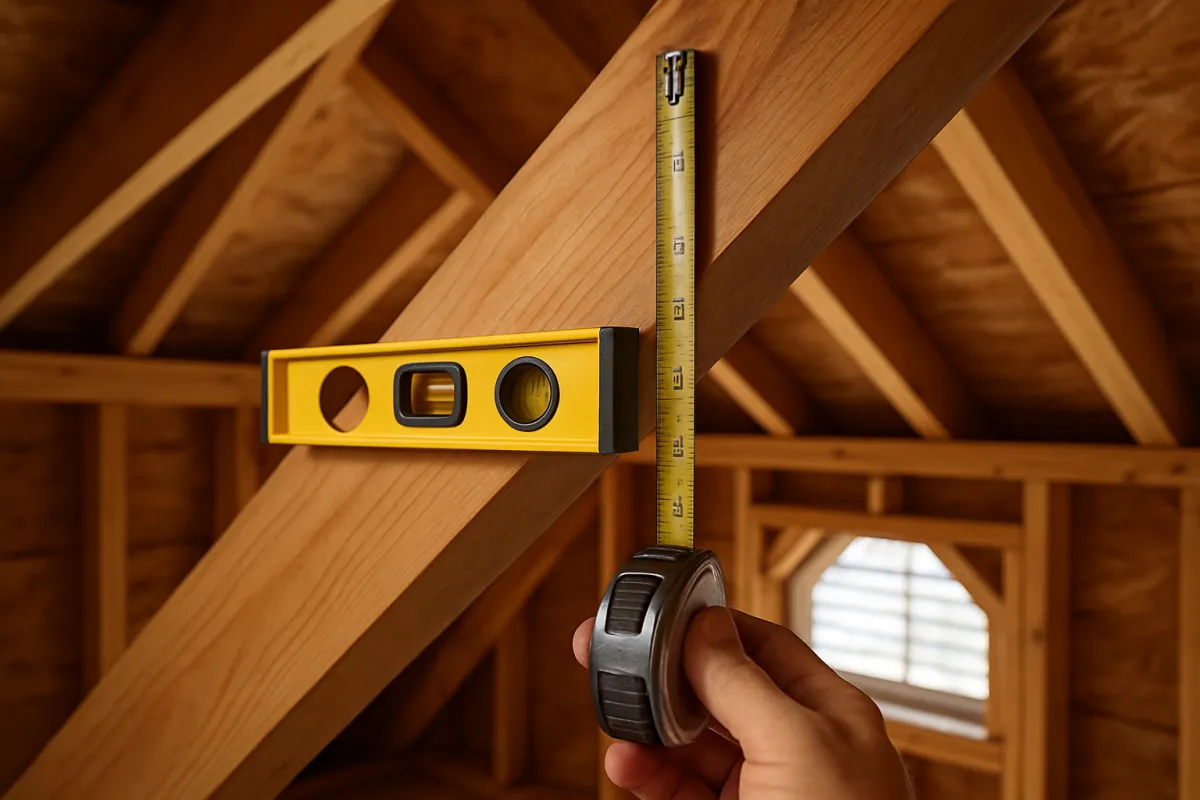
Roof pitch affects a gutter bid in two ways at once: a steeper pitch makes the eave itself harder and slower to work along safely, often needing additional fall protection or a different ladder and staging setup than a gentle, walkable pitch, and it also affects how much velocity water carries by the time it reaches the gutter, which factors into sizing the gutter and downspout capacity correctly for the roof.
Fascia condition, the board the gutter hangers actually screw into, is the structural foundation of the entire system regardless of how good the gutter material itself is. Soft, rotted, or water-damaged fascia cannot hold hangers securely no matter how well the gutter is installed on top of it, which is why a thorough contractor inspects fascia condition before quoting rather than assuming it is sound, and why a quote that skips this inspection is a real risk rather than a shortcut.
DIY gutter installation cost
Labor is a real share of an installed gutter bid, so the saving from self-installing is genuine, and sectional aluminum or vinyl gutter kits, sold at most home improvement retailers, are designed to be a realistic ladder-and-basic-tools project for a careful DIYer on a single-storey home with straightforward access. Buying just the sectional gutter stock, hangers, end caps, and connectors can be a fraction of a full installed quote.
The honest caution is that proper slope toward the downspout, roughly a quarter inch of fall per 10 feet of run, is what actually makes a gutter drain instead of ponding water along its length, a detail that is easy to get wrong without experience and invisible until the next heavy rain reveals it. Seamless gutter, which needs an on-site fabrication machine most homeowners do not own or rent, is essentially a professional-only installation regardless of DIY confidence, and any work above a single storey carries real fall risk worth weighing seriously against the labor savings.
From price per linear foot to your total
Turning the rates in this brief into your own planning number is three steps. First, measure the roofline: walk the perimeter where gutters will hang, or use the home’s footprint as a starting estimate adjusted for any roof overhangs. Second, pick the installed rate for your material, an illustrative 5 dollars for vinyl, 9 for aluminum, 12.50 for steel, 32.50 for copper.
Third, multiply the roofline length by the rate for the bare gutter figure, then add downspouts at an illustrative 50 to 150 dollars each, roughly one per 30 to 40 feet of run, and gutter guards at 4 to 10 dollars per linear foot if included in scope. A 180 foot roofline with four downspouts in aluminum is roughly 2,020 dollars before guards. The companion below runs this entire method live on your own numbers as you read.
Regional and seasonal cost swings
Every rate in this brief is a national illustrative figure, and the real number in any one market moves with local labor costs, material shipping distance, and the specific crews available. Coastal and high cost of living metro markets commonly run above these illustrative midpoints on labor alone, while regions with a lower cost of living and more gutter installers competing for work commonly run below them.
Gutter crews, like roofing crews, commonly see demand pick up in the fall ahead of winter weather and again in spring after storm season, which can mean both longer scheduling waits and firmer pricing during those windows. Booking a project in a quieter season, where the climate and your schedule allow it, sometimes softens both the wait and the price, though local weather risk and a contractor’s own backlog matter more than the calendar alone in some markets.
Ways to keep gutter installation cost down
A gutter budget has real levers, and material is the most visible one: the same roofline in vinyl at an illustrative 5 dollars per linear foot versus steel at 12.50 is well over double for comparable coverage, so choosing vinyl or standard aluminum captures most of what a gutter system offers for meaningfully less than steel or copper. Choosing K-style over half-round profile, where the architectural style of the home does not specifically call for half-round, is a smaller but real additional lever.
Sizing downspouts to the minimum the roofline genuinely needs, rather than adding extras beyond what a proper drainage calculation calls for, keeps that line item in check. What should never be cut is slope accuracy and fascia repair where it is genuinely needed, since a gutter that does not drain correctly or that is hung on rotted fascia is not a savings, it is a near-term repair and, in the fascia case, a risk to the roofline it is attached to.
Comparing gutter installation bids line by line
A gutter bid that reads as a single lump sum is the hardest one to compare against another, since a lower total can hide a thinner scope rather than a genuinely better price. Ask every bidder to itemize the gutter material and profile by name, whether the system is seamless or sectional, the downspout count and their placement, whether gutter guards are included or priced separately, and whether fascia inspection and any needed repair is included in the number.
Two bids on the same house that differ by several hundred dollars commonly differ in one of a few places: whether the downspout count actually matches what the roofline needs, whether seamless fabrication is genuinely included rather than substituted with sectional stock, or whether old gutter removal and disposal is bundled in. A bid that is unusually low relative to the others deserves a direct question rather than automatic acceptance, since the gap is rarely free money and is more often a thinner scope.
A worked example: a 180 foot house with four downspouts
Take the common case end to end. A single-storey home has 180 feet of roofline needing new gutter, standard aluminum seamless K-style, with four downspouts placed at the roof’s natural low corners. At the illustrative aluminum midpoint of 9 dollars per linear foot, the bare gutter run prices near 1,620 dollars.
Add four downspouts at an illustrative 100 dollars installed each, 400 dollars, and the all-in planning total reaches roughly 2,020 dollars before any gutter guards. Adding guards across the full run at an illustrative 7 dollars per linear foot brings the total to roughly 3,280 dollars. Switch the material to steel at the same scope and the bare gutter line rises to about 2,250 dollars before downspouts, pushing the all-in total correspondingly higher. Run your own roofline through the companion below to see how material and downspout count move your number.
New construction versus gutter replacement cost
Installing gutters on new construction commonly prices at or slightly below the replacement rates this brief uses as its baseline, since there is no old system to remove first and the fascia is freshly installed and known to be sound, two labor steps a replacement project often has to account for that new construction skips entirely. The material and fabrication cost per linear foot stays essentially the same either way, since the gutter stock itself does not know whether it is going onto a new house or an old one.
Replacement projects, by contrast, commonly carry the extra variables this brief covers in full elsewhere: old gutter removal and disposal, the chance of discovering damaged fascia once the old system comes down, and sometimes a mismatch between the old downspout locations and where a new system would ideally place them for better drainage. Budget a modest premium over the bare new-construction rate for a typical replacement project, and a larger one if the home’s fascia condition is already a known concern before the crew arrives.
Gutter repair versus full replacement
Not every gutter problem needs a full system replacement, and the honest first question is whether the issue is isolated or systemic. A single section pulling away from the fascia, one leaking joint on an otherwise sound sectional system, or a dented section from storm debris are commonly repair jobs, priced per visit or per section rather than per linear foot of the whole roofline, and often a small fraction of a full replacement project.
Widespread sagging across multiple sections, visible rust-through on a steel system rather than an isolated spot, or a system that is simply past its material’s typical service life are commonly signs that a repair is a short-term patch on a system that needs full replacement soon regardless. The same judgment this site applies to other trades holds here: spend on a repair when it genuinely buys meaningful remaining life from an otherwise sound system, and treat a full replacement as the honest answer once damage is already widespread or the gutters are simply old.
Gutter cost for a complex or multi-section roofline
A roofline with many valleys, dormers, and angle changes costs more per linear foot to gutter than a simple rectangular home of the same total length, since every inside or outside corner needs a fabricated or field-formed miter joint rather than a continuous straight run. As an illustrative figure, a complex roofline with frequent angle changes can add 15 to 30 percent to the labor line over a simple rectangular equivalent, even in the identical material and at the identical total linear footage.
A detached garage, a porch roof, or an outbuilding each add their own shorter gutter run, commonly priced at the same per linear foot rate as the main house but sometimes carrying a small minimum charge regardless of length, since a crew’s setup and travel time between separate structures does not scale down proportionally with a short run. Mention every structure that needs gutters when requesting a quote, rather than assuming a bid for the main house automatically covers outbuildings too.
Matching gutter color to trim or roof
Aluminum and steel gutter commonly come in a range of factory-baked colors, white and brown the most widely stocked, with a broader palette available at a modest upcharge, an illustrative 5 to 10 percent over a standard stocked color, since custom colors sometimes need a special order rather than coming off a standard coil already loaded on the installer’s truck. Matching gutter color to the fascia, trim, or roof shingle color is mostly an aesthetic decision with little functional difference, since the coating performs the same regardless of shade.
Vinyl gutter typically offers a narrower color range than aluminum, often limited to white and a small handful of common alternatives, since it is molded rather than coil-coated, which is worth checking against your home’s trim color before committing to vinyl specifically for its lower price if an exact color match matters to you. Copper, by contrast, is not painted or coated at all, and its color is simply the metal’s own natural, then weathering, appearance, which is part of copper’s appeal for an owner who wants that specific aged look over time.
The bottom line
Gutter installation cost comes down to a short list in a fixed order: roofline length, material, downspout count, and whether guards are included. Carry the illustrative rates, 3 to 7 dollars per linear foot for vinyl, roughly 9 for aluminum, 12.50 for steel, and 25 to 40 for copper, then multiply by your measured roofline length for the base figure and add downspouts separately.
Remember that downspouts and gutter guards are always separate line items from the bare gutter rate, that seamless fabrication carries a real but worthwhile premium over sectional gutter for most homes, and that fascia condition underneath the old gutters matters as much as the new material chosen. Measure with the estimator, price your own roofline in the companion below, read our roof replacement cost brief for the roofing work gutters attach to, then collect written bids that all cover the same downspout count and scope. Gutters priced that way arrive as a decision, not a surprise.
This cost brief is workbench education for planning a gutter budget, not a quote or an engineering opinion. Every dollar figure in it, per linear foot, by material, and by project, is an illustrative planning number, and your roofline length, house height, roof pitch, fascia condition, and local labor market will each move a real bid, sometimes substantially. Ladder and roofline work carries real fall risk, so have a qualified, insured contractor inspect fascia condition and confirm proper slope rather than relying on a general article. Build your actual budget on current written bids from local gutter installers, not on any single figure printed here.
Frequently asked questions
How much does gutter installation cost per linear foot?
As an illustrative planning range, aluminum seamless gutter, the common residential default, commonly installs somewhere around 6 to 12 dollars per linear foot, with a working midpoint near 9 dollars. Vinyl runs below that, an illustrative 3 to 7 dollars, steel or galvanized runs above it at 9 to 16 dollars, and copper sits well above the rest at an illustrative 25 to 40 dollars. That per foot figure covers the gutter stock, hangers, end caps, and the labor to fabricate and hang it, but usually not downspouts or gutter guards, which price separately. Get a written local quote, since regional labor rates and the exact material move the real figure more than any single table.
How much does it cost to install downspouts?
A downspout, the vertical pipe that carries water from the gutter down to the ground or a drainage connection, commonly adds an illustrative 50 to 150 dollars installed each, covering the pipe sections, elbows, straps, and the labor to run and secure it along the wall. A typical house needs one downspout for roughly every 30 to 40 feet of gutter run, so a house with 180 feet of gutter commonly needs 4 to 6 downspouts, adding roughly 200 to 900 dollars to the project depending on material and count. Downspout extensions that carry water further from the foundation are a small additional cost per extension.
Are seamless gutters worth the extra cost over sectional gutters?
For most residential jobs, yes. Seamless gutters are fabricated on site from a continuous coil to the exact length of each roof run, with joints only at corners and downspout connections, which means far fewer places for a leak to start compared with sectional gutters assembled from pre-cut lengths joined every 10 feet or so. The premium for seamless over sectional is commonly an illustrative 10 to 20 percent, and it buys meaningfully less maintenance over the gutter's life, since every additional joint in a sectional system is a future leak point that eventually needs resealing.
Why are copper gutters so much more expensive?
Copper gutters commonly run an illustrative 25 to 40 dollars per linear foot, two to four times aluminum's rate, for a combination of reasons: copper the raw material costs substantially more than aluminum or steel, it is heavier and more labor intensive to fabricate and hang, and installation commonly requires soldered rather than sealant-only joints, a slower, more specialized technique. The payoff is a genuinely long service life, commonly measured in decades longer than aluminum, and a distinctive weathered patina appearance many owners specifically choose copper for, which is an aesthetic and longevity premium rather than a functional necessity for most homes.
How much do gutter guards cost?
Gutter guards, covers or mesh inserts that reduce leaf and debris buildup inside the gutter, commonly add an illustrative 4 to 10 dollars per linear foot on top of the bare gutter installation rate, depending on the guard type, a simple mesh screen at the lower end and a solid surface-tension style at the upper end. Guards reduce but do not eliminate gutter cleaning, since fine debris like pine needles and seed pods can still collect on top of some guard styles, and the upfront cost is commonly weighed against the ongoing cost of professional gutter cleaning a few times a year over the years ahead.
How often do gutters need to be replaced?
Aluminum gutters, the most common residential material, commonly last an illustrative 20 to 30 years with reasonable maintenance, vinyl somewhat less, often 15 to 25 years, while steel can corrode sooner in a humid or coastal climate unless it carries a protective coating. Copper commonly outlasts all of them by a wide margin, often 50 years or more. Signs that replacement, rather than repair, is the right call include pulling away from the fascia along multiple sections, visible rust-through or cracking rather than an isolated hole, and sagging that persists after rehanging, each a sign the system as a whole has reached the end of its service life rather than needing a single spot fix.
Can I install gutters myself to save money?
Labor is a real share of an installed gutter bid, so the saving from self-installing sectional gutters is genuine, and sectional aluminum or vinyl gutter kits are designed to be a realistic ladder-and-basic-tools project for a careful DIYer on a single-storey house. The honest caution is that proper slope, roughly a quarter inch of fall per 10 feet toward the downspout, is what actually makes a gutter drain instead of pond water, and ladder work at a roofline carries real fall risk that a professional crew is equipped and insured for. Seamless gutter, which needs an on-site fabrication machine, is essentially a professional-only installation regardless of DIY confidence.
Does roof pitch or house height affect gutter installation cost?
Yes, mostly through labor and access rather than the gutter material itself. A steep roof pitch makes the eave harder and slower to work along safely, often requiring additional fall protection or a different ladder setup than a gentle, walkable pitch, and a two-storey or taller home needs taller ladders or lift equipment that a single-storey ranch never requires. Neither factor changes the per linear foot material rate, but both commonly add a labor premium that a bid written for an easy single-storey access does not anticipate, so flag your roof's height and pitch when requesting quotes.