What's on this page
- How much asphalt do I need, and what the answer is measured in
- Step one: measure the area you are paving
- Measuring a flared, curved, or irregular driveway
- Choosing a compacted thickness by use
- Area times depth: cubic feet, then cubic yards
- The inches trap that inflates an asphalt estimate
- Converting volume to tons with hot-mix density
- How many square feet one ton of asphalt covers
- Tons per square foot, and when the shortcut lies
- Compaction: loose depth is not finished depth
- The allowance for edges, spillage, and thickness drift
- How the plant sells asphalt: by the ton, off a scale
- Minimum loads, and why a small asphalt job is awkward
- A worked example: a two-car driveway in tons
- The same driveway at four thicknesses
- Overlay tonnage against new-build tonnage
- The stone base is a separate order, not asphalt
- Patching a pothole: bags, not tons
- Asphalt in metric, and other unit swaps
- Checking your tonnage before you call the plant
- Common mistakes when estimating asphalt tonnage
- Timing: hot-mix will not wait for you
- The bottom line
Short answer: Multiply the area in square feet by the compacted thickness in feet, then by about 145 pounds per cubic foot, and divide by 2,000 to get tons of hot-mix. An illustrative 480 square foot two-car driveway takes about 4.4 tons at 1.5 inches and about 8.7 tons at 3 inches, since one ton covers about 110 square feet at 1.5 inches. Add roughly 5 to 10 percent and round up to the plant's increment.
Asphalt is bought by weight and measured by area, and the whole question of how much asphalt you need lives in the conversion between the two. Your tape gives a driveway in feet. The paving plant sells hot-mix in tons off a truck scale. Between them sits a thickness you choose and a density you look up, and if either one is wrong the load that arrives is wrong with it. Order short and the crew stops with a cold seam across a half-finished drive; order long and you have paid for material that goes stiff in the truck within the hour.
The arithmetic is short enough to do on a phone: area in square feet, times compacted thickness in feet, gives cubic feet, and cubic feet times an asphalt density near 145 pounds each, divided by 2,000, gives tons. This manual runs that line end to end for the jobs that account for almost every residential asphalt order, a new driveway, an overlay on an existing one, and a patch, then covers what the formula alone will not tell you: how thickness is actually chosen, how many square feet a ton really covers, the allowance that keeps a load from running short, and how a plant sells and rounds. Our estimator does the volume step in seconds, and the companion below recalculates every section against your own driveway as you read. For what that tonnage costs, our asphalt driveway cost brief prices the same job; this manual stops at the quantity.
Key takeaways
- The line is area in square feet, times compacted thickness in feet, times about 145 pounds per cubic foot, divided by 2,000, which gives tons of hot-mix.
- Thickness scales the whole order, so settle it first: an illustrative 480 square foot two-car drive takes about 4.4 tons at 1.5 inches and about 8.7 tons at 3 inches.
- One ton of compacted asphalt is roughly 13.8 cubic feet, so it covers about 110 square feet at 1.5 inches, about 83 at 2 inches, and about 55 at 3 inches.
- Add roughly 5 to 10 percent for edges, spillage, and thickness drift, then round up to the plant's increment, because hot-mix cannot wait for a second load.
- The compacted stone base under the pavement is a separate material on a separate order, never part of the asphalt tonnage.
How much asphalt do I need, and what the answer is measured in
The first thing to settle is what unit the answer comes in, because it is not the unit you measured. Asphalt is not sold by the square foot, by the cubic yard, or by the driveway. Hot-mix is sold by the ton, weighed on a scale as the truck leaves the plant, and every quantity conversation you have with a supplier will happen in tons. So the useful answer to how much asphalt you need is a tonnage, and every step of the arithmetic below exists to turn a rectangle on the ground into that one number.
That has a consequence people miss on the first job. Because the sale unit is weight, you cannot answer the question from area alone. Two driveways of exactly the same size can take wildly different loads if one is paved thin as a wearing course and the other is built up as a structural surface. Area is only half the input. Thickness is the other half, and it is the half that is a decision rather than a measurement.
The three-move shape of the calculation is worth holding in your head before any of the detail arrives. Move one: get an area in square feet, from measurements you take yourself rather than from a memory of the lot plan. Move two: choose a compacted thickness in inches and convert it to feet. Move three: multiply area by thickness for cubic feet, then apply an asphalt density in pounds per cubic foot and divide by 2,000 to reach tons. Everything else in this manual is either a sharper version of one of those three moves or a check on the result.
It is also worth naming what this page deliberately does not do. It settles quantity, not price. Hot-mix pricing tracks the oil market and the distance from the plant, so it moves in ways a quantity never does, and the cost brief linked in the introduction is where that side lives. Keep the two apart in your own planning as well, the way our material estimating manual argues for every material: quantities are measured, prices are quoted.
Step one: measure the area you are paving
Nothing downstream survives a bad measurement, so this is the step to slow down on. Walk the driveway with a long tape and take the length and the width at more than one point, because very few drives are the neat rectangle they look like from the kerb. Write both figures down at the time. The most common source of a wrong asphalt order is not the density or the thickness but a width that was remembered rather than measured, and a foot of width across a long drive is a surprising amount of material.
For a plain rectangle the area is length times width in feet, and that is the whole of it. A 20 foot wide, 24 foot long two-car drive is 480 square feet. Keep every dimension in feet from the start rather than mixing feet and inches, and if a measurement lands at 24 feet 6 inches, write 24.5 rather than carrying the inches forward, because a stray inch is the seed of most unit errors later. Our square footage manual works this step in detail, including the room-by-room and shape-by-shape cases.
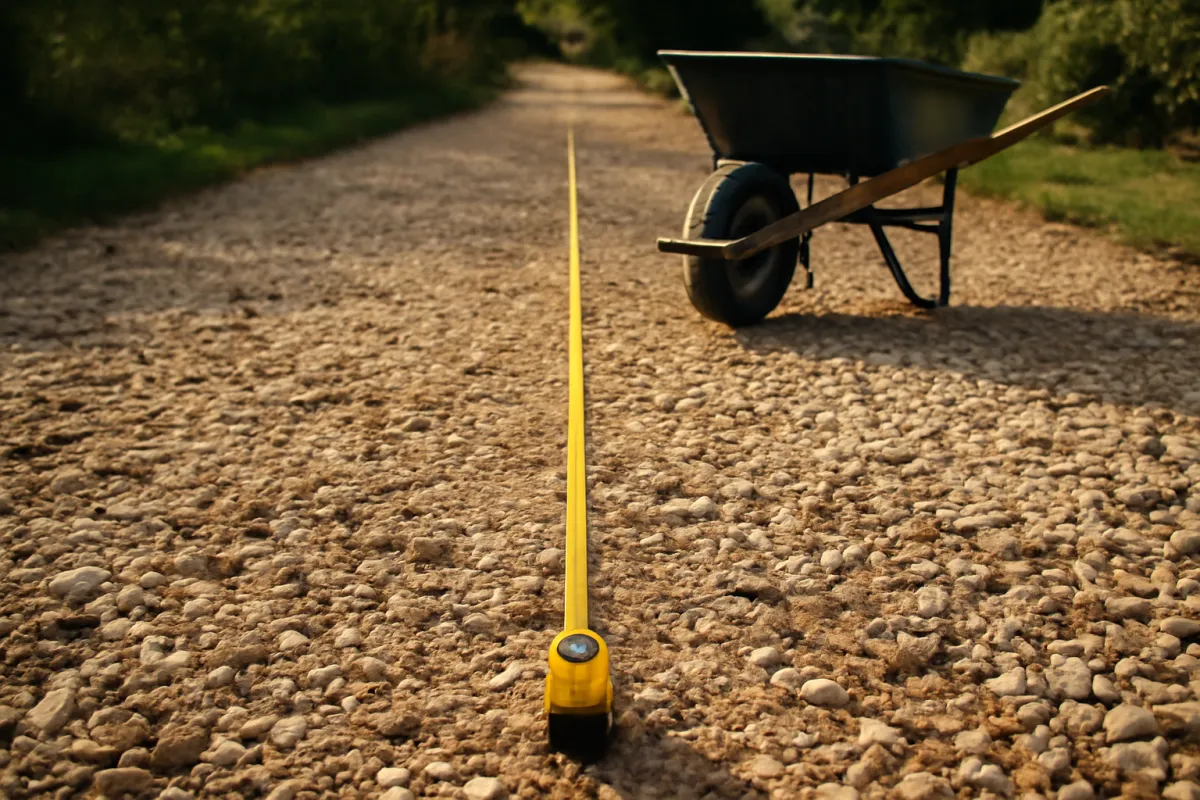
Measure the area you are actually paving, which is not always the area you see. If an existing drive is being widened, the new asphalt covers the old surface plus the new strip, and both need measuring. If a section is being left alone, subtract it. If there is an apron at the street that a contractor is treating as part of the job, it belongs in the area; if the municipality is handling it, it does not. Settle the boundary of the work before you settle the number, because an area that includes something nobody is paving is just as wrong as one that leaves something out.
Measuring a flared, curved, or irregular driveway
Most driveways are not rectangles. They flare at the street, they widen at a turning area, they curve around a tree, or they open into a parking pad beside the garage. The method for all of these is the same one used for any awkward footprint: break the shape into simple pieces you can measure, work out each piece, and add the results. Do not try to average a curve into a single width, because averaging a flare will underestimate it more often than not.
A flare at the road is usually close enough to a trapezoid, which you can handle as a rectangle at the narrow width plus a triangle for the widening part, or by taking the average of the two ends and multiplying by the length of the flared section. A turning bay off the side of a straight run is a second rectangle. A curved edge can be approximated by measuring widths at regular intervals along the length and averaging them, which gets you close enough for an ordering decision as long as the intervals are short. Our land area measurement guide covers this breaking-into-pieces method for genuinely odd footprints.
Two habits keep irregular measurements honest. First, sketch the drive on paper and write the dimensions on the sketch as you take them, rather than trying to hold four numbers in your head while you wind the tape. Second, add the pieces and sanity-check the total against a rough overall length times an average width. If the two disagree by more than a little, one of the pieces is wrong, and it is much cheaper to find that now than after a truck has been booked. When in doubt on an irregular shape, round the area up rather than down, because a slightly generous area is a much smaller problem than a load that stops the job.
Choosing a compacted thickness by use
Thickness is where an asphalt estimate is really decided, and it is a spec rather than a measurement. The figures that follow are illustrative ranges commonly seen on residential work, not a specification for your driveway, because the right thickness depends on the loads the surface will carry, the strength and drainage of the ground beneath it, the climate it has to survive, and local paving practice. Ask your paver to state the compacted thickness in the quote, and check whether your building department or public works department specifies anything for the apron in the right of way.
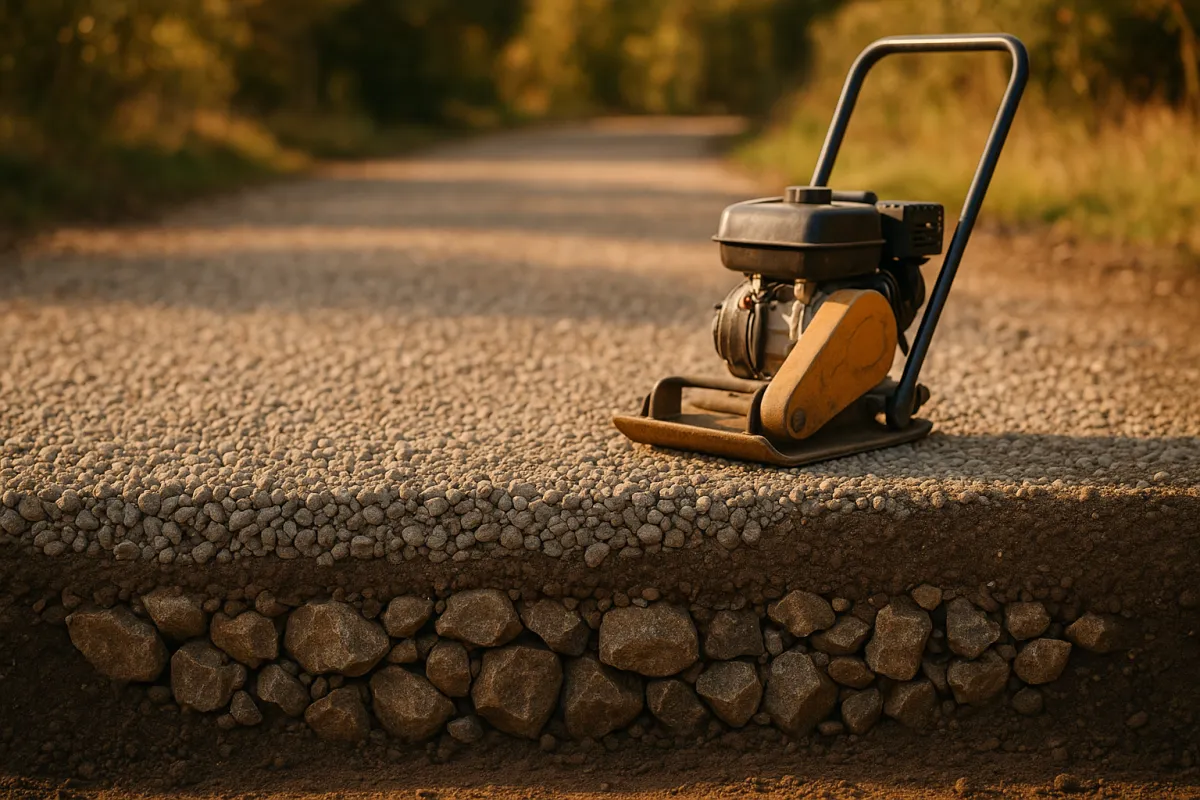
With that said, the shape of the decision is consistent. A resurfacing lift laid over a sound existing pavement is a wearing course rather than a structural layer, and is commonly placed somewhere around 1.5 to 2 inches compacted; thinner than that is hard to compact evenly and wears through early. A new residential driveway surface commonly runs about 2 to 3 inches of asphalt sitting on a compacted stone base, with the base doing the load spreading rather than the asphalt. Drives that carry heavier vehicles, or that sit on soft ground, go thicker in the asphalt, the base, or both.
The word compacted is doing real work in every one of those figures. Hot-mix is laid loose and rolled down, and the loose depth is meaningfully greater than the finished depth. Every thickness in this manual, and almost every thickness a paver quotes, refers to the compacted result, which is what your tonnage should be calculated from. The section on compaction below covers why that distinction matters and where it appears in the order.
Area times depth: cubic feet, then cubic yards
With an area and a thickness in hand, the volume falls out in one line. Convert the thickness from inches to feet by dividing by 12, then multiply by the area. Three inches is 3 divided by 12, or 0.25 feet, so the 480 square foot two-car drive from above is 480 times 0.25, or 120 cubic feet of compacted pavement. That is the physical amount of asphalt that will exist on the ground when the job is finished, before any allowance.
Cubic yards are worth carrying alongside the cubic feet even though asphalt is not usually sold that way, because a cubic yard is the unit every other bulk material on a site uses and it makes the asphalt comparable to the stone base beneath it. A cubic yard is 27 cubic feet, so divide: 120 divided by 27 is about 4.44 cubic yards. Our cubic yard calculator manual runs that same length, width, and depth line for any material, and it is the hub for the volume side of every estimate on this site.
The order of operations matters more than it looks. Convert the thickness to feet first, then multiply, and only then divide by 27 if you want yards. Doing the divide-by-27 step before the inches conversion, or applying an allowance before the volume is settled, are the two sequence errors that produce a number that looks plausible and is not. Settle the volume completely, in cubic feet, before you touch density or allowance, and every later step has something solid to stand on.
The inches trap that inflates an asphalt estimate
One error accounts for more wrong asphalt numbers than every other cause combined, and it is leaving the thickness in inches. If you multiply 480 square feet by 3 rather than by 0.25, you get 1,440, and if you then push that through a density you arrive at over 100 tons for a driveway that needs under 10. The error is a clean factor of twelve, so it is easy to spot once you know to look: an answer that is roughly twelve times too big has an unconverted inch depth inside it.
The habit that prevents it is writing the units beside every figure as you go. Not 480 times 0.25 but 480 square feet times 0.25 feet equals 120 cubic feet. Written that way, the units do the checking for you: square feet times feet gives cubic feet, which is what you want, while square feet times inches gives a quantity that is not a volume in any system and should stop you immediately. This is the same discipline our material estimating manual applies to every material, and asphalt is where it pays best, because the sale unit is unfamiliar enough that a wrong answer does not always look wrong.
A second, quieter version of the trap is the divide-by-27 step. Dividing cubic feet by 3 rather than by 27, on the reasoning that a yard is three feet, over-orders by roughly nine times. A cubic yard is three feet in each of three dimensions, so it is 27 cubic feet, not three. Between the twelve and the twenty-seven, the two conversions in this calculation are responsible for nearly every asphalt order that arrives absurdly wrong rather than slightly wrong.
Converting volume to tons with hot-mix density
Now the volume becomes a weight. Compacted hot-mix asphalt runs somewhere near 145 pounds per cubic foot as an illustrative planning figure, and the real density depends on the mix design, the aggregate in it, and the compaction actually achieved, so the plant’s own figure is the one that matters when you order. Applied to the 120 cubic feet of the two-car drive, 120 times 145 is 17,400 pounds, and dividing by 2,000 pounds per ton gives about 8.7 tons.
Expressed per cubic yard, the same density is close to 2 tons: 145 pounds times 27 cubic feet is 3,915 pounds, or just under 2 tons per cubic yard. That is a useful sanity anchor, because it makes asphalt directly comparable to the aggregates around it. Crushed gravel sits nearer 1.4 tons per cubic yard, as our tons to cubic yards conversion sets out, so asphalt is appreciably heavier per unit of volume than the stone under it. If your yards-to-tons ratio comes out near 1.4 for asphalt, you have used a gravel density by mistake.
The direction of the conversion is fixed and worth stating plainly: volume first, weight second. Never try to judge tonnage straight from the size of a driveway, and never work backwards from a tonnage somebody quoted you without knowing what thickness they assumed. The volume is the thing you can measure and check; the tonnage is a translation of it. Get the volume right and the weight is one multiplication away, and our estimator will run both steps for you once you have an area and a thickness.
How many square feet one ton of asphalt covers
Flip the same density around and you get the figure people actually ask suppliers for: coverage per ton. One ton is 2,000 pounds, and at about 145 pounds per cubic foot that is roughly 13.8 cubic feet of finished pavement. Spread those 13.8 cubic feet at a given thickness and you get the area one ton covers. At 1.5 inches, or 0.125 feet, it is about 110 square feet. At 2 inches it is about 83. At 3 inches it is about 55. At 4 inches it is about 41.
Notice what those numbers do: they halve as the thickness doubles, exactly as they must, because the same weight spread twice as thick covers half the area. That relationship is the reason a coverage figure quoted without a thickness beside it is meaningless. If a supplier or a website tells you a ton of asphalt covers a certain area and does not say at what depth, the number cannot be used, and asking the follow-up question is the single most useful thing you can do with it.
Coverage per ton is most useful as a cross-check rather than as a primary method. Work your tonnage the long way, area times thickness times density, then divide your area by the coverage figure for your thickness and see whether the two agree. For the two-car drive: 480 square feet divided by 55 square feet per ton is about 8.7 tons, which matches the long calculation. Two methods that share no arithmetic arriving at the same answer is the strongest check available on a quantity, and it takes fifteen seconds.
Tons per square foot, and when the shortcut lies
There is an even shorter shortcut in circulation, a tons-per-square-foot factor, and it is worth understanding precisely so you know when it is safe. At 3 inches compacted, the 8.7 tons across 480 square feet works out at about 0.018 tons per square foot, so multiplying an area by 0.018 gives a tonnage directly. The factor is genuinely convenient for pricing several drives at the same spec in a row.
The trap is that the factor is only valid at the thickness it was derived from. At 2 inches the same drive is 5.8 tons across 480 square feet, or about 0.012 tons per square foot, a third less. Apply a 3 inch factor to a 2 inch job and you over-order by half. Because the factor hides the thickness inside itself, it is the easiest number in asphalt estimating to misuse, and it is usually passed on without the thickness that made it true.
Use the factor only for repeat work at a fixed, known spec, and derive it yourself rather than borrowing one. If you do adopt one, write the thickness into its name every time you use it, so that a 3 inch factor never quietly gets applied to a 1.5 inch overlay. For any job you have not done before, run the full three-move calculation, because the twenty seconds it takes is cheaper than the load it prevents.
Compaction: loose depth is not finished depth
Hot-mix arrives loose and is rolled down, so the depth of the material as it leaves the paver is greater than the depth of the finished pavement. That difference is real, and it is where a good deal of confusion about asphalt quantities comes from. The important point for ordering is that the standard practice, and the assumption behind every figure in this manual, is that thickness is specified and calculated as the compacted result.
That convention makes life simpler than it first appears, because the density figure and the thickness figure are then talking about the same thing: a compacted cubic foot at compacted density. Mixing them is what causes trouble. If you calculate volume at a loose depth and then apply a compacted density, you will over-order; if you calculate at a compacted depth and apply a loose density, you will fall short. Keep both on the compacted side and the arithmetic stays consistent.
Compaction is also why an asphalt estimate behaves differently from a gravel one. With gravel you deliberately add a substantial compaction allowance on top of the calculated volume, often around 20 percent, as our gravel manual explains, because loose stone settles a great deal when placed and driven on. Asphalt is placed and rolled by machine to a specified compacted thickness in a single controlled operation, so the allowance it needs is much smaller. Do not carry a gravel allowance across to an asphalt order; they are different problems.
The allowance for edges, spillage, and thickness drift
A calculated tonnage is the pavement that ends up on the ground if everything goes perfectly, and paving does not go perfectly. Add a modest allowance, commonly in the region of 5 to 10 percent for residential work, and treat it as an honest description of where material actually goes rather than as padding. Three things eat it. Thickness drifts high in places, because a paver following a slightly uneven base lays a little more where the ground dips. Material is lost at the edges, in the hopper, and in the transfer. And the measurement itself carries some optimism, especially on an irregular shape.
A driveway asphalt order, by destination
Illustrative split of a 10 ton order for a 480 square foot drive at 3 inches compacted.
The calculated pavement is most of the order but not all of it. An 8 percent allowance takes 8.7 tons to about 9.4, and rounding up to the plant's increment lands on 10 tons ordered. The cushion is deliberate and small rather than accidental and large.
The chart makes the shape of a sound order visible: a calculated quantity, a small planned allowance, and a round-up to the unit the plant actually sells in. Where asphalt differs from most materials is the cost of getting it wrong in the short direction. A tile order that runs short costs a second trip; an asphalt order that runs short costs a cold joint across the middle of a driveway that will be visible and will be the first place the surface fails. That asymmetry is the whole argument for the allowance.
Apply the allowance once, after the volume and the density conversion are both settled, and never twice. The classic double-count is adding a percentage to the area, then adding another to the tonnage, which quietly inflates the order by more than either figure suggests. One allowance, applied to the final tonnage, then a single round-up. That is the sequence our material estimating manual uses for every material, and asphalt gives no reason to depart from it.
How the plant sells asphalt: by the ton, off a scale
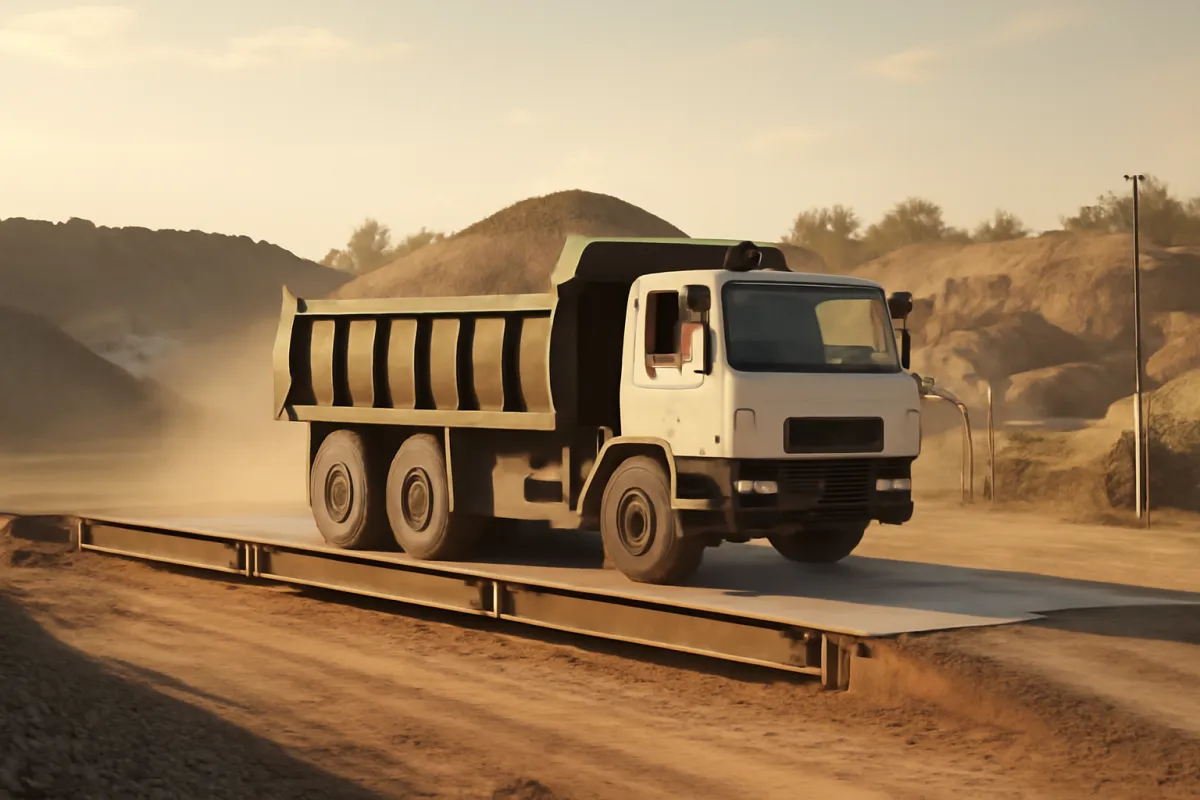
Understanding how the supply side works removes most of the surprises from an asphalt order. Hot-mix comes from an asphalt plant, is loaded into a dump truck, and the truck is weighed on a scale on the way out, so the ticket that comes back is a weight. That is why every quantity conversation with a plant or a paving contractor happens in tons, and why the coverage and volume figures in this manual all funnel toward a tonnage rather than an area.
The scale also explains a detail that catches people out: what is weighed is the material, so a slightly heavier or lighter mix changes the tonnage for the same finished pavement. This is not a trick, it is just what selling by weight means, and it is another reason the density figure you calculate with should be the plant’s rather than a general one. If you are working through a paving contractor, they handle the ordering, and your tonnage is a check on their quote rather than an order you place yourself.
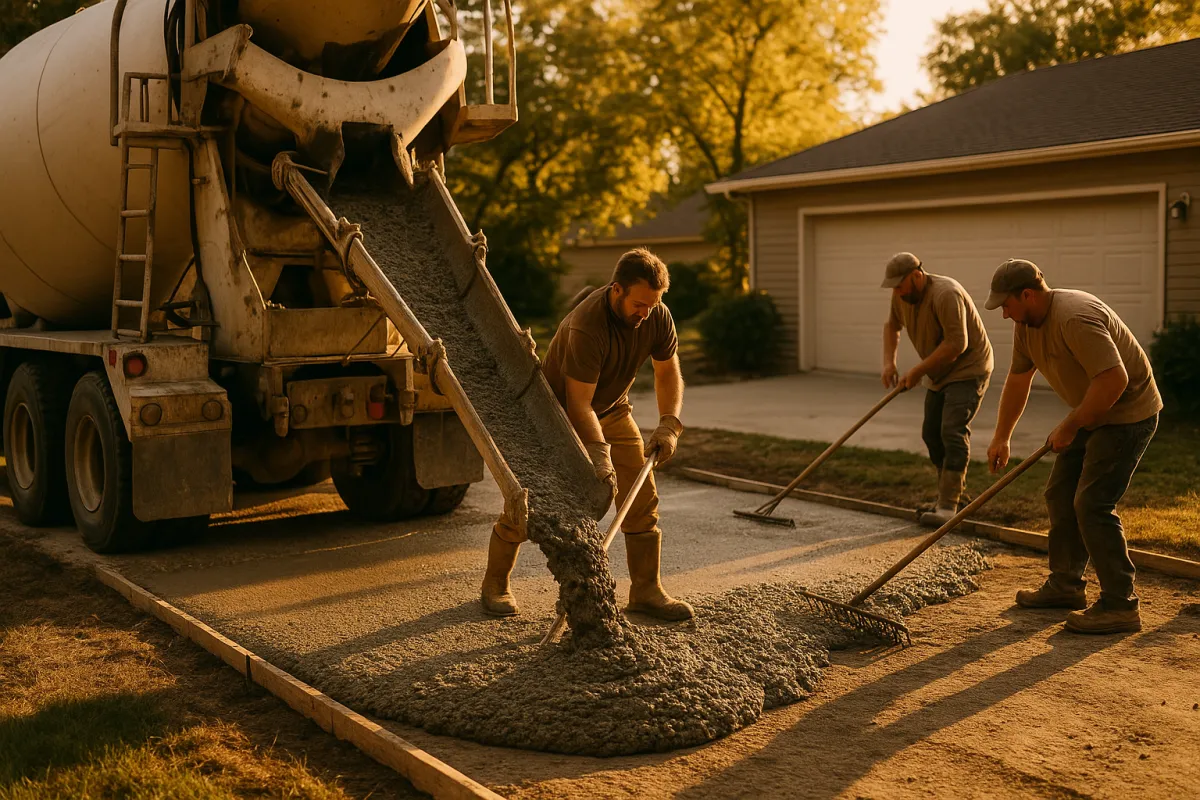
Timing is part of the supply picture too. Asphalt plants run seasonally in cold climates and do not produce year round everywhere, and a plant may batch particular mixes on particular days. None of that changes your tonnage, but all of it changes when the tonnage can be delivered, so ask about availability at the same time you confirm density and increments rather than after the driveway is torn up.
Minimum loads, and why a small asphalt job is awkward
Asphalt is not a material you can buy in any quantity you like. Plants and hauliers work in truckloads, and there is usually a practical minimum below which a delivery either is not offered or carries a charge that makes a small quantity poor value. This is the same short-load logic that applies to ready-mix concrete, and it has the same consequence: a small job can cost disproportionately more per unit than a larger one.
The practical response is to know your tonnage before you call, because it tells you which side of the awkward line you are on. If your calculation comes out well under a typical minimum, that is worth knowing early, because the options change. Sometimes it makes sense to widen the scope slightly, paving an adjoining pad or extending an apron, so the order sits comfortably above a minimum instead of just under one. Sometimes it makes sense to combine with a neighbour who is paving in the same week. Sometimes the honest answer is that a very small area is not a hot-mix job at all and belongs in bags, which the patching section covers.
Ask three questions when you call. What is the minimum load. What increment do you sell in above that. And what does the delivered figure assume about the mix and its density. The answers convert your calculated tonnage into an order the plant can actually fill, which is the last step of every estimate on this site, exactly as our material coverage reference frames it for other materials: the calculation gives a quantity, the supplier’s units give an order.
A worked example: a two-car driveway in tons
Take the drive that has run through this manual and work it start to finish. A two-car driveway measures 20 feet wide by 24 feet long, a plain rectangle with no flare, and it is being paved new at a compacted asphalt thickness of 3 inches over a stone base that is being ordered separately. Step one, the area: 20 times 24 is 480 square feet.
Step two, the volume. Convert 3 inches to feet: 3 divided by 12 is 0.25 feet. Multiply: 480 square feet times 0.25 feet is 120 cubic feet of compacted pavement. In yards, for comparison with the base material, 120 divided by 27 is about 4.44 cubic yards.
Step three, the weight. At an illustrative 145 pounds per cubic foot, 120 times 145 is 17,400 pounds. Divide by 2,000 and the driveway takes about 8.7 tons of hot-mix. Cross-check it the other way: at 3 inches one ton covers about 55 square feet, and 480 divided by 55 is about 8.7 tons. The two methods agree, which is the check worth running every time.
Step four, the order. Add an allowance of 8 percent for edges, spillage, and thickness drift: 8.7 times 1.08 is about 9.4 tons. Round up to the plant’s whole-ton increment and you order 10 tons, which is the figure in the chart above. Note what is not in that number: the stone base, which is a separate order in a different material, and any tear-out of an old surface. Run your own dimensions through the companion below and the same four steps recalculate against your driveway.
The same driveway at four thicknesses
Because thickness is the input most people are least sure of, it is worth seeing exactly how much it moves the order. The same 480 square foot driveway, at four compacted thicknesses, gives four very different loads, and the relationship is strictly proportional: double the thickness, double the tonnage.
Asphalt tonnage for a 480 square foot driveway
Illustrative tonnage by compacted thickness at about 145 pounds per cubic foot, before any allowance.
Bar widths track the tonnage figures. The heaviest build here takes well over twice the material of the thinnest, on identical dimensions, which is why a tonnage quoted without a thickness beside it tells you nothing about whether it is right.
The practical reading of that chart is that thickness, not size, is where an asphalt order is won or lost. A measurement error of a foot on the width of this drive moves the area by 24 square feet, about 5 percent, and the tonnage by less than half a ton. Getting the thickness wrong by an inch moves it by nearly 3 tons. Spend your attention accordingly: measure carefully, but interrogate the thickness spec hardest, and get it in writing from whoever is paving.
It also explains why comparing two paving quotes on price alone is a trap. If one quote assumes 2 inches and another assumes 3, they are not quoting the same job, and the cheaper one is smaller rather than better value. How that plays out on a bid belongs to the cost side of the question; for quantity purposes, the point is simply that tonnage and thickness travel together and neither means anything alone.
Overlay tonnage against new-build tonnage
Resurfacing an existing driveway is the other common asphalt job, and it is a smaller quantity question than a new build for a reason worth understanding. An overlay is a new wearing course laid over a pavement whose structure is still sound, so it is placed thinner, commonly around 1.5 to 2 inches compacted, because the layer underneath is still doing the load spreading. On our 480 square foot drive that is about 4.4 tons at 1.5 inches and about 5.8 at 2 inches, against about 8.7 for a 3 inch new surface.
The arithmetic is identical; only the thickness changes. Measure the area of the surface being overlaid, choose the lift, convert, and apply the density. What changes is the checking you should do before you trust the answer, because an overlay assumes the base beneath is sound, and if it is not, the correct quantity is not a thin lift at all. A pavement that is cracked through in a pattern, that moves underfoot, or that has failed in the same spots repeatedly is telling you the layer below has gone, and adding tonnage on top of it buys a short-lived surface.
There is one quantity consequence of an overlay that has nothing to do with tons: the finished surface sits higher by the thickness of the lift. That matters where the driveway meets fixed things, a garage floor, a door threshold, a drain grate, the road at the apron. It does not change your tonnage, but it can change the scope, because milling the tie-in areas so the new surface starts at the old height adds work and sometimes adds area. Settle the scope, then calculate the tonnage for the scope you settled on.
The stone base is a separate order, not asphalt
The single most consequential mistake in asphalt estimating is including the base in the asphalt tonnage. An asphalt driveway is a compacted stone base with a layer of hot-mix on top, and those are two different materials from two different suppliers, priced and ordered separately. If the spec says 3 inches of asphalt over 6 inches of compacted base, the asphalt calculation uses 3 inches, not 9, and the base is its own line.
Get the base wrong in the other direction and you have a different problem, because the base is what carries the vehicles. Calculate it the way you would any aggregate: area times depth in feet, divided by 27 for cubic yards, then converted to tons at a gravel density nearer 1.4 tons per cubic yard rather than the roughly 2 tons per cubic yard that hot-mix runs. Our gravel manual works that calculation end to end, and our gravel depth reference sets out the depth-versus-load reasoning for the stone layer.
Keeping the two orders apart also keeps the site sequence straight. The base is placed, graded, and compacted before any asphalt arrives, and the grade you build into it is the grade the finished surface inherits, which our slope and grade manual covers for drainage purposes. Our manual on building a gravel driveway walks the base build itself. Two materials, two calculations, two deliveries, in that order.
Patching a pothole: bags, not tons
A pothole or a small patch is not a tonnage question, and trying to make it one leads nowhere useful, because the quantity involved is far below any plant minimum. Small repairs are normally done with bagged cold-patch material, which is a different product from the hot-mix that paves a driveway, sold in bags rather than by the ton and placed by hand rather than by machine.
Estimate it by volume against the bag’s stated yield, exactly as you would estimate bagged concrete. Measure the hole: length, width, and depth, all in feet, so a patch 2 feet by 1.5 feet by 3 inches deep is 2 times 1.5 times 0.25, or 0.75 cubic feet. Read the yield printed on the bag, which states the volume one bag fills, divide your volume by that yield, and round up. The rounding matters more than usual on a patch, because half a bag short means the repair is not finished and an opened bag does not keep indefinitely.
Two adjustments are worth making. Clean the hole out to sound material first, which usually makes it larger than it looked, so measure after cleaning rather than before. And allow for the fact that repair material is compacted down as it is tamped, so slightly more goes in than the finished hole suggests. Neither adjustment changes the method, which is the same measure, divide by yield, round up sequence our material estimating manual applies to everything sold in units.
Asphalt in metric, and other unit swaps
If your measurements or your supplier work in metric, the method is unchanged and only the constants swap. Measure the area in square metres, choose a compacted thickness in millimetres, convert it to metres by dividing by 1,000, and multiply for cubic metres. A density of about 145 pounds per cubic foot is roughly 2.3 tonnes per cubic metre, so multiplying cubic metres by about 2.3 gives tonnes, the same way multiplying cubic feet by 145 and dividing by 2,000 gives short tons.
The comparisons carry across sensibly. Fifty millimetres is close to 2 inches, and 75 millimetres is close to 3, so a metric spec is usually recognisable as one of the same thicknesses discussed above. What you must not do is mix the systems mid-calculation, measuring in feet and applying a density in tonnes per cubic metre, which produces an answer that is wrong by a factor nobody will spot at a glance. Pick one system, write the units beside every figure, and finish in that system.
One more unit distinction is worth naming because it appears on delivery paperwork. A short ton is 2,000 pounds and is the unit behind every tonnage in this manual. A metric tonne is 1,000 kilograms, roughly 2,205 pounds, so it is about 10 percent heavier. On a 10 ton driveway order that difference is not academic. If a figure arrives without its unit spelled out, ask which ton is meant before you use it in an order.
Checking your tonnage before you call the plant
Before a quantity becomes an order, run it through a short fixed check, the same six-step discipline our material estimating manual sets out. Re-derive the number with the units written beside every figure, so square feet times feet gives cubic feet and nothing silently mixes. Test the order of magnitude against a coverage figure you trust: a typical residential driveway at a normal thickness lands in single-digit or low double-digit tons, so an answer in the hundreds has a conversion error in it.
Reverse the calculation. Take your tonnage back to an area by dividing by the coverage per ton at your thickness, and see whether you land on the area you measured. Then cross-check with a second method that shares no arithmetic with the first, which for asphalt means running it once through volume and density and once through coverage per ton. Confirm the result is in the unit the plant sells in, tons rather than yards or square feet. And confirm the allowance was applied once, after the tonnage was settled, rather than at two different stages.
Then make the confirmations that are not arithmetic. Ask the plant or the paver for the density they work to rather than assuming 145 pounds per cubic foot. Ask what compacted thickness the quote is based on and get it in the written quote. Ask the minimum load and the increment. Our estimator will hold the arithmetic side steady while you settle those three answers, and once they are in, the tonnage you calculated is a number you can order against rather than a number you hope is right.
Common mistakes when estimating asphalt tonnage
A handful of errors account for nearly every asphalt order that goes wrong, and each one traces back to a step skipped rather than to anything subtle.
- Leaving the thickness in inches. The classic factor-of-twelve error, and the reason an answer occasionally comes out in the hundreds of tons for a domestic driveway.
- Adding the base depth to the asphalt depth. The stone base is a separate material on a separate order; only the asphalt layer goes into the asphalt tonnage.
- Using a coverage figure without its thickness. Square feet per ton halves as thickness doubles, so a coverage number quoted bare cannot be used.
- Borrowing a gravel density. Hot-mix runs near 2 tons per cubic yard against roughly 1.4 for crushed stone, so a gravel figure under-orders asphalt badly.
- Carrying a gravel compaction allowance across. Gravel wants a large settling allowance; machine-laid asphalt at a compacted spec wants a much smaller one.
- Applying the allowance twice. Once to the area and again to the tonnage quietly inflates the order well past what was intended.
- Ordering without asking the minimum load. A calculated tonnage below a plant’s minimum changes the shape of the job, and it is better known before the drive is torn up.
Every one of these is caught by the checking routine in the previous section, which is the argument for running it. The method itself is short: measure, fix a thickness, convert to volume, apply a density, add one allowance, round up to the plant’s increment. The mistakes are all shortcuts around one of those six steps.
Timing: hot-mix will not wait for you
One property of asphalt has no equivalent in most materials and it changes how you should think about the quantity. Hot-mix is delivered hot and has to be placed and compacted while it is still workable, so a load is not a stock of material sitting in a pile the way gravel or bagged concrete is. It is a delivery on a clock. That is the practical reason the allowance in this manual is framed as insurance rather than as padding.
The consequence for ordering is that running short is not a matter of a second trip. A load that runs out mid-driveway leaves a joint between material placed at different times, and joints are where an asphalt surface tends to open up first. A modest surplus, by contrast, is a manageable problem: it can top up an edge, extend an apron slightly, or be handled by the crew. The cost of the two errors is not symmetrical, and the order should reflect that.
It also means the sequence on the day matters. The base should be finished, graded, and compacted before the truck is called, the access should be clear, and the crew should be ready, because the schedule is set by the material rather than by the calendar. None of that is a quantity decision, but all of it decides whether the quantity you calculated ends up where it was supposed to go.
The bottom line
How much asphalt you need is a tonnage, and it comes out of three numbers: an area you measure, a compacted thickness you choose, and a density the plant confirms. Multiply the area in square feet by the thickness in feet for cubic feet, multiply by an asphalt density near 145 pounds per cubic foot, and divide by 2,000 for tons. A 480 square foot two-car driveway at 3 inches works out at about 8.7 tons, which becomes about 9.4 with an 8 percent allowance and 10 tons once rounded to the plant’s increment. Thickness is the lever that moves the order most, so settle it first and get it in writing; the same drive is about 4.4 tons at a 1.5 inch overlay lift and about 11.6 at 4 inches. Keep the stone base as its own calculation at its own density, add one allowance rather than two, cross-check the tonnage against coverage per ton at your thickness, and ask the plant for its density, its minimum load, and its increment before you commit. Run your own dimensions through our estimator or the companion below, and you will arrive at the plant with a number you can defend rather than a guess you have to hope about.
Treat these pages as bench notes written to teach the arithmetic, not as a paving specification. The density, thickness ranges, coverage figures, and allowances shown here are typical illustrative values, and the real ones shift with the mix, the compaction achieved, the ground beneath the pavement, the climate, and local paving practice. Measure your own driveway, confirm the density and the compacted thickness with the plant or the contractor doing the work, check anything sitting in the public right of way with your local authority, and verify the tonnage yourself before a load is booked.
Frequently asked questions
How much asphalt do I need for a driveway?
Work it in three moves. Measure the area in square feet, fix the compacted thickness in inches, then convert. Area times thickness in feet gives cubic feet, and compacted hot-mix runs somewhere near 145 pounds per cubic foot as an illustrative figure, so multiply the cubic feet by 145 and divide by 2,000 for tons. A two-car drive of 20 by 24 feet is 480 square feet, and at 3 inches compacted that is 120 cubic feet, roughly 8.7 tons. Add a small allowance and round up to the plant's increment before you order.
How many square feet does a ton of asphalt cover?
It depends entirely on the thickness, because a ton is a weight and coverage is an area. At an illustrative 145 pounds per cubic foot, one ton is about 13.8 cubic feet of finished pavement. Spread that 1.5 inches thick and it covers roughly 110 square feet; at 2 inches, about 83; at 3 inches, about 55; at 4 inches, about 41. Any coverage figure quoted without a thickness beside it is incomplete, so ask what thickness a supplier's number assumes before you use it.
How do I convert cubic yards of asphalt to tons?
Multiply the cubic yards by the density expressed in tons per cubic yard. A cubic yard is 27 cubic feet, so at roughly 145 pounds per cubic foot a yard of compacted hot-mix weighs about 3,915 pounds, which is close to 2 tons per cubic yard. So 4.4 cubic yards is around 8.7 tons. Densities are mix-dependent and the plant knows its own, so treat 145 pounds per cubic foot and 2 tons per cubic yard as illustrative planning figures and confirm the real ones when you book the load.
How thick should asphalt be on a driveway?
Compacted thickness is a spec you choose from the loads the surface will carry and the ground under it, not a number a reference page can set for you. As illustrative ranges seen on residential work, an overlay lift often sits near 1.5 to 2 inches, a new residential driveway surface commonly runs 2 to 3 inches of asphalt over a compacted stone base, and drives that take heavier vehicles go thicker still. Thickness scales the whole order, so settle it before any other number, and ask your paver to state the compacted thickness in writing.
How much extra asphalt should I order?
Add a modest allowance over the calculated tonnage, commonly in the region of 5 to 10 percent for residential work, to cover thickness that drifts high in places, material lost at the edges and in the machine, and a measurement that was slightly optimistic. Then round up to whatever increment the plant sells in. The allowance is not padding: hot-mix cools on a schedule you do not control, so a load that runs short mid-job is far more expensive than a little surplus.
Does the stone base count as asphalt?
No, and mixing the two is the most common way an asphalt estimate comes out wrong. The compacted stone base under the pavement is a separate material, ordered separately, usually by the ton or the cubic yard from an aggregate yard rather than an asphalt plant. Calculate the asphalt at the asphalt thickness and the base at the base thickness, keep them as two lines, and never add the two depths together and price the total as hot-mix.
How much does a cubic yard of asphalt weigh?
Close to 2 tons as an illustrative planning figure. A cubic yard is 27 cubic feet, and compacted hot-mix runs somewhere near 145 pounds per cubic foot, which works out around 3,915 pounds, or just under 2 tons. That is heavier per yard than crushed gravel, which sits nearer 1.4 tons per cubic yard, which is one reason asphalt is quoted in tons rather than yards. The exact figure moves with the mix design and the compaction achieved, so confirm it with the plant.
Can I buy asphalt by the bag for a small repair?
For a pothole or a small patch, yes. Cold-patch asphalt is sold in bags and is estimated by volume rather than tonnage: measure the hole in feet, multiply length by width by depth, and divide by the yield printed on the bag, then round up. Bagged repair material is a different product from the hot-mix that paves a driveway, and it is priced and placed differently, so do not use bag arithmetic to size a paving order or plant tonnage to size a patch.