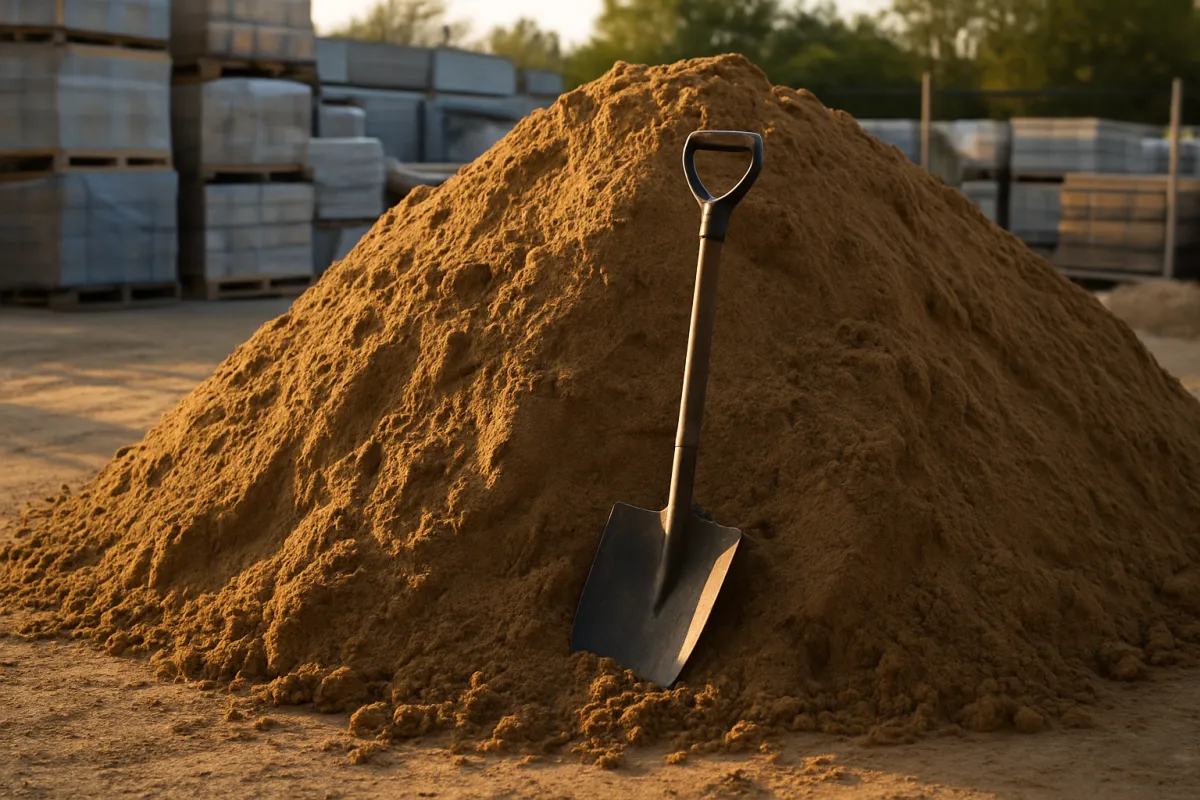
What's on this page
- The short answer: what a cubic yard of sand weighs
- Where the number comes from: density times 27
- Why 100 pounds per cubic foot is not a made-up number
- Moisture first: why a yard of sand is a range, not a number
- The moisture ladder: dry, damp, wet, and saturated
- What a saturated yard is actually made of
- Why the delivered yard is almost never dry
- Sand weight by type: masonry, concrete, play, and fill
- Why sand type matters less than moisture
- Pounds per cubic foot, and what a bag weighs
- Bulking: why damp sand takes up more space
- Loose, settled, and why both figures are true
- Buying by volume when the sand is bulked
- A yard of sand converted to tons
- Tons to yards, and what wet sand does to the trade
- A conversion table from one density
- Coverage: what a yard of sand covers at depth
- A worked example: a paver bedding course
- A worked example: filling a sandbox
- What a pickup can actually carry
- Trailers, tow ratings, and tongue weight
- Wheelbarrows and the walk to the back yard
- Safety: overloading and silica dust
- Sand against gravel, concrete, and topsoil
- Reading a delivery ticket by weight
- Ordering: the sequence that keeps the number honest
- The bottom line
How much does a yard of sand weigh? A cubic yard of dry sand weighs roughly 2,700 pounds, about 1.35 tons, but the honest answer is a band rather than a point, because the same cubic yard runs closer to 2,835 pounds when it is damp the way delivered sand usually is, and can reach about 3,375 pounds when it is saturated. That 675 pound spread between oven dry and soaked is the single biggest thing moving the number, and it is wider than the gap between one type of sand and another.
Moisture is why sand earns its own weight article rather than sharing one with stone. Gravel drains, so a rained-on pile of crushed rock sheds most of what falls on it, and its weight per yard moves within a modest band. Sand holds water in the fine pore space between grains, releases it slowly, and can carry a real fraction of its own weight in water without looking especially wet. This manual works the whole chain from a stated density: where the per cubic foot figure comes from, what moisture does to it, how sand type shifts it by a smaller amount, why damp sand also occupies more space than dry, what your truck or trailer can actually carry, and how the volume you measured converts to the tons a supply yard bills. The companion is the material coverage reference for the yield side, and you can run your own dimensions through our estimator as you read.
Key takeaways
- A cubic yard of dry sand weighs about 2,700 pounds, or 1.35 tons, which is a representative dry density of 100 pounds per cubic foot times the 27 cubic feet in a cubic yard.
- Moisture is the dominant variable: the same yard runs about 2,835 pounds damp, 2,970 pounds wet, and about 3,375 pounds saturated, a swing of 675 pounds or roughly 25 percent.
- Sand type moves the number less than water does. Across play, masonry, concrete and fill sand the dry spread is about 405 pounds a yard, well under the moisture spread on any one of them.
- Delivered sand is almost never dry, so plan hauling and payload against roughly 3,000 pounds a cubic yard, one and a half tons, rather than the dry figure.
- One cubic yard exceeds the rated payload of most half-ton pickups by a factor of two or more, and coverage is set by depth rather than by weight.
The short answer: what a cubic yard of sand weighs
A cubic yard of dry sand weighs roughly 2,700 pounds, about 1.35 tons. Commonly quoted dry densities for loose sand run from about 90 to 110 pounds per cubic foot, which brackets the per yard figure between roughly 2,430 and 2,970 pounds, and the 100 pounds per cubic foot used throughout this manual sits in the middle of that band. Every other number here is derived from that one value, so if your supplier hands you a different density you can regenerate the whole article in a minute.
The complication, and the reason a single figure misleads, is that almost nobody buys oven dry sand. A load that has sat in an open stockpile through a week of ordinary weather carries water in the pore space between its grains, and that water is weight you haul and weight you are billed for. Damp sand at around 5 percent moisture works out near 2,835 pounds a cubic yard, and a saturated yard reaches about 3,375 pounds.
So the practical answer has two halves. For arithmetic and for comparing products, use 2,700 pounds dry. For deciding what your truck can carry and what a delivery ticket should read, use something closer to 3,000 pounds, because the sand that actually arrives is wet. Our gravel weight manual runs the same two-figure discipline for crushed stone.
Where the number comes from: density times 27
The whole manual rests on one line: weight equals volume times density. A cubic yard is a cube three feet on a side, so it contains 3 times 3 times 3, or 27 cubic feet. To weigh a cubic yard of anything, take its density in pounds per cubic foot and multiply by 27.
At 100 pounds per cubic foot, that is 100 times 27, or 2,700 pounds. At the low end of the dry range, 90 times 27 is 2,430 pounds. At the high end, 110 times 27 is 2,970. Nothing about the 27 ever changes, which is why the density is the only figure worth arguing about and why memorizing a per yard number is a worse habit than memorizing the method.
Running it backwards is just as useful. If a delivery ticket shows a net weight and you know how many cubic yards were on the truck, divide weight by yards to get pounds per cubic yard, then divide by 27 to get the density. A 6 yard load weighing 17,500 pounds is 2,917 pounds a yard, or about 108 pounds per cubic foot, which reads as a fairly wet sand rather than a dry one. Our tons to cubic yards manual runs the same conversion for every bulk material on a site, and our cubic yards manual works the volume side that feeds into it.
Why 100 pounds per cubic foot is not a made-up number
It is worth showing where the dry density comes from, because a figure you can derive is a figure you can defend. Sand grains are mostly quartz, and solid quartz has a specific gravity around 2.65, meaning it is about 2.65 times as heavy as water. Water weighs about 62.4 pounds per cubic foot, so solid quartz weighs roughly 2.65 times 62.4, or about 165 pounds per cubic foot.
A pile of sand is not solid quartz. It is grains with space between them, and for loose sand that void space is commonly taken as roughly 40 percent of the total volume. So a cubic foot of loose dry sand contains about 0.60 cubic feet of actual mineral, and 0.60 times 165 is about 99 pounds. Round that to 100 and you have the working density.
That derivation also explains everything else in this manual. Compact the sand and the void fraction drops, so the density climbs. Fill the voids with water instead of air and you add roughly 0.40 times 62.4, about 25 pounds per cubic foot. Use a sand with more fines packing into the gaps and the void fraction drops again. Two variables, void space and what fills it, account for the entire range.
Moisture first: why a yard of sand is a range, not a number
Most articles about material weight treat moisture as a footnote. For sand it is the headline. The pore space that makes up roughly 40 percent of a loose pile is a reservoir, and sand’s fine grains hold water against gravity far better than the coarse open structure of crushed stone does. A gravel pile drains within hours of rain. A sand pile holds water for days, and the bottom of a stockpile can stay wet for weeks.
The consequence is arithmetic, not opinion. If water fills the voids completely, the added weight is about 25 pounds per cubic foot, which is 675 pounds per cubic yard. That is a 25 percent increase on the dry figure, from 2,700 to 3,375 pounds, and it happens without a single extra grain of sand entering the pile.
Compare that against sand type. Across the four common products in this manual, play, masonry, concrete and fill sand, the dry densities run 95 to 110 pounds per cubic foot, a spread of 405 pounds a cubic yard. Moisture moves the number by more than half again as much as the choice of product does. That is the ordering principle for the rest of this manual: name the moisture state before you argue about the sand.
The moisture ladder: dry, damp, wet, and saturated
Moisture content is usually expressed as the weight of water as a percentage of the weight of the dry sand, and once you state it that way the weights fall out directly. Take 100 pounds per cubic foot dry. Add 5 percent moisture and the cubic foot weighs 105 pounds. Add 10 percent and it weighs 110. Saturate it and the pore water adds about 25 pounds, taking it to about 125.
Multiply each by 27 for the cubic yard figures: 2,700 pounds oven dry, 2,835 damp, 2,970 wet, and 3,375 saturated. In tons that is 1.35, 1.42, 1.49, and 1.69. Those four rungs are the spine of this manual and every later section refers back to them.
Illustrative weight of one cubic yard of sand by moisture state
All four figures are the same sand at a 100 lb per cubic foot dry density, multiplied by 27.
Each bar width is its weight against the heaviest case shown, the saturated yard at 3,375 pounds, so 2,700 divided by 3,375 is 80 percent and 2,835 divided by 3,375 is 84 percent. The 675 pound gap between the top and bottom rungs is water, not sand.
Two honest caveats belong with the ladder. The percentages are labels for a continuum, not grades a supplier sells, so a real pile sits somewhere between the rungs and moves with the weather. And the saturated figure assumes the voids are full while the sand still drains freely, which is the wettest a stockpile realistically gets before water runs out of the bottom.
What a saturated yard is actually made of
Splitting the saturated yard by weight makes the point better than any adjective. Of the 3,375 pounds, exactly 2,700 is sand grains, the same quantity that was there when the pile was dry. The remaining 675 pounds is water that arrived with the weather and will leave again with the sun.
Breaking that water into two parts is useful, because most deliveries land in the middle. A damp yard at 5 percent moisture carries 135 pounds of water, which is the first slice. Going from damp to fully saturated adds another 540 pounds, which is the second. Together they make up the 675 pound gap.
A saturated cubic yard of sand, split by weight
Illustrative breakdown of 3,375 pounds, showing how much of a wet yard is not sand.
The three slices are 2,700, 135 and 540 pounds against a 3,375 pound total, which is 80, 4 and 16 percent and sums to 100. On a by-the-ton purchase the whole right-hand fifth of a saturated load is water you paid for and will watch evaporate.
That last point is the commercial one. Sand sold by weight from a saturated pile delivers about a fifth less sand per ton than the same product dry. The scale is honest, the ticket is correct, and you still received less material, which is why asking whether a pile has been rained on is a fair question at the counter.
Why the delivered yard is almost never dry
Bulk sand lives outdoors. It is stockpiled in an open yard, loaded with a bucket that scoops from wherever the pile is convenient, and dropped into a truck bed that has no roof. Even in settled weather a stockpile holds residual moisture from washing and screening, because most construction sands are washed as part of production and are never dried afterwards.
That is why the working assumption for anything involving hauling should be the damp to wet part of the ladder rather than the dry end. A practical planning rule is to call a delivered cubic yard 3,000 pounds, or one and a half tons. It sits between the damp figure of 2,835 and the wet figure of 2,970, it errs slightly heavy, and erring heavy is the safe direction when the constraint is a payload rating.
The exception is bagged sand, which is dried and packaged indoors and stays close to its stated dry weight unless the bags have been sitting in the rain. That is one reason bagged and bulk figures do not line up neatly, and a reason to check bag yields separately rather than dividing a bulk figure. Our sand manual works the bag-versus-bulk crossover on the volume side.
Sand weight by type: masonry, concrete, play, and fill
Sand is a category. The products under it differ in grain size, in how well graded they are, and in how much fine silt and clay they carry, and each of those nudges the void fraction and therefore the density. Here is the type ladder, all figures dry and illustrative:
- Play sand: about 95 pounds per cubic foot, so 2,565 pounds a cubic yard, about 1.28 tons. Fine, washed and screened, with rounded grains that leave a little more open space.
- Masonry sand: about 100 pounds per cubic foot, so 2,700 pounds a cubic yard, about 1.35 tons. The general-purpose middle of the range and the value this manual uses for worked examples.
- Concrete sand: about 105 pounds per cubic foot, so 2,835 pounds a cubic yard, about 1.42 tons. Coarser and better graded, so the smaller grains fill gaps between the larger ones and the void fraction drops.
- Fill sand: about 110 pounds per cubic foot, so 2,970 pounds a cubic yard, about 1.49 tons. Unwashed, carrying silt and clay fines that pack into the pore space.
Two things to notice. The heaviest dry sand here, fill at 2,970 pounds, is exactly the same weight as ordinary masonry sand at 10 percent moisture. And the whole type spread, 405 pounds from play to fill, is smaller than the 675 pound moisture spread on a single product. Type matters, but it is the second variable, not the first.
Why sand type matters less than moisture
The reason is structural. Every one of these products is essentially the same mineral, quartz at around 165 pounds per cubic foot solid, so type cannot change what the grains are made of. All it can change is how tightly they pack, which moves the void fraction across a modest range, perhaps from around 42 percent for a loose rounded play sand to around 35 percent for a well graded concrete sand with fines.
Water, by contrast, changes what fills the voids. Going from air, which weighs essentially nothing, to water at 62.4 pounds per cubic foot is a much larger substitution than any rearrangement of the grains. A void fraction moving from 42 to 35 percent shifts the density by about 12 pounds per cubic foot. Filling a 40 percent void fraction with water shifts it by about 25.
The practical instruction that follows is short. If someone quotes you a sand weight without saying whether the material is wet, the missing information is worth more than the product name they did give you. Ask about the moisture state first, ask about the product second, and treat any figure without both as a starting point. That habit is the same one our gravel weight manual recommends for stone, where the moisture effect is real but smaller.
Pounds per cubic foot, and what a bag weighs
Dropping to the smaller unit reconnects the abstract per yard figure to something you can lift. At 100 pounds per cubic foot dry, a half cubic foot of sand weighs 50 pounds, which is why a 50 pound bag of sand typically holds roughly half a cubic foot. The arithmetic closes neatly: 27 cubic feet in a yard divided by 0.5 cubic feet a bag is 54 bags, and 54 bags at 50 pounds is 2,700 pounds, the dry per yard figure exactly.
That consistency is a good sanity check on any bagged product. If a bag claims a yield well away from the density implied by its weight, either the material is not ordinary sand or one of the two numbers is a rounding. Play sand at 95 pounds per cubic foot, for instance, means a 50 pound bag holds a little over half a cubic foot, closer to 0.53, so it takes about 52 bags rather than 54 to make a yard.
The per cubic foot figure also drives the depth math. A square foot of sand one inch deep is one twelfth of a cubic foot, so about 8.3 pounds dry, 8.8 damp, and 10.4 saturated. Multiply by area and by depth in inches and you have the weight of any bedding course without touching cubic yards at all.
Bulking: why damp sand takes up more space
Here is the effect that seems to contradict everything above, and does not. Loose damp sand occupies more volume than the same quantity of dry sand. A thin film of water around each grain creates surface tension that holds neighbouring grains apart instead of letting them settle into contact, so the pile fluffs up. The trades call it bulking, and it is commonly described as on the order of 20 to 30 percent expansion at moisture contents of a few percent, peaking somewhere in that band and falling back toward zero once the sand is fully saturated and the water films merge.
Work an example at 25 percent bulking. Start with the 2,700 pounds of sand grains that make up one dry cubic yard. Damp and freshly poured, those same grains spread across 1.25 cubic yards. Add the 135 pounds of water at 5 percent moisture and the total mass is 2,835 pounds spread over 1.25 cubic yards, which is 2,268 pounds per loose cubic yard, or about 84 pounds per cubic foot.
So freshly poured damp sand can read lighter per yard than dry sand while containing considerably less sand. That is not in conflict with the moisture ladder, because the ladder describes settled material, and it is the settled state that matters for a delivery.
Loose, settled, and why both figures are true
The reconciliation is that sand has more than one packing state, and the two effects dominate in different ones. Freshly poured, uncompacted sand is where bulking dominates, because nothing has yet forced the grains past the surface tension holding them apart. A stockpile that has stood under its own weight, been loaded by a bucket, ridden in a truck and been dumped is a different animal: the handling consolidates it, most of the bulking collapses, and what remains is water sitting in the voids adding weight.

That gives you a rule for which figure to use. For hauling, payload, delivery tickets and anything involving a scale, use the settled moisture ladder: 2,700 dry through 3,375 saturated. For measuring loose sand into a mix by the shovel or the bucket, or for judging what a freshly dumped heap really contains, allow for bulking, because the volume in front of you overstates the material.
Both figures are honest descriptions of the same sand in different conditions, which is a more useful thing to know than either one alone.
Buying by volume when the sand is bulked
The commercial consequence of bulking shows up whenever sand is sold by volume rather than by weight. A cubic yard scooped loose from a damp, bulked pile contains less sand than a cubic yard from the same product dry and settled, and the shortfall can be substantial. Using the 25 percent example, a bulked yard holds only about 80 percent of the grains a settled yard holds, since 1 divided by 1.25 is 0.8.
That is the mirror image of the by-the-ton problem. Buy wet sand by weight and you pay for water. Buy bulked sand by loose volume and you receive less sand. Moisture costs you in either direction, which is a reasonable argument for ordering somewhat generously and for asking how a supplier measures.
In practice most bulk yards weigh, because a scale is harder to argue with than a bucket count, so the by-the-ton effect is the one you will meet more often. Where volume pricing does appear, on small loads scooped by the bucket or on material sold by the scoop, the bulking effect is worth naming out loud. Run your area and depth through our estimator first so you know the volume you actually need before either measurement convention gets applied to it.
A yard of sand converted to tons
Supply yards quote in tons because trucks cross scales, so the conversion from your measured volume to their billing unit is the one that closes an order. Divide pounds by 2,000. Dry sand at 2,700 pounds a yard is 1.35 tons. Damp at 2,835 is 1.42. Wet at 2,970 is 1.49. Saturated at 3,375 is 1.69.
To go from volume to weight, multiply your cubic yards by the tons per yard figure. A job needing 5 cubic yards of damp sand is 5 times 1.42, or about 7.1 tons, and 14,175 pounds. A job needing 12 cubic yards is about 17 tons. To go back the other way, divide: a 10 ton quote at 1.42 tons a yard is about 7 cubic yards.
The discipline that keeps this honest is stating your moisture assumption alongside the number. “Seven tons” means nothing on its own, but “5 cubic yards at about 1.42 tons a yard, assuming damp” is a claim someone at the counter can check and correct. Our tons to cubic yards manual runs the conversion both directions with the density tables for the other bulk materials on a typical site.
Tons to yards, and what wet sand does to the trade
Buying by the ton makes the moisture question expensive in a way that is easy to miss. Take a fixed 10 ton purchase, 20,000 pounds, and ask how many cubic yards it delivers at each rung of the ladder.
Dry, at 2,700 pounds a yard: 20,000 divided by 2,700 is about 7.4 cubic yards. Damp, at 2,835: about 7.1 cubic yards. Wet, at 2,970: about 6.7. Saturated, at 3,375: about 5.9 cubic yards.
So the same 10 tons buys 7.4 yards of dry sand or 5.9 yards of saturated sand, a difference of roughly 1.5 cubic yards, about 20 percent of the order. On a job where the volume is what fills the space, that gap is the difference between finishing and making a second call. The defence is not suspicion, it is arithmetic: calculate the cubic yards you need, convert at a realistic wet density rather than the dry one, and order the tonnage that produces your volume rather than the tonnage that produces a dry-sand fantasy of it.
A conversion table from one density
Every figure below is the same three densities, 100 dry, 105 damp and 125 saturated pounds per cubic foot, applied to different quantities. Nothing is asserted independently, so substituting your supplier’s density regenerates the whole table.
| Quantity | Dry, 100 lb/cu ft | Damp, 105 lb/cu ft | Saturated, 125 lb/cu ft | How it is derived |
|---|---|---|---|---|
| 1 cubic foot | 100 lb | 105 lb | 125 lb | the stated density |
| 1 cubic yard (27 cu ft) | 2,700 lb | 2,835 lb | 3,375 lb | density x 27 |
| Same, in tons | 1.35 | 1.42 | 1.69 | pounds / 2,000 |
| Half a cubic yard | 1,350 lb | 1,418 lb | 1,688 lb | per yard / 2 |
| 5 cubic yards | 13,500 lb | 14,175 lb | 16,875 lb | per yard x 5 |
| 10 cubic yards | 27,000 lb | 28,350 lb | 33,750 lb | per yard x 10 |
| 1 cubic metre | 3,532 lb | 3,708 lb | 4,414 lb | per yard x 1.308 |
| A 50 lb bag (about 0.5 cu ft) | 50 lb | 53 lb | 63 lb | density x 0.5 |
| 1 sq ft at 1 inch deep | 8.3 lb | 8.8 lb | 10.4 lb | density / 12 |
The cubic metre row is worth a second look as a cross-check. Dry sand at 3,532 pounds per cubic metre converts to about 1,602 kilograms, and 1,600 kilograms per cubic metre is the figure most metric references quote for dry sand. The saturated row lands near 2,000 kilograms per cubic metre, which is likewise the standard metric figure for saturated sand. Two independent conventions agreeing is a good sign the density assumptions are reasonable.
Coverage: what a yard of sand covers at depth
Coverage and weight are different questions and mixing them is the most common ordering mistake. A cubic yard is 27 cubic feet regardless of what it weighs, so the area it covers depends only on how thick you spread it. Divide 27 by the depth in feet, or equivalently divide 324 by the depth in inches.
- 1 inch: about 324 square feet. The usual paver bedding course.
- 2 inches: about 162 square feet. A thicker bedding layer or a levelling course.
- 3 inches: about 108 square feet.
- 4 inches: about 81 square feet.
- 6 inches: about 54 square feet. A shallow fill or a base under a shed pad.
- 12 inches: 27 square feet. Deep fill, a sandbox, or a pipe bedding trench.
A heavy saturated yard and a light dry yard cover exactly the same area, because coverage follows volume and depth while weight follows density. Keep the two in separate columns of your notes: coverage tells you how much to buy, weight tells you how it gets to site and what the invoice says. Our material coverage reference collects the yield figures for the other materials on the same job.
A worked example: a paver bedding course
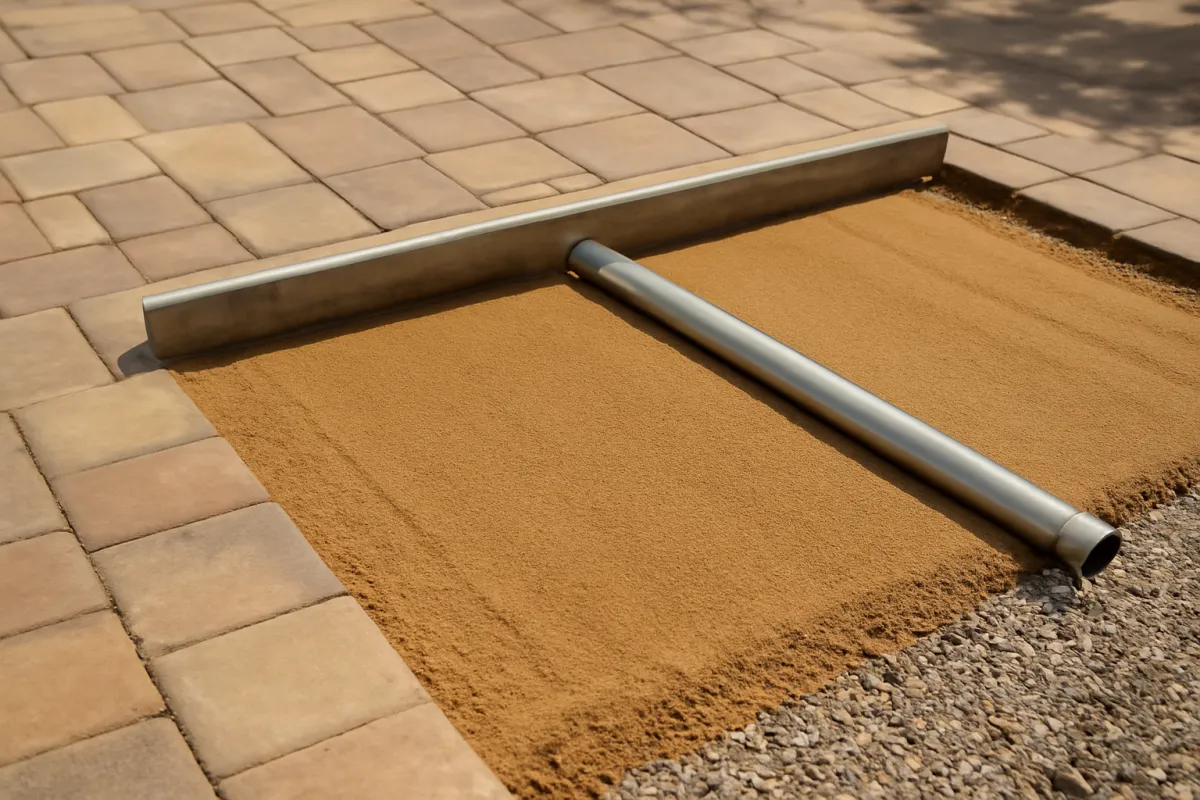
Take a patio 16 feet by 20 feet with a 1 inch screeded sand bedding course, which is a common residential job. Area is 16 times 20, or 320 square feet. Depth in feet is 1 divided by 12, about 0.0833. Volume is 320 times 0.0833, which is about 26.7 cubic feet, and dividing by 27 gives 0.99 cubic yards. Call it one cubic yard ordered.
Now weigh it. Dry, 26.7 cubic feet at 100 pounds per cubic foot is about 2,670 pounds. Damp, at 105, it is about 2,800. Saturated, at 125, it is about 3,335. Cross-check against the per square foot route: 320 square feet at 8.3 pounds per square foot per inch is 2,656 pounds dry, which matches to within rounding. The density is doing all the work and the units are behaving.
So a single-layer bedding course on a modest patio is roughly a ton and a half of material arriving on a pallet or in a heap. Against a 1,250 pound pickup payload, 2,800 pounds is 2.24 loads, meaning three trips. That is the moment most people book a delivery, and it is the moment the weight figure earned its keep. Run your own patio dimensions through our estimator for the volume, then apply the density here.
A worked example: filling a sandbox
A backyard sandbox is the job where people most reliably underestimate weight, because it looks like a small box. Take one 8 feet by 8 feet, filled to a depth of 12 inches. Area is 64 square feet, depth is 1 foot, so volume is 64 cubic feet, which over 27 is about 2.37 cubic yards.
Play sand at 95 pounds per cubic foot dry gives 64 times 95, or 6,080 pounds. That is about 3.04 tons of sand for a box you could step over. In 50 pound bags it is roughly 120 bags, since play sand at 95 pounds per cubic foot means about 0.53 cubic feet a bag and 64 divided by 0.53 is about 121. At 120 bags the checkable weight is 6,000 pounds, close to the 6,080 the density predicts.
The lesson is the one this manual keeps repeating. Nobody would carry three tons home in bags on purpose, but 120 bags does not feel like three tons until you write it down, and a half-ton pickup would need at least four heavily loaded trips to move it. Half-filling the box to 6 inches halves everything, to 32 cubic feet, about 3,040 pounds and roughly 60 bags, which is often the sensible revision once the arithmetic is visible.
What a pickup can actually carry
The most useful warning in this manual is the payload one. A half-ton pickup is commonly rated somewhere around 1,000 to 1,500 pounds of payload, and a single cubic yard of damp sand at about 2,835 pounds is roughly two to three times that. The name is a historical rating convention rather than a modern capacity, and the real number is on the placard inside the driver’s door jamb, specific to your vehicle with its options.
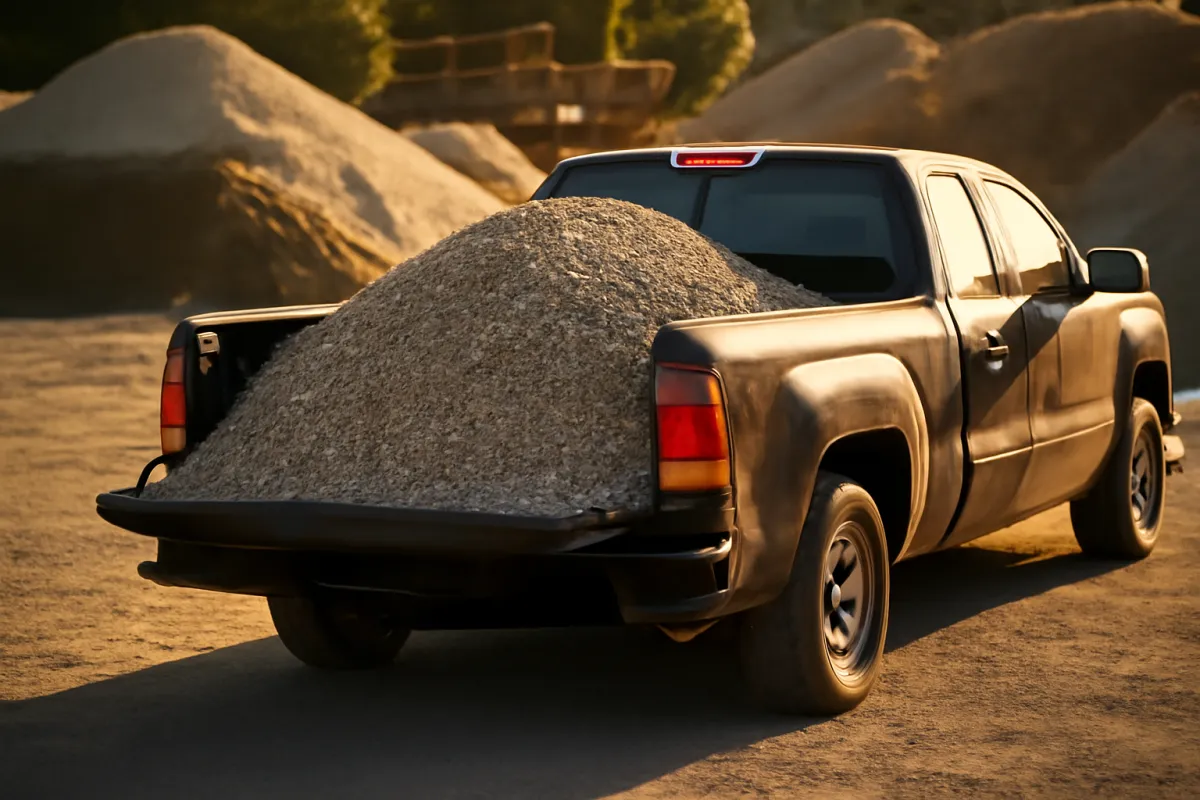
Turn the arithmetic around for the honest limit. At 105 pounds per cubic foot damp, a 1,000 pound payload is 1,000 divided by 105, about 9.5 cubic feet, roughly a third of a cubic yard. A 1,500 pound payload is about 14.3 cubic feet, roughly half a yard. A three-quarter-ton or one-ton pickup with 2,000 to 3,000 pounds of payload reaches about 19 to 28.6 cubic feet, which is 0.7 to about 1.06 cubic yards, so even the heaviest common pickup barely manages a single yard.
Two subtractions people forget. Passengers, tools and a toolbox all count against payload before any sand goes in. And a bed filled level with the rails is far more than a yard of sand by volume, so the bed will physically hold a load the truck cannot safely carry. Fill by weight, not by eye.
Trailers, tow ratings, and tongue weight
A trailer extends what you can move without repealing the arithmetic, and it introduces a second set of ratings that also bind. A common single-axle utility trailer might carry a gross vehicle weight rating somewhere in the 2,000 to 3,500 pound region, and after subtracting its own tare weight of perhaps 400 to 800 pounds the payload lands roughly between 1,600 and 2,700 pounds. A single cubic yard of damp sand at 2,835 pounds exceeds that, which surprises people who think of a trailer as unlimited.
Step up to a tandem-axle trailer rated at 7,000 pounds gross with a tare of around 1,800 pounds and the payload is about 5,200 pounds, which is roughly 1.8 cubic yards of damp sand. Those are illustrative figures and your trailer’s own plate is the governing number, but the shape of the answer holds: bulk sand fills a trailer’s rating long before it fills its deck.
Tongue weight is the trap. A trailer is normally loaded so that roughly 10 to 15 percent of its total weight bears down on the hitch, which for a 7,000 pound loaded trailer is 700 to 1,050 pounds. That tongue weight counts against the tow vehicle’s payload, not just its tow rating, so a trailer can put a half-ton truck over its payload limit while the towing number still looks comfortable. Check the trailer plate, the vehicle placard and the hitch rating, and take the lowest of the three as the answer.
Wheelbarrows and the walk to the back yard
When the pile lands on the driveway and the job is in the back garden, the weight becomes personal. A contractor wheelbarrow rated at about 6 cubic feet cannot be filled with sand, because 6 cubic feet of damp sand at 105 pounds per cubic foot is 630 pounds and nobody is steering that on one wheel. A realistic load is 2 to 3 cubic feet, which is 210 to 315 pounds, and that is already a serious push over grass.
At 3 cubic feet a trip, one cubic yard is 27 divided by 3, or 9 trips minimum, and in practice 10 to 14 once you allow for spillage and the loads you deliberately keep light. The paver bedding example above, at one cubic yard, is therefore about a dozen barrow runs. The sandbox example, at 2.37 cubic yards, is upwards of 25.
That trip count is worth calculating before the delivery, not after, because it changes decisions. It may justify paying for placement closer to the work, or spreading the job over two sessions, or renting a powered barrow. Whichever way it goes, the number comes from the same density that produced everything else, and our material estimation manual folds this kind of handling arithmetic into the quantity plan rather than leaving it as a surprise.
Safety: overloading and silica dust
Two safety points belong in an article about sand weight, and neither is a box-ticking exercise. The first is vehicle and trailer overloading. An overloaded vehicle does not degrade gracefully. Braking distances lengthen, tires run hot and can fail at speed, springs and hitch components work outside their design envelope, and handling deteriorates precisely when you need it most. Beyond the physical risk, exceeding rated weights can affect insurance and legal liability if something happens. The mitigation is free: read the placard, do the division against the density, and take an extra trip or pay for delivery.
The second is respirable crystalline silica. Sand is largely quartz, and quartz is crystalline silica, so handling dry sand can put fine dust into the air that is small enough to reach deep into the lungs. Repeated inhalation of respirable crystalline silica over time is associated with serious and irreversible lung disease, and the risk is highest with dry material, enclosed spaces, sweeping, pouring bags, and any cutting or grinding of silica-containing products.
The sensible precautions are ordinary. Keep material damp when you can, since wet sand raises far less dust and this is one of the few times moisture works in your favour. Avoid dry sweeping, work outdoors and upwind where possible, and read the safety data sheet for the product you bought. Respirator selection and fit are a specialist matter rather than a shopping decision, so treat this as general information and consult a qualified occupational safety professional for anything beyond incidental handling.
Sand against gravel, concrete, and topsoil
Sand rarely arrives alone, and comparing weights across a job sharpens the ordering. Dry sand at about 2,700 pounds a cubic yard, 1.35 tons, sits just below common crushed stone, which runs about 2,700 to 2,800 pounds with 1.4 tons a yard the planning figure our gravel weight manual uses. Screened topsoil is the lightest of the group, commonly cited near 2,200 pounds a yard, about 1.1 tons. Concrete is in a different class altogether at about 3,915 pounds a yard, close to two tons, the figure our concrete weight manual derives from 145 pounds per cubic foot.
The moisture behaviour differs as much as the weight does. Gravel drains fastest and its weight per yard moves least with the weather. Sand holds water in fine pores and swings substantially, which is this whole manual. Topsoil, loose and organic, holds the most and swings hardest of the three. Concrete is a designed mix whose water is specified rather than weather-dependent.
The practical consequence for a layered job, say a gravel base under a sand bedding course under pavers, is that you cannot convert the whole thing at one blended density without mispricing every layer. Convert each material at its own weight per yard and sum the tons, which is exactly the discipline our tons to cubic yards manual sets out.
Reading a delivery ticket by weight
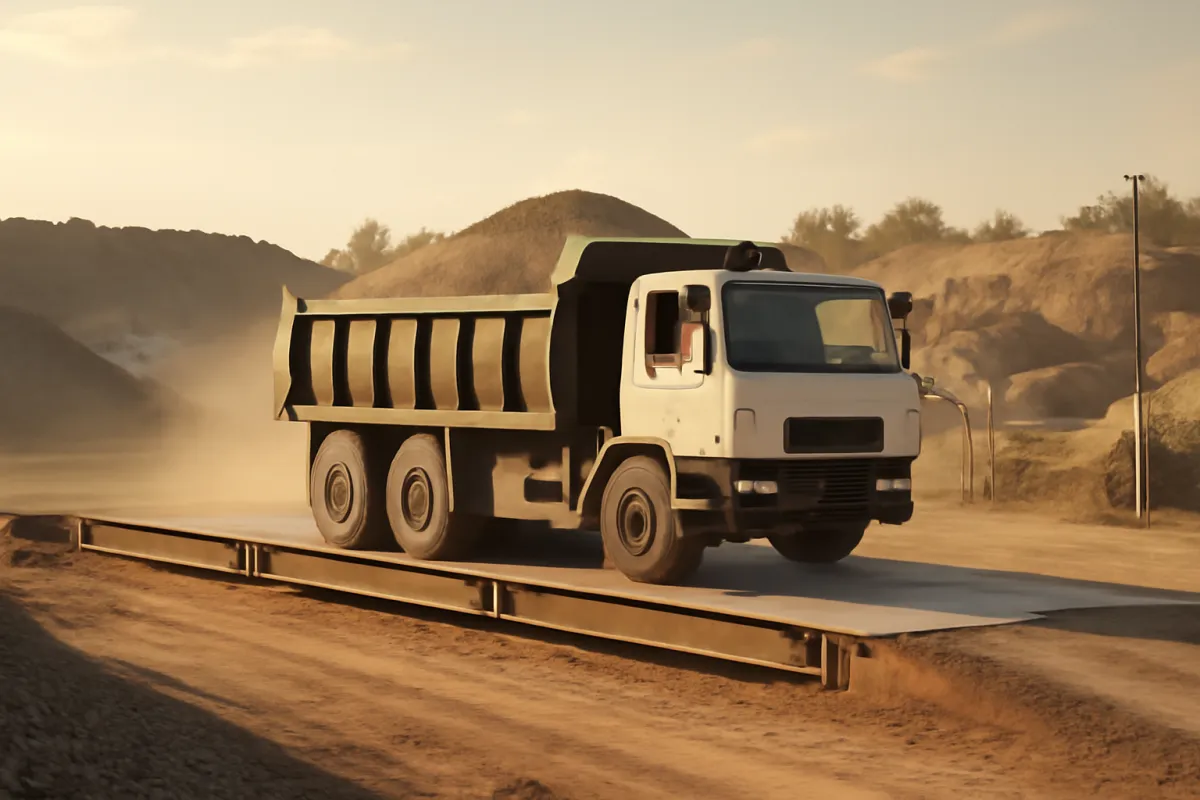
The weight figure earns its keep when the truck arrives and a ticket in tons has to reconcile against the cubic yards you ordered. A ticket typically shows a gross weight, a tare, and a net, and the net is what you are billed for. Divide the net by your assumed density in pounds per cubic yard and you get the cubic yards delivered, which you compare against what you calculated.
Work an example. You ordered 5 cubic yards of damp sand and expected about 14,175 pounds, since 5 times 2,835 is 14,175. The ticket comes back at 16,000 pounds. Dividing 16,000 by 5 gives 3,200 pounds a cubic yard, which is 118.5 pounds per cubic foot, sitting between the wet and saturated rungs. That reads as a very wet load rather than extra material, and it is worth confirming rather than assuming you received a bonus 0.6 of a yard.
Write three numbers down before delivery day: your calculated cubic yards, the density you assumed, and the weight you therefore expect. Running the ticket back through that on the spot takes a minute and turns a heap you hope is right into one you have checked.
Ordering: the sequence that keeps the number honest
The chain from a measurement to an order has four steps and doing them in order is what keeps the answer defensible. Step one is volume: measure the area, choose the depth, and run length times width times depth in feet divided by 27, which our cubic yards manual works through including the inches-to-feet conversion that catches people out.
Step two is the allowance. Sand settles and some is always lost to spillage, screeding and the uneven subgrade underneath, so buying the bare calculated volume tends to leave you short. Step three is the density decision, and this is the step people skip: pick a moisture state deliberately, use the damp or wet rung rather than the dry one for anything delivered, and say so out loud. Step four is the conversion, multiplying the allowance-inclusive volume by the tons per yard figure for the state you chose.
Skipping straight to a tonnage guess is where orders go wrong, because tons are no more guessable by eye than cubic yards. Let each step feed the next, ask the yard for their own weight per yard for the specific product when the order is large, and arrive at the counter with a volume, a density and a tonnage that all reconcile. The volume side runs in our estimator and the coverage figures live in our material coverage reference.
The bottom line
A cubic yard of sand weighs roughly 2,700 pounds dry, about 1.35 tons, which is 100 pounds per cubic foot times the 27 cubic feet in a cubic yard rather than a number to take on faith. Moisture is the variable that matters most: the same yard runs about 2,835 pounds damp, 2,970 wet, and about 3,375 saturated, a 675 pound spread that is wider than the 405 pound spread across play, masonry, concrete and fill sand combined. Because delivered sand is almost never dry, plan hauling and payload against roughly 3,000 pounds a yard, one and a half tons, and remember that damp sand also bulks, so a loose measured volume overstates what it contains while a wet weighed load overstates what it delivers. From that one density everything else follows: about 8.3 pounds per square foot per inch of depth, 324 square feet covered at a 1 inch bedding, 54 fifty-pound bags to a yard, roughly a third to a half of a yard as the honest limit for a half-ton pickup, and about a dozen wheelbarrow trips to move a single cubic yard. Work the volume in our sand manual and our cubic yards manual, the conversion in our tons to cubic yards manual, the comparisons in our gravel weight manual and concrete weight manual, and put your own dimensions through our estimator. Do that and the pile on the driveway, the ticket in your hand, and the space you measured will finally agree.
Read this as supply-yard arithmetic rather than an engineering specification. The 100 pounds per cubic foot dry density used throughout was chosen so every worked figure here can be checked and reproduced, not because sand is a constant, and your product’s mineralogy, its grading, the fines it carries and the water it happens to be holding on the day will each move the real number. Payload ratings, trailer plates, tow capacities and tongue weight limits are specific to your vehicle and your jurisdiction, so read your own placards rather than borrowing an example from this article. The silica and overloading notes are general safety information, not medical or legal advice, and respirator selection belongs with a qualified occupational safety professional. On any order where the tonnage genuinely matters, ask the yard for their measured weight for that specific product and let their scale settle it.
Frequently asked questions
How much does a yard of sand weigh?
A cubic yard of dry sand weighs roughly 2,700 pounds, about 1.35 tons, using a representative dry density of 100 pounds per cubic foot times the 27 cubic feet in a yard. Damp sand of the sort that actually arrives on a truck runs closer to 2,835 pounds, and fully saturated sand can reach about 3,375 pounds, roughly 1.69 tons. Those figures are illustrative planning numbers rather than constants, because the mineral makeup, the grain sizes and above all the water content move them. For hauling, assume the heavy end and call a delivered yard 3,000 pounds, or one and a half tons.
How much does a cubic yard of wet sand weigh?
Wet sand weighs meaningfully more than dry sand of the same type, and the spread is larger than the difference between sand types. Working from a dry density of 100 pounds per cubic foot, sand at about 5 percent moisture runs near 105 pounds per cubic foot, or 2,835 pounds a cubic yard, and sand at about 10 percent runs near 110, or 2,970 pounds. Fully saturated sand, where the pore space between grains is filled with water instead of air, adds roughly 25 pounds per cubic foot and lands near 125, or about 3,375 pounds a yard. That is a 675 pound swing per cubic yard between oven dry and saturated, about 25 percent.
How many tons is a yard of sand?
One cubic yard of dry sand is about 1.35 tons, since 2,700 pounds divided by the 2,000 pounds in a ton gives 1.35. Damp sand as delivered works out closer to 1.42 tons a yard, and saturated sand near 1.69 tons. To convert a measured volume to the tonnage a supply yard quotes, multiply your cubic yards by the tons per yard figure for the moisture state you expect, so 5 cubic yards of damp sand is about 7.1 tons. Going the other way, divide the tonnage by the same figure, and note that the wetter the pile the fewer cubic yards a given tonnage delivers.
How much does sand weigh per cubic foot?
Dry loose sand is commonly cited around 90 to 110 pounds per cubic foot, with 100 a convenient representative value that this manual uses so every worked figure is reproducible. The number is not arbitrary: sand grains are mostly quartz at roughly 165 pounds per cubic foot solid, and a loose pile is about 40 percent empty space between the grains, so 60 percent of 165 lands near 99. Damp sand runs a few pounds higher per cubic foot and saturated sand roughly 25 pounds higher, since water replaces the air in that pore space. Divide any per cubic foot figure by 12 to get the weight of a square foot one inch deep.
Can a pickup truck haul a yard of sand?
Not safely, in most cases. A half-ton pickup is commonly rated somewhere around 1,000 to 1,500 pounds of payload, and a single cubic yard of damp sand at about 2,835 pounds is roughly two to three times that. Turning the arithmetic around, a 1,000 pound payload divided by 105 pounds per cubic foot is about 9.5 cubic feet, roughly a third of a yard, and a 1,500 pound payload is about 14 cubic feet, roughly half a yard. Read the payload figure on the placard inside your own driver's door jamb, subtract passengers and gear, and divide what remains by the density rather than filling the bed by eye.
How much does a yard of play sand weigh?
Play sand is fine, washed and screened, and it typically sits at the lighter end of the range, near 95 pounds per cubic foot dry, which puts a cubic yard around 2,565 pounds or about 1.28 tons. That is only a few hundred pounds below a coarser concrete sand, so the type difference is modest next to the moisture difference, which can add over 600 pounds to the same yard. Play sand is also sold bagged, and at roughly half a cubic foot per 50 pound bag it takes on the order of 54 bags to make a cubic yard. Those are illustrative figures, so check the stated yield printed on the bag you actually buy.
Does wet sand take up more space than dry sand?
Loose damp sand can occupy noticeably more volume than the same quantity of dry sand, an effect the trades call bulking, because a thin film of water holds the grains apart instead of letting them settle together. The expansion is commonly described as on the order of 20 to 30 percent at a few percent moisture, and it falls away again once the sand is fully saturated. Bulking and the heavier per-yard weight of wet sand are not a contradiction, they describe different states: freshly poured loose sand bulks, while a settled stockpile or a delivered load consolidates and the water simply adds weight. Buying by loose volume from a bulked pile gets you less sand than the number suggests.
How much area does a yard of sand cover?
Coverage is set by depth, not by weight. A cubic yard is 27 cubic feet, so at a 1 inch bedding depth it covers about 324 square feet, at 2 inches about 162, at 3 inches about 108, at 4 inches about 81, and at a full foot only 27 square feet. The arithmetic is 27 divided by the depth in feet, which is the same as 324 divided by the depth in inches. A heavy yard and a light yard of the same volume cover the same area, which is why the coverage question and the weight question have to be kept separate.