What's on this page
- Drywall installation cost per square foot
- Drywall installation cost by room size
- Drywall installation cost by finish level
- Level 4 finish: the paint-ready standard
- Level 5 finish: the premium smooth skim coat
- Texture finish cost compared with a smooth finish
- Walls versus ceilings: why overhead work costs more
- What drives drywall installation cost
- Hanging versus finishing: where the labor splits
- Where the money goes
- New construction versus remodel drywall cost
- Drywall repair and patch cost
- Fire-rated and moisture-resistant drywall cost
- Soundproofing and specialty drywall cost
- DIY drywall installation cost
- From price per square foot to your total
- Permits and inspections
- Regional and seasonal cost swings
- Ways to keep drywall installation cost down
- Comparing drywall bids line by line
- Priming and painting after drywall: the next line item
- A worked example: a 12 by 12 bedroom drywalled
- The bottom line
Short answer: As an illustrative planning range, a standard Level 4 smooth finish, hung, taped, and sanded paint ready, commonly runs 1.50 to 3.50 dollars per square foot, with a working midpoint near 2.50 dollars for walls alone and near 2.88 once a ceiling's labor premium is blended in. Level 5 skim coat work runs higher, near 3.50 to 4.03 with a ceiling, and texture commonly runs close to or modestly below Level 4, near 2.25. A 528 square foot room, walls plus ceiling, a common 12 by 12 bedroom figure, lands near 1,520 dollars at the Level 4 midpoint with a ceiling included.
Drywall installation cost is really two jobs priced under one number: hanging the board, which is carpentry, and finishing the joints, which is a slower, more skilled trade that decides whether the wall looks flat or shows every seam under a lamp. A rate quoted per square foot bundles both, along with the compound, tape, screws, and corner bead the job consumes along the way, so understanding where the dollars actually go matters more on drywall than on almost any other interior material this site prices.
This cost brief prices drywall the way a remodeling contractor actually quotes one: per square foot of total board area, scaled to common room sizes, broken out by finish level, and separated into hanging labor, finishing labor, materials, and disposal the way a real bid has to be. It sits alongside our drywall sheet count manual for the physical takeoff this brief prices on top of, and our square footage manual for measuring an irregular room. Run your own board area through the estimator or the companion below as you read.
Key takeaways
- Level 4 smooth finish commonly runs an illustrative 1.50 to 3.50 dollars per square foot installed, midpoint near 2.50 for walls alone, near 2.88 with a ceiling blended in; Level 5 and texture each shift from there.
- A drywall bid prices total board area, walls plus ceiling, not floor area, the same gross area figure our sheet count manual works through for the physical takeoff.
- Finishing labor, taping, floating, and sanding joints invisibly flat, is the single biggest line in a drywall bid, which is why two jobs at the same finish level can still price apart on crew skill.
- Ceilings commonly carry an illustrative 10 to 20 percent premium over wall work at the same finish level, because overhead hanging and finishing is slower and harder than working a vertical wall.
- Every dollar figure here is illustrative and local: your room's area, finish level, ceiling scope, and region set the real number, so measure and collect written bids.
Drywall installation cost per square foot
The cleanest unit for pricing drywall is dollars per square foot of total board area, because that is the unit most contractors quote in and the one unit that lets a small bathroom and a large open living room compare fairly against each other. As an illustrative planning range, a standard Level 4 finish, hung, taped, and sanded smooth enough for flat paint, commonly runs somewhere around 1.50 to 3.50 dollars per square foot, with a working midpoint near 2.50 dollars for wall surface alone.
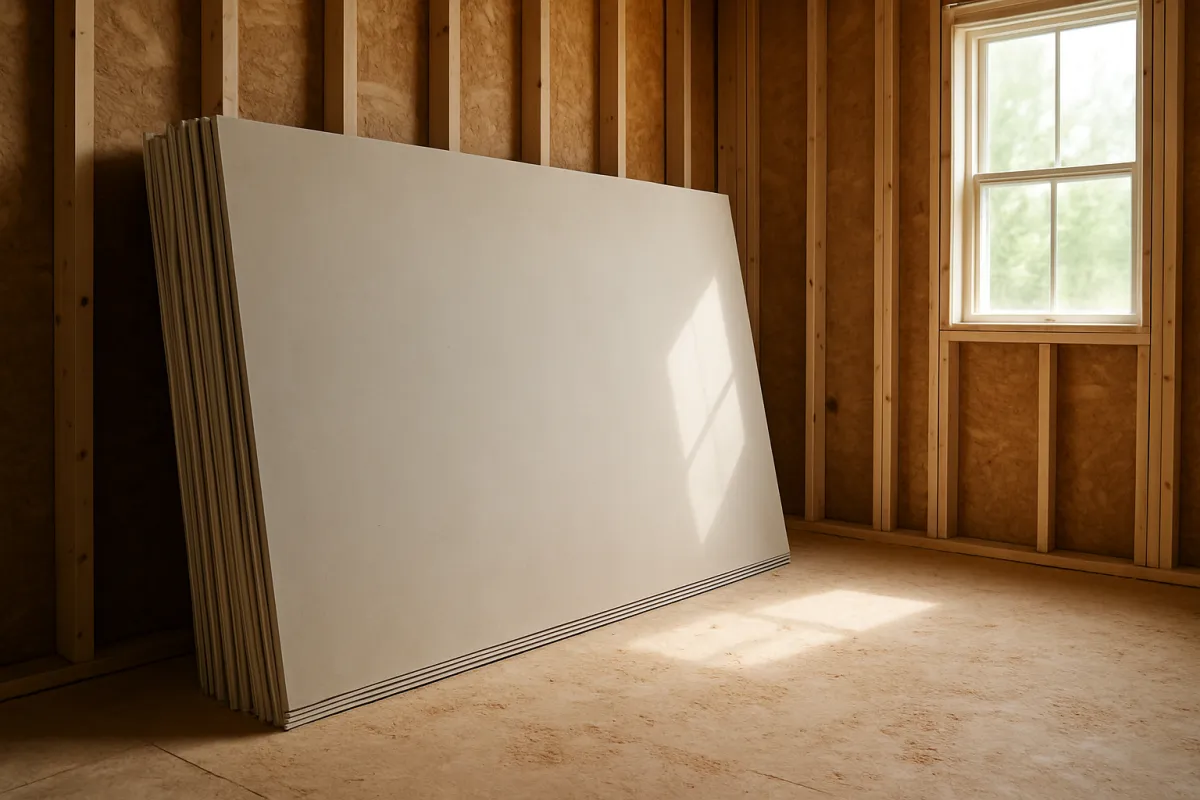
That installed figure bundles more than the board itself: it covers the joint tape, the compound in all three coats a Level 4 finish needs, the screws or nails, the corner bead at outside corners, and the labor to hang the sheets and finish every seam invisibly flat. Our drywall sheet count manual prices the physical takeoff, the board area and the sheet count, but converting that into a dollar figure needs the installed rate this brief works through. The companion below runs the math on your own room as you go.
Drywall installation cost by room size
Size is the first multiplier, and on a drywall job it is always total board area, walls plus ceiling, never just the room’s floor area, since a tall ceiling or a room with few openings can carry meaningfully more board than its footprint suggests. The table below prices common board areas at the illustrative Level 4 rate with a ceiling included, roughly 2.88 dollars per square foot once the ceiling’s labor premium is blended in.
| Board area | Illustrative total at ~$2.88/sq ft |
|---|---|
| 300 sq ft | ~$860 |
| 500 sq ft | ~$1,440 |
| 800 sq ft | ~$2,300 |
| 1,200 sq ft | ~$3,450 |
| 1,800 sq ft | ~$5,175 |
| 2,500 sq ft | ~$7,190 |
Read every row as a starting point, not a quote. Drop the ceiling from the scope and the wall only Level 4 rate of 2.50 dollars applies instead, trimming the total by roughly 13 percent. Our drywall sheet count manual covers measuring your own board area in full, perimeter times ceiling height plus the ceiling itself, and the estimator turns those two numbers into square feet in seconds.
Drywall installation cost by finish level
Finish level is the second fork in a drywall estimate, and because the board and framing underneath stay the same regardless of how smooth the final surface reads, finish level is close to the whole story in how one job’s bid compares with another of similar size. The chart below places texture, Level 4, Level 4 with a ceiling, and Level 5 with a ceiling side by side on illustrative installed cost per square foot, and the sections that follow take each in turn.
Illustrative installed cost per square foot, by finish type
Hang, tape, and finish, labor and material together; local labor and room complexity move every bar.
Level 5 sits at the top because a full skim coat across every surface, not just the joints, adds a genuinely slower finishing pass. Texture sits near the bottom because it trades careful sanding labor for spray equipment, which lands it close to a standard smooth finish rather than meaningfully cheaper.
The framing and board underneath every one of these finishes is essentially the same: the same studs, the same sheets, the same fasteners. What climbs the chart is finishing labor, the time a taper spends floating and sanding joints, which is worth remembering when a budget tightens, since finish level is a choice you can trade without touching the structure underneath it.
Level 4 finish: the paint-ready standard
Level 4 is the common standard finish on most residential drywall jobs, three coats of joint compound over taped seams and fastener heads, sanded smooth enough to take a flat or eggshell paint sheen without the seams reading through. It prices as the baseline of this range, an illustrative 1.50 to 3.50 dollars per square foot for walls alone with a midpoint near 2.50, climbing to roughly 2.88 once a ceiling’s labor premium is blended across the job.
Because Level 4 is the volume standard most drywall crews build their day rate around, pricing and scheduling for it is relatively easy to compare across contractors, and it covers the overwhelming majority of bedrooms, hallways, and living spaces where a flat paint sheen is going up. For a straightforward remodel with no unusual lighting condition or glossy paint plan, Level 4 delivers a wall that reads perfectly flat to the eye for meaningfully less than the tier above it.
Level 5 finish: the premium smooth skim coat
Level 5 adds a thin skim coat of joint compound across the entire wall or ceiling surface, not just the taped seams, a step up from Level 4 that commonly runs an illustrative 2.50 to 4.50 dollars per square foot for walls alone with a midpoint near 3.50, climbing to roughly 4.03 with a ceiling included. The skim coat seals the paper facing of the board uniformly, which is the entire point of the extra pass.
The premium buys protection against a specific problem Level 4 cannot fully solve: flashing, a visual effect where the taped joints and fastener heads show as a faint pattern under raking light, light crossing the wall at a shallow angle from a window or a row of recessed cans, or under a glossier paint sheen that reflects more directly. Level 5 is commonly specified for rooms with strong side lighting, for glossy or satin paint finishes, and for any wall where a client has specifically asked for the flattest possible result.
Texture finish cost compared with a smooth finish
Texture, commonly a sprayed knockdown or orange peel pattern applied over a base coat, prices as an illustrative 1.75 to 3.00 dollars per square foot with a midpoint near 2.25, close to or modestly below a standard Level 4 smooth finish rather than meaningfully cheaper. The reason the two costs land so close together is that texture trades one kind of labor for another: it skips the meticulous floating and sanding a smooth wall needs, but it adds the equipment, the spray material, and the skill of laying down an even, consistent pattern across a whole room.
Texture is rarely chosen purely to save money given how close the rates run. It is chosen because a sprayed pattern hides minor drywall imperfections and seam irregularities a smooth wall would show, and because matching an existing textured house, common in many regions built in past decades, is sometimes the only practical option for a remodel that has to blend with rooms left untouched.
Walls versus ceilings: why overhead work costs more
Ceiling drywall commonly carries an illustrative 10 to 20 percent premium over wall work at the same finish level, a working midpoint near 15 percent, and the reason is physical rather than a matter of material. Hanging a sheet overhead against gravity, holding it in place while driving fasteners, and finishing a joint while working with arms raised the entire time is slower and more fatiguing than the same work on a vertical wall at eye level.
Ceilings also take tighter fastener spacing than walls in most framing, commonly 12 inches in the field against 16 on walls, which adds a modest amount of material on top of the labor premium, and a heavier 5/8 inch board is frequently specified or required on ceilings for sag resistance, adding further cost over a lighter wall board. A drywall lift is worth renting for ceiling work past a small room, since holding a full sheet overhead by hand while driving screws is both slow and a real strain injury risk.
What drives drywall installation cost
Beyond size and finish level, a handful of factors decide where a real bid lands inside the illustrative ranges, and knowing them explains why two rooms of a similar board area can price apart. Room complexity comes first: more corners, more closets, soffits, and angled walls all generate more cut pieces and more linear feet of joint relative to a plain rectangular room of the same board area, the same principle our contractor estimate manual applies generally to per-square-foot pricing.
Access follows closely: a finished house with furniture, flooring, and trim already in place needs careful masking and protection a bare new construction shell never requires, which adds real labor time. Ceiling height matters too, since a vaulted or cathedral ceiling needs scaffolding or extended staging a standard 8 foot ceiling never asks for, even when the board area itself stays similar. Finally, whether old drywall has to be removed first, covered next, moves the bid independently of the board area alone.
Hanging versus finishing: where the labor splits
A drywall job’s labor is not one skill, it is two distinct trades stacked together, and understanding the split explains both the pricing and why some owners hang their own board but hire out the finish. Hanging is carpentry: measuring, cutting, lifting, and fastening sheets to the framing, work that rewards strength and careful layout but is relatively forgiving of small imperfections since the finish coat covers minor gaps.
Finishing is a slower, more skilled trade: taping every joint, applying three progressively wider coats of compound, sanding each coat smooth, and doing it all in a way that reads invisibly flat once painted. A finisher’s work is the part of a drywall job that is hardest to rush and hardest to redo well after the fact, which is why finishing commonly consumes the larger share of a bid’s labor line even though hanging is the more physically demanding of the two trades in the moment.
Where the money goes
Understanding the split inside an installed drywall price is what makes a bid legible, and the split shifts somewhat with finish level and scope, but a generalized breakdown holds reasonably well across the common Level 4 and Level 5 tiers.
Where an installed Level 4 drywall job's cost goes
Illustrative split for a mid-size room with walls and ceiling; shares shift with finish level and room complexity.
Finishing is the single largest line even though hanging is the more physically demanding trade in the moment. That is the clearest signal in this whole brief: a drywall bid is mostly paying for the skill of making seams disappear, not for the board itself.
Two conclusions follow from the split. First, finishing is worth protecting on a tight budget even more than hanging, since a rushed finish shows under paint in a way a slightly imperfect hang rarely does once the finish coats go on. Second, materials are a modest enough share that chasing a cheaper board brand saves relatively little next to the labor lines around it.
New construction versus remodel drywall cost
New construction drywall, going up over bare, accessible framing with no existing finishes to protect, is generally the faster and cheaper scenario within the illustrative ranges this brief prices, since the crew has open access to every stud bay and no furniture, flooring, or trim to mask and work around. A remodel job on an occupied or finished space commonly runs toward the higher end of the same ranges for exactly that reason, protection, masking, and careful disposal through a finished house all add real time.
A remodel also frequently layers in demolition of the existing wall, which this brief treats as a separate line next, and a genuine chance of surprises once old material comes down, wiring or plumbing that was not on any drawing, or framing that needs repair before new board can go up. New construction has none of that uncertainty, which is part of why builders and remodelers quote the two scenarios differently even at an identical finish level and board area.
Drywall repair and patch cost
A small drywall repair, a doorknob hole, a crack from house settling, or a patch left by removed shelving hardware, is commonly priced per repair rather than per square foot, an illustrative 75 to 250 dollars depending on the hole’s size and whether texture or a specific paint sheen needs matching. The flat-fee structure reflects a real minimum charge for a crew’s travel time and materials regardless of how small the actual hole is, which is why a repair rarely scales down proportionally from the per-square-foot rates above.
A larger repair, replacing a section of water damaged or impact damaged board, blends toward this brief’s per-square-foot rates once the patched area exceeds a handful of square feet, with an added cost specifically for matching the surrounding texture and paint sheen so the repair does not read as a visible patch once finished. Matching an existing texture pattern by hand is a real skill gap between crews, worth asking about directly before hiring for a visible repair.
Fire-rated and moisture-resistant drywall cost
Fire-rated board, commonly 5/8 inch Type X, is required by code in specific locations, shared walls between a house and an attached garage, and around furnaces or water heaters in many jurisdictions, and it carries a modest material premium over standard half-inch board along with a slight labor premium from its added weight. Moisture-resistant board, commonly used in bathrooms and other damp spaces, carries a similar modest premium over standard board, and in wet areas like a shower surround a cement backer board, a different product entirely, is frequently required instead of drywall regardless of its moisture rating.
Neither premium is large enough to move the headline per-square-foot figures in this brief by much on a whole-room basis, since fire-rated and moisture-resistant boards are typically specified for a specific wall or room rather than an entire project, but it is worth confirming a bid correctly specifies the right board type for each space rather than quoting standard board everywhere to look cheaper.
Soundproofing and specialty drywall cost
Sound-dampening drywall assemblies, whether a specialty acoustic board or a standard double layer of regular board with a damping compound between the layers, add real material and labor cost over a single layer of standard board, commonly pricing well above this brief’s Level 4 and Level 5 ranges because the job genuinely involves more board, more fasteners, and more finishing surface area per square foot of wall. These assemblies are specified where noise transmission between rooms or units is a real concern, a shared wall between units, a home theater, or a bedroom adjacent to a mechanical room.
Specialty boards exist for other needs too, abuse-resistant board for high-traffic commercial or multifamily corridors, and mold-resistant board for spaces with elevated humidity beyond what standard moisture-resistant board addresses. Each carries its own material premium, and a bid specifying one of these products by name is worth confirming against the actual need rather than assuming standard board would have been just as good.
DIY drywall installation cost
Labor is a real share of most drywall bids, roughly 60 percent of the installed price in the illustrative breakdown this brief uses, so the saving from self-installing is genuine, and hanging drywall in particular is one of the more approachable parts of an interior remodel for a careful do-it-yourself project with a helper and a drywall lift to manage ceiling sheets safely.
The harder skill by a wide margin is finishing: taping, floating three coats, and sanding every joint invisibly flat is a trade that takes real practice to do well, and a rushed or amateur finish shows under paint in raking light from any window or lamp, often not becoming obvious until the room is fully furnished and lit. Many owners hang their own board and hire a professional specifically for taping and finishing, which captures a meaningful share of the saving while protecting the part of the job that is hardest to redo once paint is on.
From price per square foot to your total
Turning the rates in this brief into your own planning number is three steps. First, measure the board area: perimeter times ceiling height for the walls, plus the ceiling itself, as our drywall sheet count manual works through in full. Second, pick the installed rate for your finish level, an illustrative 2.25 dollars for texture, 2.50 for Level 4 walls only, 2.88 for Level 4 with a ceiling, 3.50 to 4.03 for Level 5.
Third, multiply the board area by the rate for the base figure, then adjust for what the base rate cannot see: add for old drywall removal if the room is a remodel rather than new construction, for fire-rated or moisture-resistant board where code requires it, and for any sound-dampening assembly specified for the project. A 528 square foot room at the Level 4 midpoint with a ceiling included is roughly 1,520 dollars. The companion below runs this entire method live on your own numbers as you read.
Permits and inspections
Drywall itself is rarely the trigger for a permit on its own, but the work it commonly follows, new framing, an electrical or plumbing rough-in, or a structural change, almost always is, and the inspection for those trades has to happen before the drywall goes up and conceals the work behind it. Scheduling drywall ahead of a required rough-in inspection is a genuine and costly mistake, since an inspector who cannot see the framing, wiring, or piping behind closed walls will fail the inspection and the board has to come back off.
Fire-rated assemblies, a garage separation wall or a rated corridor in multifamily construction, are commonly inspected specifically for the correct board type and fastening pattern, since the rating depends on the installed assembly matching a tested specification exactly. Confirm with your local building department what inspections your specific project needs and in what order, rather than assuming drywall is a trade that skips the permit process entirely.
Regional and seasonal cost swings
Every rate in this brief is a national illustrative figure, and the real number in any one market moves with local labor costs and the specific crews available, since drywall is overwhelmingly a labor-priced trade rather than a material-priced one. Coastal and high-cost-of-living metro markets commonly run above these illustrative midpoints on labor alone, while regions with a lower cost of living and more finishing crews competing for work commonly run below them.
Drywall work, unlike roofing or siding, is interior work and therefore largely insulated from weather, but it still runs on a seasonal calendar tied to the broader remodeling and new construction cycle in most markets, busiest in spring and fall when overall construction activity peaks. Booking a project outside a region’s busiest season sometimes softens both the scheduling wait and the price, though a contractor’s own backlog matters more than the calendar alone in markets where demand stays high year-round.
Ways to keep drywall installation cost down
A drywall budget has real levers, and finish level is the most visible one: the same room at the illustrative Level 4 rate of 2.50 dollars per square foot versus Level 5 at 3.50 is a meaningful jump for comparable board area, so confirming Level 4 is genuinely sufficient for your lighting and paint sheen before specifying Level 5 captures a real saving. Hanging your own board while hiring out the finish, where the skills genuinely support it, is the next lever, capturing a real share of the labor saving while protecting the hardest part of the job.
Bundling multiple rooms into a single project rather than scheduling them separately can soften the per-room price by spreading a crew’s mobilization cost across more board area. What should never be cut is the finishing pass itself: a rushed Level 4 finish that skips a coat or shortcuts the sanding will show under paint, and a bid that trims it to look cheaper is not a deal, it is a wall that needs redoing once the room is furnished and lit.
Comparing drywall bids line by line
A drywall bid that reads as a single lump sum is the hardest one to compare against another, since a lower total can hide a thinner finish level rather than a genuinely better price. Ask every bidder to specify the finish level by name, Level 4 or Level 5, whether the ceiling is included in the scope, whether old drywall removal and disposal is included where applicable, what board type is specified for bathrooms, garages, and any fire-rated walls, and what the labor warranty covers if seams crack or show after the fact.
Two bids on the same room that differ by several hundred dollars commonly differ in one of a few places: whether a ceiling is genuinely included at the premium rate it needs, whether old board removal is priced in or assumed, or whether the finish level quoted is actually Level 4 rather than a lighter Level 3 finish that was never specified by name. A bid that is unusually low relative to the others deserves a direct question about finish level specifically, since that is the single easiest place for a bid to quietly undercut its competitors.
Priming and painting after drywall: the next line item
A freshly finished drywall job is paint ready, not painted, and the priming and paint line is a separate cost most bids intentionally exclude from a drywall-only quote. New drywall needs a dedicated drywall primer before finish paint, since raw compound and raw paper face absorb paint unevenly and will show through a topcoat applied directly, a detail our paint coverage manual works through for estimating the material once the walls are ready.
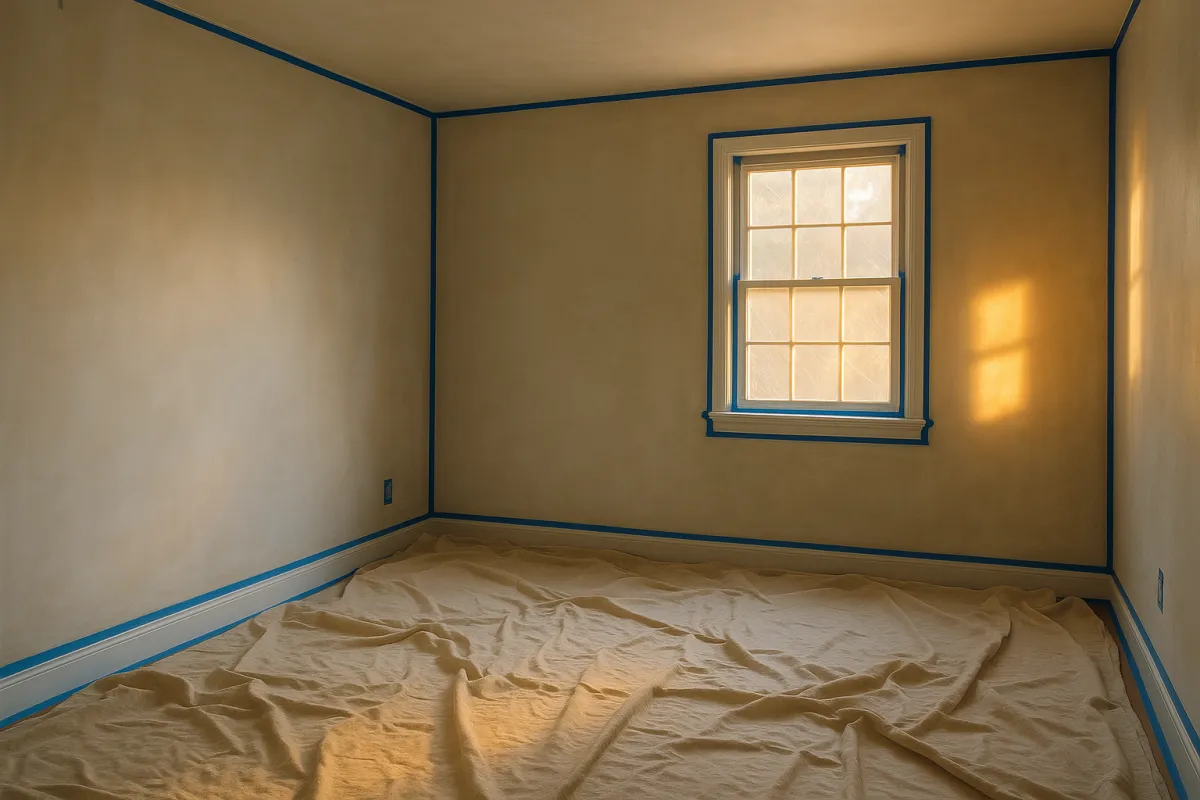
Confirm whether a drywall bid includes any priming at all, since some crews prime as a final step to protect their own finish work and seal the dust from sanding, while others hand off a bare, sanded wall and leave priming entirely to the painting contractor or the homeowner. Neither approach is wrong, but a bid should say which one it is rather than leaving the boundary between the two trades ambiguous.
The sequencing matters for scheduling too: paint should not go on until the compound has fully cured and any sanding dust has been thoroughly cleared, since trapped moisture under paint can cause bubbling and dust left on the surface can telegraph through a finish coat as a faint texture. A bid or schedule that compresses drywall finishing and painting into the same day or two is worth a direct question about cure time, since rushing that handoff is a common source of callbacks on an otherwise well-finished job.
A worked example: a 12 by 12 bedroom drywalled
Take the common case end to end: a 12 by 12 bedroom with 8 foot ceilings, the same room size our sheet count manual uses for its own quantity math. The wall perimeter is 2 times 12 plus 12, or 48 linear feet, times the 8 foot height gives 384 square feet of wall. The ceiling adds 144 square feet, the room’s floor area, for a combined board area of 528 square feet.
At the illustrative Level 4 rate with the ceiling included, roughly 2.88 dollars per square foot once the ceiling’s labor premium is blended in, the job prices near 1,520 dollars installed. Flex the finish level on the same board area: the same room in Level 5 with a ceiling runs near 2,125 dollars, and in texture with a ceiling it settles near 1,366 dollars. The board area barely moves across those figures, since the framing underneath is the same regardless of finish, which is the entire lesson of this brief: price your own board area and finish level in the companion below and watch finish level move your number more than almost any other single decision.
The bottom line
Drywall installation cost comes down to a short list in a fixed order: board area, finish level, whether a ceiling is in scope, and whether old board has to come down first. Carry the illustrative rates, 2.25 dollars per square foot for texture, 2.50 for Level 4 walls alone, roughly 2.88 for Level 4 with a ceiling blended in, and 3.50 to 4.03 for Level 5, then multiply by your measured board area for the base figure.
Remember that board area is never the same as floor area, that a ceiling carries a real labor premium over wall work at the same finish level, and that finish level moves a bid more than almost any other single choice on a job where the framing and board underneath barely change. Measure with the estimator, price your finish level in the companion below, read our drywall sheet count manual for the physical takeoff, then collect written bids that all name the same finish level and the same ceiling scope. Drywall priced that way arrives as a decision, not a surprise.
This cost brief is workbench education for planning a drywall budget, not a quote, a design, or a construction specification. Every dollar figure in it, per square foot, by finish level, and by project, is an illustrative planning number, and your room’s board area, finish level, ceiling scope, local labor market, and season will each move a real bid, sometimes substantially. Drywall work commonly follows framing, electrical, and plumbing rough-ins that require their own inspections before the walls close, and fire-rated and moisture-resistant assemblies depend on local code, so have the scope and board specifications reviewed by a qualified contractor rather than borrowed from a general article. Build your actual budget on current written bids from local drywall contractors, not on any single figure printed here.
Frequently asked questions
How much does drywall installation cost?
As an illustrative planning range, a standard Level 4 smooth finish, hung, taped, and sanded paint ready, commonly runs somewhere around 1.50 to 3.50 dollars per square foot, with a working midpoint near 2.50 dollars. A 528 square foot room, walls plus ceiling, a common size for a 12 by 12 bedroom with 8 foot ceilings, lands near 1,320 to 1,520 dollars at that midpoint once the ceiling's own labor premium is folded in. Paint is a separate line item, and old drywall removal, fire rated board, and a more demanding finish level each move the number from there.
How much does drywall cost per square foot?
As illustrative installed figures that already include hanging, taping, and finishing labor, a textured finish commonly runs near 2.25 dollars per square foot, a standard Level 4 smooth finish on walls alone near 2.50, the same Level 4 scope with a ceiling included near 2.88 once the ceiling's overhead labor premium is blended in, and a Level 5 skim coat with a ceiling near 4.03. Multiply the rate for your scope by your total board area, walls plus ceiling, not just the floor area of the room.
How much does it cost to drywall a 12 by 12 room?
A 12 by 12 room with 8 foot ceilings carries a 48 foot wall perimeter, which is 384 square feet of wall, plus a 144 square foot ceiling, for 528 square feet of combined board area before any opening is deducted. At the illustrative Level 4 rate with the ceiling included, about 2.88 dollars per square foot, that lands near 1,520 dollars installed. Drop the ceiling from the scope and price only the 384 square feet of wall at the Level 4 walls only rate of 2.50 and the figure falls to roughly 960 dollars.
What is the difference between Level 4 and Level 5 drywall finish cost?
Level 4 is the common standard finish, three coats of joint compound over tape and fasteners, sanded smooth enough for flat paint, and it commonly runs an illustrative 1.50 to 3.50 dollars per square foot with a midpoint near 2.50. Level 5 adds a thin skim coat of compound across the entire surface, not just the joints, which hides imperfections under raking light from windows or recessed cans and under glossier paint sheens, and it commonly runs higher, an illustrative 2.50 to 4.50 dollars per square foot with a midpoint near 3.50. The premium buys a flatter wall, not a different board or a faster job.
Does textured drywall cost more or less than a smooth finish?
As an illustrative range, a sprayed texture finish, commonly knockdown or orange peel, often prices close to or modestly below a standard Level 4 smooth finish, somewhere around 1.75 to 3.00 dollars per square foot with a midpoint near 2.25. Texture trades the careful floating and sanding labor a smooth wall needs for spray equipment and material, and the two costs land close enough together that texture is rarely chosen purely to save money. It is chosen because it hides minor imperfections a smooth wall would show, and because matching an existing textured house is sometimes the only practical option.
How much more does ceiling drywall cost than wall drywall?
As an illustrative planning figure, ceiling work commonly carries somewhere around a 10 to 20 percent premium over wall work at the same finish level, a working midpoint near 15 percent, because hanging and finishing overhead is physically harder and slower than working a vertical wall at eye level. On a Level 4 job priced at 2.50 dollars per square foot for walls alone, folding in a 15 percent ceiling premium across a job that includes both surfaces moves the blended rate to roughly 2.88 dollars per square foot. Ceilings also take tighter fastener spacing than walls, which adds a small amount of material on top of the labor premium.
Can I hang drywall myself to save money?
Labor is a real share of most drywall bids, roughly 60 percent of the installed price in the illustrative breakdown this brief uses, so the saving from self-installing is genuine, and hanging drywall is one of the more approachable parts of a remodel for a careful do-it-yourself project with a helper and a drywall lift for ceiling sheets. The harder skill is the finishing: taping, floating, and sanding joints invisibly flat is a trade that takes real practice, and a rushed finish shows under paint in raking light from any window or lamp. Many owners hang their own board and hire out the taping and finishing specifically, which captures a real share of the saving while protecting the part of the job that is hardest to redo.
How much does it cost to repair a drywall patch or hole?
A small drywall repair, a doorknob hole or a crack from settling, is commonly priced per repair rather than per square foot, an illustrative 75 to 250 dollars depending on size and whether texture or paint matching is needed, since a patch job carries a real minimum charge for the crew's time and materials regardless of how small the hole is. A larger repair, a section of water damaged board that needs cutting out and replacing, blends toward the per square foot rates in this brief once the patched area exceeds a few square feet, plus a real cost for matching the surrounding texture and paint sheen so the repair does not read as a visible patch.