What's on this page
- Asphalt driveway cost per square foot, and asphalt overlay cost
- What the per-square-foot number includes and excludes
- Asphalt overlay cost per square foot
- Asphalt driveway cost per ton
- What drives asphalt driveway cost
- Size and thickness
- The base and grading
- Removal of an old surface
- Slope, access, and site conditions
- Region and the price of hot-mix
- Total asphalt driveway cost by size
- Asphalt versus concrete, gravel, and pavers
- Overlay, mill and overlay, and full replacement
- When an overlay works and when the base has failed
- Overlay thickness and tonnage
- The height problem: aprons, thresholds, and drainage
- From price per foot to your total
- Sealcoating cost and frequency
- Crack filling and pothole repair
- Lifespan of an asphalt driveway
- DIY versus hiring a pro
- Labor and equipment share
- Ways to keep asphalt driveway cost down
- Permits and the apron
- A worked example: a two-car driveway priced
- The bottom line
Short answer: A new asphalt driveway commonly runs an illustrative 3 to 7 dollars per square foot installed, with a working midpoint near 5 dollars, so a two car drive of about 480 square feet lands near 2,400 dollars. An overlay on a sound existing driveway runs an illustrative 2 to 4 dollars per square foot, and tearing out an old driveway adds a separate 1 to 3 dollars per square foot.
Asphalt driveway cost and asphalt overlay cost are two different numbers hiding behind the same question, and pulling them apart is the first thing worth doing. A new install builds a driveway from bare ground: excavate, grade, compact a stone base, then lay and roll the asphalt. An overlay, which pavers also call resurfacing, lays fresh hot-mix over a driveway that is already there and still structurally sound, using the old pavement in place of that base. The same 480 square feet can be a 2,400 dollar job or a 1,440 dollar one depending on which of the two you actually need, and what decides it is the condition of the layers under your feet rather than anything visible from the street. Everything else, thickness, slope, access, the price of hot-mix, moves you within one of those numbers; the scope moves you between them.
This cost brief prices asphalt the way a paver actually bids it: per square foot installed for each scope, per ton of hot-mix for the material, then scaled to a whole-project total by size. It states once what the per-square-foot rate includes and what is billed separately, so no figure here quietly changes meaning halfway down the page. It takes the overlay seriously as its own job, with the three scopes a tired driveway can be given, the structural signals that decide between them, the thickness and tonnage an overlay actually uses, and the height problem an added lift creates at a threshold or an apron. It then covers what drives the number, compares asphalt to concrete, gravel, stamped concrete and pavers, and prices the sealcoating and repairs that stretch an asphalt driveway’s life. This article is the asphalt-specific companion to our concrete driveway cost brief, which prices the rigid-slab alternative, and it sits alongside our gravel driveway cost brief and our gravel driveway build manual for the cheaper loose-stone surface. Run your own driveway through the estimator or the companion below to turn a length and a width into an illustrative total as you read.
Key takeaways
- A new asphalt (blacktop) driveway commonly runs an illustrative 3 to 7 dollars per square foot installed, with a working midpoint near 5 dollars, cheaper than concrete and dearer than gravel up front.
- Total cost scales with area, so a single-car drive of about 288 square feet, a two-car drive of about 480 square feet, and a long approach of 800 square feet or more land in very different budgets.
- Asphalt overlay cost, the same job pavers call resurfacing, runs an illustrative 2 to 4 dollars per square foot, and a mill and overlay sits between at about 3 to 5.50, but an overlay adds surface rather than support and only holds over a sound base.
- Every installed rate here covers the finished surface at that scope and nothing else: tearing out an old driveway is a separate illustrative 1 to 3 dollars per square foot, and permits and sealcoating are separate again.
- Every dollar figure here is illustrative and local: your site, your base, and regional hot-mix and labor rates move a real quote more than any rule of thumb, so get written bids.
Asphalt driveway cost per square foot, and asphalt overlay cost
The cleanest way to price asphalt is per square foot of finished surface installed, because that is how pavers estimate and how jobs of different sizes compare fairly. As illustrative planning ranges, a new asphalt driveway built from bare ground commonly runs somewhere around 3 to 7 dollars per square foot, with a working midpoint near 5 dollars. An asphalt overlay on a sound existing driveway runs nearer 2 to 4 dollars per square foot, midpoint about 3. A mill and overlay, where the top of the old pavement is ground off before the new layer goes on, sits between them at an illustrative 3 to 5.50 dollars per square foot, midpoint about 4. Those are three rates for three different jobs, not one wide band, and keeping them apart is what makes the rest of the arithmetic honest.
The reason an installed figure beats every other unit is that it already includes the parts of the job a material price leaves out. A per-ton price tells you what the hot-mix costs off the truck, but it says nothing about the crew grading the base, running the paver, and rolling the surface before it cools. For a driveway, that labor, equipment, and base work are the majority of the bill, so the installed figure is the one that matches a real quote. Pick your scope first, pick a point in that scope’s band second, multiply by area third, and you have a defensible starting point before a single bidder arrives. The next section states exactly what sits inside those bands and what is billed on top, and every figure in this cost brief obeys that boundary without exception.
What the per-square-foot number includes and excludes
Every per-square-foot figure in this cost brief means the same thing, and stating it once means it never has to be guessed at again. An installed rate covers the work that ends in a finished, compacted asphalt surface at the scope you chose, and nothing beyond that. For a new install that is the excavation, the grading, the compacted stone base, the hot-mix across every course, the paving and the rolling. For an overlay it is the surface preparation, the tack coat, the hot-mix of the new lift, and the rolling, with the existing pavement standing in for the base. For a mill and overlay it is all of that plus grinding off the old top layer and carting the millings away. The rate is per square foot of finished surface, and the apron where the drive meets the street is part of that surface, so it belongs in the area you measure rather than in a line of its own.
What the rate does not include is the half people forget. Tearing out and hauling away an old driveway is a separate line at an illustrative 1 to 3 dollars per square foot, midpoint about 2, added on top of the install rate and never folded into it. Permit and inspection fees are separate and set locally. Sealcoating is separate and recurring, not part of the build. Rebuilding a base that has failed, importing fill on soft ground, and any drainage work the site needs are separate again, because they are priced off what the site turns out to be rather than off the surface area. The companion below follows exactly this boundary: it prices the surface at your scope, then adds removal as its own line, so the total on screen is assembled the way a bid should be.
| Line item | Inside the per-square-foot install rate? | Illustrative figure |
|---|---|---|
| Excavation and grading, new build | Yes | Inside the $3 to $7 band |
| Compacted stone base, new build | Yes | Inside the $3 to $7 band |
| Hot-mix, placing, and rolling | Yes | Inside the band for every scope |
| Surface prep and tack coat, overlay | Yes | Inside the $2 to $4 band |
| Milling off the old top layer | Only in the mill and overlay scope | ~$3 to $5.50 per sq ft all in |
| The apron where the drive meets the street | Yes, as part of the measured area | Counted in square feet, not added |
| Tear-out and haul-away of an old surface | No, separate line | ~$1 to $3 per sq ft |
| Permit and inspection fees | No, separate and local | Set by your municipality |
| Sealcoating | No, recurring maintenance | ~$0.15 to $0.30 per sq ft per coat |
| Rebuilding a failed base, fill, drainage | No, separate site work | Priced off the site |
Asphalt overlay cost per square foot
Asphalt overlay cost is the number most people actually want when the driveway is tired rather than gone. An overlay lays a fresh lift of hot-mix over the existing pavement, and because the old surface does the job a stone base does on a new build, the excavation, the base material and most of the disposal drop out of the bill. That puts an overlay at an illustrative 2 to 4 dollars per square foot installed against roughly 3 to 7 for a full build. On a two-car drive of 480 square feet the arithmetic is about 960 to 1,920 dollars for the overlay, near 1,440 at the 3 dollar midpoint, against about 1,440 to 3,360 for the new install, near 2,400. Both figures are surface only; if the old driveway has to come out instead, the tear-out is its own line on top of the new-install rate.
The saving is real and the condition attached to it is strict. An overlay is a wearing course, not a repair. It adds thickness and a new riding surface, and it adds no support at all. Whatever is failing underneath goes on failing, and the new layer cracks along the same lines within a season or two once it does. That is why the honest sequence is to establish whether the driveway is a candidate first and price it second, which the sections further down work through in detail, rather than picking the cheaper number and hoping the base cooperates. An overlay that fails early costs more than the replacement it postponed. Set the companion below to the overlay scope to see the difference on your own dimensions.
Asphalt driveway cost per ton
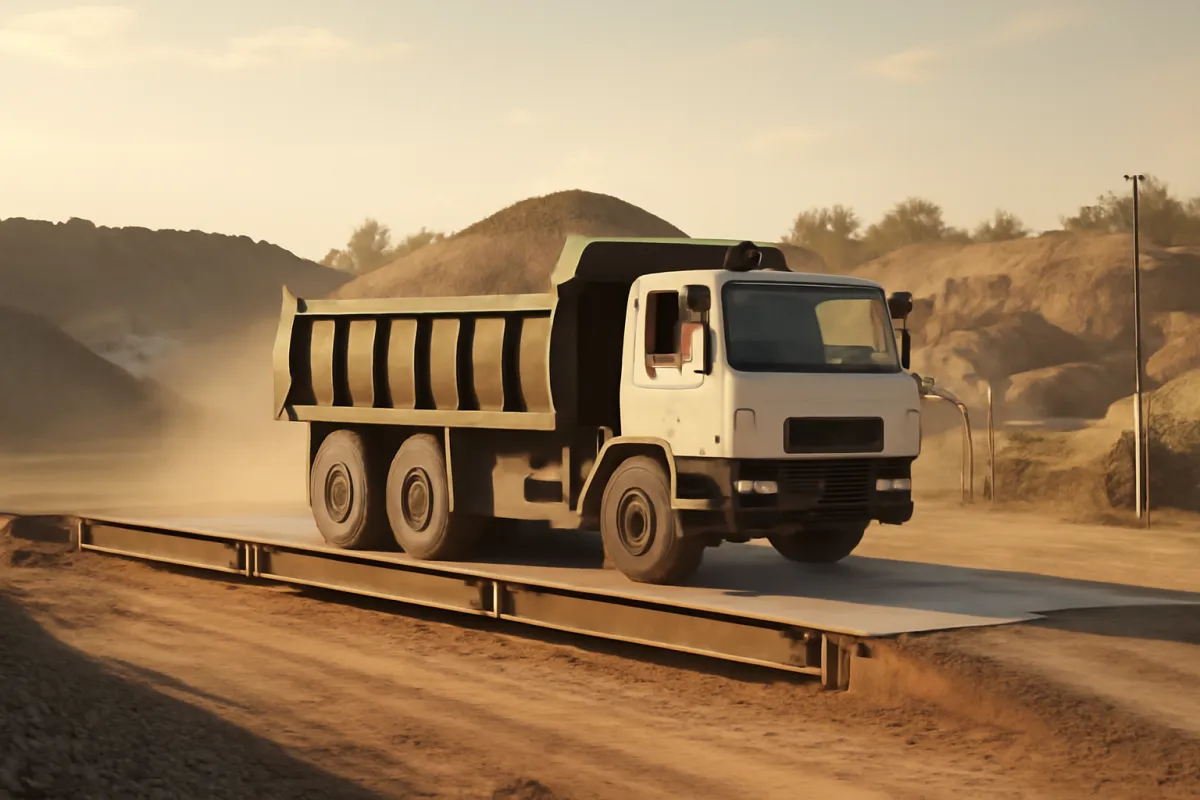
Hot-mix asphalt, the material itself, is commonly sold by the ton, and understanding the per-ton figure explains why asphalt prices swing more than most paving materials. As an illustrative range delivered, hot-mix often runs somewhere near 100 to 200 dollars per ton, moving with oil prices, the region, the mix specified, and how far the load has to travel from the plant. Because asphalt is petroleum-based, its price tracks the oil market in a way concrete and gravel do not, so a delivered rate that was current last season can be stale this one. Always confirm the live delivered price rather than trusting a rule of thumb.
Turning tons into an area needs a density, and that is where the arithmetic becomes checkable rather than a rule of thumb. Compacted hot-mix runs somewhere near 145 pounds per cubic foot, so a 2,000 pound ton, the short ton NIST Handbook 44, Appendix C defines, is about 13.8 cubic feet of finished pavement. Spread 13.8 cubic feet an inch and a half thick and it covers about 110 square feet; at two inches, about 83 square feet; at three inches, about 55; at four inches, about 41. Work it the other way for a driveway and the tonnage falls out of the dimensions. A two-car drive of 480 square feet at three inches of asphalt is 480 times a quarter of a foot, or 120 cubic feet, which at 145 pounds a cubic foot is 17,400 pounds, about 8.7 tons. The same drive at two inches is about 5.8 tons, and an inch and a half overlay lift is about 4.4 tons. Our tons to cubic yards conversion runs the same density arithmetic for aggregates, and our cubic yard calculator handles the volume step on any shape.
Run the per-ton price against the installed price and something the tables hide comes out. Those 8.7 tons at 100 dollars a ton delivered are about 870 dollars of hot-mix sitting inside a 2,400 dollar job, near 36 percent of it. At 200 dollars a ton the same tonnage is about 1,740 dollars, near 73 percent, and a job priced at 5 dollars a square foot would have almost nothing left for the crew, the base and the machines. That is not two figures contradicting each other, it is the reason the installed band runs as wide as 3 to 7 dollars: the same driveway sits at the bottom when hot-mix is cheap and the build is thin, and at the top when hot-mix is dear and the build is thick. Use the per-ton figure to sanity-check the material line on a bid, never to price the whole driveway.
What drives asphalt driveway cost
Beyond the raw material, a handful of factors move an asphalt driveway quote, and knowing them explains why two bids for the same-size drive can differ by a wide margin. Thickness comes first, because a driveway that carries vehicles wants an adequate depth of asphalt over an adequate base, and more depth is more tonnage. The base and grading below the pavement are next: an asphalt driveway is only as good as the compacted base it sits on, and building that base is real labor and material that never shows on the finished surface. The removal and disposal of any old driveway is a whole cost category before new paving begins.
The site itself is the quiet multiplier that surprises people most. A driveway a paving machine and a roller can reach and work with room to move is far cheaper to pave than one on a tight, steep, or awkward lot where the equipment cannot maneuver and more of the work falls to hand tools. On top of all this sits the regional price of hot-mix and the local labor rate, which between them are the whole of the bill’s two largest slices and can move a total further than any change in the driveway’s own dimensions. The rest of this brief takes these drivers one at a time, starting with size and thickness, so you can see which lever is moving a quote you receive.
Size and thickness
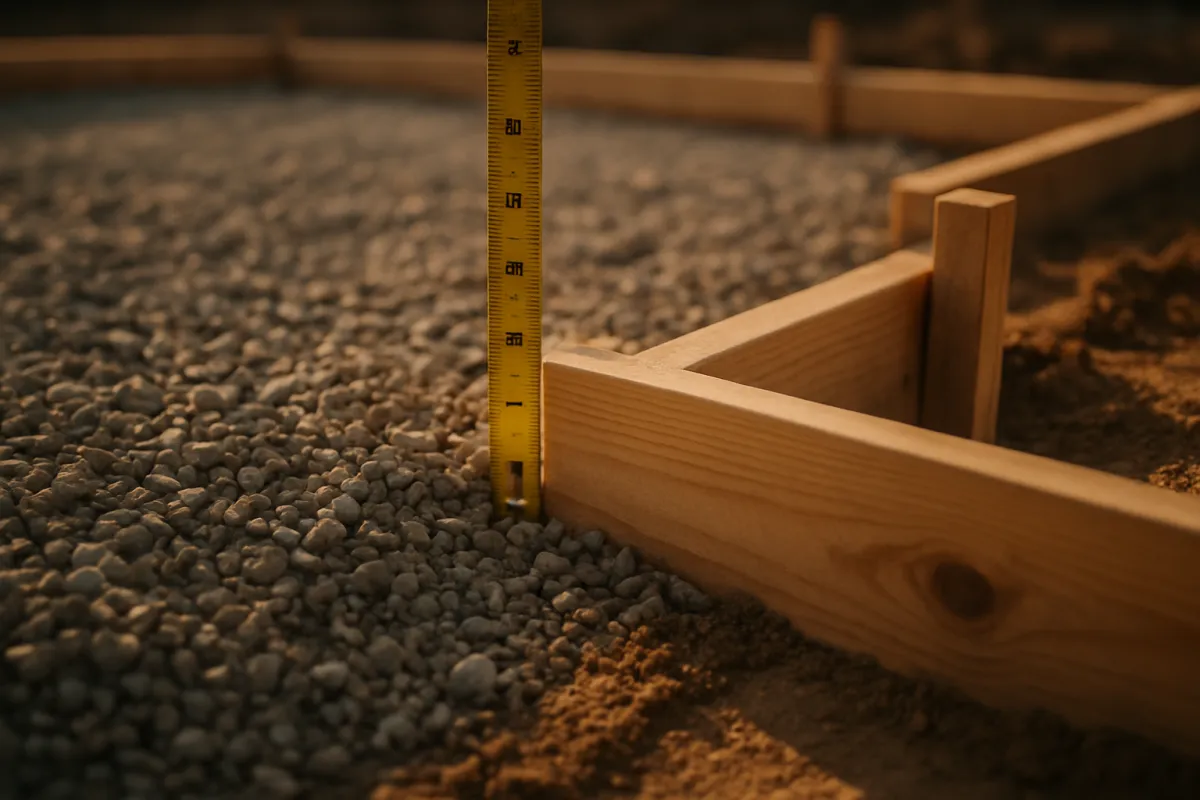
Size and thickness are the two structural dimensions of an asphalt driveway estimate, and together they set the tonnage. Area is the obvious one: length times width in feet gives the surface area, and cost scales directly with it, so a small increase in each dimension adds up fast across a whole drive. Thickness is the less visible lever. A residential asphalt driveway is commonly built with a compacted stone base topped by a couple of inches or more of asphalt, sometimes laid as a base course and a separate top course, and the exact depth is an engineering choice driven by the soil and the loads the driveway will carry.
The reason thickness matters to the budget is that asphalt is priced by weight, so every extra inch of depth across the whole area is extra tonnage and extra cost. A driveway laid too thin to save money is a false economy, because it will rut, crack, and fail under vehicle loads sooner than the saving ever justified, and a failed asphalt surface usually means starting over. The material cost of depth is checkable: one extra inch across one square foot is about 12 pounds of hot-mix, roughly 90 cents at 150 dollars a ton, so an inch across a 480 square foot drive is about 430 dollars of asphalt. Confirm the base depth and the compacted asphalt thickness in any quote, since a bid that is cheaper because it skimps on depth is not a better deal, only a smaller one. Our square-footage manual walks the area math that turns a length and a width into the surface figure every asphalt estimate starts from.
The base and grading
The part of an asphalt driveway that decides whether it survives is entirely hidden below the pavement: the compacted base and the grading it sits on. Before any asphalt is laid, the ground is excavated to depth and a layer of compacted crushed-stone base is built and leveled so the pavement has firm, well-draining support. An asphalt driveway laid over soft, poorly drained, or badly compacted ground will settle, rut, and crack no matter how good the top layer is, because asphalt is a flexible pavement that follows the shape of what is beneath it. The base is not optional, it is the foundation of the whole job, and a cheap bid may have quietly skimped on it.
Grading is the related step, and it does two jobs at once. First, it establishes the slope so the finished driveway sheds water toward the street or a drain rather than pooling, since standing water is one of the fastest ways to fail asphalt. Second, it sets the depth so the pavement thickness is consistent across the whole area. An asphalt driveway that does not drain lets water sit on and seep under the surface, and in a freezing climate that water expands and breaks the pavement apart from below. When you compare bids, ask each one what base depth and compaction it includes and how the driveway is graded to drain, because a quote that skips the base is not a cheaper driveway, it is one that will fail sooner and cost more to replace.
Removal of an old surface
Whenever an old driveway has to come out before new asphalt goes down, the demolition and disposal are a whole cost category that people routinely forget to budget. Removing an existing surface, whether cracked asphalt, broken concrete, or a loose gravel drive, means breaking it up, hauling it away, and paying to dispose of it, all of which take equipment, labor, and dump fees. Old asphalt is heavy and disposal is priced by weight or volume, so a full tear-out commonly adds an illustrative 1 to 3 dollars per square foot, midpoint about 2, on top of the install rate rather than inside it. On the 480 square foot two-car drive that is about 480 to 1,440 dollars, near 960 in the middle of the band. Broken concrete is heavier still and can cost more to remove than old asphalt.
There is a cheaper path when the existing driveway is structurally sound, which is to resurface over it rather than tear it out, covered in its own section below. But when the old surface has failed, resurfacing only postpones the problem, and a clean removal down to a proper base is the honest fix. Some owners trim the bill by handling the demolition of a gravel or lightly damaged surface themselves, converting a labor line into their own time, though heavy asphalt and concrete removal usually wants a machine. When you budget a replacement rather than a fresh pave on bare ground, get the removal priced as its own line, because it is easy to overlook and it is rarely small. The companion below lets you add old-surface removal to see how much it shifts the total.
Slope, access, and site conditions
Site access is the cost factor most often underestimated, because it does not appear on any material list yet can move the labor and equipment bill substantially. A driveway a paving machine and a roller can drive straight onto, with room to maneuver and stage the hot-mix trucks, is far cheaper to pave than the same driveway on a tight, steep, or awkward lot where the equipment cannot reach and more of the asphalt has to be placed and worked by hand. Hand-laying asphalt is slower and harder to compact evenly than machine paving, so a difficult-access drive costs more per square foot for the same finished area.
Slope adds its own complications beyond access. A steep driveway is harder to pave to a consistent thickness, harder to compact evenly, and more prone to the hot-mix sliding before it sets, so it can call for a stiffer mix or extra care that adds to the labor. Slope also drives the drainage design, since water runs faster on a grade and can erode edges or pool at the bottom if the driveway is not shaped to handle it. Odd shapes, curves, and tight corners raise the hand-work share too, because a paving machine lays a straight, even mat most efficiently. Two identical-area driveways can quote well apart on slope and access alone, so describe your site honestly when you ask for bids and expect a difficult lot to carry a premium.
Region and the price of hot-mix
Region moves an asphalt driveway cost through two channels at once: the price of the hot-mix and the local labor rate. Hot-mix asphalt is heavy and does not travel well once it leaves the plant, since it has to be laid while hot, so a driveway far from an asphalt plant carries a higher delivered price and a tighter working window than one nearby. That haul sensitivity means asphalt prices vary not just by state but by how close you sit to a plant, and rural drives can pay a premium simply for distance. The mix specified matters too, since a heavier-duty or higher-grade mix costs more per ton.
The second channel is labor, and because paving is skilled, equipment-heavy work, the local wage rate moves the largest lines on a bid. The same driveway costs differently in a high-cost metro than in a low-cost rural county, and the swing is not small. Layered on top is the volatility of asphalt itself: because it is petroleum-based, hot-mix prices rise and fall with oil in a way that can make a quote from last season inaccurate today. All of this is why a national average per-square-foot figure is only ever a starting point, and why the honest move is to get several local bids that price your driveway with current hot-mix and local labor rather than trusting any single published number.
Total asphalt driveway cost by size
Scaling a rate up to a whole-project total is where the numbers become real, and the method has no hidden steps: multiply the area by the rate for your scope. There is no size discount buried in it, only the levers already listed. A single-car driveway of about 12 by 24 feet is 288 square feet, which on the 3 to 7 dollar new-install band is about 864 to 2,016 dollars, near 1,440 at the 5 dollar midpoint. A two-car driveway of about 20 by 24 feet is 480 square feet, about 1,440 to 3,360 dollars, near 2,400. A three-car width or a longer approach at 800 square feet is about 2,400 to 5,600 dollars, near 4,000. A long rural approach of 1,200 square feet is about 3,600 to 8,400 dollars, near 6,000. The overlay column runs the same areas at 2 to 4 dollars.
| Driveway | Area | New install, ~$3 to $7 / sq ft | Midpoint at $5 | Overlay, ~$2 to $4 / sq ft |
|---|---|---|---|---|
| Single-car, ~12 by 24 ft | 288 sq ft | ~$864 to $2,016 | ~$1,440 | ~$576 to $1,152 |
| Two-car, ~20 by 24 ft | 480 sq ft | ~$1,440 to $3,360 | ~$2,400 | ~$960 to $1,920 |
| Three-car or long, ~20 by 40 ft | 800 sq ft | ~$2,400 to $5,600 | ~$4,000 | ~$1,600 to $3,200 |
| Rural approach, ~12 by 100 ft | 1,200 sq ft | ~$3,600 to $8,400 | ~$6,000 | ~$2,400 to $4,800 |
Every figure in that table is the finished surface only, exactly as the boundary section set out. Add a tear-out of an old driveway at an illustrative 1 to 3 dollars a square foot and the 1,200 square foot approach climbs by another 1,200 to 3,600 dollars, which is how a large replacement passes 10,000 dollars without anything unusual happening to it. Add extra thickness, a base that has to be rebuilt, a steep or tight site, or hot-mix at the top of its band and every column moves up together. Treat these as starting points rather than quotes: measure your own area with our square-footage manual, pick the rate for your scope, and get local bids, because regional hot-mix and site conditions move a total more than any table can predict. If you are pricing several materials for one project at once, our material estimation method is the general procedure this cost brief applies to a single surface. The companion below runs the same arithmetic on your own dimensions.
Asphalt versus concrete, gravel, and pavers
Asphalt is one of several driveway surfaces, and where it sits on cost depends on which alternative you compare it to. On up-front installed cost, asphalt usually falls toward the lower-middle of the field: cheaper than concrete or pavers, and dearer than a loose gravel drive. Gravel is the cheapest to install because it is loose stone spread and compacted with no pour or paving, which our gravel driveway cost brief covers in full. Concrete is poured and finished as a rigid slab, typically dearer than asphalt up front but longer-lived, as our concrete driveway cost brief lays out. Pavers are individual units set by hand on a prepared base, the most labor-intensive and usually the most expensive per square foot. Stamped concrete sits between plain concrete and pavers, priced in our stamped concrete cost brief, and the per-yard and per-bag view of concrete itself is in our concrete price brief.
The chart below places these surfaces side by side on illustrative installed cost per square foot, and it makes asphalt’s lower-middle position clear. What the chart cannot show is the other half of the decision: lifespan and maintenance. Asphalt is cheaper than concrete to install but generally lasts fewer years and asks for periodic sealcoating and eventual resurfacing, while concrete lasts longer with lighter upkeep. Asphalt does flex with freeze-thaw movement better than a rigid slab, is quick and cheap to patch, and can be resurfaced rather than fully replaced when the surface wears. Gravel is cheapest to build but needs the most regular regrading. The right surface is the one whose installed cost and lifetime upkeep together fit your budget and your climate, not the one with the lowest sticker.
Illustrative installed cost per square foot, by driveway surface
Asphalt against the common alternatives; local rates, hot-mix prices, site prep, and access move every bar.
Asphalt sits below concrete and pavers up front, but installed cost is only half the story. Asphalt's shorter lifespan and its sealcoating and resurfacing upkeep can narrow the gap over the years, which is why a full comparison weighs maintenance too.
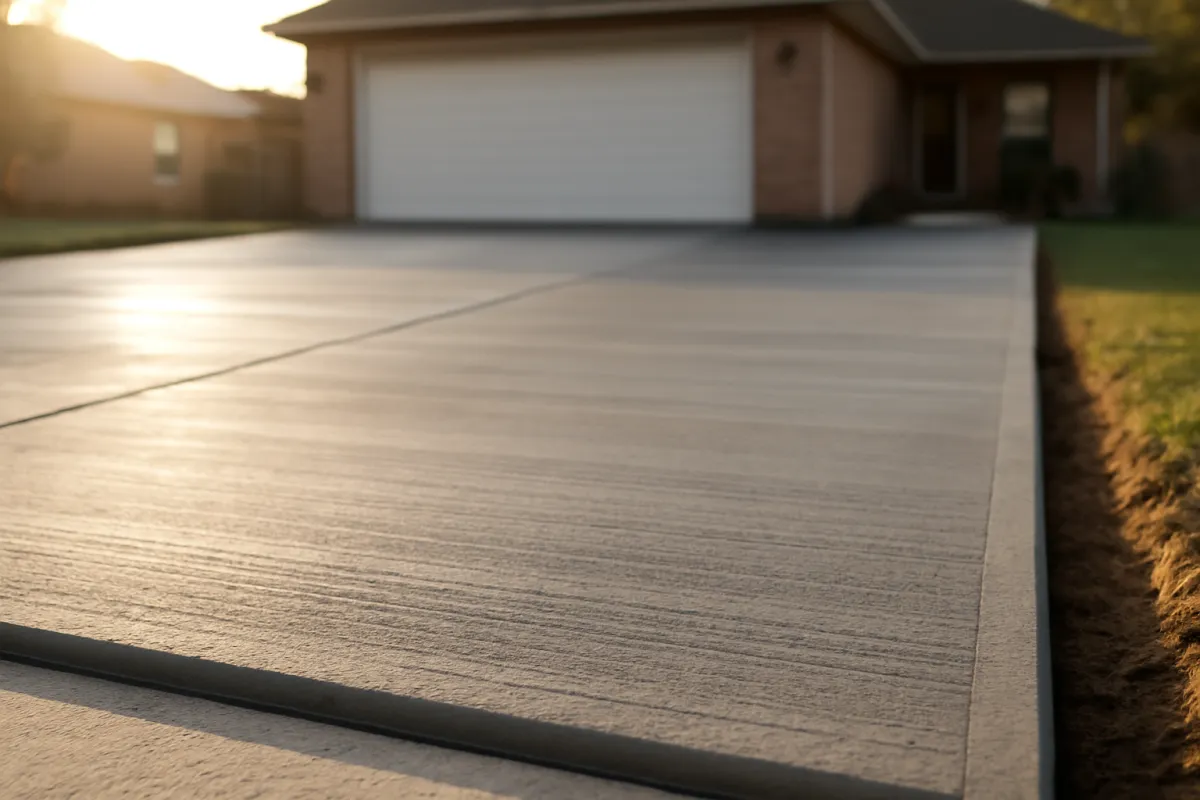
The table below sets the common surfaces side by side on illustrative installed cost and typical lifespan, since the two together are what an honest comparison weighs. Read every figure as a planning band, not a quote, because your region, your site, and the maintenance you keep up move all of them.
| Surface | Illustrative cost per sq ft installed | Illustrative lifespan |
|---|---|---|
| Gravel | ~$2 | Indefinite with regular regrading and topping |
| Asphalt (blacktop) | ~$5 | ~15 to 30 years with sealcoating and repair |
| Concrete (plain) | ~$8 | ~25 to 40 years with sealing and crack repair |
| Stamped concrete | ~$16 | ~25 to 40 years, resealing keeps the color and pattern |
| Pavers | ~$18 | ~25 to 50 years, units can be lifted and reset |
Overlay, mill and overlay, and full replacement
Four different things get called resurfacing in conversation, and they are not interchangeable, so it is worth fixing the vocabulary before pricing anything. Sealcoating is a thin protective coating over the surface; it is maintenance, it adds no thickness worth measuring and no strength at all, and it belongs in a different budget entirely. An overlay, which is the same thing as resurfacing, is a fresh compacted lift of hot-mix laid over the existing pavement, using it as the base. A mill and overlay grinds a controlled depth off the old top layer first, then lays the new lift into the space that creates. A full replacement removes the old driveway entirely, rebuilds or repairs the stone base beneath it, and paves from there. Those are four scopes with four price tags and four sets of conditions, and choosing wrongly between them is the most expensive mistake available on this page.
The reason the vocabulary matters is that the cheap options are only cheap when they are appropriate. An overlay borrows its structure from what is already there, so it is a bargain on a sound driveway and a waste on a failing one. A mill and overlay costs more than a plain overlay because milling and carting the millings away are real work, but it earns that money in two specific situations: where the finished height cannot be allowed to rise, and where the top of the old pavement is too broken or too smooth to bond to reliably while the base below is still fine. A full replacement is the only option that fixes the base, which is why it is the honest answer whenever the base is the problem. Set the companion below between the scopes to watch the same driveway change price.
| Scope | What is done | Illustrative rate | What it fixes |
|---|---|---|---|
| Sealcoating | Thin protective coat over the surface | ~$0.15 to $0.30 / sq ft | Weathering only, no structure |
| Overlay (resurfacing) | New compacted lift over the old pavement | ~$2 to $4 / sq ft | Worn, rough, lightly cracked surface |
| Mill and overlay | Grind off the old top layer, then overlay | ~$3 to $5.50 / sq ft | The same, without raising the height |
| Full replacement | Remove, rebuild the base, repave | ~$3 to $7 / sq ft plus ~$1 to $3 removal | A failed base or a broken pavement |
When an overlay works and when the base has failed
Deciding between an overlay and a replacement is a structural judgement, not a cosmetic one, and the useful question is whether the layers under the surface still carry a vehicle. The signals that point toward a full replacement all say the same thing in different ways. Alligator cracking, the interlocking web of small blocks, means the pavement is flexing under load because what is beneath it has stopped supporting it. Potholes that have broken clean through to the stone say the same. Areas that visibly move or feel soft when a car rolls across them are a base that has gone. Edges that crumble away have nothing holding them up. And standing water that never drains means the shape is wrong, which matters because an overlay copies the shape it is laid on and will reproduce the puddle faithfully.
The signals that favour an overlay are the ones that stop at the surface. Scattered straight cracks, faded and rough texture, shallow ravelling where the fine material has weathered out of the top, and a driveway that still sheds water and feels solid underfoot are all wear rather than failure. Extent matters as much as type. Isolated failure can be cut out, the base repaired locally and patched, and the overlay laid over the whole thing afterwards, which is a common and sensible middle path. Failure spread across a large share of the area usually means the base is finished and no amount of new asphalt on top will change that. None of this is a rule you can apply from a photograph or a page, so have a paver walk the driveway, probe the soft spots, and give you the reasoning behind the recommendation rather than only a price. Our concrete crack repair manual works through the same logic on the rigid alternative, where cracking is read the same way: what the crack is telling you about the layer below.
Overlay thickness and tonnage
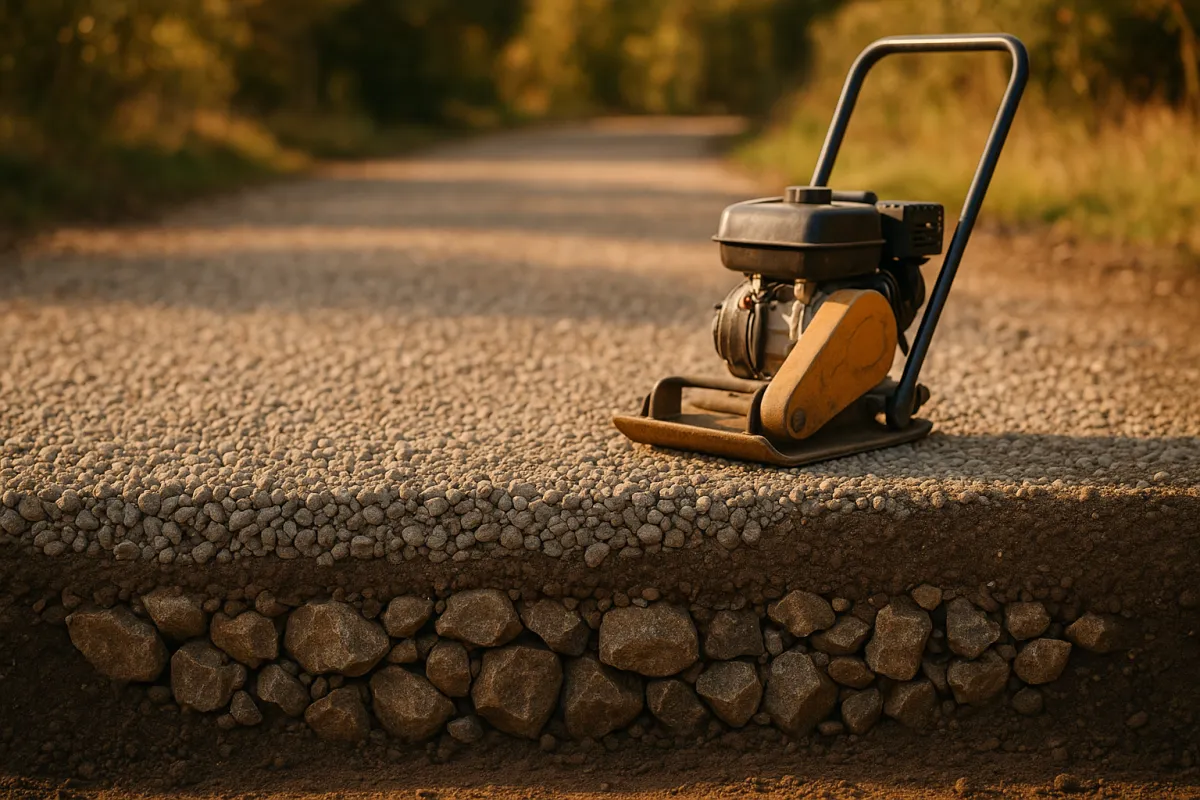
An overlay is a wearing course rather than a structural build, so it is normally laid thinner than the asphalt on a new driveway, with an illustrative compacted lift somewhere around an inch and a half to two inches. Thinner than that and the layer is hard to compact evenly and wears through quickly; much thicker and you are paying new-build money without new-build structure, and the height problem in the next section gets worse. The tonnage follows straight from the density figure already established. At roughly 145 pounds per cubic foot, a 480 square foot two-car drive takes about 4.4 tons of hot-mix at an inch and a half and about 5.8 tons at two inches, against about 8.7 tons for three inches of asphalt on a new build. So an overlay is roughly half the material of a full build before any of the base work is counted, which is most of where the saving comes from.
Thickness is also the one lever whose cost you can check yourself. One extra inch across one square foot is one twelfth of a cubic foot, about 12 pounds of hot-mix, which at 150 dollars a ton is roughly 90 cents. Across a 480 square foot drive that inch is about 430 dollars of material, which is why a quote that is cheaper because it is thinner is not a better deal, it is a smaller one. What the right lift actually is for your driveway depends on the condition of what sits underneath, the loads the drive carries, the climate it has to survive, and local paving practice, all of which vary enough that no page can hand you a number. Ask the paver to state the compacted thickness in the quote, and check whether your municipality or building department specifies anything for a driveway apron in the right-of-way. Our gravel depth reference covers the same depth-versus-load reasoning for the stone layer below.
The height problem: aprons, thresholds, and drainage
A plain overlay adds its own compacted thickness to the finished surface, so an inch and a half of new asphalt leaves the driveway sitting an inch and a half higher than it did. That sounds trivial and is not, because a driveway meets several fixed things it can no longer meet at the same level. A garage floor that was flush with the pavement loses that clearance, and so does a side door threshold. The apron at the street has to tie back into the existing gutter line or road surface, and if it simply stops it leaves a lip that catches a bumper and a snowplough. Walkways, drain grates set in the surface, and any step or landing along the edge face the same problem.
Drainage is the version of this that does the most damage quietly. A driveway that shed water correctly did so because of the falls built into it, and a new lift that is not shaped to match those falls can put a low spot where none existed, which is exactly the standing water that shortens an asphalt driveway’s life. The usual answers are to mill the tie-in areas so the new surface starts at the old height where it has to, to feather the lift down at the edges, or to move to a full mill and overlay if too many points are constrained. All of that is cheaper to decide before the crew arrives than after the asphalt is down and cooling. Raise every fixed point with the paver during the walk-through, and check with your local building or public-works department about anything sitting in the right-of-way, since the apron is usually their jurisdiction rather than yours.
From price per foot to your total
Turning a rate into a real total is a short calculation, and it starts with the driveway’s area. Measure the length and the width in feet and multiply them for the surface area in square feet, adding the pieces if the drive is an L-shape, and including the flared apron at the street, since the apron is surface you are paying to pave rather than an extra. Then multiply that area by the installed rate for your scope: roughly 5 dollars for a standard new install, roughly 3 for an overlay on a sound driveway, roughly 4 for a mill and overlay, higher within any band for a difficult site or extra thickness. A two-car driveway of 20 by 24 feet is 480 square feet, which at an illustrative 5 dollars a square foot for a new install is around 2,400 dollars as a planning figure, or around 1,440 as an overlay. Our estimator handles the area in seconds from your length and width.
Two adjustments then make the total honest, and they work in different directions for a reason. The first is inside the band: extra thickness, a steep grade, poor access, an odd shape and hot-mix at the top of its range all push you toward the upper figure for the scope you chose, while a flat, square, easy drive with cheap local hot-mix sits near the bottom. The second is outside the band entirely: tear-out and disposal at an illustrative 1 to 3 dollars a square foot, permit fees, and any base rebuild or drainage work the site turns out to need are added lines, not adjustments to the rate. Keeping those two kinds of adjustment separate is what stops a total from double-counting. Run your own length and width through the estimator for the area, apply a local rate and these adjustments, and you have a number you can take into a bidding conversation. The companion below does the same on your own driveway and adds removal as its own visible line.
Sealcoating cost and frequency
Sealcoating is the recurring maintenance that stretches an asphalt driveway’s life, and understanding it changes how you judge the surface against concrete. A sealcoat is a thin protective layer brushed or sprayed over the asphalt that shields it from the water, oil, and the sun’s UV that dry the asphalt binder out and make the surface brittle and prone to cracking. As an illustrative guide, most asphalt driveways are sealcoated every 2 to 4 years, with the first coat usually applied about a year after the driveway is laid so the fresh asphalt can fully cure first. Sealing brand-new asphalt too soon can trap the curing oils, so the wait is deliberate.
The cost is modest against the driveway itself. As an illustrative range, professional sealcoating runs somewhere near 0.15 to 0.30 dollars per square foot, so a two-car drive of about 480 square feet works out near 72 to 144 dollars a coat, about 96 dollars at a working rate of 20 cents a square foot, which is the rate the companion uses. Doing it yourself with sealer from a home center trims that to the price of the material and your afternoon. Sealing a concrete driveway is a different product on a different schedule, covered in our concrete driveway sealing manual and our concrete sealer types reference, but the discipline is identical: fill the cracks first, seal periodically rather than constantly. The balance to strike is periodic, not constant: sealing too often wastes money and can build up an uneven film, while never sealing lets water and UV shorten the driveway’s life and bring forward the far larger cost of resurfacing. Fill any cracks before you seal, since sealer is a surface protectant, not a crack repair. Budgeted across the years, sealcoating is small money that protects a large asset.
Crack filling and pothole repair
Between sealcoats, the other recurring asphalt maintenance is filling cracks and patching potholes before they spread, and it is cheap upkeep that prevents expensive failures. Asphalt cracks as it ages and as the ground moves beneath it, and a hairline crack left open lets water down into the base, where it undermines the support and, in a freezing climate, expands and levers the pavement apart. Filling cracks early with a pourable or hot-applied crack filler is inexpensive material and a realistic do-it-yourself job, and it keeps a small crack from becoming the deep, branching alligator cracking that signals a failing surface.
Potholes are the next stage, where the surface has broken through and a section has come loose, and they too are cheaper to fix early. A small pothole can be patched with cold-patch asphalt from a home center, tamped down, and driven over to compact, which is a genuine weekend repair. Larger areas of failure, or cracking that covers much of the driveway, are usually past the point where patching helps and point toward a resurfacing overlay or, if the base has gone, a full replacement. The honest maintenance rhythm is to seal on schedule, fill cracks as they appear, and patch small potholes promptly, because every one of those small jobs postpones the day the whole surface needs redoing. Neglecting them is how a driveway with 20 years in it fails in ten.
Lifespan of an asphalt driveway
A well-built and maintained asphalt driveway commonly lasts an illustrative 15 to 30 years, with something near 20 years a reasonable planning figure. That is generally shorter than a concrete driveway’s typical life, which is part of the trade-off for asphalt’s lower installed cost, but it is long enough that a driveway built and kept up well repays its cost many times over. The lifespan hinges on a few things: the quality of the base it was laid on, the workmanship of the original paving, the climate it endures, and, more than anything, the maintenance it receives over the years.
Maintenance is the lever that separates the long life from the short one. A driveway that is sealcoated on schedule, has its cracks filled early, and is graded to shed water off the surface can reach the top of the range, while one that is never sealed and left to crack can fail in half the time. Standing water, freeze-thaw cycles, tree roots, and heavy or point loads like a parked trailer jack are the main enemies. Asphalt also has a second life the rigid alternatives do not share as easily: when the surface wears out but the base still holds, a resurfacing overlay can extend the driveway rather than replacing it, effectively resetting the clock at a fraction of a full rebuild. That resurfacing option is a real part of asphalt’s whole-life value, and it is why the maintenance you keep up matters so much.
DIY versus hiring a pro
Whether to lay an asphalt driveway yourself comes down to equipment and timing, and for most people the answer is to hire it out. Unlike gravel you can spread with a rake or a small concrete pad you can pour from bags, hot-mix asphalt has to be laid and compacted while it is still hot, in a narrow window before it cools, which practically requires a paving machine or a skilled crew and a heavy roller to compact it evenly. The base preparation, grading to drain, and compaction that decide whether the driveway lasts are also machine work on anything but the smallest area. A new asphalt driveway is genuinely a professional job, and a poor amateur pave usually cannot be salvaged, only redone.
There is still real room for owner effort to trim the lifetime cost, just not in the initial pave. Sealcoating is a genuine do-it-yourself project many owners handle themselves with sealer from a home center, saving the labor line every few years. Filling cracks and patching small potholes with cold-patch are realistic weekend repairs that anyone can do and that meaningfully extend the surface’s life. Some owners also handle the demolition of an old, lightly damaged surface or clear and prep the area before the crew arrives. The pattern is that the skilled, equipment-heavy initial paving is where hiring a pro pays off most, and the ongoing maintenance is where owner labor saves the most over the driveway’s life. Match the decision to the task in front of you.
Labor and equipment share
Everything that is not hot-mix is the majority of an installed asphalt driveway, which is why regional wage rates and site access move a total as much as the asphalt price does and why owner-supplied maintenance saves real money over the years. Building an asphalt driveway is skilled, machine-intensive work from start to finish: excavating and grading, building and compacting the stone base, running the paving machine or hand-laying the hot-mix, and rolling the surface to compaction, all against the clock while the asphalt is hot. Every one of those steps is time and equipment, and on a difficult site the hand-work multiplies. The hot-mix you see laid is often the minority of the total once all that labor and machinery are counted.
The chart below splits a built asphalt driveway into roughly where the money goes, and it is drawn to agree with the tonnage arithmetic rather than to look tidy. Two things follow from the split. First, the same driveway costs differently in different markets and on different sites, because local wages and access move the largest non-material lines on the bid. Second, hot-mix volatility means the material slice itself swings between quotes and between seasons, so the shares are not fixed proportions of a fixed price. When you compare bids you are largely comparing labor, equipment, site conditions and a moving material price, not a sticker, so ask each bidder what the quote includes and how the site will be worked before you decide one is cheaper than another.
Where the cost of a built asphalt driveway goes
Illustrative split of a standard new install; shares vary by site, access, and hot-mix prices.
Check the split against the tonnage: 45 percent of the 2,400 dollar two-car example is about 1,080 dollars, which buys the 8.7 tons that driveway needs at about 124 dollars a ton delivered. Move hot-mix to the top of its 100 to 200 dollar band and the material slice alone approaches three quarters of that same total, which is exactly why the installed band has to be as wide as 3 to 7 dollars.
Ways to keep asphalt driveway cost down
An asphalt driveway cost has real levers, and pulling them before you order beats haggling after. The largest single choice is scope: if the existing driveway’s base and pavement are sound, a resurfacing overlay is far cheaper than a full tear-out and rebuild, so having a paver honestly assess whether you are an overlay candidate can save a large fraction. Right-sizing the driveway is the next lever, since cost scales directly with area, so paving only the width and length you actually need, rather than an oversized apron, cuts hot-mix and labor together. Choosing a simple rectangular shape over a complex curved outline keeps the machine paving efficient and the hand-work down.
More savings hide in timing and maintenance. Paving is seasonal, since hot-mix wants warm weather to lay and cure, so scheduling in a paver’s shoulder season rather than peak summer can find softer bids, and combining your job with a neighbor’s to share mobilization and a full hot-mix load can lower the per-driveway cost. Over the driveway’s life, the biggest saving is the cheapest work: sealcoating on schedule and filling cracks early, both realistic do-it-yourself tasks, postpone the far larger cost of resurfacing or replacement. What you should never cut is the base and the thickness, since a driveway laid thin over a poor base will fail early and cost more to redo than the saving ever justified. Cut on scope, size, timing, and your own maintenance labor, never on the structure below the surface.
Permits and the apron
The most overlooked line in an asphalt driveway budget is not a material at all, it is the permit, and it can shape the whole project. Many municipalities require a permit to build or replace a driveway, particularly where the driveway meets a public road, because the apron and the curb cut affect drainage and the public right-of-way. A permit carries a fee, and any required inspection is a step in the schedule that has to be planned around the paving. The rules are set locally rather than nationally, so the only reliable answer comes from your building or public-works department, and it is worth asking before you design the driveway, not after.
Beyond the permit itself, local rules can shape the driveway’s size and placement. Setback requirements govern how close a driveway can sit to a property line, maximum impervious-surface limits can cap how much of a lot can be paved, and drainage requirements can dictate how the driveway sheds water and where it goes. The apron where the driveway meets the street is often subject to its own standards, since it sits in the public right-of-way. Homeowner associations sometimes add restrictions on materials, so an association may weigh in on whether asphalt is even allowed. None of this is a code citation, since the specifics vary everywhere, but the point is that permitting and setback rules can change what you are allowed to build before cost even enters the picture. Confirm the local requirements early, because a driveway built outside them can have to be altered or removed at your expense.
A worked example: a two-car driveway priced
Nothing clarifies the method like one driveway costed end to end, so take a two-car drive, 20 feet wide by 24 feet long, laid as a standard new asphalt install on a reasonably accessible lot with no old surface to remove. The area is 20 times 24, or 480 square feet. At an illustrative 5 dollars per square foot installed for a new build, the figure is 480 times 5, or 2,400 dollars, which covers the excavation, the compacted stone base, the grading, the hot-mix, the paving and the rolling, and nothing else. At three inches of asphalt that driveway carries about 8.7 tons of hot-mix, roughly 1,080 dollars of material at about 124 dollars a ton, which is the 45 percent slice the chart above shows. That is the planning number before any scope or site adjustment, and it is exactly what the area method produces from a width and a length.
Now flex the inputs one at a time and watch each lever. Switch the scope to an overlay on a sound base at an illustrative 3 dollars a square foot and the same driveway is 480 times 3, or 1,440 dollars, using about 4.4 tons at an inch and a half rather than 8.7 at three inches. Choose a mill and overlay at 4 dollars instead and it is 1,920 dollars, the extra 480 dollars buying the milling and the disposal of the millings that keep the finished height where it was. Go the other way: if the old asphalt has to come out, removal at an illustrative 1 to 3 dollars a square foot is another 480 to 1,440 dollars, about 960 at the middle of that band, taking a straightforward replacement to roughly 3,360 dollars. Move the same driveway to a tight, steep lot the paving machine cannot easily reach and you climb within the new-install band toward its 3,360 dollar top. The 480 square feet is fixed by the dimensions in every case; the scope, the structure, the site and the price of hot-mix are what move the total. Run your own driveway through the companion below and watch each lever move the number.
The bottom line
Asphalt driveway cost is set by a short list of things in roughly this order: the size, the scope, the base and structure below the surface, and the site. As illustrative planning ranges, a new asphalt driveway runs about 3 to 7 dollars per square foot installed, near 5 at the midpoint; an overlay on a sound driveway runs about 2 to 4, near 3; and a mill and overlay sits between at about 3 to 5.50. You turn any of them into a total by multiplying by the area, width times length, and then adding the lines that sit outside the rate: tear-out at an illustrative 1 to 3 dollars a square foot, permits, and any base or drainage work the site needs. The scope is the biggest single choice, and it is decided by the condition of the base rather than by the budget, while thickness, slope, access and volatile hot-mix prices move the figure within whichever band you land in. Asphalt sits below concrete and pavers on installed cost and above gravel, and it flexes with freeze-thaw better than a rigid slab, but it asks for sealcoating and eventual resurfacing that concrete does not. Price the scope first, size the area with our estimator or the companion below, read our concrete driveway cost brief and gravel driveway cost brief to weigh the alternatives, then get more than one written bid and check that each one states the same inclusions. Do that and the quote you receive becomes a number you can judge rather than one that simply surprises you.
Treat this as workbench education, not a price quote or a paving specification. Every dollar figure here, per square foot, per ton, per project, and per maintenance task, is an illustrative planning range, and your site, your base, your driveway’s size and thickness, the slope and access of your lot, the removal of any old surface, your region, the current price of hot-mix, and the season will each move the real numbers, often significantly. An asphalt driveway carries vehicle loads and must be built with an adequate base, thickness, and drainage for your conditions, all of which are engineering decisions before they are cost decisions, and many places require a permit to build or replace one. Confirm your local permit, setback, and drainage requirements with your municipality, and have the base and pavement thickness specified for your soil and climate by a qualified paver. Build a budget only on live, written quotes for your driveway in your area.
Frequently asked questions
How much does an asphalt driveway cost per square foot?
As an illustrative planning range, a new asphalt (blacktop) driveway built from bare ground commonly runs somewhere around 3 to 7 dollars per square foot installed, with a working midpoint near 5 dollars. That rate covers the excavation, the grading, the compacted stone base, the hot-mix across every course, the paving and the rolling, and it counts the apron as part of the measured surface. It does not cover tearing out and hauling away an old driveway, which is a separate illustrative 1 to 3 dollars per square foot on top, nor permits, nor sealcoating. An overlay on a sound existing driveway is a different scope at an illustrative 2 to 4 dollars per square foot. Thickness, base condition, slope, access and hot-mix prices move you within a band; changing scope moves you between bands.
How much does an asphalt driveway cost in total?
Total cost is the area times the rate for your scope, so it follows the arithmetic exactly. A single-car driveway of roughly 12 by 24 feet is about 288 square feet, which on the illustrative 3 to 7 dollar new-install band is about 864 to 2,016 dollars, near 1,440 at the 5 dollar midpoint. A two-car driveway of roughly 20 by 24 feet is about 480 square feet, or about 1,440 to 3,360 dollars, near 2,400. A 1,200 square foot rural approach is about 3,600 to 8,400 dollars, near 6,000, and adding a tear-out at 1 to 3 dollars a square foot can push that past 10,000. Extra thickness, a base that must be rebuilt, and poor access all push higher. These are planning ranges, not quotes, so measure your own area and get written bids.
Is asphalt cheaper than concrete for a driveway?
Yes, asphalt is usually cheaper than concrete to install up front, which is a large part of its appeal. As illustrative installed figures, gravel might run a couple of dollars per square foot, asphalt around 5 dollars, plain concrete around 8 dollars, stamped concrete around 16, and pavers around 18 because each unit is set by hand. Up-front price is only part of the picture, though, since concrete typically lasts longer and asks for less frequent attention, while asphalt is cheaper to install but wants periodic sealcoating and resurfacing over its life. Asphalt also flexes with freeze-thaw movement better than a rigid slab and is quick to repair in patches. Weigh the lower installed cost against the ongoing maintenance and how each surface suits your climate before you choose on the sticker alone.
How much does asphalt cost per ton?
Hot-mix asphalt, the material itself, is commonly sold by the ton, and as an illustrative range delivered it often runs somewhere near 100 to 200 dollars per ton, moving with oil prices, your region, the mix specified, and the haul distance from the plant. Tonnage comes from density: compacted hot-mix runs near 145 pounds per cubic foot, so a 2,000 pound ton is about 13.8 cubic feet, which covers about 83 square feet at two inches and about 55 at three. A two-car driveway of 480 square feet at three inches is 120 cubic feet, about 17,400 pounds, or roughly 8.7 tons. The per-ton figure is only the material and leaves out the grading, base, paving labor and compaction, so use it to sanity-check the material line on a bid rather than to price the driveway. Confirm the current delivered rate, because asphalt tracks oil and a stale figure misleads.
How much does it cost to resurface an asphalt driveway?
Resurfacing and overlay are two words for the same job: a fresh lift of hot-mix laid over a sound existing driveway rather than a tear-out and rebuild. As an illustrative range an overlay runs near 2 to 4 dollars per square foot installed against roughly 3 to 7 for a full new build, so a 480 square foot two-car drive is about 960 to 1,920 dollars rather than 1,440 to 3,360. The saving comes from the old pavement standing in for the stone base, which removes the excavation, the base material and most of the disposal. The catch is structural: an overlay adds a wearing surface, not support, so it will not hold over a failing base, deep alligator cracking or serious settling. Have a paver assess whether the driveway is a genuine candidate before you budget for the cheaper number.
How often does an asphalt driveway need sealcoating, and what does it cost?
Sealcoating is the recurring maintenance that stretches an asphalt driveway's life, a thin protective coat that shields the surface from water, oil, and the sun's UV that dries asphalt out and makes it brittle. As an illustrative guide, most asphalt driveways are sealcoated every 2 to 4 years, often first about a year after the driveway is laid so the fresh asphalt can cure. The cost is modest against the driveway itself, an illustrative range near 0.15 to 0.30 dollars per square foot when done professionally, so a two-car drive of about 480 square feet works out near 72 to 144 dollars a coat, about 96 at a working rate of 20 cents a square foot. Sealcoating too often wastes money and can build up, while never sealing lets water and UV shorten the driveway's life, so the right interval is periodic, not constant. Fill cracks before you seal, since sealer is not a crack repair.
How long does an asphalt driveway last?
A well-built and maintained asphalt driveway commonly lasts an illustrative 15 to 30 years, with something near 20 years a reasonable planning figure, which is generally shorter than a concrete driveway but longer than an unmaintained one has any right to be. The lifespan depends heavily on the base it was built on, the quality of the original paving, the climate, and, more than anything, the upkeep: a driveway that is sealcoated on schedule, has its cracks filled early, and drains water off the surface can reach the top of that range, while one that is never maintained can fail in half the time. Freeze-thaw cycles, standing water, and heavy loads are the main enemies. Because asphalt can be resurfaced rather than fully replaced when the surface wears but the base holds, its practical service life can be extended with an overlay. Maintenance is what separates the long life from the short one.
Can I install an asphalt driveway myself?
A full asphalt driveway is usually a job to hire out, even for capable do-it-yourselfers, because it depends on equipment and timing that are hard to replicate by hand. Hot-mix asphalt has to be laid and compacted while it is still hot, which means a paving machine or a skilled crew placing and rolling it before it cools, all in a narrow window, and a heavy roller to compact it properly. The base preparation, grading to drain, and compaction that decide whether the driveway lasts are also machine work on anything but the smallest area. Cold-patch and small repairs are realistic do-it-yourself tasks, and sealcoating is a genuine weekend project many owners handle themselves, but laying a new driveway is where the equipment and the timing make hiring a pro the sensible call. Supplying your own sealcoating and minor repairs over the years is where owner effort saves the most.
How do I know whether my driveway can take an overlay or needs a full replacement?
The test is structural rather than cosmetic, and it comes down to whether the layers below the surface still carry a vehicle. Signs that point toward a full replacement are alligator cracking, the interlocking web of small blocks that says the pavement is flexing under load; potholes that have broken clean through to the stone below; areas that visibly move or feel soft when a car rolls over them; edges that crumble away because there is nothing supporting them; and standing water that never drains, which means the shape is wrong and an overlay will copy that shape. Signs that favour an overlay are scattered straight cracks, faded and rough surface texture, shallow surface ravelling, and a driveway that still sheds water and feels solid underfoot. Extent matters as much as type: isolated failure can be cut out and patched before an overlay, while failure spread across much of the area usually means the base is done. Have a paver walk it and give you the reasoning, not just a price.
How thick is an asphalt overlay, and how much hot-mix does it take?
An overlay is a wearing course rather than a structural build, so it is normally laid thinner than the asphalt on a new driveway, with an illustrative lift somewhere around an inch and a half to two inches once compacted. The tonnage follows from density: at roughly 145 pounds per cubic foot, a 480 square foot two-car drive takes about 4.4 tons at an inch and a half and about 5.8 tons at two inches, against about 8.7 tons for three inches of asphalt on a new build. Each extra inch across a square foot is about 12 pounds of hot-mix, which at 150 dollars a ton is roughly 90 cents, so thickness moves the material line in a way you can check yourself. The right lift for your driveway depends on the condition of what is underneath, the traffic it carries and your local practice, so ask the paver to state the compacted thickness in the quote rather than assuming one.
What is a mill and overlay, and when is it worth the extra cost?
A mill and overlay grinds off the top layer of the existing asphalt before the new lift goes down, rather than simply paving over what is there. The milling machine removes a controlled depth of old surface, which does three useful things: it takes away the worst of the cracked and ravelled material, it lets the new layer go on without raising the finished height, and it leaves a rough, clean surface for the new asphalt to bond to. As an illustrative range it sits between a plain overlay and a full rebuild, near 3 to 5.50 dollars per square foot, because the milling and the disposal of the millings are real work. It earns its keep where raising the driveway is a problem, at a garage threshold or where the apron has to meet an existing gutter line, and where the top of the old pavement is too broken to bond to but the base below is still sound.
Does an overlay raise the height of my driveway, and does that matter?
Yes. A plain overlay adds its own compacted thickness to the finished surface, so an inch and a half of new asphalt sits an inch and a half higher than the old driveway did, and that has consequences at every point where the driveway meets something fixed. A garage floor or a side door threshold that was already level with the pavement loses that clearance. The apron at the street has to tie back into the existing gutter or road surface, which usually means feathering the new layer down or milling that section so the joint is not a lip. Edges, walkways, and any drain grate in the surface face the same problem, and a driveway that drained correctly can be given a new low spot if the lift is not shaped to match the old falls. Milling the tie-in areas is the normal answer. Raise these points with the paver before the work is scheduled, and check with your local building or public-works department about anything in the right-of-way.