What's on this page
- Interior painting cost per square foot
- Interior painting cost by room
- Interior painting cost by house size
- What drives interior painting cost
- One coat versus two coats, and what that does to price
- Paint grade and sheen: where the material dollar goes
- Ceiling paint, priced separately
- Trim and door paint, priced separately
- Primer: when it is a separate line
- Where the money goes
- Prep work: patching, sanding, and taping
- Furniture moving and protecting floors
- Color changes and why a dramatic switch costs more
- Accent walls and multi-color rooms
- DIY interior painting cost
- From price per square foot to your total
- Regional and seasonal cost swings
- Ways to keep interior painting cost down
- Comparing painting bids line by line
- A worked example: a 12 by 14 bedroom repainted
- Textured versus smooth walls
- New construction versus repaint cost
- Crew size and how it affects your schedule, not just the price
- Insurance and licensing checks before hiring
- Lead paint and older homes
- The bottom line
Short answer: As an illustrative planning range, professional interior painting commonly runs 2 to 6 dollars per square foot of wall area for two coats, materials and labor together, with a working midpoint near 4 dollars. A typical bedroom with about 370 square feet of net wall area lands near 1,480 dollars at the midpoint, before ceiling or trim work, which price as separate lines.
Interior painting cost looks like the simplest home project to estimate, a can of paint and a roller, and behaves like a labor-driven trade estimate the moment a real bid comes back higher than the paint on the shelf would suggest. The material itself, two gallons for an average room at an illustrative 40 to 70 dollars each, is genuinely a modest line. What a bid is actually pricing is the labor: prep, taping, cutting in edges, two full coats, and cleanup, done carefully enough that the finished wall looks even under every light in the room.
This cost brief prices interior painting the way a painting contractor actually quotes one: per square foot of wall area, scaled from a single room up to a whole house, broken into the material and labor shares that make up an installed price, and separated from the pure material math our paint quantity manual already works through in detail. That manual prices the gallons; this brief prices the finished job. Run your own wall area through the estimator or the companion below as you read.
Key takeaways
- Professional interior painting commonly runs an illustrative 2 to 6 dollars per square foot of wall area for two coats, with a working midpoint near 4 dollars, materials and labor together.
- A whole-house interior repaint is commonly quoted per square foot of floor area instead, an illustrative 1.50 to 3.50 dollars, since the two units track closely across a typical floor plan.
- Labor, not paint, is the largest share of an installed price, which is why prep work, patching, sanding, and taping, moves a bid more than the paint grade chosen.
- Ceilings and trim are priced as separate lines from wall paint, since each uses a different product and a different, often slower, painting technique.
- Every dollar figure here is illustrative and local: your wall area, prep needs, and region set the real number, so measure and collect written bids.
Interior painting cost per square foot
The cleanest unit for pricing interior painting is dollars per square foot of wall area, the same net area, perimeter times height minus doors and windows, our paint quantity manual measures for the gallon count. As an illustrative planning range, a professional two-coat interior paint job commonly runs somewhere around 2 to 6 dollars per square foot of that wall area, with a working midpoint near 4 dollars.
That installed figure bundles standard prep, patching minor nail holes and scuffs, light sanding, and taping, plus two coats of wall paint and the labor to apply them evenly, and basic cleanup. It usually does not include a ceiling, trim and doors, or a dramatic color change that needs extra coats, each of which this brief prices as its own line below. The companion below runs the math on your own wall area as you go.
Interior painting cost by room
Room size is the first multiplier, using the same net wall area, perimeter times height minus openings, our paint quantity manual works through in full. The table below prices common room wall areas at the illustrative midpoint of 4 dollars per square foot, purely as planning bands.
| Net wall area | Illustrative total at ~$4/sq ft |
|---|---|
| 300 sq ft (small bedroom) | ~$1,200 |
| 370 sq ft (average bedroom) | ~$1,480 |
| 450 sq ft (living room) | ~$1,800 |
| 600 sq ft (large family room) | ~$2,400 |
Read every row as a starting point, not a quote. Prep needs shift the column meaningfully: the same 370 square foot bedroom with heavily patched walls or a dramatic color change can push toward the top of the 2 to 6 dollar range, while a simple color-matched refresh on clean walls can sit near the bottom. Our paint quantity manual covers measuring your own wall area in full, and the estimator turns a perimeter and height into wall area in seconds.
Interior painting cost by house size
Pricing a whole house room by room works but is slow, so most contractors quote a full interior repaint per square foot of the home’s floor area instead, since the two units track closely across a typical floor plan even though they measure genuinely different things. As an illustrative planning range, a full interior repaint, walls throughout the home, commonly runs somewhere around 1.50 to 3.50 dollars per square foot of floor area, with a midpoint near 2.50 dollars, before ceilings and trim, which are commonly priced as their own add-on lines rather than folded into this base figure.
A 1,500 square foot home lands near 3,750 dollars at the midpoint, a 2,000 square foot home near 5,000 dollars, and a 2,800 square foot home near 7,000 dollars, each for wall paint alone throughout the interior. These figures price the whole-house scope differently from the per-room wall-area table above, so do not add the two together; pick the unit that matches the scope you are actually pricing, one room or the whole interior.
What drives interior painting cost
Beyond size, a handful of factors decide where a real bid lands inside the illustrative ranges, and knowing them explains why two similarly sized rooms can price meaningfully apart. Prep work is the first and largest lever: clean, smooth, previously painted drywall needs only light prep, while heavily patched, textured, or water-stained walls need real time to fill, sand, and prime before paint ever goes on, the same principle our material estimating manual applies generally to labor-heavy estimates.
Color change is the second major lever, covered in detail below, followed by ceiling height above a standard 8 feet, furniture that has to be moved rather than already cleared from the room, and how many distinct colors a single room carries. Each of these layers cost on top of the bare per square foot rate without changing what that rate itself represents.
One coat versus two coats, and what that does to price
Here is the decision that moves an interior painting estimate more than almost anything else: how many coats. Estimate every genuine color change at two coats, since a second coat is how paint is designed to work, building the film to full depth, evening the color, and erasing roller marks a single pass leaves visible in low-angle light.
A single-coat job is a realistic estimate only when repainting the same color in the same sheen over sound, clean, previously painted walls, a refresh rather than a change, and prices at roughly 65 percent of the two-coat rate as an illustrative planning adjustment. A dramatic color change, especially into or out of a weak-hiding color family like deep reds or bright yellows, sometimes needs a third coat or a tinted primer instead, which adds back above the standard two-coat rate rather than below it.
Paint grade and sheen: where the material dollar goes
Paint material itself is typically a smaller share of an installed price than labor, but grade still moves the number. As illustrative per-gallon figures, an economy or builder-grade paint commonly runs 25 to 35 dollars, a standard quality paint runs 40 to 70 dollars, matching the range our paint quantity manual already cites for a typical can, and a premium, highly scrubbable or stain-blocking line runs 70 to 100 dollars or more.
Illustrative paint material cost per gallon, by grade
Material only; a standard two-coat room commonly uses about two gallons of wall paint.
Because paint is a modest share of an installed job's total, moving up a grade tier changes the finished price less than the per-gallon jump alone suggests, since labor stays roughly constant across grades.
The practical case for a higher grade is less about the up-front material cost and more about hide, durability, and a longer repaint cycle, since a premium paint’s better washability and resistance to scuffing can mean the room goes longer before it needs repainting again, a form of savings a single per-gallon comparison does not capture.
Ceiling paint, priced separately
A ceiling is a separate product and a separate labor line from wall paint, almost always flat sheen and commonly tinted a different white or a pale color than the walls. Overhead work is slower and more physically demanding than rolling a vertical wall, since every stroke fights gravity and drips, which is why ceiling labor commonly costs more per square foot of actual coverage than wall labor does even though the paint itself is similarly priced.
As an illustrative figure, painting a typical room’s ceiling adds roughly 150 to 350 dollars on top of the wall paint cost, with the lower end for a small, smooth, standard-height ceiling and the upper end for a larger room, a textured ceiling, which both slows the work and uses more paint, or a ceiling taller than a standard 8 feet that needs scaffolding or an extension pole to reach safely.
Trim and door paint, priced separately
Trim, baseboards, door and window casings, and the doors themselves, is commonly priced by the linear foot for baseboard and casing and per door for a slab or paneled door, rather than folded into the wall’s per square foot rate, since trim paint is typically a different, higher-sheen enamel product applied with more careful brushwork than a wall’s roller-driven coverage. As an illustrative figure, trim painting commonly adds 2 to 4 dollars per linear foot for baseboard and casing, and 75 to 150 dollars per door for both faces and the frame.
A typical bedroom with roughly 60 linear feet of baseboard and casing and one door adds an illustrative 200 to 350 dollars in trim work on top of the wall and ceiling lines, which is worth asking about explicitly when comparing bids, since a quote silent on trim is pricing a smaller scope than one that itemizes it.
Primer: when it is a separate line
Primer earns its own line in four situations: bare or newly patched drywall, stain blocking over a water mark or smoke damage, a drastic color change such as dark to light or the reverse, and a glossy or chalky existing surface that fresh paint grips poorly without help. As an illustrative material figure, primer commonly runs 20 to 35 dollars per gallon, a bit less than standard wall paint, with coverage closer to 225 to 300 square feet per gallon on porous surfaces, lower than paint’s own coverage figure.
On a sound, previously painted wall in a similar color and sheen, a quality self-priming paint usually makes a separate primer coat unnecessary, which is part of why the baseline two-coat estimate in this brief does not assume primer by default. Confirm with a contractor whether your specific walls, and your specific color change, actually need it before assuming the base per square foot rate already covers it.
Where the money goes
Understanding the split inside an installed interior painting price is what makes a bid legible, and painting splits more toward labor than most of the cost briefs on this site, since the material itself is genuinely inexpensive relative to the time a careful job takes.
Where an installed interior painting job's cost goes
Illustrative split for a standard-prep room repaint, two coats.
Labor alone carries more than half of a typical installed price, which is exactly why heavily damaged or textured walls, which add prep time, move a bid more than switching to a pricier paint grade does.
Two conclusions follow from the split. First, because labor dominates, a bid that looks cheap on paint grade but vague on prep time is not actually the lower bid once the walls are examined up close. Second, DIY savings on a paint job are real precisely because labor is the largest share, so self-performing the application work captures most of what a professional quote charges for.
Prep work: patching, sanding, and taping
Prep is the step a finished paint job never shows and the step that most determines whether it looks professional. Filling nail holes and minor dings, sanding rough patches and old drips smooth, and taping clean lines at ceilings, trim, and adjacent colors all happen before a roller ever touches the wall, and skipping or rushing any of it is the single most common reason a paint job reads as amateur under close inspection or raking light.
Heavily patched walls, a wall covered in picture hooks and anchors from a previous owner, or walls with visible texture repairs, add real time to this step beyond the standard estimate, which is part of why the illustrative 2 to 6 dollar per square foot range is as wide as it is. A contractor who walks the room and prices prep specifically, rather than quoting a flat rate sight unseen, is giving a more accurate number than one who is not.
Furniture moving and protecting floors
Clearing a room, moving furniture to the center and covering it, and laying down floor protection is either included in a quote or billed as its own modest line, and it is worth confirming which before the crew arrives. A fully cleared, empty room is faster and safer to paint than one still holding furniture that has to be worked around, so moving furniture yourself ahead of time, where feasible, is a real, low-effort way to keep labor time down.
Floor protection matters most in a room with hardwood, tile, or carpet that a paint drip would damage or stain, and a professional crew’s standard practice typically includes drop cloths or masking film as part of the base quote rather than an extra, which is worth confirming explicitly rather than assuming.
Color changes and why a dramatic switch costs more
A same-color or similar-tone refresh is the cheapest scenario this brief prices, since it can sometimes get by with a single coat and never needs a tinted primer. A dramatic color change, light to dark, dark to light, or into a weak-hiding color family, needs the full two-coat treatment at minimum and sometimes a third coat or a gray-tinted primer to keep the final color from reading patchy or requiring an extra coat mid-job to fully hide the old wall.
Deep reds, bright yellows, and some oranges are chemically weaker at hiding than most colors because of how their pigments work, and painting into or out of one of those families is a specific case worth flagging to a contractor directly, since it is the scenario most likely to need a coat beyond the standard two-coat estimate this brief’s base rate assumes.
Accent walls and multi-color rooms
A single accent wall, one wall in a different color from the other three, adds a modest cost on top of a standard room repaint, mostly in the extra cutting-in labor at the two inside corners where the accent color meets the main color, plus a partial can of a second color that still has to be purchased at close to full-gallon price. As an illustrative figure, a single accent wall commonly adds 150 to 300 dollars to a standard room’s quote.
A room with three or more distinct colors, an accent wall plus a different ceiling color plus contrasting trim, multiplies that cutting-in labor further, since every color boundary is a line that has to be taped or carefully hand-cut rather than rolled freely across an open wall. Price a multi-color room as its own specific scope rather than assuming it scales simply from the single-color per square foot rate.
DIY interior painting cost
Labor is the largest share of a professional interior painting bid, so the saving from doing it yourself is genuine, and painting is one of the more approachable do-it-yourself home projects for a patient homeowner with basic tools, a ladder, and time to do the prep properly. Buying just the paint, primer where needed, and supplies, tape, drop cloths, rollers, and brushes, can be a small fraction of a full installed quote for a standard-sized room.
The honest caution is that prep is what separates a professional-looking result from an amateur one, and it is the step most tempting to rush when the paint itself is the exciting part of the project. Budget real time for patching, sanding, and taping, not just for rolling color onto the wall, and expect a DIY timeline to run longer than a professional crew’s schedule for the same room.
From price per square foot to your total
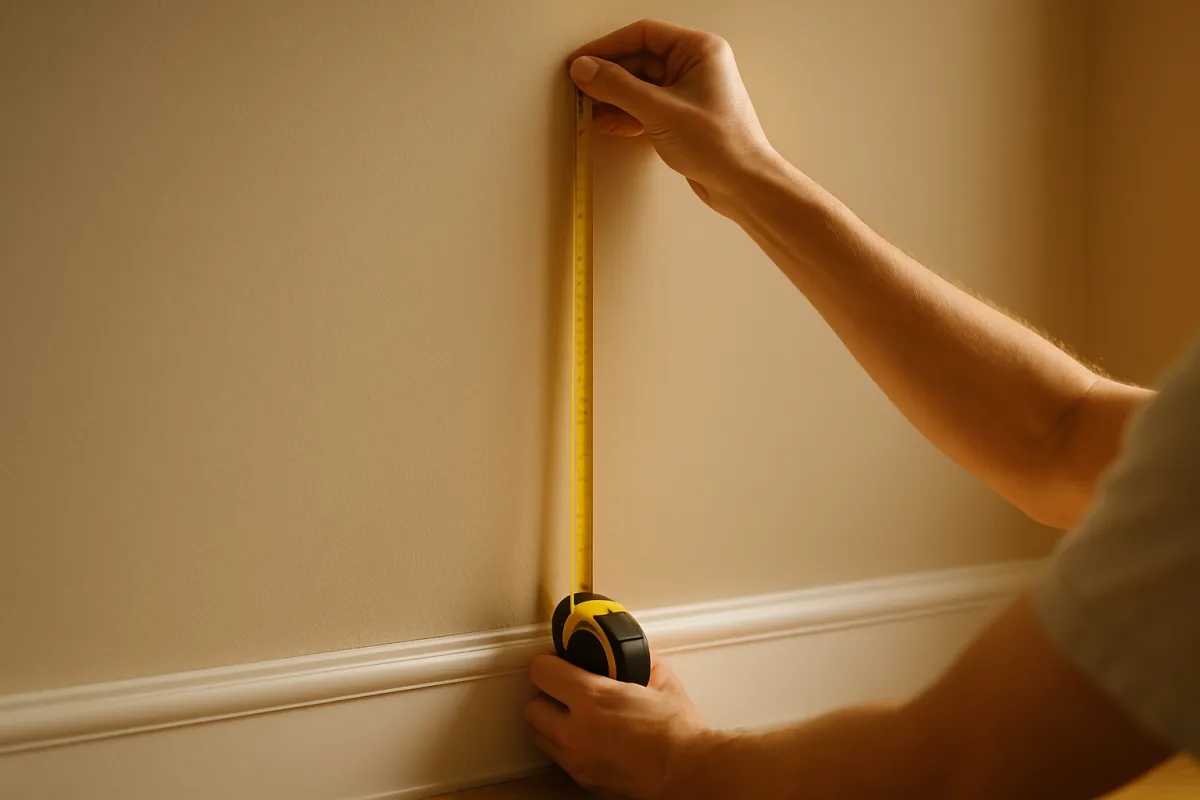
Turning the rates in this brief into your own planning number is three steps. First, measure the net wall area: perimeter times height minus doors and windows, as our paint quantity manual works through in full. Second, pick the installed rate, an illustrative 4 dollars per square foot at the midpoint, adjusted up for heavy prep or a dramatic color change, or down for a simple refresh.
Third, multiply the wall area by the rate for the base figure, then add ceiling paint and trim as their own lines if they are in scope, since neither is included in the bare wall-area rate. A 370 square foot bedroom at the midpoint is roughly 1,480 dollars for walls, plus an illustrative 250 for the ceiling and 275 for trim brings a full-room repaint to roughly 2,000 dollars all in. The companion below runs this entire method live on your own numbers as you read.
Regional and seasonal cost swings
Every rate in this brief is a national illustrative figure, and the real number in any one market moves with local labor costs and the specific crews available. Coastal and high cost of living metro markets commonly run above these illustrative midpoints on labor alone, while regions with a lower cost of living and more painting crews competing for work commonly run below them.
Interior painting runs on a less pronounced seasonal calendar than an outdoor trade, since the work happens indoors regardless of weather, though many painting crews see a genuine demand bump around the spring and early summer home-selling and renovation season. Booking a project in a quieter season, where a contractor’s backlog allows it, sometimes softens scheduling and occasionally pricing, though a contractor’s own workload matters more than the calendar alone.
Ways to keep interior painting cost down
A painting budget has real levers, and labor is the largest one, so doing the prep yourself, patching, sanding, and taping, ahead of a crew’s arrival, where you are confident doing it well, can trim real hours from a bid even if you still hire out the application itself. Choosing a same-color or similar-tone refresh over a dramatic change avoids the extra coat and primer a weak-hiding color change commonly needs.
Clearing furniture from the room yourself before the crew arrives is a low-effort way to save labor time, and bundling multiple rooms into one visit typically costs less per room than scheduling them separately, since a crew’s setup and cleanup time spreads across more square footage. What should never be cut is prep time on genuinely damaged or heavily patched walls, since that is the part of the job that most determines whether the finished paint actually looks even.
Comparing painting bids line by line
A painting bid that reads as a single lump sum is the hardest one to compare against another, since a lower total can hide a thinner prep scope rather than a genuinely better price. Ask every bidder to itemize the number of coats assumed, the specific prep work included, whether ceilings and trim are in scope or priced separately, the paint brand and grade by name, and whether primer is included where your walls likely need it.
Two bids on the same room that differ by several hundred dollars commonly differ in one of a few places: whether a second coat is actually assumed by default, how much prep time is budgeted for patched or textured walls, or whether ceiling and trim work is bundled in or quietly excluded. A bid that is unusually low relative to the others deserves a direct question rather than automatic acceptance, since the gap is rarely free money and is more often a thinner prep or coat count.
A worked example: a 12 by 14 bedroom repainted
Take the common case end to end, the same 12 by 14 foot room with 8 foot ceilings our paint quantity manual uses in its own worked example, with a net wall area of 366 square feet after one door and two windows are subtracted. At the illustrative installed midpoint of 4 dollars per square foot, two coats of wall paint prices near 1,464 dollars.
Add the ceiling at an illustrative 250 dollars for a smooth, standard-height surface, and trim and one door at an illustrative 300 dollars, and the full-room all-in total reaches roughly 2,014 dollars as a planning figure for a complete repaint. Choose a simple same-color refresh instead of a dramatic change on the walls alone, and that wall line alone can drop closer to 950 dollars at the single-coat adjustment. Run your own room through the companion below to see how coats, grade, and ceiling choices move your number.
Textured versus smooth walls
Textured walls, an orange peel or knockdown spray texture common in many homes built from the 1980s onward, or a hand-applied skip trowel or stucco-style finish, take longer to paint than smooth drywall, since the roller has to work paint fully into every ridge and valley rather than gliding across a flat plane. As an illustrative figure, a textured wall commonly adds 10 to 25 percent to the labor line over an identical smooth wall, and it also uses somewhat more paint per square foot, since the textured surface area covered is genuinely greater than the flat square footage measured.
Heavy texture, a pronounced knockdown or a rough stucco finish, sits at the upper end of that range, while a light orange peel adds comparatively little. Smoothing a heavily textured wall before painting, a separate skim coat and sand process some owners choose for a more contemporary look, is its own substantial project priced apart from painting entirely, commonly treated as a drywall finish upgrade rather than a paint prep step, and worth pricing through our drywall installation cost brief if that is the direction you are considering.
New construction versus repaint cost
Painting new construction drywall for the first time differs from repainting an already-finished room in ways that move the estimate in both directions at once. New drywall needs a primer coat before color goes on, since bare drywall and the compound used at taped seams absorb paint unevenly without it, an extra material and labor line a repaint of a previously painted wall in a similar color usually skips.
Working against that extra primer step, new construction painting happens in an empty house with no furniture to move, no existing paint to patch around, and often several rooms painted in sequence by the same crew, all of which speed up the labor side relative to painting one furnished, lived-in room at a time. The net effect commonly lands new construction painting at a similar or modestly lower per square foot rate than a comparable repaint once primer is accounted for, though the two scopes are different enough that a fair quote prices each on its own terms rather than assuming one rate fits both.
Crew size and how it affects your schedule, not just the price
A single painter working alone and a two or three person crew price a given room similarly on a per square foot basis, since the rate this brief prices already reflects labor hours rather than a headcount, but crew size changes how long the job takes on your calendar. A solo painter spreads the same labor hours across more calendar days, while a crew finishes faster but needs more coordination, particularly around dry time between coats, which no amount of extra crew members can shorten.
For a single room, the difference rarely matters much either way. For a whole-house repaint, a larger crew finishing in a handful of days versus a solo painter stretching the same scope over a couple of weeks is a real scheduling consideration, especially if the home is occupied during the work, worth discussing directly with a contractor when comparing bids that otherwise land at a similar price.
Insurance and licensing checks before hiring
Confirming a painting contractor carries liability insurance and, where locally required, a business license is a basic check worth doing before signing any contract, since interior painting work happens inside an occupied home with real furniture, flooring, and finishes at risk from an accident, a spilled can or a fall from a ladder. A legitimate contractor should provide proof of insurance without hesitation when asked.
Beyond insurance, a short reference check or a look at recent review history is a reasonable step for any project of meaningful size, a whole-house repaint rather than a single small room, since painting quality and professionalism varies considerably between individual painters and crews even within the same company. None of this changes the dollar figures in this brief, but it is part of what a careful comparison between written bids should include alongside the price itself.
Lead paint and older homes
Homes built before 1978 may have layers of lead-based paint under the current finish, a genuine health consideration rather than a routine prep detail, since disturbing lead paint through sanding or scraping can release hazardous dust. A reputable contractor working on a pre-1978 home should follow lead-safe work practices, containment, wet sanding methods, and proper cleanup, which commonly adds a real cost premium over a standard repaint on a newer home.
If your home falls in this window and the walls have never been tested, a lead paint test kit or a professional inspection before any heavy sanding or scraping is a reasonable precaution, since the alternative, discovering the issue mid-project, is both more expensive to remediate properly and a genuine exposure risk in the meantime. This is not a line item this brief’s illustrative rates assume by default, so flag a pre-1978 home specifically when requesting quotes rather than assuming a standard bid already accounts for it.
Confirm any contractor working on a home in this window can describe their specific lead-safe containment and cleanup method rather than giving a vague assurance, since the regulated practices exist precisely because dust from disturbed lead paint is hazardous to children and pregnant occupants in particular. A contractor unwilling or unable to describe their process in specific terms is a real warning sign worth taking seriously on an older home, regardless of how competitive the rest of the quote looks.
The bottom line
Interior painting cost comes down to a short list in a fixed order: wall area, number of coats, prep needs, and whether ceilings and trim are in scope. Carry the illustrative rate, 2 to 6 dollars per square foot of wall area with a midpoint near 4, then multiply by your measured net wall area for the base figure, and add ceiling and trim as their own lines when they apply.
Remember that labor, not paint, is the largest share of an installed price, which is why prep work on damaged or textured walls moves a bid more than paint grade does, and that a dramatic color change needs the full two-coat treatment and sometimes a third. Measure with the estimator, price your own room in the companion below, read our paint quantity manual for the gallon math behind the number, then collect written bids that all cover the same prep and coat count. Interior painting priced that way arrives as a decision, not a surprise.
This cost brief is workbench education for planning a painting budget, not a quote or a professional estimate. Every dollar figure in it, per square foot, by room, and by project, is an illustrative planning number, and your wall condition, color change, ceiling height, and local labor market will each move a real bid, sometimes substantially. Build your actual budget on current written bids from local painting contractors, not on any single figure printed here.
Frequently asked questions
How much does interior painting cost per square foot?
As an illustrative planning range, professional interior painting, materials and labor together for two coats, commonly runs somewhere around 2 to 6 dollars per square foot of wall area, with a working midpoint near 4 dollars. That figure covers prep, taping, two coats of paint, and cleanup, but usually not ceilings or trim, which price as separate lines. A typical bedroom with roughly 370 square feet of net wall area lands near 1,480 dollars at the midpoint before ceiling or trim work is added. Get a written local quote, since regional labor rates and the specific prep the walls need move the real figure more than any single table.
How much does it cost to paint a 12 by 14 room?
A 12 by 14 foot room with 8 foot ceilings, one door, and two windows has roughly 366 square feet of net wall area once openings are subtracted. At the illustrative installed midpoint of 4 dollars per square foot, that prices near 1,464 dollars for two coats of wall paint, before a ceiling, which commonly adds a few hundred dollars more, and trim, priced separately by linear foot. A simple color-matched refresh at the same size can run below that midpoint, while a dramatic color change or heavily patched walls can run above it.
How much does it cost to paint a house interior?
Contractors commonly quote a whole-house interior repaint per square foot of the home's floor area rather than summing every room's wall area separately, since the two track closely across a typical floor plan. As an illustrative planning range, a full interior repaint commonly runs somewhere around 1.50 to 3.50 dollars per square foot of floor area, with a midpoint near 2.50, so a 2,000 square foot home lands near 5,000 dollars for walls throughout, before ceilings and trim, which are commonly priced as add-on lines rather than folded into the base figure.
Do I need two coats of paint, and does skipping one save money?
Almost every repaint needs two coats to build an even film and fully hide the old color, and skipping the second coat is the most common way a paint job ends up looking patchy under normal light. A single-coat job, estimating at roughly 65 percent of the two-coat rate, is realistic only when repainting the same color in the same sheen on a sound, previously painted wall, essentially a refresh rather than a color change. Estimate every job at two coats and treat one coat as a pleasant surprise on a simple refresh, never as the plan for a genuine color change.
How much does paint grade affect interior painting cost?
Paint grade moves the material line directly, and as illustrative per-gallon figures, an economy or builder-grade paint commonly runs 25 to 35 dollars, a standard quality paint runs 40 to 70 dollars, and a premium, highly scrubbable or stain-blocking line runs 70 to 100 dollars or more. Because paint material is typically a smaller share of an installed price than labor, moving up a grade tier changes the total less dramatically than the per-gallon jump suggests, though a premium paint's better hide and durability can mean fewer touch-ups and a longer repaint cycle, which is its own form of savings over time.
Does painting a ceiling cost extra?
Yes, a ceiling is priced as its own line separate from wall paint, since ceiling paint is typically a different flat-sheen product and overhead work is slower and more physically demanding than rolling a vertical wall. As an illustrative figure, painting a typical room's ceiling adds roughly 150 to 350 dollars on top of the wall paint cost, depending on room size and whether the ceiling has texture, which both slows the work and uses more paint than a smooth surface would.
Can I paint my own interior to save money?
Labor is the largest share of a professional interior painting bid, so the saving from doing it yourself is genuine, and painting is one of the more approachable do-it-yourself projects for a careful homeowner with basic tools and patience for prep work. The honest caution is that prep, patching holes, sanding rough spots, taping clean lines, and priming where needed, is what actually determines whether the finished job looks professional, and skipping it is the single most common reason a DIY paint job looks like one. Budget real time for prep, not just for the rolling, and expect the job to take longer than a professional crew's schedule.
What drives interior painting cost up the most?
Prep work is the single biggest swing factor, since heavily patched, textured, or damaged walls take meaningfully longer to prepare than clean, smooth, previously painted drywall, and that extra time shows up directly in the labor line. A dramatic color change, especially to or from a deep, weak-hiding color, commonly needs a third coat or a tinted primer, which adds real material and labor beyond the standard two-coat estimate. Ceiling height above a standard 8 feet, furniture that has to be moved rather than already cleared, and multiple accent colors in one room each add their own smaller increments on top of the base per square foot rate.