
What's on this page
- What topsoil costs per cubic yard
- Topsoil cost by the ton
- Topsoil cost by project size
- Topsoil cost in bags
- Topsoil cost by grade
- Screened vs unscreened topsoil
- Topsoil blended with compost: the premium
- Delivery cost and minimums
- Where the money goes
- Bagged topsoil cost and when it makes sense
- Topsoil cost for a new lawn
- Topsoil cost for a raised garden bed
- Topsoil cost to level or topdress a yard
- Fill dirt vs topsoil: the cheaper option and when it is wrong
- DIY topsoil cost vs hiring grading labor
- A worked example: 5 yards delivered for a new garden bed
- Checking topsoil quality before you buy
- Ways to keep topsoil cost down
- Common mistakes that inflate a topsoil order
- Your topsoil cost checklist
- The bottom line
Short answer: Bulk screened topsoil commonly runs an illustrative 15 to 40 dollars per cubic yard delivered, with a working midpoint near 25 dollars, a compost blend runs higher at roughly 35 to 65, and fill dirt runs lower at about 10 to 20. A 3.7 cubic yard garden bed order prices near 93 dollars in plain topsoil material before delivery, and delivery is commonly a separate 50 to 150 dollar flat fee most buyers forget to ask about until the quote arrives.
Topsoil cost is a small number that hides behind a large one. The material itself, priced by the cubic yard, is genuinely inexpensive for how much ground it covers, which is exactly why the delivery fee, the grade of soil chosen, and the minimum order a supplier sets end up mattering more to the final bill than most buyers expect going in. A homeowner ordering three or four yards for a garden bed is often surprised to find the flat delivery charge costs more than the soil riding on the truck, and that surprise is entirely avoidable once the pricing structure is laid out plainly.
This cost brief prices topsoil the way landscape suppliers and bulk yards actually sell it: per cubic yard, per ton, and per bag, broken out by grade from plain screened soil up through a compost blend, with delivery, minimums, and the fill dirt alternative priced alongside. It is the direct cost companion to our topsoil quantity calculator, which works the area-times-depth math for a new lawn, a raised bed, and a topdressing job in full. Here the focus is money rather than volume. Run your own project through the companion below to turn an area, a depth, and a grade into an illustrative delivered total as you read.
Key takeaways
- Bulk screened topsoil commonly runs an illustrative 15 to 40 dollars per cubic yard, with a working midpoint near 25; a compost blend runs 35 to 65, and fill dirt runs 10 to 20.
- Delivery is frequently a separate flat fee, an illustrative 50 to 150 dollars, that most buyers overlook until the quote arrives, and it can cost more than the soil itself on a small order.
- Bulk beats bags once an order passes roughly half a cubic yard; below that, bagged soil from a store is often the cheaper and simpler buy.
- Fill dirt is the cheapest material but is not a substitute for topsoil anywhere plant roots need to establish; the economical move on a deep fill is fill dirt below and topsoil only in the top few inches.
- Most residential topsoil orders are small in dollar terms, a few cubic yards, so the delivery fee and the minimum order a supplier sets move the real bill more than the per yard rate does.
What topsoil costs per cubic yard
The cubic yard is the standard unit for pricing topsoil, because it is how bulk suppliers measure, sell, and deliver the material, and because area-times-depth volume calculations naturally land in yards rather than tons or bags. As an illustrative planning range, bulk screened topsoil commonly runs somewhere around 15 to 40 dollars per cubic yard, with a working midpoint near 25 dollars. That range covers the soil itself after screening, and it usually does not include delivery, which the next section prices separately.
The spread inside that range tracks the grade of soil and the local supply chain more than anything else: a basic screened topsoil near a quarry or a large landscape supplier sits toward the low end, while a premium blend or soil sourced and trucked some distance sits toward the top. Treat the illustrative 25 dollar midpoint as a sanity check rather than a quote, since local sourcing, screening quality, and the supplier’s own costs all shift the real number, and the companion below carries this rate through your own project’s yardage as you read.
Topsoil cost by the ton
Some suppliers, particularly larger quarries and bulk material yards that weigh every truck on a scale, price and sell topsoil by the ton rather than by the cubic yard. A cubic yard of topsoil weighs roughly 1 to 1.3 tons depending on its moisture content and composition, with 1.1 tons a commonly cited working figure for planning purposes, so an illustrative 25 dollar per yard rate works out to somewhere around 20 to 25 dollars per ton on that same material.
For a small or mid-size residential order, cubic yards remain the more useful unit, since a garden bed or a lawn’s fill depth is naturally measured in inches over a known area, and our topsoil quantity calculator converts that area and depth directly into yardage. Tonnage becomes the more relevant figure mainly on very large orders, multiple truckloads for a new lawn’s full base grade or a significant regrading job, where a supplier’s scale ticket is the actual record of what was delivered.
Topsoil cost by project size
Size is the multiplier every other factor in this brief sits on top of, and the table below prices common project volumes at the illustrative screened topsoil midpoint of 25 dollars per cubic yard plus a flat 100 dollar delivery fee, purely as planning bands. Small orders carry the heaviest delivery burden relative to material, since the flat fee barely changes with load size until a truck is genuinely full.
| Order size | Illustrative material | Illustrative delivered total |
|---|---|---|
| 1 cubic yard | ~$25 | ~$125 |
| 2 cubic yards | ~$50 | ~$150 |
| 4 cubic yards | ~$100 | ~$200 |
| 6 cubic yards | ~$150 | ~$250 |
| 10 cubic yards | ~$250 | ~$350 |
| 20 cubic yards | ~$500 | ~$600 |
Read the pattern across the rows rather than any single number: the delivered total grows far more slowly than the material line alone would suggest, because the fixed delivery fee is doing proportionally less work as the order grows. That is the practical case for combining every topsoil need on a property, several beds, a topdressing pass, and a low spot in the lawn, into a single larger order rather than several small ones scheduled separately. The companion below runs your own measured yardage through this same delivered-total math rather than a nominal round number.
Topsoil cost in bags
Bagged topsoil, sold by the 40 pound bag at home improvement and garden stores, is priced per bag rather than per yard, and the comparison to bulk only makes sense once both are converted to the same unit. A standard 40 pound bag covers roughly three quarters of a cubic foot, so it takes about 36 bags to equal one cubic yard, a conversion our topsoil quantity calculator performs automatically once a project’s yardage is known.
Priced per bag, topsoil commonly runs a few dollars each at retail, which multiplied across 36 bags for a full cubic yard frequently lands above what the same yard costs delivered in bulk, sometimes considerably so. The crossover where bulk starts winning commonly sits somewhere around half a cubic yard, below which many bulk suppliers’ delivery minimums and flat fees make bags the more economical and far more convenient choice, since no truck access, scheduling, or large pile in the driveway is involved.
Topsoil cost by grade
Illustrative topsoil cost per cubic yard, by grade
Bulk material price before delivery; local sourcing and screening quality move every bar.
Every bar width is that row's illustrative midpoint divided by the highest, 65, times 100. Screening and added compost are the two steps that move a load up this chart; neither changes the underlying dirt, both add real processing cost.
Grade is the single largest lever in a topsoil estimate after delivery, and the chart above places the common options side by side. Fill dirt anchors the bottom because it skips screening entirely. Screened topsoil is the common default for most lawn and bed work. A compost blend and premium bagged garden soil sit at the top, priced for the added processing and, in the bagged case, the retail packaging and handling layered on top of bulk pricing.
Screened vs unscreened topsoil
Screened topsoil has been passed through a mesh screen that removes rocks, roots, clumps, and construction debris, leaving a finer, more consistent product that is what most people mean when they ask for topsoil at all. That screening step is real equipment time and labor on top of the raw material, which is exactly why screened soil costs more than unscreened fill dirt even though both start as dug earth.
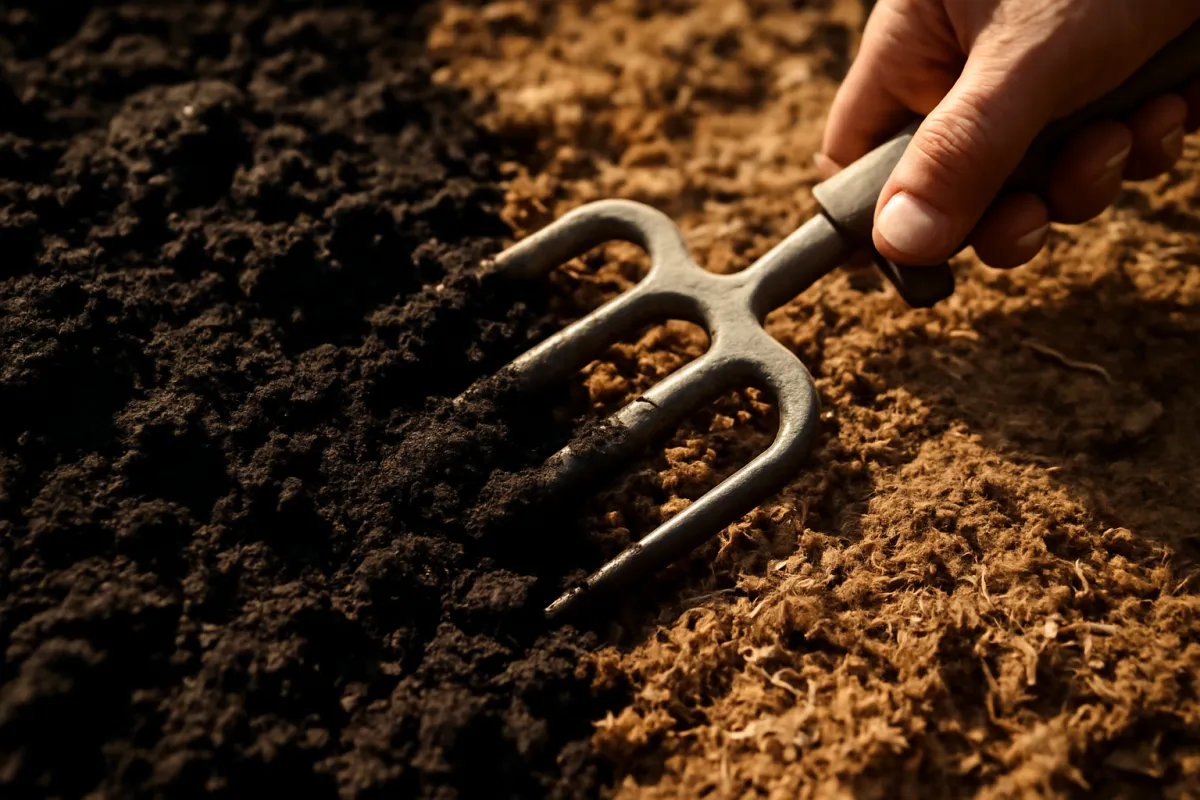
Unscreened fill dirt, sold for an illustrative 10 to 20 dollars per cubic yard, is genuinely cheaper, but it is sold specifically for filling low spots, backfilling excavations, and building up a base grade, not for anywhere a lawn, a bed, or any plant actually needs to root. Using fill dirt as a top layer under sod or seed is a common way to save a modest amount up front and then fight poor drainage, compaction, and buried debris for seasons afterward. Where a job needs real depth, fill dirt for the bulk of it and a thinner screened topsoil layer on top for the last few inches is the economical way to use both materials where each actually belongs.
Topsoil blended with compost: the premium
A topsoil and compost blend, screened soil with organic compost mixed through it, commonly runs an illustrative 35 to 65 dollars per cubic yard, a real premium over plain screened topsoil’s 15 to 40. The added cost buys added organic matter and improved structure from day one, which matters most specifically where a bed is being built new and has no existing soil life or nutrient reserve to draw on.
The premium earns its keep unevenly across project types. For a new raised bed or a vegetable garden, where the growing medium is small in volume and the payoff in plant performance is immediate and visible, the blend is usually worth it. For filling the base grade under an entire new lawn, where the volume is far larger and turfgrass itself builds organic matter into the soil over successive seasons, plain topsoil is usually the more economical and entirely adequate choice, saving the blend premium specifically for the smaller-volume beds where the extra cost per yard matters least in absolute dollars.
Delivery cost and minimums
Delivery is the line most topsoil buyers underweight when comparing supplier quotes, and it is frequently priced as a flat fee entirely separate from the material rate. As an illustrative range, delivery runs somewhere around 50 to 150 dollars, moving with distance from the supplier, the truck size the order needs, and whether the site offers easy access for a full-size dump truck or requires a smaller, more maneuverable vehicle that costs more to dispatch.
Many suppliers also set a minimum order, commonly a handful of cubic yards, below which they either decline to deliver at all or charge the same flat fee regardless of how little material rides on the truck. That minimum is exactly what makes bagged soil competitive for small jobs: a 1 yard garden bed order might clear a supplier’s minimum and pay the full delivery fee anyway, while the same yard in 36 bags from a store needs no delivery scheduling at all. Always request the all-in delivered price per yard when comparing suppliers, since a lower bare material rate can hide a higher delivery fee that erases the apparent saving, especially on a small order.
Site access is the other variable hiding inside a delivery quote. A driveway a full-size dump truck can back into and tip directly where the pile is needed is the cheap case, and it is what most delivery quotes assume by default. A backyard behind a gate, a narrow side path, or a steep slope the truck cannot reach means the load either gets wheelbarrowed by hand from the nearest access point, adding labor time a supplier may bill separately, or a smaller, more maneuverable vehicle has to be dispatched at a higher per-trip cost. Mention any access restriction when requesting a quote rather than after the truck arrives and cannot get close, since a driver turned away by a gate the quote never asked about is a wasted trip that someone ends up paying for.
Where the money goes
Where the cost of a small delivered topsoil order goes
Illustrative split for a 3 to 4 cubic yard screened topsoil order, typical delivery distance.
On a small order, delivery can approach the material cost itself, which flips the usual intuition that soil is the expensive part. On a large multi-yard order the same flat delivery fee shrinks to a much smaller share, which is why bulk buying rewards ordering for the whole project at once rather than in several small trips.
The practical lesson in that split is sizing the order correctly the first time. Because the delivery fee is largely fixed regardless of load size up to a full truck, two separate 2 yard deliveries for the same project cost close to double one 4 yard delivery, simply from paying the flat fee twice. Measuring the whole project’s need up front with the quantity calculator and ordering it in one trip is one of the easiest ways to keep total topsoil cost down without changing the material at all.
Bagged topsoil cost and when it makes sense
Bags are not simply the inferior option at a higher per yard price; they are the more sensible buy below the bulk crossover point regardless of price, because they solve problems bulk delivery cannot. A single raised bed, a scattering of containers, or a small patch repair often needs well under half a cubic yard, an amount that clears few if any delivery minimums and would otherwise leave a buyer paying a full flat fee for a trivial amount of material.
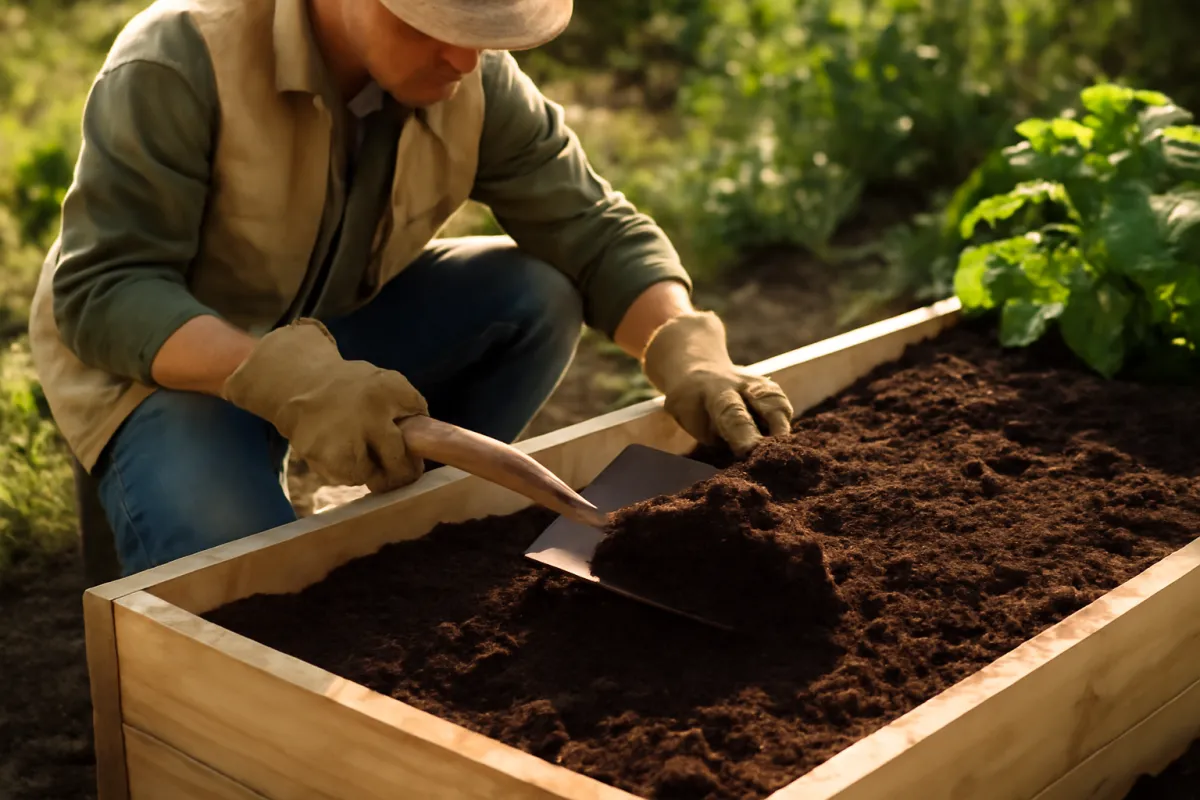
Bags also solve an access problem bulk delivery sometimes cannot: no large truck needs to reach the work area, no pile sits in a driveway waiting to be moved by wheelbarrow, and leftover, unopened bags store indefinitely for the next small project. For any job that clearly exceeds a cubic yard or two, run both the bagged and bulk delivered price before ordering, since the crossover point moves with local bag pricing and local delivery fees rather than sitting at one fixed volume everywhere.
Topsoil cost for a new lawn
A new lawn’s topsoil need is usually the largest-volume, lowest-cost-per-yard case in residential work, since the typical depth is shallow, commonly a few inches over the full yard area, which keeps the per square foot material cost modest even though the total square footage is large. Plain screened topsoil is usually the right grade here rather than a compost blend, since turfgrass builds its own organic matter into the soil over successive growing seasons, and the blend premium is better spent on the smaller beds in the same yard where its effect shows up faster.
Because a new lawn’s topsoil order is large enough to clear most delivery minimums comfortably, bulk is almost always the more economical path here, and the delivery fee that dominates a small bed order shrinks to a minor share of a multi-yard lawn delivery. Confirm the grading plan and the final depth with whoever is doing the lawn installation before ordering, since topsoil depth under new sod or seed is a specification decision, not just a cost one, and ordering short means a second delivery that pays the flat fee all over again.
Topsoil cost for a raised garden bed
A raised bed is the case where the compost blend premium most reliably pays for itself, since the bed’s whole growing medium is this one order, with no existing native soil underneath contributing nutrients or structure. As a worked figure, a 4 by 8 foot bed filled 10 inches deep is about 27 cubic feet, almost exactly 1 cubic yard, which in a compost blend at an illustrative 50 dollars a yard prices near 50 dollars in material, a small enough number that the blend’s premium over plain topsoil is only a few dollars on the whole bed.
That small dollar gap is exactly why the blend makes sense at bed scale even though it would add real money across a whole lawn: the total project is small, so a higher per yard rate barely moves the final bill, while the improved soil structure and nutrient content benefit whatever is planted from the first season rather than waiting for amendments to build up over years.
Topsoil cost to level or topdress a yard
Topdressing, spreading a thin layer of topsoil across an existing lawn to fill low spots and smooth the grade, uses a very different depth than either a new lawn or a bed, commonly a quarter to half an inch, which keeps the total yardage small even across a sizable lawn area. At that thin a depth, a 1,000 square foot lawn needs well under 2 cubic yards, a modest material cost that again makes delivery the dominant line item rather than the soil itself.
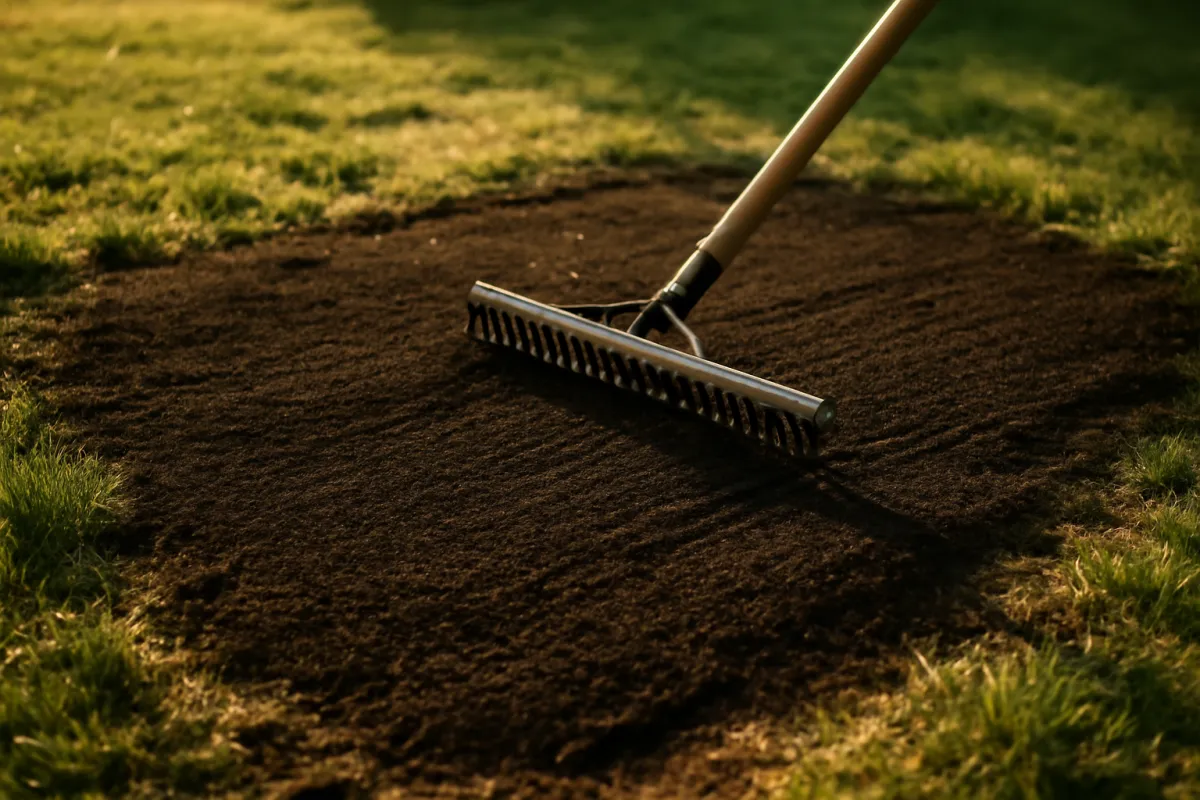
Screened topsoil, finer and free of clumps, is the right grade for topdressing specifically because a coarse or unscreened material is hard to spread thin and even across established grass without smothering it in patches. Plan a topdressing project around the thin depth this job actually needs rather than ordering at a lawn-installation depth by habit, since over-ordering here wastes material that a thin spread genuinely does not need.
Fill dirt vs topsoil: the cheaper option and when it is wrong
Fill dirt earns its lower price, an illustrative 10 to 20 dollars per cubic yard against topsoil’s 15 to 40, honestly: it is unscreened, commonly subsoil or excavated material from a construction site, sold for filling and grading rather than growing. Used where it belongs, backfilling a trench, raising a low area of yard well below the finished surface, or building up a base grade before a final topsoil layer goes on top, it is the correct, economical material and topsoil would be overkill.
Used where it does not belong, as the top layer under new sod, seed, or a planting bed, fill dirt’s lack of screening, its often poor drainage and compaction, and the debris it can carry are a common and costly mistake, one that shows up as a struggling lawn or bed rather than at the time of purchase. The economical answer on any job needing real depth is layering the two: fill dirt for the bulk of the fill, and a topsoil layer only in the final few inches where roots actually establish, which spends the pricier material only where it earns its cost.
DIY topsoil cost vs hiring grading labor
Ordering and spreading topsoil yourself attacks the labor portion of what a full-service landscaping job would otherwise charge, and for a bed or a topdressing job, that saving is substantial, since spreading a few cubic yards by wheelbarrow and rake is physical but straightforward work. The material and delivery costs in this brief apply either way; what changes is whether a crew’s spreading and grading labor gets added on top.
The case for hiring grading labor strengthens with scale and precision: a new lawn’s full base grade needs to be shaped to specific slopes for drainage before sod or seed goes down, work that benefits from experience and sometimes equipment a homeowner does not have. A bed or a topdressing job, by contrast, is forgiving of imperfect technique and genuinely suited to DIY. Match the decision to the specific job rather than to a blanket rule, and remember that ordering the full measured quantity in one delivery, regardless of who spreads it, is what keeps the delivery fee from being paid twice.
A worked example: 5 yards delivered for a new garden bed
Take a common case end to end: a homeowner is building two new raised beds, a combined 160 square feet, filled 10 inches deep, plus topdressing an adjoining 600 square foot patchy section of lawn at a quarter inch. The beds need roughly 4.9 cubic yards at that depth, and the topdressing needs well under half a yard, rounding the whole order to about 5 cubic yards to cover both jobs in one delivery.
Ordered as a compost blend for the beds at an illustrative 50 dollars a yard, the material line prices near 250 dollars for the full 5 yards treated uniformly, or the order can be split, a blend for the bed volume and plain screened topsoil at 25 dollars for the topdressing volume, trimming the blended share to only what the beds actually need. Add an illustrative 100 dollar delivery fee for a single trip and the all-in total lands somewhere between 300 and 350 dollars depending on how the grades are split, a single number that would have cost meaningfully more as two separate deliveries paying the flat fee twice. The companion below runs this same math on your own areas and depths.
Checking topsoil quality before you buy
Price alone does not tell the whole story on a topsoil order, and a few quick checks before committing to a supplier protect against paying for a product that fails to perform once it is spread. A visual check at the yard, where possible, is the simplest: screened topsoil should look reasonably uniform and dark, free of visible construction debris, large rocks, or obvious weed seed heads, and it should crumble rather than form hard, dry clumps when squeezed in a hand.
Ask the supplier directly what the product is screened to, a mesh size is the common way this is specified, and whether it is tested for contaminants, since topsoil sourced from an unknown excavation site can occasionally carry construction debris or, less commonly, contamination that a visual check alone will not catch. A reputable bulk supplier is usually glad to answer both questions, and a vague or evasive answer is itself useful information when choosing between quotes that otherwise look similar on price.
For a project where plant health matters most, a new vegetable garden bed being the clearest case, a simple soil test after the topsoil is in place and before planting is inexpensive insurance, checking pH and basic nutrient levels so any amendment needed is added deliberately rather than discovered after a season of disappointing growth. None of this changes the dollar figures in this brief, but a cheap load of poor-quality soil is rarely actually cheaper once a failed lawn or bed has to be redone.
Ways to keep topsoil cost down
A topsoil budget has a short list of real levers. Ordering the whole project’s measured need in a single delivery rather than in several smaller trips is the single largest one, since the flat delivery fee is paid once either way and a small order pays it for very little material. Matching the grade to the job, plain topsoil for a lawn’s base and topdressing, the compost blend reserved for beds where it earns its keep fastest, is the next largest lever.
Comparing the bagged and bulk price before committing, rather than assuming bulk is automatically cheaper, protects against the delivery minimum trap on small jobs. And where real depth is needed for grading or filling, using cheaper fill dirt for the bulk of it and topsoil only in the finished top layer spends the pricier material only where it actually matters, which is the single biggest lever on any job deep enough to need both.
Common mistakes that inflate a topsoil order
A handful of errors recur across topsoil purchases. Ordering by a rough guess rather than running the area and depth through the actual formula our topsoil quantity calculator uses leads to either an expensive second delivery or a pile of costly leftover soil. Comparing a bare per yard price between suppliers without asking about the delivery fee is the second, and it is the one most likely to produce a surprise on the final invoice.
Using fill dirt where real topsoil was needed to save a little up front, only to fight a struggling lawn or bed afterward, is the third. Ordering a premium compost blend for a large-area job like a whole new lawn, where the premium adds real money without a proportional benefit, is the fourth. And splitting one project into several small deliveries instead of one full order, paying the flat delivery fee multiple times for no real benefit, is the fifth, and the easiest of all five to simply avoid by measuring the whole job before placing the first order.
Your topsoil cost checklist
Work through this before placing an order, and the total will not surprise you once the truck arrives.
- Measured the actual area and depth for every part of the project, beds, lawn, and topdressing separately, with the quantity calculator, rather than ordering a round number by guess.
- Combined every topsoil need on the property into one order where timing allows, since a single delivery fee beats paying it more than once.
- Matched the grade to the job: plain screened topsoil for a lawn base or topdressing, a compost blend reserved for beds, fill dirt only where nothing needs to root.
- Requested the all-in delivered price per cubic yard from each supplier, not the bare material rate alone, before comparing quotes.
- Confirmed whether the order clears the supplier’s delivery minimum, and priced bagged soil as an alternative if it does not.
- Asked what the topsoil is screened to and whether it is tested, especially for a bed where food will be grown.
- Confirmed site access for a delivery truck, and asked what happens, and what it costs, if the driveway or yard cannot take a full-size vehicle.
The companion below runs your own area, depth, and grade choice into an illustrative delivered total, so your own project has a number to check a real quote against.
The bottom line
Topsoil cost is set first by grade, screened soil, a compost blend, or fill dirt, and then by whether the order is bought bulk or bagged and how the delivery fee lands relative to the material itself. As an illustrative planning range, bulk screened topsoil runs 15 to 40 dollars per cubic yard with a midpoint near 25, a compost blend runs 35 to 65, and fill dirt runs 10 to 20, while delivery commonly adds a separate 50 to 150 dollar flat fee that can rival the material cost on a small order. The single most reliable way to control the final bill is measuring the whole project’s need with the quantity calculator and ordering it in one delivery, choosing the grade the specific job actually needs rather than the one that sounds best, and confirming the all-in delivered price before comparing suppliers. Price your own project in the companion below, and get more than one quoted delivered price before you order, since the delivery fee, not the dirt, is usually what decides which supplier actually costs less.
Read this brief as cost education for planning a topsoil budget, not a quote or a soil test. Every dollar figure here, per cubic yard, per ton, per bag, and per project, is an illustrative planning range, and your region, your supplier, the grade of soil chosen, and delivery distance will each move a real price, sometimes considerably. Topsoil quality, contamination, and suitability for a specific use are practical and sometimes regulatory questions a general cost brief cannot answer for your site, so ask any supplier what testing or sourcing standard their product meets and confirm it suits your planting plans before a large order is placed. Build your actual budget on current quoted delivered prices from local suppliers, not on any single figure printed here.
Frequently asked questions
How much does topsoil cost per cubic yard?
As an illustrative planning range, bulk screened topsoil commonly runs somewhere around 15 to 40 dollars per cubic yard delivered, with a working midpoint near 25 dollars, moving with how finely the soil is screened, whether it is blended with compost, and local hauling distance. A premium topsoil and compost blend built for garden beds commonly runs higher, an illustrative 35 to 65 dollars per yard, while unscreened fill dirt sits well below plain topsoil, often 10 to 20 dollars per yard, since it skips the screening step entirely. Delivery is frequently charged as a separate flat fee on top of the per yard material price rather than folded into it, so ask for the all-in delivered rate rather than the yard price alone when comparing suppliers.
How much does a ton of topsoil cost, and how is that different from a yard?
A cubic yard of topsoil weighs roughly 1 to 1.3 tons depending on moisture and composition, commonly cited near 1.1 tons as a working figure, so a yard priced at an illustrative 25 dollars works out to roughly 20 to 25 dollars per ton on that same load. Some suppliers price and sell topsoil by the ton directly rather than by the yard, which matters most for very large orders where a quarry or landscape supplier weighs trucks on a scale rather than estimating volume by eye. For a typical homeowner order measured in a handful of yards, volume is the more useful unit since garden beds and yard depths are naturally thought of in inches over an area, which our topsoil quantity calculator converts directly to cubic yards.
Is bagged topsoil or bulk topsoil cheaper?
Bulk topsoil is reliably cheaper per cubic yard once an order passes roughly half a yard, commonly the crossover point where a bulk delivery's flat fee is spread across enough material to beat the per-bag price of buying the same volume in 40 pound bags from a store. Below that threshold, bags often win, since many bulk suppliers set a delivery minimum that a tiny order does not clear economically, and a trunk full of bagged soil needs no scheduling or truck access. A standard 40 pound bag covers roughly three quarters of a cubic foot, so about 36 bags fill a cubic yard, a conversion worth running before assuming bags are always the pricier choice; for a single raised bed or a handful of potted containers, bags are frequently the more sensible buy regardless of the per-yard math.
Why does screened topsoil cost more than fill dirt?
Screened topsoil has been passed through a mesh screen to remove rocks, roots, clumps, and construction debris, leaving a finer, more uniform product that plants can actually root into, and that screening step is real equipment time and labor layered onto the raw material cost. Fill dirt is unscreened subsoil or excavated material, commonly sold for an illustrative 10 to 20 dollars per cubic yard, well below plain screened topsoil, and it is sold specifically for filling low spots, backfilling, and grading where nothing needs to grow, not for a lawn, a bed, or anywhere plant roots have to establish. Using fill dirt where topsoil is actually needed is a common way to save money up front and lose a lawn or a garden bed to poor drainage, compaction, or buried debris afterward.
Does topsoil cost more with compost mixed in?
Yes, a topsoil and compost blend commonly runs an illustrative 35 to 65 dollars per cubic yard against plain screened topsoil's 15 to 40 dollars, because compost itself is a separate, more processed product layered into the mix at a real cost per yard. The blend earns the premium specifically for new garden beds and raised beds, where the added organic matter improves structure and nutrient content from day one rather than relying on amendments applied later. For a large-area job like filling a new lawn's base grade, where the grass itself will build organic matter over seasons, plain topsoil is usually the more economical and entirely adequate choice, saving the blend premium for the smaller-volume beds where it does the most good.
How much does topsoil delivery cost?
Delivery is commonly charged as a flat fee separate from the per yard material price, and as an illustrative range it runs somewhere around 50 to 150 dollars depending on distance from the supplier, the size of the truck needed, and whether the site has easy driveway access for a full-size dump truck. Many suppliers also set a delivery minimum order, commonly a handful of cubic yards, below which they either decline the delivery or charge a flat rate regardless of how little material is on the truck, which is exactly the threshold that makes bagged soil competitive for small orders. Always ask for the all-in delivered price per yard rather than comparing bare material prices between suppliers, since a lower per yard rate can hide a higher delivery fee that erases the saving on a small order.
How much topsoil do I need for my project, and what does that cost?
Topsoil volume follows area times depth divided by 324 to convert square feet and inches into cubic yards, a formula our topsoil quantity calculator works through in full for a new lawn, a garden bed, and a topdressing job, each of which uses a very different typical depth. Once you have the yardage, multiply by the illustrative per yard rate for the grade you want, plain screened topsoil near 25 dollars, a compost blend near 50, to get a planning figure, then add the delivery fee on top. A 200 square foot garden bed at a 6 inch depth is about 3.7 cubic yards, which in plain topsoil at 25 dollars a yard prices near 93 dollars in material before delivery, a useful anchor for how small most residential topsoil orders actually are in dollar terms next to the delivery fee that often rides along with them.
Can I save money buying fill dirt instead of topsoil?
Fill dirt is genuinely the cheaper material, commonly an illustrative 10 to 20 dollars per cubic yard against topsoil's 15 to 40, but the saving only makes sense where the job is actually filling, raising a low spot, backfilling an excavation, or building up a base grade well below the finished surface, rather than growing anything. The common and costly mistake is using fill dirt as the top layer under new sod, a seeded lawn, or a garden bed, where its lack of screening, its compaction, and its often poor nutrient content and drainage can doom whatever is planted in it. The economical approach on a grading job that also needs a planting layer is fill dirt for the bulk of the depth and a topsoil layer on top for the finished few inches, which uses the cheap material where it belongs and the pricier material only where roots actually live.