What's on this page
- Why depth is the number to settle first
- The gravel depth reference table
- How deep should gravel be for a driveway
- The driveway base and surface layers
- How deep should a gravel base be for pavers
- Gravel depth for walkways and paths
- How deep should pea gravel be
- Gravel depth for landscaping and decorative beds
- Gravel depth for drainage and French drains
- Gravel depth under a concrete slab
- Gravel depth for sheds, RV pads, and heavy parking
- The compaction allowance: tape depth versus ordered depth
- Coverage per cubic yard at each depth
- From depth to an order: the quantity math
- When deeper gravel is not better
- Matching the gravel type to the depth spec
- Edging and fabric: keeping the depth you built
- A worked example: one delivery, four depths
- Common gravel depth mistakes
- The depth spec checklist
- The bottom line
Short answer: Gravel depth is set by the use, all illustrative: about 2 to 3 inches for paths, pea gravel and decorative layers, 4 to 6 inches for paver and slab bases, 6 to 12 inches for a driveway built in layers, and a foot or more for drainage. A driveway is two depths: a coarse base of about 4 to 6 inches under roughly 3 inches of finer surface gravel. Order about 20 percent extra.
How deep should a gravel driveway base be? Nearly every gravel question that matters on ordering day, driveway base included, is secretly a depth question. Area is easy, you read it off a tape, but depth is a spec you have to choose, and it is the input that moves the order more than any measuring error ever will: doubling the depth doubles the cubic yards, the tons, and the bill. Choose it wrong in the other direction and the layer fails early, a 2 inch driveway surface ruts the first wet month, a 1 inch decorative layer shows soil in patches by summer, a shallow drain simply does not drain.
This reference settles that one input, use by use. It covers the depths that recur on almost every residential job: the two-layer driveway build, the compacted base under pavers, walkways, pea gravel, decorative landscaping layers, drainage trenches, and the base under a concrete slab, gathered into one depth table you can check in seconds. It deliberately stays on the depth side of the problem: once your depth is fixed, our gravel quantity manual turns it into cubic yards and tons, and our material coverage reference holds the coverage-per-yard charts. For a first pass on your own dimensions, the estimator runs the arithmetic in seconds.
Key takeaways
- Depth is chosen from the job, not measured from the ground: paths and pea gravel run about 2 to 3 inches, paver and slab bases 4 to 6, driveway builds 6 to 12 in layers, drainage a foot or more, all illustrative.
- A driveway is two depths, not one: a coarse angular base of about 4 to 6 inches for load, under roughly 3 inches of finer surface gravel, with full new builds commonly 8 to 12 inches total.
- Structural layers are compacted in lifts of about 2 inches, because a plate compactor only reaches an inch or two down; depth you cannot compact is cost without strength.
- Depth multiplies straight into the order: one cubic yard covers about 162 square feet at 2 inches, 108 at 3, and 81 at 4, so settling the depth spec is most of the estimate.
- Loose gravel compacts as it is placed and used, so order about 20 percent over the formula volume to end up with the finished depth you specified.
Why depth is the number to settle first
Every gravel estimate runs through the same line, length times width times depth in feet, divided by 27 for cubic yards, and two of those three inputs are facts you collect with a tape. Depth is different in kind: it is a decision, and it is the decision. Get the area wrong by a foot on a 40 foot drive and the order moves a few percent. Spec 6 inches where 3 would do, or 2 where 4 is needed, and the order, the cost, and the lifespan of the surface all move by multiples. Once the depth is decided, our manual on how to calculate cubic yards turns it into an order, with a calculator on the page that runs the length, width, and depth for you.
Depth is also the input where the two directions of error behave differently. Too shallow fails functionally: the layer ruts, scatters, shows soil, or fails to drain, and the fix is a second delivery plus rework. Too deep fails financially and sometimes functionally too, because loose material past what you can compact stays soft, and because depth multiplies straight into tonnage. So the depth spec is not a detail to fill in while the truck is being booked. It is the first line of the plan, chosen from what the surface has to do, and everything after it, the gravel type, the layer structure, the compaction plan, and the order itself, follows from it. That is the whole logic of this reference: fix the depth by use, then let our gravel quantity manual do the volume arithmetic on a number you trust.
The gravel depth reference table
The table gathers the depths this reference works through, one row per use. Every figure is an illustrative common practice, not a specification: soil, climate, frost, and traffic all move the real number, and local practice is the tiebreaker. Depths are finished, compacted depths; the ordering allowance for compaction comes later.
| Use | Common depth | Notes |
|---|---|---|
| Garden path, walkway | 2 to 3 in | Finer angular stone; add a base course on soft ground |
| Pea gravel path or patio | 2 to 3 in | Needs edging at any depth; deeper walks like sand |
| Decorative or landscaping layer | 2 to 3 in | Bigger rock wants a layer at least one stone deep |
| Driveway surface (top course) | ~3 in | Finer angular gravel that packs into a driving crust |
| Base under a concrete slab | ~4 in | Compacted angular stone, even depth matters |
| Paver patio or walkway base | 4 to 6 in | Plus about 1 in of bedding sand and the paver |
| Driveway base layer | 4 to 6 in | Coarse angular stone, compacted in lifts |
| Full new driveway build | 8 to 12 in total | Commonly three layers of roughly 4 in each |
| French drain, drainage trench | 12 in or more | Clean washed stone around the pipe; depth is the point |
Read the table with one habit: identify which rows are surfaces, which are bases, and which are reservoirs. Surfaces (paths, pea gravel, decorative layers, the driveway top) run shallow because they only have to cover and wear. Bases (paver, slab, driveway base) run 4 to 6 inches because they have to spread load. Drainage runs deepest because the stone itself is the working volume. Once you can place a job in one of those three families, its depth roughly places itself.
How deep should gravel be for a driveway
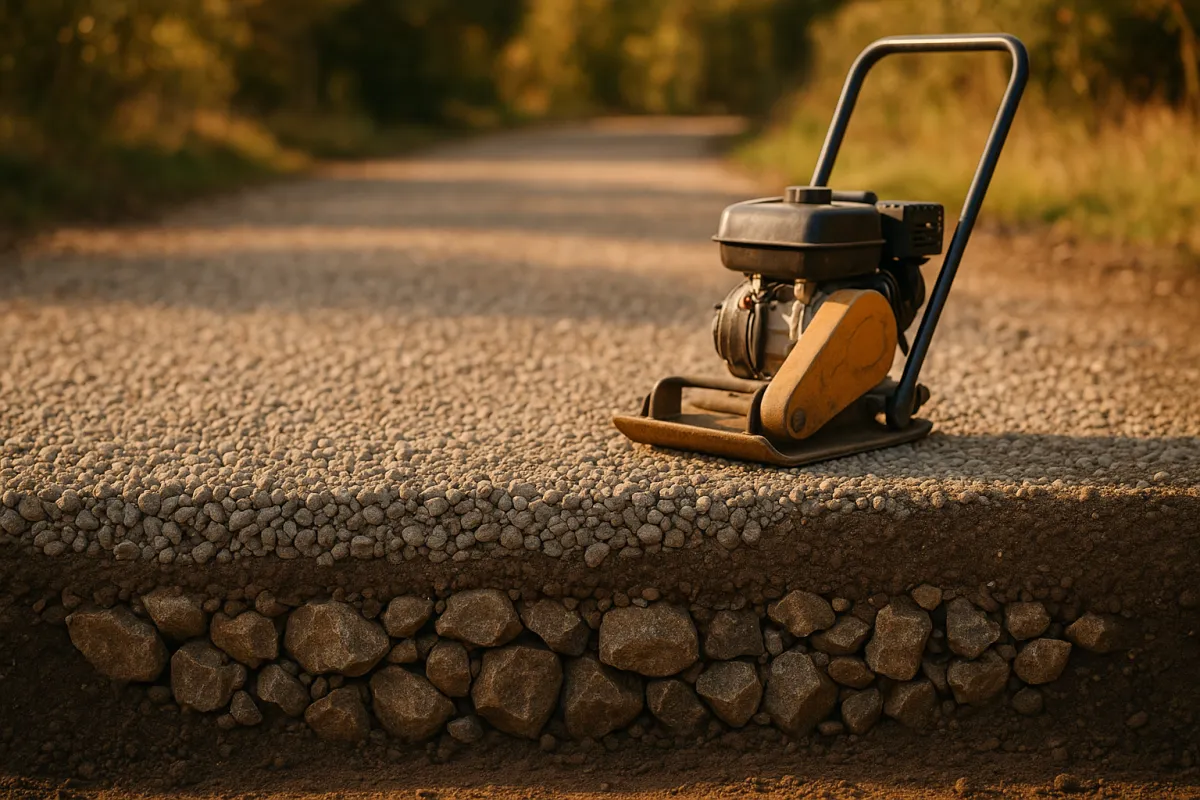
The driveway is the job where “how deep should gravel be” has no single answer, because a driveway is not one layer of gravel. It is a stack, and each layer in the stack has its own depth and its own product. The load-bearing base is a coarse, angular crushed stone laid about 4 to 6 inches deep and compacted, and its job is to spread the weight of vehicles across the subgrade so tires do not punch ruts into the soil. The driving surface is a finer angular gravel, often a crushed product with fines that packs into a firm crust, laid at roughly 3 inches. A full new build therefore commonly totals 6 to 9 inches of stone, and heavier-duty builds run 8 to 12 inches, often split into three layers of roughly 4 inches each, base, middle, and top, as our gravel driveway tutorial walks step by step.
Which spec applies depends on what exists. A brand-new drive cut into soil needs the full stack, fabric, base, and top. An existing drive with a sound, compacted base that has simply gone thin usually needs only the top course, about 3 inches of fresh surface gravel, which is a far smaller order. The failure mode to avoid is the middle path: pouring 3 inches of fine surface gravel straight onto soft soil, where it has no base to sit on. It ruts under the first heavy delivery, and the fix costs more than building the base would have. When in doubt, dig a test hole and see what is actually under the surface before you spec the depth.
The driveway base and surface layers
The base and the top are different depths because they are different machines. The base carries load, and load-spreading is a function of thickness: each inch of compacted angular stone spreads a tire’s pressure across a wider patch of subgrade, which is why soft or clay ground earns the 6 inch end of the base range, or more, while firm, well-drained ground can live at 4. The top course wears and sheds water, jobs that do not improve past about 3 inches; a thicker layer of fine gravel just stays loose at the bottom where the compactor cannot reach it.
Common gravel depth by use
Illustrative finished depths; soil, frost, and traffic move the real figures.
Bar widths track the midpoint of each depth range against the 12 inch drainage trench: a path at about 2.5 inches is roughly a fifth of the drain's depth, the slab base a third, and the structural base ranges sit between. Surfaces run shallow, bases run middle, reservoirs run deep.
The compaction rule binds both layers: a plate compactor only reaches an inch or two down, so any layer past about 2 inches is spread and packed in lifts, not dumped and packed once. A 6 inch base is three passes of roughly 2 inches each, wetted lightly so the stone locks. That lift discipline is also why depth past the spec buys so little on the surface course: gravel you cannot compact stays loose, and loose gravel is what the spec was trying to prevent.
How deep should a gravel base be for pavers
Under pavers, the gravel is invisible on day one and decisive every year after. A commonly cited base for a walk-on patio or walkway is roughly 4 to 6 inches of compacted angular stone over firm subgrade, with the deeper end for soft or clay soils, freeze-prone climates, or anything beyond foot traffic; a paver surface that carries a vehicle wants a substantially deeper base, confirmed against local practice. On top of the base sits a screeded bedding layer of coarse sand about 1 inch deep, and then the paver itself, commonly around 2 to 2.4 inches thick, so the full excavation runs about 7 to 8 inches below the finished surface for a typical build.
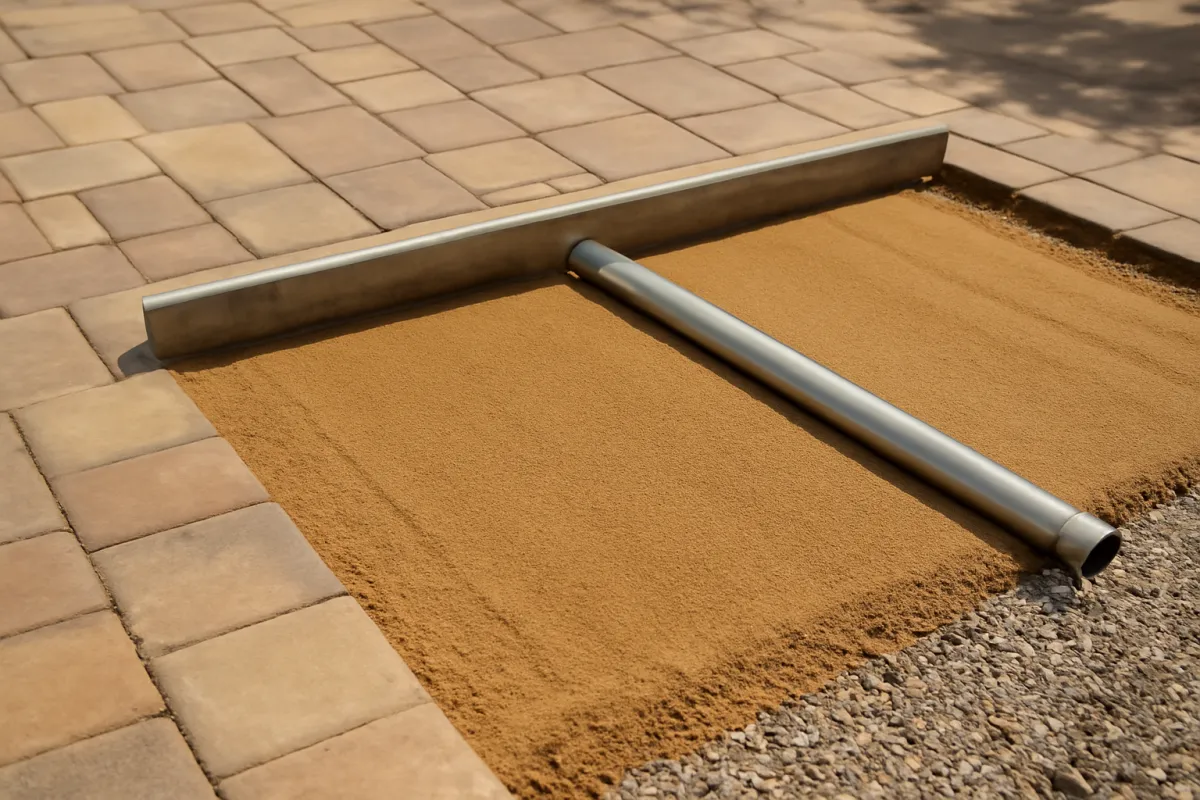
The proportions matter more than the exact figures. The base is the structural layer, and it is the one that never gets thinned: a soft site earns a deeper base, not a shallower one. The sand is deliberately thin, about an inch, because sand keeps moving under load; a thick sand bed used to hide an uneven base lets the pavers settle unevenly no matter how flat the sand started. Our paver patio tutorial builds the whole stack step by step, including the quarter inch per foot drainage slope that gets built into the base rather than corrected at the surface. For the order, a 4 inch base under a 10 by 12 foot patio is about 1.5 cubic yards from the formula and near 1.8 with the compaction allowance.
Gravel depth for walkways and paths
Paths are the forgiving end of the chart, and the common answer is 2 to 3 inches of surface gravel. That is enough to cover the soil completely, drain rain through, and hold a comfortable walking surface, without the cost of a structural build. On firm, well-drained ground, that single shallow layer over a weed fabric is often the whole job, which is why a path is the best first gravel project: the depth spec is short, the tonnage is small, and the failure modes are cosmetic rather than structural.
Two upgrades move a path deeper. Soft or wet ground swallows a thin layer, stone by stone, so a path across it earns a compacted angular base course of a few inches under the surface gravel, pushing the total toward 4 to 6 inches, a miniature of the driveway logic. And a path that carries wheels, garden carts, mowers, wheelbarrows loaded with the next project, behaves more like a light driveway than a walkway, so it earns the base course too. The surface product is a choice between lock and comfort: a fine angular stone with fines packs into a firm crust that wheels like pavement, while rounded pea gravel feels better underfoot and looks softer but stays loose and needs edging. Either way, the depth math is the path’s area times a short depth, which is why a yard of gravel goes a long way here: at 3 inches, one cubic yard covers roughly 100 square feet of path.
How deep should pea gravel be
Pea gravel gets its own row because its depth window is genuinely narrow, and both edges of the window are real. The common spec for a pea gravel path, patio, or seating area is 2 to 3 inches. Below about 2 inches, the layer cannot hide the ground: rounded stones scatter and thin with use, bare patches of soil or fabric show through, and the surface looks starved within a season. Past about 3 inches, the layer gets worse to walk on, not better, because rounded stones do not lock the way angular crushed stone does; they roll past each other, so a deep pea gravel bed behaves like dry beach sand, swallowing shoes, chair legs, and bicycle stands.
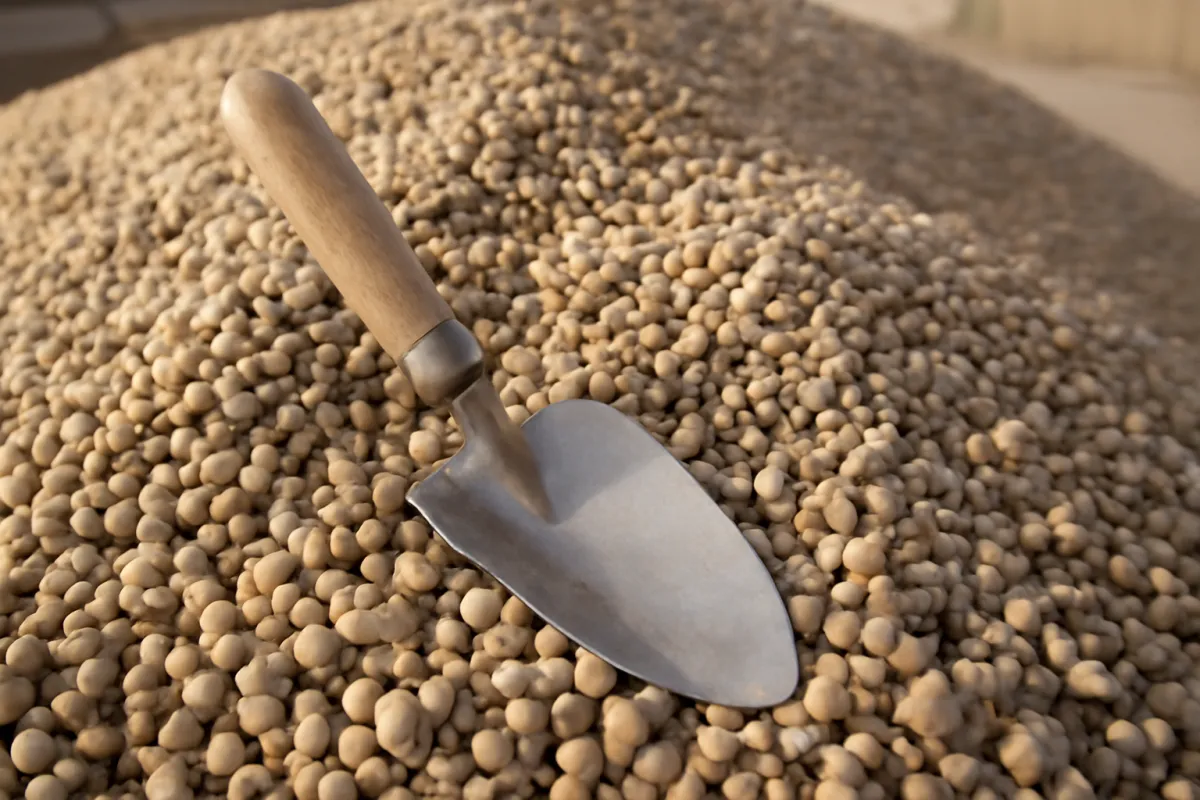
Because it rolls, pea gravel needs two supports at any depth. Edging is not optional: without a firm border of steel, timber, stone, or a paver restraint, the layer migrates outward and thins in place, and you keep buying stone to maintain a depth that is quietly leaving the site. And where traffic is real, a compacted angular base of a few inches under the pea gravel keeps the decorative layer from working down into the soil, so the 2 to 3 inches you specified stays 2 to 3 inches. Order for pea gravel the same way as any layer, area times depth over 27, and remember the narrow window when a deeper-is-better instinct kicks in: with this stone, deeper is literally worse.
Gravel depth for landscaping and decorative beds
Decorative gravel over beds, borders, and open ground runs the same 2 to 3 inches as paths, and for the same reason: the layer’s job is coverage, not structure. Two to three inches hides the soil completely, blocks enough light to suppress most weeds, tolerates some scatter and raking, and does not bury the crowns of plants growing through it. One inch reads as full coverage the day it is spread and as patchy soil by midsummer; five inches buries plants, wastes stone, and makes every future planting hole an excavation.
Stone size adjusts the figure. The 2 to 3 inch spec fits small stone, pea gravel and crushed rock up to around an inch. Larger decorative rock, river cobbles and big angular pieces, wants a layer at least as deep as the stone is wide, so the pieces sit within the layer instead of perching on top of fabric in a single rattling course; that pushes bigger material toward 3 to 4 inches. Under all of it, a weed fabric earns its cost twice, once by suppressing weeds and once by preserving depth, because it stops the stone from pressing into the soil the way it stops soil from rising into the stone. Decorative layers are where coverage math shines: at 3 inches, a cubic yard spreads about 100 square feet, the same convenient rule of thumb our material coverage reference tabulates for every depth, and a modest bed order is often the easiest bulk delivery you will ever spread.
Gravel depth for drainage and French drains
Drainage flips the whole depth logic, because the gravel is not a surface at all: it is the working volume. In a French drain, the stone’s open voids are the reservoir that receives water and the highway that moves it to the pipe, so depth is capacity, and shallow drainage stone is simply a drain that does not drain. A common build runs a foot or more of stone around the perforated pipe, in a trench often about 12 inches wide and 18 to 24 inches deep depending on the water problem, with fabric lining the trench so soil cannot silt the voids shut.
The product spec is as important as the depth spec here, and it points the opposite way from a driveway. Drainage wants clean, washed, angular stone with the fines removed, the kind often labeled by a number such as #57, precisely because it does not pack tight: the voids are the point. That also softens the compaction allowance, since clean stone settles less than a dense base blend. The volume math is trench math, length times width times depth over 27, and it surprises people in the deep direction: an illustrative 40 foot trench at 12 by 12 inches is about 40 cubic feet, roughly 1.5 cubic yards before allowance, more stone than a much larger shallow path. Our gravel quantity manual works that trench-versus-surface contrast in full, and it is the clearest demonstration in all of gravel work that depth, not footprint, drives the order.
Gravel depth under a concrete slab
The base under a slab is the quietest depth spec on the chart and one of the most consequential. A commonly cited figure is roughly 4 inches of compacted angular gravel over firm subgrade, deeper on soft or clay soils. The base does three jobs at once: it spreads the slab’s load onto the ground, it drains water away from the underside of the concrete, and it presents a uniform, firm surface so the slab is supported evenly everywhere. Skipping it, or pouring on loose soil, is one of the most common reasons a slab settles and cracks.
Uniformity is the part the depth number alone does not capture. A base that averages 4 inches but humps in the middle leaves the slab thin over the hump, and thin spots are where cracks start, so the base is leveled and checked inside the forms, not just dumped to a rough depth. Compaction runs in lifts of about 2 inches, the same discipline as every structural layer. The base volume rides along with the concrete order: under an illustrative 10 by 10 foot slab, 4 inches of base is about 1.23 cubic yards from the formula and near 1.5 with the compaction allowance, numbers our slab pouring tutorial carries through a full build. Confirm the base depth for your soil and load with local practice, because expansive clays and frost-prone ground both push the spec deeper.
Gravel depth for sheds, RV pads, and heavy parking
Between the walkway and the driveway sit the pads: shed foundations, RV and boat parking, bin stores, and hot tub aprons. Their depths follow from the load family they belong to. A shed pad carrying a garden building commonly runs 4 to 6 inches of compacted angular stone, the paver-base family, often held inside a timber or steel frame so the edges do not shed. A pad that parks a vehicle is a driveway in a square shape: it wants the driveway stack, a 4 to 6 inch coarse base under a packed top course, and an RV or loaded trailer, which concentrates more weight per tire than a car, leans the base toward the deep end of the range and rewards the full 8 to 12 inch build on soft ground.
The pads are also where the two-layer logic is easiest to skip and most expensive to have skipped, because the load arrives rarely but heavily. A parking pad used twice a month can look perfect for a year on a thin single layer, then rut badly the weekend it rains before the trailer comes home. Spec pads by the heaviest thing that will ever sit on them, not the average day. The volume math is friendly, one rectangle at one or two depths, and the estimator turns a pad’s dimensions into cubic yards and an approximate tonnage in seconds, which makes it easy to price the honest build against the thin one before the ground makes the argument for you.
The compaction allowance: tape depth versus ordered depth
Every depth in this reference is a finished, compacted depth, and finished depth is not what the truck delivers. Loose gravel occupies more space than the same stone after it has been raked, wetted, packed, and driven on, because compaction closes the air gaps between stones. So an order calculated exactly from the finished depth comes up short once the layer settles, and the common correction is to order about 20 percent over the raw formula volume, a little more on soft subgrades that swallow the first inches of stone, a little less for clean drainage stone that is chosen not to pack.
The allowance is not padding; it is the difference between the depth you specified and the depth you end up owning. Skip it and the shortfall shows up as the worst kind of thin: not uniformly shallow, but thin in the exact spots that settled most, which are the soft spots, which are where potholes and bare patches start. The direction of error seals the argument, as it does across bulk materials: surplus gravel is cheap insurance that tops up low spots next season, while a shortfall is a partial-load delivery fee and a visible seam between old and new stone. Calculate the finished depth from this reference, add the allowance from our gravel quantity manual, and round up to the yard’s increment; that chain, spec then allowance then round, is the whole ordering method.
Coverage per cubic yard at each depth
Depth and coverage are the same fact read in two directions, and the conversion is worth carrying in your head. A cubic yard is 27 cubic feet, which spread 1 inch thick covers 324 square feet; divide 324 by the depth in inches and you have the area one yard covers at that depth. At 2 inches a yard covers about 162 square feet, at 3 inches about 108, at 4 inches about 81, and at 6 inches about 54. The rule of thumb that falls out, a yard covers roughly 100 square feet at a typical 3 inch depth, is the fastest sanity check in gravel work.
Read the table backward and it prices the depth decision. The same 300 square foot path costs about 1.9 yards at 2 inches, 2.8 at 3 inches, and 3.7 at 4 inches, before the compaction allowance, so each inch of spec on that path is most of a cubic yard of stone. That is why this reference keeps insisting the depth be chosen deliberately: the difference between a 3 inch and 4 inch spec across a whole driveway is measured in tons. The full coverage tables, for gravel and for every other bulk material the same math governs, live in our material coverage reference, and the weight side of the conversion, roughly 1.4 tons per cubic yard for common crushed stone, is worked in our gravel weight manual.
From depth to an order: the quantity math
Once the depth is fixed, the estimate is one line: length times width times depth, all in feet, divided by 27 for cubic yards, then plus about 20 percent for compaction, then times roughly 1.4 if the yard sells by the ton. The single trap in the line is units, because depth arrives in inches and the formula wants feet, so divide the inches by 12 first: a 3 inch layer is 0.25 feet, a 4 inch base is 0.333. Folded into one expression, cubic yards equal length in feet times width in feet times depth in inches, divided by 324.
Layered jobs run the line once per layer, because each layer has its own depth and usually its own product. A full driveway is the base at its depth plus the top at its depth, ordered as two products; a paver patio is the gravel base in yards plus the bedding sand, a separate thin layer of a different material, as its own small calculation. Keep the layers separate on the order sheet so the yard sends the right stone for each, and only sum them to sanity-check the total tonnage and the delivery plan. This reference stops at the depth spec on purpose: the full ordering method, allowances, bags-versus-bulk crossover, delivery economics, and the worked driveway, lives in our gravel quantity manual, and the estimator chains the whole calculation, depth to yards to an approximate tonnage, from your own dimensions.
When deeper gravel is not better
The instinct that more depth equals more quality is true for exactly two rows of the table, the structural base and the drainage reservoir, and false for the rest. On surfaces, extra depth is often a downgrade. Pea gravel past about 3 inches walks like soft sand. A driveway top course much past 3 inches stays loose at depth, because the compactor’s effective reach is an inch or two, so the crust rides on a slack layer that shifts under braking. Decorative layers past coverage depth bury plants and turn every bulb hole into a dig. In each case the surplus inches cost real tonnage and give back nothing, or less than nothing.
Even in the structural family, depth has a shape requirement: it must be built in compacted lifts to count. Six inches of base packed in three 2 inch passes is a foundation; the same 6 inches dumped and surface-packed is 2 inches of foundation on 4 inches of stored looseness, which behaves like the thin base it secretly is. So the honest rule is not deeper is better but deeper where the job is load or water, exactly to spec elsewhere, and always in lifts you can actually compact. When a supplier or a neighbor pushes a much deeper number than this table suggests, the right response is not suspicion or obedience but a question: what is the load, what is the soil, and which layer is the extra depth going into. Good answers name the base; vague answers are selling stone.
Matching the gravel type to the depth spec
Depth and stone type are chosen together, because each depth in the table assumes a stone that behaves a certain way. The structural depths assume angular crushed stone, whose sharp faces lock under compaction: the 4 to 6 inch base figures only deliver their load-spreading if the stone actually locks, which is why base courses use crushed products, often a dense blend with fines called base rock or road base. The drainage depths assume the opposite product, clean washed angular stone without fines, because the spec is void space and fines pack voids shut. The shallow decorative depths are the only rows where rounded stone belongs, and its rolling behavior is exactly why those rows are shallow and edged.
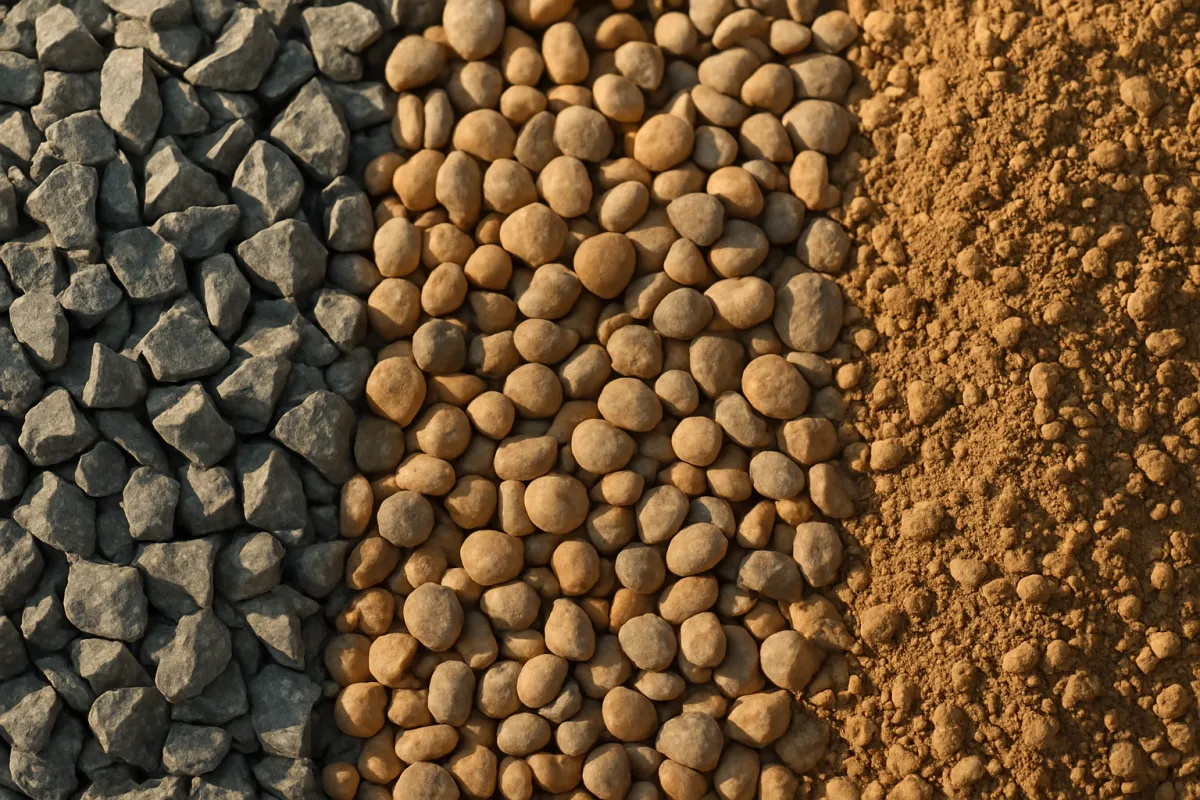
Crossing the pairings is how depth specs fail while looking correct on paper. Pea gravel laid 5 inches deep as a driveway surface meets a depth number but not a job: it ruts immediately, because rounded stone at any depth does not lock. A dense fines-heavy blend filling a French drain trench to a dutiful 18 inches packs nearly solid and drains almost nothing. The habit that prevents both is to read every row of the depth table as two words, not one: a depth and its stone. Order them together, and if the local yard’s product names differ from the generic ones here, describe the job, base, surface, drainage, or decorative, and let them match the local product to it.
Edging and fabric: keeping the depth you built
A depth spec has to survive contact with time, and gravel’s natural tendency is to lose depth in two directions at once: sideways, as traffic and weather push loose stone off the edges, and downward, as stone presses into soil and soil pumps up into stone. The two defenses are cheap relative to the stone they protect. Edging, a firm border of steel, timber, stone, or a spiked restraint, holds the layer’s footprint so the depth you paid for stays inside the lines; it matters most for rounded stone, which rolls freely, and at every margin of a driveway where tires push outward.
Geotextile fabric defends the vertical direction. Laid between soil and stone, it stops the base from sinking into soft ground and the ground from rising into the base, which is the slow exchange that makes a gravel layer visibly vanish over a few wet seasons while the total material on site never changes. On soft or clay subgrades it is the cheapest insurance in the build; on firm, free-draining ground it matters less but rarely hurts. Both are order-sheet items with their own units, edging by the linear foot of perimeter, fabric by the footprint area plus seam overlap, and both are easy to forget while the mind is on cubic yards. Put them on the same order as the stone: a maintained edge and an intact fabric are why a correctly specified depth is still the actual depth five years on.
A worked example: one delivery, four depths
Put the table to work on a single property with four jobs, and watch depth, not area, set every share of the order. The plan: top up a 500 square foot driveway surface with 3 inches of fresh crushed gravel; build a 200 square foot garden path at 2.5 inches; run a 40 foot French drain, 12 inches wide and 12 inches deep, in washed stone; and dress a 150 square foot bed with 3 inches of decorative rock.
Run the line four times. The driveway top: 500 times 0.25 feet is 125 cubic feet, about 4.6 cubic yards. The path: 200 times 0.208 is roughly 42 cubic feet, about 1.5 yards. The drain: 40 times 1 times 1 is 40 cubic feet, about 1.5 yards. The bed: 150 times 0.25 is 37.5 cubic feet, about 1.4 yards. The total is roughly 9 cubic yards before allowances, and the shares tell the story: the driveway’s modest 3 inch top over a big area is half the order, while the little drain, a fortieth of the driveway’s footprint, matches the entire garden path because it runs four times as deep.
One delivery, four depth specs
Illustrative split of a roughly 9 cubic yard order across the four jobs, before compaction allowances.
Each segment is that job's share of the roughly 9 yard total, and the four sum to 100 percent. The drain's 40 square foot trench nearly matches the 200 square foot path because it runs four times deeper: depth times area, not area, sets every share.
Finish the order like the quantity manual teaches: add about 20 percent to the driveway, path, and bed for compaction, a touch less to the clean drain stone, convert to tons at roughly 1.4 per yard if the yard sells by weight, and order the washed drainage stone and the decorative rock as separate products from the crushed gravel. Four depth decisions, one line of arithmetic each, one truck.
Common gravel depth mistakes
The depth errors repeat reliably enough to name, and most of them are one of these six.
- One number for a layered job. Calculating a driveway as a single 3 inch layer when the spec is a 4 to 6 inch base plus a 3 inch top. The order arrives at half the build.
- Structural gravel with no structural depth. Three inches of surface stone on soft soil with no base under it, whether that is a driveway, a parking pad, or a heavily used path. It ruts, and rebuilding costs more than building.
- Deep pea gravel. Five inches of rounded stone as an upgrade that turns a patio into a beach. Rounded stone gets a shallow, edged spec, always.
- Starved decorative layers. One inch of rock over a bed reads as covered in spring and patchy by August. Coverage depth is 2 to 3 inches, deeper for big stone.
- Shallow drainage. A French drain with a token few inches of stone around the pipe has almost no reservoir, so it fills and overflows in the first real storm. Drainage depth is the function.
- Finished depth ordered as loose depth. Skipping the roughly 20 percent compaction allowance, so the packed layer lands thinner than the spec everywhere, and thinnest where the ground was softest.
Every one of these is caught by the same two questions this reference keeps asking: which family is the job in, surface, base, or reservoir, and is the ordered volume calculated from the finished depth plus an allowance. Ask both before the truck is booked, and the mistakes have nowhere to hide.
The depth spec checklist
The whole reference, compressed to the check you run before any gravel order.
- Name the job’s family. Surface (path, pea gravel, decorative, driveway top), base (paver, slab, driveway base), or reservoir (drainage). The family sets the depth range.
- Pick the depth from the table. Paths, pea gravel, and beds about 2 to 3 inches; driveway top about 3; slab base about 4; paver and driveway bases 4 to 6; full driveway builds 8 to 12 in layers; drainage 12 or more. All illustrative; local practice wins.
- Adjust for ground and load. Soft or clay soil, frost, and heavy vehicles push bases deeper; firm ground tolerates the shallow end.
- Pair the depth with its stone. Dense crushed base blends for structural layers, finer angular stone for surfaces, clean washed stone for drainage, rounded stone only shallow and edged.
- Plan the lifts. Structural layers compact in roughly 2 inch passes; depth you cannot compact is not strength.
- Run the volume line per layer. Length times width times depth in inches, divided by 324, equals cubic yards; add about 20 percent for compaction, then convert to tons at roughly 1.4 per yard if the yard sells by weight.
- Protect the depth. Edging on the perimeter, fabric under structural and decorative layers on soft ground, both on the same order as the stone.
Run the list top to bottom and the vague question, how deep should gravel be, becomes a spec you can defend: a family, a depth, a stone, and an order calculated from all three.
The bottom line
How deep should gravel be is really three questions wearing one coat. For surfaces, paths, pea gravel, decorative layers, and the driveway’s top course, the answer is shallow, about 2 to 3 inches, because the job is coverage and wear, and extra depth makes loose stone worse, not better. For bases, under pavers, slabs, and driveways, the answer is 4 to 6 inches of compacted angular stone, deeper on soft ground and for heavy loads, built in lifts because uncompacted depth is not strength. For drainage, the answer is the deepest on the chart, a foot or more of clean washed stone, because there the gravel is the machine itself. Fix the depth first, from the job’s family and your ground, then let the arithmetic follow: area times depth over 27, plus about 20 percent for compaction, times roughly 1.4 for tons. Our gravel quantity manual runs that ordering side in full, the material coverage reference holds the per-yard coverage tables, and the estimator chains it all from your own tape measurements. Choose the depth deliberately and the rest of the job is spreading stone; guess it, and the ground will eventually publish the correction.
Read this reference as a set of illustrative starting points, not a build specification. Every depth here is a commonly used figure that your soil type, frost depth, drainage, traffic, and local practice can move substantially, and the coverage, compaction, and weight numbers are typical planning values rather than measured properties of any specific product. Confirm depths and layer structures for structural or drainage work against local codes and practice, check the actual density and coverage of the stone you buy with your supplier, and bring in a qualified contractor or engineer where a surface carries vehicles, supports a structure, or manages water near a foundation.
Frequently asked questions
How deep should gravel be for a driveway?
A driveway is built in layers, so the honest answer is two numbers, not one. A common spec is a coarse angular base of about 4 to 6 inches for load bearing, topped with roughly 3 inches of finer gravel that packs into the driving surface, so a full new build commonly totals 6 to 9 inches of stone, and heavier builds run 8 to 12 inches in three layers. A simple resurfacing of an existing drive that already has a sound base is often just the 3 inch top course. Treat every figure as an illustrative starting point and confirm against your soil, traffic, and local practice.
How deep should the gravel base be for pavers?
A commonly cited base for a walk-on paver patio is roughly 4 to 6 inches of compacted angular gravel over firm subgrade, with the deeper end for soft or clay soils, freeze-prone climates, or anything that carries more than foot traffic. On top of that base sits about 1 inch of bedding sand and then the paver itself, commonly around 2 to 2.4 inches thick, so the total excavation runs 7 to 8 inches or more. The base is the structural layer and the one never to thin, because a skimped base is the most common reason a paver surface settles.
How deep should pea gravel be?
Pea gravel commonly runs about 2 to 3 inches deep for paths, patios, and decorative areas. Shallower than about 2 inches lets the ground show through in patches, while much deeper than 3 inches makes walking feel like soft sand, because rounded stones roll past each other rather than locking. Pea gravel always wants firm edging at any depth, since the smooth stones migrate without a border, and in high-traffic spots a compacted angular base underneath keeps the decorative layer from working into the soil.
How deep should landscaping gravel be?
Decorative gravel over beds and open ground commonly runs 2 to 3 inches: enough to cover the soil completely, block light to weeds, and survive some scatter, without burying plants or wasting stone. Larger decorative rock wants a layer at least as deep as the stone is wide so pieces sit in the layer rather than on it, which can push bigger cobbles toward 3 to 4 inches. A weed fabric underneath preserves the depth by keeping the stone from pressing into the soil, and it means the layer you paid for stays visible instead of sinking.
How deep should gravel be for a walkway?
A garden path or walkway commonly runs about 2 to 3 inches of gravel, enough to cover the ground, drain, and stay put underfoot. Firm, well-drained ground handles the shallow end; soft ground, or a path that sees carts and mowers, earns a compacted angular base course underneath the surface gravel, which pushes the total toward 4 to 6 inches. The surface layer works best in a finer angular stone or, where comfort matters more than lock, pea gravel held by edging. As with every figure here, treat the depths as illustrative planning numbers.
How deep should gravel be for drainage or a French drain?
Drainage work wants the most depth on the chart, because the stone is the reservoir: a French drain commonly runs a foot or more of clean, washed angular stone around the perforated pipe, and the trench often measures 12 inches wide by 18 to 24 inches deep depending on the water problem. The gravel here is not a surface, it is open void space that stores and moves water, so shallow drainage stone simply does not do the job. Clean stone without fines is the spec, since fines pack the voids the drain depends on.
How deep should gravel be under a concrete slab?
A commonly cited base under a residential slab-on-grade is roughly 4 inches of compacted angular gravel over firm subgrade, deeper on soft or clay soils. The base spreads the slab's load onto the ground, drains water away from the underside, and gives the concrete a uniform surface, so an even depth matters as much as the depth itself: a base that humps in the middle leaves the slab thin there, and thin spots crack first. Compact it in lifts of about 2 inches, and confirm the base spec for your soil and load with local practice.
Can gravel be too deep?
Yes, in two different ways. Loose surface layers that run too deep get worse to use: pea gravel much past 3 inches walks like dry sand, and an over-thick top course on a driveway stays soft because a compactor only reaches an inch or two down, so depth beyond what you can compact in lifts adds cost without strength. The second way is the order itself, since depth multiplies straight into volume: doubling depth doubles the cubic yards and the tonnage. Deeper is only better for the structural base and for drainage stone, and even there it is built in compacted lifts, not one deep pour.