What's on this page
- Tile installation cost per square foot
- Tile installation cost by room
- Tile installation cost by material
- Ceramic tile: the budget standard
- Porcelain tile: the durable upgrade
- Natural stone tile: the premium tier
- What drives tile installation cost
- Subfloor prep, underlayment, and waterproofing
- Grout, trim, and transition pieces
- Pattern and layout: how tile orientation changes labor
- Tile size and how it moves cost
- Removing old flooring first
- Where the money goes
- Wall tile versus floor tile cost
- Heated floor systems and the cost they add
- Permits and inspections
- DIY tile installation cost
- From price per square foot to your total
- Regional and seasonal cost swings
- Ways to keep tile installation cost down
- Comparing tile installation bids line by line
- A worked example: a 120 square foot bathroom floor tiled
- Shower and tub surround tile cost
- Natural stone sealing cost, now and later
- Large format tile and slab cost
- The bottom line
Short answer: As an illustrative planning range, ceramic tile commonly installs for 5 to 10 dollars per square foot, with a working midpoint near 7.50 dollars. Porcelain runs a step above near 10.50, and natural stone is the highest common tier near 18.50. A 120 square foot bathroom floor in porcelain lands near 1,260 dollars installed before removing old flooring or adding a waterproofing membrane.
Tile installation cost looks like a single number on a showroom sign and behaves like three separate decisions stacked together, because the tile itself is only one line in the final bid. Before any rate gets applied, the substrate underneath has to be flat, clean, and properly prepared, and that prep step, more than the tile material chosen, is what decides whether a floor stays crack free for years or starts failing within a season.
This cost brief prices tile the way flooring contractors actually quote one: per square foot of area, broken out across the common material tiers, scaled to typical room sizes, and separated into materials, labor, and prep the way a real estimate has to be. It sits alongside our tile quantity manual for the physical takeoff this brief prices, and our square footage manual for measuring an irregular room. Run your own area through the estimator or the companion below as you read.
Key takeaways
- Ceramic tile commonly runs an illustrative 5 to 10 dollars per square foot installed, with a working midpoint near 7.50; porcelain and natural stone each step up from there.
- Porcelain typically prices 35 to 40 percent above ceramic for the same floor area, buying a denser, harder, more water resistant tile body.
- Substrate prep, not the tile material, is what actually decides whether a floor stays crack free, and a wet area commonly adds a waterproofing membrane as its own cost line.
- Removing old flooring first commonly adds an illustrative 1.50 to 3 dollars per square foot and is usually the right call over tiling directly on top of most existing floors.
- Every dollar figure here is illustrative and local: your area, tile choice, pattern, and region set the real number, so measure and collect written bids.
Tile installation cost per square foot
The cleanest unit for pricing tile is dollars per square foot of area installed, because that is the unit most flooring contractors quote in and the one that lets differently shaped and differently sized rooms compare fairly. As an illustrative planning range, ceramic tile, the common entry point for a tiled floor or wall, commonly runs somewhere around 5 to 10 dollars per square foot, with a working midpoint near 7.50 dollars.
That installed figure bundles more than the tile itself: it covers the thinset or mortar bed, the grout and spacers, cutting the field and border tiles to fit the room, and the labor to level and prep the substrate before a single tile goes down. Our tile quantity manual prices the physical takeoff, the square footage and the box count, but converting that into a dollar figure needs the installed rate this brief works through. The companion below runs the math on your own area as you go.
Tile installation cost by room
Room size is the first multiplier, and because tile is sold and installed by the square foot regardless of which room it ends up in, the table below prices common room areas at the illustrative ceramic midpoint of 7.50 dollars per square foot, purely as planning bands.
| Area | Illustrative total at ~$7.50/sq ft |
|---|---|
| 35 sq ft (small bathroom floor) | ~$260 |
| 30 sq ft (kitchen backsplash) | ~$225 |
| 150 sq ft (kitchen floor) | ~$1,125 |
| 400 sq ft (living or dining floor) | ~$3,000 |
| 1,200 sq ft (whole first floor) | ~$9,000 |
Read every row as a starting point, not a quote. Swap the material and the whole column shifts: the same 150 square foot kitchen floor at a porcelain rate near 10.50 dollars reads about 1,575 dollars. Our tile quantity manual covers measuring your own area in full, and the estimator turns a length and width into square footage in seconds.
Tile installation cost by material
Material is the second fork in a tile estimate, and because the substrate prep underneath stays roughly the same regardless of what covers it, material choice is close to the whole story in how one room’s bid compares with another’s. The chart below places the three common tile material tiers side by side on illustrative installed cost per square foot, and the sections that follow take each one in turn.
Illustrative installed cost per square foot, by tile material
Full tile installation, substrate prep through grout; local labor, pattern, and tile size move every bar.
Natural stone sits at the top because the material is quarried and cut rather than manufactured to a uniform spec, and most stone needs sealing that a glazed tile does not. Ceramic sits at the bottom because it is the simplest, most widely manufactured tile body on the market.
The substrate under every one of these materials is essentially the same: the same subfloor, the same backer board or membrane where one applies, the same leveling work. What you buy as you climb the chart is the tile’s hardness, its water resistance, its appearance, and in stone’s case a genuinely one of a kind look, which is worth remembering when a budget tightens, since tile material is a choice you can trade without touching the prep work underneath it.
Ceramic tile: the budget standard
Ceramic is the most common entry level tile material and the baseline of this range, an illustrative 5 to 10 dollars per square foot installed with a midpoint near 7.50. It is manufactured from clay fired at a lower temperature than porcelain, finished with a glaze that gives it color and pattern, and available in a wide range of sizes, colors, and finishes at a relatively accessible price point.
Because ceramic is softer and more porous than porcelain, it is better suited to lower traffic, lower moisture areas, a powder room floor, a kitchen backsplash, or a decorative wall, than to a busy entry or a shower floor where porcelain’s added durability and water resistance earn their premium. For a straightforward floor or wall with no unusual durability requirement, ceramic delivers most of what most owners want from tile for meaningfully less than porcelain or stone.
Porcelain tile: the durable upgrade
Porcelain tile, fired at a higher temperature from a denser clay body than ceramic, sits a step above, an illustrative 7 to 14 dollars per square foot installed with a midpoint near 10.50. It is harder, less porous, and more water resistant than ceramic, which is why porcelain is the common default for a kitchen floor, an entry, or a bathroom floor that sees real daily traffic and moisture.
The premium over ceramic buys genuine durability rather than just appearance, since porcelain’s low porosity means it absorbs far less water, resists staining better, and holds up to scratching and impact more than a standard ceramic body. The trade off is that porcelain is also denser and harder to cut, which can add a modest labor premium on a job with many cuts, angles, or a complex pattern.
Natural stone tile: the premium tier
Natural stone, travertine, marble, slate, and similar quarried materials, sits at the top of the common tile range, an illustrative 12 to 25 dollars per square foot installed with a common midpoint near 18.50, the highest among the three tiers this brief prices. It is cut from quarried stone rather than manufactured, which means genuine variation piece to piece in color, veining, and texture that no manufactured tile fully replicates.
Stone’s case for the premium is that no two floors look alike, and many stone types age by weathering gracefully rather than wearing out. The trade offs are real: most natural stone needs periodic sealing to resist staining, since it is more porous than a glazed tile, it is typically heavier and can be more labor intensive to cut and set, and sourcing a specific stone lot can be slower than ordering a standard manufactured tile line.
What drives tile installation cost
Beyond size and material, a handful of factors decide where a real bid lands inside the illustrative ranges, and knowing them explains why two rooms of a similar area can price meaningfully apart. Substrate condition comes first: a flat, sound subfloor needs little more than standard prep, while an uneven or deflecting floor needs self leveling compound or additional backer board, a real labor and material line our material estimating manual treats the same way it treats any prep step a bare material rate does not show.
Tile size and pattern follow: a simple grid layout in a standard size tile installs faster than a herringbone pattern, a mosaic of small pieces, or a large format tile that takes careful handling to avoid cracking during the set. Room shape matters too, since more corners, more cutouts around fixtures, and any angled walls all generate more cut pieces and more waste than a plain rectangular room of the same area.
Subfloor prep, underlayment, and waterproofing
Subfloor prep is the part of a tile job a finished floor never shows and the part that most often decides whether it lasts. A sound, flat subfloor needs backer board or an uncoupling membrane in most installations, a layer that gives the tile a stable base independent of minor subfloor movement, commonly an illustrative 1 to 3 dollars per square foot on top of the bare tile rate.
A wet area, a bathroom floor, a shower, or anywhere water pools, commonly adds a waterproofing membrane on top of or instead of standard backer board, an illustrative 2 to 4 dollars per square foot beyond the bare tile rate. Skipping or undersizing waterproofing in a wet area is one of the most expensive mistakes a tile job can make, since water that gets behind the tile and into the subfloor causes damage that is invisible until the floor fails, often well after the original install is finished.
Grout, trim, and transition pieces
Grout fills the joints between tiles and is a modest material cost on its own, commonly a few dollars per square foot depending on joint width, but it is not purely a cosmetic choice. Standard cement based grout costs less but is more prone to staining and cracking over time, while epoxy grout costs meaningfully more, an illustrative several times the material cost per square foot, in exchange for far better stain and crack resistance, which matters most in a kitchen, a shower, or a high traffic floor.
Trim pieces, bullnose edges, transition strips where tile meets another flooring material, and any schluter or metal edging at an exposed tile edge each add their own small material and labor line that a bare per square foot rate does not fully capture. None of these individually move a budget much, but a room with many transitions, a kitchen with an island, a bathroom with multiple fixtures, accumulates more of them than a simple rectangular room, which is worth flagging when comparing bids.
Pattern and layout: how tile orientation changes labor
A straight grid pattern, tiles set in simple rows and columns parallel to the walls, is the fastest and least wasteful layout to install, and it is the baseline this brief prices from. A diagonal layout, the same grid rotated 45 degrees, needs more cut pieces around every wall and corner and commonly adds an illustrative 10 to 20 percent to the labor line for the extra cutting and layout care it takes to keep the diagonal lines straight across the room.
Herringbone and basketweave patterns add more again, often an illustrative 20 to 30 percent over a straight grid, since every piece in the pattern is cut at an angle and the layout has to be planned carefully from the room’s center outward to avoid an uneven border. A pattern choice is a real labor decision, not just an aesthetic one, so price the specific layout you want rather than assuming pattern is a footnote on top of the material rate.
Tile size and how it moves cost
Tile size affects labor time in both directions. Small mosaic tiles, commonly sold pre-mounted on mesh sheets, take longer to set piece by piece and use more grout per square foot because of their many narrow joints, which commonly adds an illustrative 15 to 25 percent to the labor line over a standard size tile. Large format tiles, 24 inches or larger on a side, install faster per square foot in an open field but need a flatter substrate and more careful handling to avoid cracking during the set, since a large thin tile flexes more than a small one under uneven pressure.
A standard 12 by 12 or 12 by 24 inch tile sits in the middle of that range and is the size most illustrative rates in this brief assume, fast enough to install efficiently while remaining forgiving of minor substrate imperfections that a large format tile would show. Confirm which size a quote is built around, since the same material at a different size can carry a meaningfully different labor line.
Removing old flooring first
Most tile jobs start by removing whatever flooring is already there, and that removal is its own cost line rather than something folded quietly into the bare installed rate. Pulling up old vinyl, laminate, or carpet and scraping any adhesive residue commonly runs an illustrative 1.50 to 3 dollars per square foot, while removing old tile is typically slower and costs more, since the old thinset bed has to come up too before a new floor can be properly prepped.
A 150 square foot kitchen floor with old vinyl removed first adds roughly 225 to 450 dollars to the project before a single new tile goes down. Tiling directly over sound existing tile is sometimes possible with a crack isolation membrane, which avoids demolition cost but raises the finished floor height, a detail worth checking against doorways, cabinets, and appliances before choosing that route over a full tear out.
Where the money goes
Understanding the split inside an installed tile price is what makes a bid legible, and tile splits differently depending on material and pattern, but a generalized breakdown holds reasonably well across the common tiers.
Where an installed ceramic or porcelain tile job's cost goes
Illustrative split for a standard grid layout on a prepped subfloor; shares shift with material, pattern, and prep needs.
Labor carries the largest share of a tile job, more than the material itself, which is why pattern complexity and substrate condition move a bid as much as the tile choice does.
Two conclusions follow from the split. First, because labor is the largest single share, a complex pattern or a difficult substrate moves the total meaningfully even when the tile material stays the same and cheap. Second, the prep and waterproofing share, though the smallest of the three, does the most to determine whether the floor actually lasts, so it is a poor place for a tight budget to economize.
Wall tile versus floor tile cost
Wall tile, a kitchen backsplash or a shower surround, commonly costs a similar or slightly higher rate per square foot than floor tile of the same material, since wall installation often involves more cuts around outlets, fixtures, and corners relative to the area covered, even though the total area is usually much smaller than a floor. A typical backsplash, 25 to 30 square feet behind a run of counter, prices near 190 to 225 dollars in ceramic at the illustrative midpoint, a modest total that still carries a minimum labor charge on many jobs regardless of the small area.
Shower surrounds add their own waterproofing requirement beyond what a backsplash needs, since a shower wall sees sustained water exposure that a kitchen backsplash never does, which is why a shower retile commonly costs more per square foot than an equivalent area of dry wall tile. Confirm whether a bid treats a shower as wall tile with standard backsplash level prep or correctly prices the waterproofing membrane a wet wall actually needs.
Heated floor systems and the cost they add
A radiant floor heating mat installed under tile is a common upgrade on a bathroom or kitchen floor remodel, since the tile install already exposes the subfloor and the labor to lay tile over the mat afterward is a modest add on top of the install already happening. As an illustrative figure, a heated floor mat system commonly adds several dollars per square foot in material plus the electrical connection labor, on top of the bare tile installation rate this brief prices.
The decision is usually made at the same time as the tile choice, since adding heat later means pulling up a finished floor to retrofit it, which costs far more than including it during the original install. If floor heat is a consideration, raise it with your tile contractor before the substrate prep begins rather than after the tile is already set.
Permits and inspections
Tile installation itself is rarely a permitted scope on its own, since it is a finish material rather than a structural or systems change. The exception is when a heated floor system adds a new electrical circuit, which commonly does require a permit and inspection in most jurisdictions, or when a tile job is part of a larger bathroom remodel that touches plumbing or structural framing, where the larger scope triggers its own permit requirements independent of the tile itself.
Confirm with your contractor whether any part of your specific project, most often an electrical addition for heated floors, needs a permit, and treat that step the same way this site treats a vague answer on any permit question: not a savings to skip, an unfinished scope until it is confirmed.
DIY tile installation cost
Labor is a real share of most tile bids, so the saving from self installing is genuine, and a straightforward floor in a small, simply shaped room is a realistic do-it-yourself project for someone comfortable with basic tools and a level, patient approach to layout. Buying just the tile, thinset, grout, and spacers can be a fraction of a full installed quote.
The honest caution is that substrate prep and, in a wet area, waterproofing are exactly the steps where a mistake is invisible until the floor fails years later, cracked tiles from a flexing subfloor or water damage behind a shower wall that never got a proper membrane. Confirm the substrate is sound and flat before starting, and consider hiring out a wet area specifically, where the consequences of a waterproofing mistake are largest, even if you plan to self install a dry room’s floor.
From price per square foot to your total
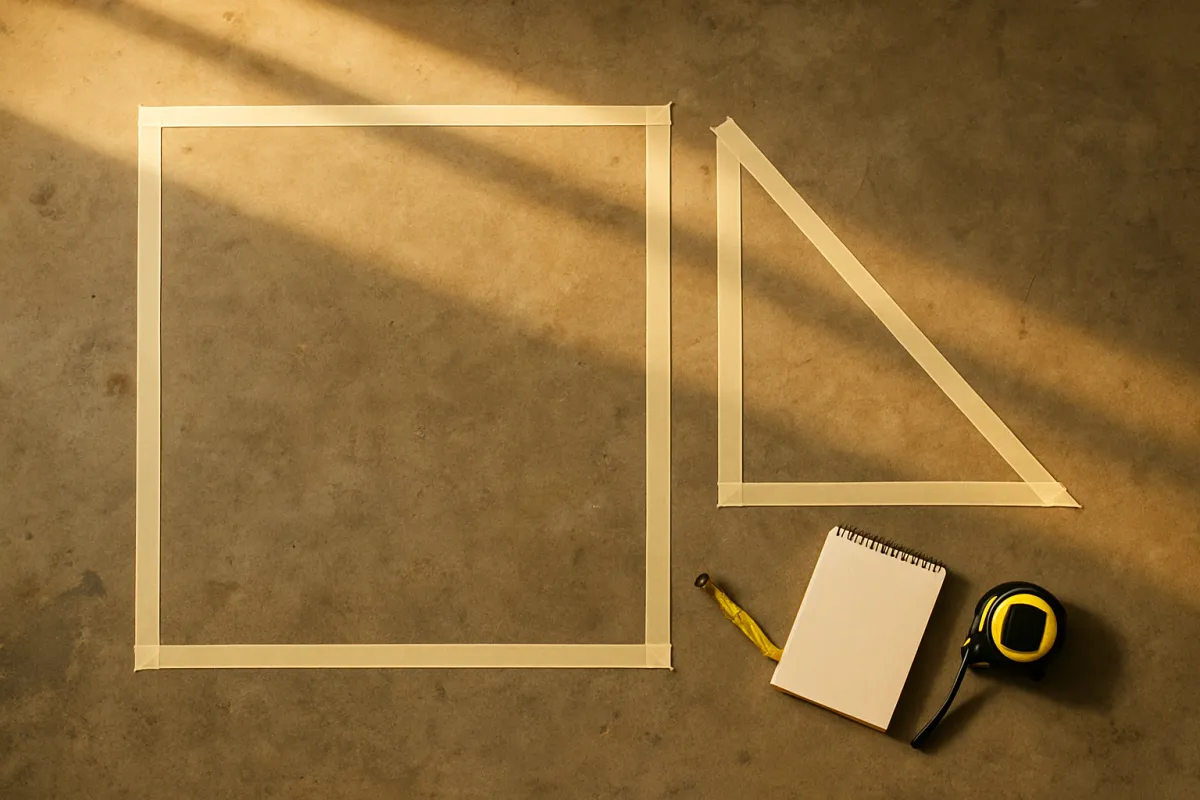
Turning the rates in this brief into your own planning number is three steps. First, measure the area: length times width for a rectangular room, broken into rectangles and triangles for an irregular shape, as our square footage manual works through in full. Second, pick the installed rate for your material, an illustrative 7.50 dollars for ceramic, 10.50 for porcelain, 18.50 for natural stone.
Third, multiply the area by the rate for the base figure, then adjust for what the base rate cannot see: add for removing old flooring, for a waterproofing membrane in a wet area, and for a complex pattern like herringbone or a mosaic. A 120 square foot bathroom floor at the porcelain midpoint is roughly 1,260 dollars before prep extras. The companion below runs this entire method live on your own numbers as you read.
Regional and seasonal cost swings
Every rate in this brief is a national illustrative figure, and the real number in any one market moves with local labor costs, material shipping distance, and the specific crews available. Coastal and high cost of living metro markets commonly run above these illustrative midpoints on labor alone, while regions with a lower cost of living and more flooring crews competing for work commonly run below them.
Tile crews, unlike an outdoor trade, do not run on as strong a seasonal calendar, since interior work continues through winter in most climates. Booking during a slower season for remodeling generally, often outside spring and early summer when many homeowners schedule renovations, sometimes softens both the wait and the price, though a contractor’s own backlog matters more than the calendar alone in markets where demand stays high year round.
Ways to keep tile installation cost down
A tile budget has real levers, and material is the most visible one: the same area in ceramic at an illustrative 7.50 dollars per square foot versus natural stone at 18.50 is well over double for comparable floor coverage, so choosing ceramic or porcelain captures most of what a tiled floor offers for meaningfully less. A straight grid pattern in a standard size tile instead of a diagonal layout, herringbone, or a small mosaic is the next largest lever, since pattern complexity moves the labor line directly.
Tiling over sound existing tile with a crack isolation membrane, where the substrate genuinely supports it, is the next lever, though the raised floor height caution applies. What should never be cut is substrate prep and, in a wet area, waterproofing, since that is the part of the job that actually determines whether the floor lasts, and a bid that trims it to look cheaper is not a deal, it is a future repair waiting on the next failed grout line or the next flooded bathroom.
Comparing tile installation bids line by line
A tile bid that reads as a single lump sum is the hardest one to compare against another, since a lower total can hide a thinner scope rather than a genuinely better price. Ask every bidder to itemize the tile material and size by name, substrate prep and any leveling compound needed, backer board or membrane type in a wet area, grout type and color, trim and transition pieces, and old flooring removal where applicable, so the line items can be checked against each other rather than just the bottom line.
Two bids on the same room that differ by several hundred dollars commonly differ in one of a few places: whether waterproofing in a wet area is actually included rather than assumed, whether old flooring removal is bundled in, or the grout type specified. A bid that is unusually low relative to the others deserves a direct question rather than automatic acceptance, since the gap is rarely free money and is more often a thinner prep scope.
A worked example: a 120 square foot bathroom floor tiled
Take the common case end to end. A bathroom floor measures 120 square feet, old vinyl flooring comes out first, and the owner chooses porcelain tile in a standard grid layout, with a waterproofing membrane since it is a wet area. At the illustrative porcelain midpoint of 10.50 dollars per square foot, the bare tile installation prices near 1,260 dollars.
Add removal of the old vinyl at an illustrative 2 dollars per square foot, 240 dollars, and a waterproofing membrane at an illustrative 3 dollars per square foot, 360 dollars, and the all-in planning total reaches roughly 1,860 dollars before any trim pieces or an accent border. Switch the material to ceramic at the same scope and the bare tile line drops to about 900 dollars, pulling the all-in total down to roughly 1,500 dollars. Run your own room through the companion below to see how material and prep choices move your number.
Shower and tub surround tile cost
A shower or tub surround is priced differently from an open floor, since nearly every square foot borders a corner, a fixture, a niche, or a drain, which means more cuts and more careful waterproofing per square foot than a plain field. As an illustrative planning range, a standard shower surround commonly runs 15 to 35 dollars per square foot installed depending on tile material and the complexity of any niche or bench, meaningfully above the bare material rates this brief prices for an open floor, since the waterproofing membrane and the fixture work are both folded into that higher per square foot figure.
A built-in niche for shampoo and soap, a bench seat, and a linear or curbless drain each add their own cost beyond a simple four-wall surround with a standard drain, commonly an illustrative 150 to 600 dollars per feature depending on complexity. Tile size interacts with a shower’s many corners too: a large format tile needs fewer grout lines to maintain in a wet environment but is harder to fit cleanly around a niche or a curved corner, while a smaller tile fits those details more easily at the cost of more total grout joints for water to eventually test.
Natural stone sealing cost, now and later
Most natural stone tile needs sealing before grout is applied and again periodically afterward, since stone is more porous than a glazed ceramic or porcelain tile and will absorb stains, especially oil and wine, without that protective layer. As an illustrative figure, sealing a natural stone floor commonly runs 0.50 to 1.50 dollars per square foot for materials and labor at the time of installation, a modest add to the bare per square foot rate this brief prices for stone.
The ongoing part is what buyers weighing porcelain against stone most often underweight: sealing commonly needs reapplying every 1 to 3 years depending on the stone type, its finish, and how much traffic or moisture the floor sees, a recurring cost a glazed porcelain or ceramic floor never carries. Factor that recurring line into a lifetime comparison the same way this site treats a wood fence’s staining schedule, since a stone floor’s true cost of ownership is the installed price plus every resealing over the years you own it.
Large format tile and slab cost
Large format tile, generally 24 inches or larger on a side, and the even bigger thin porcelain slabs used for a statement floor, a shower wall, or a countertop surface, carry their own cost logic beyond the standard per square foot rates this brief prices. Large format porcelain commonly runs an illustrative 10 to 18 dollars per square foot installed, above the standard porcelain midpoint, because a flatter substrate and careful handling to avoid cracking a large thin piece during the set both add real labor time even though fewer total pieces cover the same area.
Thin porcelain slabs, sometimes used as a dramatic single-piece shower wall or an island surface, sit well above that, an illustrative 20 to 40 dollars per square foot or more installed, reflecting both the material’s premium manufacturing process and the specialized handling and cutting equipment a slab installation needs that a standard tile job does not. For a straightforward floor with no architectural statement in mind, standard-size tile delivers comparable durability for meaningfully less than either large format or slab products.
The bottom line
Tile installation cost comes down to a short list in a fixed order: area, material, substrate prep, and pattern. Carry the illustrative rates, 5 to 10 dollars per square foot for ceramic with a midpoint near 7.50, roughly 10.50 for porcelain, and 12 to 25 for natural stone with a midpoint near 18.50, then multiply by your measured area for the base figure.
Remember that substrate prep and waterproofing in a wet area are what actually decide whether a floor lasts, that removing old flooring first is usually the right call, and that pattern complexity moves labor as much as material choice does on a detailed room. Measure with the estimator, price your material and prep in the companion below, read our tile quantity manual for the physical takeoff, then collect written bids that all cover the same prep and waterproofing scope. Tile priced that way arrives as a decision, not a surprise.
This cost brief is workbench education for planning a tile budget, not a quote, a design, or a construction specification. Every dollar figure in it, per square foot, by material, and by project, is an illustrative planning number, and your area, substrate condition, pattern, and local labor market will each move a real bid, sometimes substantially. Waterproofing in a wet area is a detail that determines whether a wall or floor assembly stays dry behind the finished tile, so have it specified and reviewed by a qualified installer rather than borrowed from a general article. Build your actual budget on current written bids from local tile contractors, not on any single figure printed here.
Frequently asked questions
How much does tile installation cost per square foot?
As an illustrative planning range, ceramic tile commonly installs somewhere around 5 to 10 dollars per square foot, with a working midpoint near 7.50 dollars. Porcelain runs a step above, roughly 7 to 14 dollars with a midpoint near 10.50, and natural stone such as travertine, marble, or slate sits highest, an illustrative 12 to 25 dollars with a midpoint near 18.50. That installed figure bundles the tile itself, thinset or mortar, grout, spacers, and the labor to prep the substrate and set the tile, but usually not removing an old floor first, which prices separately. Get a written local quote, since regional labor rates and the exact tile line move the real figure more than any single table.
Is porcelain tile more expensive than ceramic to install?
Yes, as illustrative installed rates, porcelain commonly runs near 10.50 dollars per square foot against ceramic near 7.50, so porcelain typically prices around 35 to 40 percent above ceramic for the same floor area. The premium buys a denser, less porous tile body that is harder, more water resistant, and generally more durable under heavy foot traffic, which is part of why porcelain is the common default for an entry or a kitchen floor. Ceramic remains a reasonable choice for lower traffic areas like a powder room or a backsplash, where the durability gap matters less.
How much does it cost to tile a bathroom floor?
A small bathroom floor, commonly 35 to 50 square feet, prices near 300 to 375 dollars installed at the illustrative ceramic midpoint of 7.50 dollars per square foot, or roughly 420 to 525 dollars in porcelain at 10.50. Bathroom floors often add a waterproofing membrane under the tile in a wet area, which is a real line item beyond the bare per square foot rate, commonly an illustrative 2 to 4 dollars per square foot on top. A 40 square foot bathroom floor in porcelain with a membrane lands near 500 to 550 dollars as a planning figure, before any shower or tub surround tile, which prices separately.
How much does natural stone tile cost compared to porcelain?
As illustrative installed rates, natural stone commonly runs near 18.50 dollars per square foot against porcelain near 10.50, so stone typically prices roughly 75 percent higher than porcelain for the same floor area. The premium reflects a material that is quarried and cut rather than manufactured to a uniform spec, along with sealing requirements most natural stone needs that a glazed porcelain or ceramic tile does not. Stone's case is a one of a kind look and a texture no manufactured tile fully replicates; porcelain's case is a lower price and a harder, more consistent, lower maintenance surface for the same budget.
Do I need to remove old flooring before tiling?
In most cases yes, especially over an old vinyl, laminate, or carpeted floor, since tile needs a flat, stable, properly prepared substrate to bond to and perform correctly over time. Removing old flooring commonly adds an illustrative 1.50 to 3 dollars per square foot, covering pulling the old material, scraping adhesive residue, and hauling the debris away. Tiling directly over an existing ceramic or porcelain floor is sometimes possible with the right prep and a crack isolation membrane, but it raises the finished floor height at every doorway and transition, which is worth confirming before committing to that route.
How much does grout cost compared to the tile itself?
Grout is a small share of a tile budget by itself, commonly a few dollars per square foot of material depending on joint width and whether it is standard sanded grout or a pricier epoxy grout, but it is not a place to economize blindly. Epoxy grout costs meaningfully more than standard cement based grout, an illustrative several times the material cost per square foot, but it resists staining and cracking far better, which matters most in a kitchen, a shower, or any floor that sees spills regularly. The bigger grout related cost driver is joint width and tile size, since a mosaic with many small tiles and narrow joints uses more grout and more labor time per square foot than a few large format tiles.
Can I install tile myself to save money?
Labor is a real share of most tile bids, so the saving from self-installing is genuine, and a straightforward floor tile job in a small, square room is a realistic project for a careful do-it-yourself effort with the right tools. The honest caution is that substrate prep, making sure the floor is flat, clean, and properly primed or membraned, is what actually determines whether tile stays down and stays crack free for years, and that mistake is invisible until tiles start cracking or lifting well after the job is done. Confirm the substrate is suitable before starting, and consider hiring out a bathroom or shower floor specifically, where waterproofing mistakes cause the most expensive damage if they go wrong.
How long does a tile installation take?
A straightforward floor tile job in a small to mid sized room commonly takes an illustrative one to three days from substrate prep through grouting, with drying time between steps, thinset curing and grout curing, adding real calendar days beyond the hands on labor itself. A larger area, a complex pattern like herringbone, a mosaic with many small pieces, or a wall tile job with more cuts around fixtures commonly stretches to four days or more. Natural stone, which often needs sealing before and after grouting, typically adds another day or two to the schedule compared with a porcelain or ceramic job of the same size.