What's on this page
- The short answer, and why it swings
- A cubic yard of gravel, weighed in pounds
- A yard of gravel, converted to tons
- Weight by gravel type
- Pea gravel weight per yard
- How many pounds in a yard of crushed stone
- Crushed stone versus gravel weight
- Wet gravel and the weight it adds
- Pounds per cubic foot
- Converting yards to tons for a gravel order
- Why the weight matters: trucks, delivery, and hauling
- What your vehicle can actually haul
- Coverage from a single yard of gravel
- Gravel weight versus sand and topsoil
- Calculating tonnage for your order
- A quick reference table
- Working a driveway from yards to tons
- Reading a delivery ticket by weight
- The bottom line
Short answer: A cubic yard of dry gravel weighs roughly 2,400 to 2,900 pounds, about 1.2 to 1.5 tons, with about 1.4 tons per yard, roughly 2,800 pounds, the common planning figure for typical crushed stone. Dense base grades with stone dust run heavy, clean or rounded stone like pea gravel a little lighter, and wet gravel weighs meaningfully more. A single yard is more than a half-ton pickup should carry in one load.
How much does a yard of gravel weigh? A cubic yard of gravel weighs roughly 2,400 to 2,900 pounds, or about 1.2 to 1.5 tons, for common dry crushed stone, with denser base grades toward the heavy end and cleaner or more rounded stone toward the light end. Moisture pushes any of those figures higher, because water adds weight without adding much volume.
That one range, and the handful of things that move a load within it, is what this manual works through. Weight is the number a gravel order actually turns on, because the supply yard does not sell you a volume at all: the truck crosses a scale on the way out and the ticket comes back in tons, so the cubic yards your tape measured have to cross over to the pounds and tons the yard prices by. This article is the weight companion to the volume manuals: our gravel manual works out the cubic yards a driveway or trench needs, our cubic yards manual lays out the volume formula underneath it, and our tons to cubic yards manual is the conversion that bridges the two. Here we take the weight side head on: how many pounds and tons a yard runs, why it swings by type and moisture, and what that weight means for your truck and your delivery. Run your own numbers through our estimator as you read.
Key takeaways
- A cubic yard of dry gravel weighs roughly 2,400 to 2,900 pounds, about 1.2 to 1.5 tons, with roughly 1.4 tons per yard a common planning figure for typical crushed stone.
- Weight moves with gravel type: dense base grades run heavy, clean or rounded stone like pea gravel runs a little lighter, all illustrative until the yard weighs the specific product.
- Wet gravel weighs meaningfully more than dry, because water fills the gaps between stones and adds weight without adding much volume, which is the quiet delivery gotcha.
- Per cubic foot, common gravel runs near 100 pounds, so a single yard of stone is well over a ton, more than a half-ton pickup should carry in one load.
- Weight tells you what to haul and how the yard bills; depth, not weight, tells you what a yard covers, so keep the two numbers separate.
The short answer, and why it swings
The direct answer is a range, not a point, and the range is the honest version. A cubic yard of common dry gravel weighs somewhere around 2,400 to 2,900 pounds, which is about 1.2 to 1.5 tons, and a figure near 1.4 tons per cubic yard, roughly 2,700 to 2,800 pounds, is the planning number most often quoted for typical crushed stone. If you need a single figure to size an order before the yard weighs your product, 1.4 tons per yard is a defensible one, but the spread on either side of it is real and worth understanding.
Three things move a load within that range. The first is the gravel type, because a dense base grade packed with stone dust weighs more per yard than a clean, washed drainage stone or a rounded pea gravel with more open space between the stones. The second is the size and shape of the crush, since angular material with fines nests tighter than uniform rounded stone. The third, and the one that surprises people most, is moisture: water fills the air gaps and adds weight without adding volume, so a rained-on pile weighs more per yard than the same stone dry. Hold the range, not a single number, and you will read every quote and delivery ticket more accurately.
A cubic yard of gravel, weighed in pounds
Stated in pounds, the number people search for most, a cubic yard of dry gravel commonly runs about 2,400 to 2,900 pounds. The middle of that band, near 2,700 pounds, is a reasonable stand-in for typical crushed stone, and it maps cleanly to the tonnage figures: 2,700 pounds is 1.35 tons, and 2,800 is 1.4, since a ton is 2,000 pounds. So when a manual says gravel runs about 1.4 tons per yard, it is saying roughly 2,800 pounds, and the two ways of stating it are the same fact in different units.
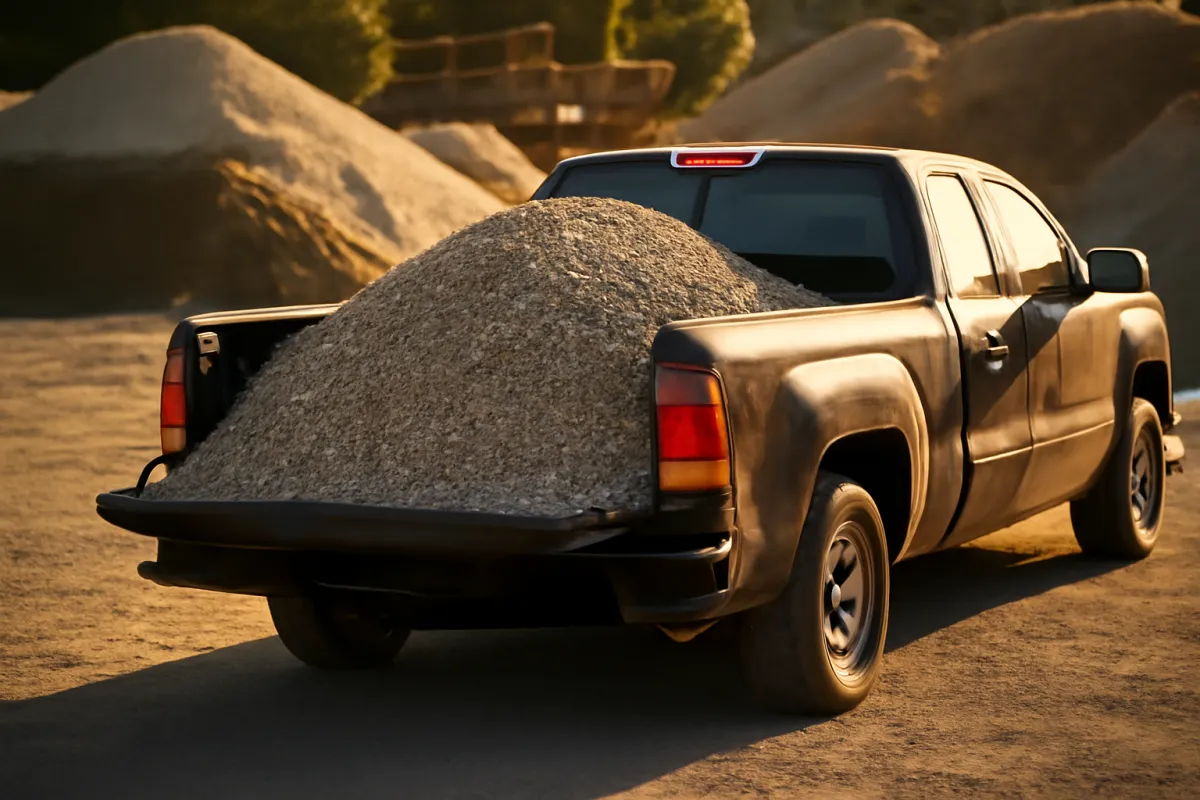
The pound figure earns its keep in two places. It sanity-checks a quote, because if a delivery ticket’s weight divided by your cubic yards lands far outside the 2,400 to 2,900 band, either the load is unusually wet, the stone is unusually dense, or something is off worth a question. And it sets the hauling plan, because 2,700 pounds is heavier than most half-ton pickups are rated to carry, so the pound figure is really telling you whether you are self-hauling in trips or booking a delivery. Convert the volume our cubic yards manual produces into pounds and the abstract yard becomes a physical weight you have to move.
A yard of gravel, converted to tons
Tons is the unit the supply yard actually speaks, so this is the conversion that matters most at the counter. One cubic yard of common gravel weighs roughly 1.2 to 1.5 tons, and about 1.4 tons per cubic yard is the widely cited planning figure for typical crushed stone. To go from volume to weight you multiply: tons equal cubic yards times the density in tons per cubic yard. A bed that needs 5 cubic yards of gravel at about 1.4 tons per yard is therefore roughly 7 tons on the truck scale, the number the yard will quote back.
This is the same conversion our tons to cubic yards manual works in full, both directions, and the reason it exists is that measurement produces volume while the yard sells weight. You read a driveway off the ground in feet, run the length-times-width-times-depth-over-27 line to get cubic yards, then multiply by the density to speak the supplier’s language. Carrying both numbers is the practical skill: the cubic yards tell you the space is filled, and the tons let you read the quote and check the ticket. The 1.4 figure is illustrative, not a constant, so on a large or expensive order use the yard’s own weight for the specific product. Run your volume through our estimator first, then apply the density here for the tonnage.
Weight by gravel type
Gravel is a category, not a single product, and the type sets both the job it suits and, within a modest band, the weight per yard. Dense base grades, sometimes called crusher run or road base, are a mix of crushed stone and fines that pack tightly and sit toward the heavy end of the range. Clean, washed drainage stone with the fines rinsed out has more open void space and runs a touch lighter per yard. River rock, rounded and smooth, falls in the middle. Pea gravel, small and rounded, tends toward the lighter side because the smooth stones do not nest as tightly as angular crushed material.
Illustrative weight per cubic yard by gravel type
Dry-weight planning figures in pounds; the real weight belongs to the specific product and its moisture.
Bar widths track each weight against the heaviest case shown, the dense base gravel at about 2,900 pounds per cubic yard. The spread from roughly 2,400 to 2,900 is why a single per-yard number is a starting point, not a guarantee, and why the yard weighs your specific stone.
The chart carries the lesson the whole manual rests on: the weights cluster but do not coincide, and the spread from a light rounded stone to a dense fines-packed base is wide enough that using the wrong figure throws a large order off by a noticeable fraction. The type is a spec decision you make from the job, lock and load for a base, drainage for a trench, looks and comfort for a path, and it steers the weight along with everything else, which is why naming the product comes before reaching for a number.
Pea gravel weight per yard
Pea gravel gets its own question because it is the gravel people most often buy for looks, for paths, patios, and garden beds, and because it is sold both bagged and bulk, so the per-yard weight decides how you buy it. A cubic yard of pea gravel weighs roughly 2,400 to 2,800 pounds, about 1.2 to 1.4 tons, in the same general band as other gravels but often toward the lighter end. The reason is shape: pea gravel is small, smooth, and rounded, so the stones do not nest together as tightly as angular crushed rock, leaving a little more open space and a little less stone per cubic yard.
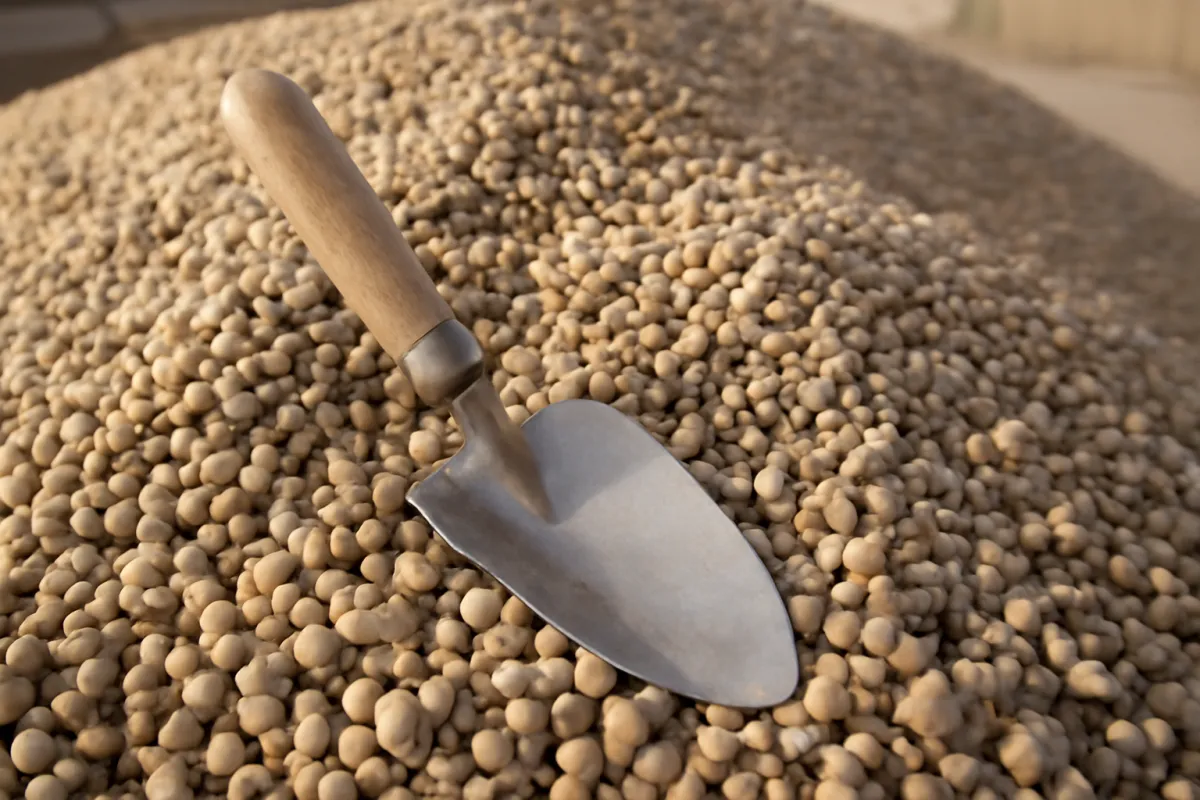
The lighter weight does not change the practical warning that pea gravel is still heavy: even at 2,400 pounds, a single yard is well over a ton, more than a pickup should carry in one load. What the per-yard weight really tells you is where the bag-versus-bulk line sits. A bag of pea gravel typically holds only about half a cubic foot, so it takes more than 50 bags to equal a cubic yard, which is why bulk delivery wins fast past a small job. If your patio or path needs more than a fraction of a yard, the weight figure is your signal that a bulk delivery, priced by the ton, will beat a car full of bags on both cost and your back. Our gravel manual works that crossover in detail.
How many pounds in a yard of crushed stone
Crushed stone is the workhorse gravel, the angular material that locks together under compaction and forms driveways, bases, and the stone around drainage pipe, and it is almost always sold bulk by the ton. A cubic yard of crushed stone commonly weighs about 2,500 to 2,900 pounds, roughly 1.25 to 1.45 tons, with dense base grades that carry a lot of stone dust sitting toward the heavy end. A representative planning figure near 2,700 pounds per cubic yard works for common crushed stone, but the size of the crush and the amount of fines move it: a clean single-size stone like a washed number 57 runs a bit lighter than a dense crusher run packed with fines.
Because crushed stone is priced by weight, the pound figure is mostly a sanity-check tool. When a yard quotes you a per-ton price and you have calculated a volume, converting your cubic yards to pounds lets you see roughly what the delivery should weigh, so a ticket that comes back far heavier flags either a very wet load or a denser stone than you expected. It also sets the hauling reality: at 2,700 pounds per yard, even a modest three-yard order is more than 8,000 pounds, well past what any pickup carries and squarely in delivery territory. The volume side of a crushed stone order, the depths and the compaction allowance, is the work our gravel manual walks through, and the weight here is what turns that volume into a truck ticket.
Crushed stone versus gravel weight
People often ask whether crushed stone weighs more than gravel, and the honest answer is that crushed stone is a kind of gravel, so the comparison is really between angular crushed material and rounded natural stone. Within the broad gravel category, the angular crushed grades, especially dense base rock with fines, tend to weigh slightly more per cubic yard than smooth rounded stone like pea gravel or river rock, because the angular pieces and the fines nest together with less open space between them. The difference is modest, a few hundred pounds per yard at most, not a different order of magnitude.
The practical upshot is that shape and grading matter more than the label. A washed, single-size crushed stone with the fines rinsed out can actually run lighter per yard than you would guess, because rinsing out the fines opens up void space, while an unwashed crusher run of the same rock runs heavier because the fines fill those voids. So two products both called crushed stone can weigh differently per yard depending on their grading. This is exactly why every figure in this manual is illustrative and why the yard’s own weight for the specific product is the number that ends up on the scale. When you compare quotes, compare the same graded product, and let the supplier’s measured weight, not the category name, settle the tonnage.
Wet gravel and the weight it adds
Yes, and this is the single most important thing to understand about gravel weight, because it is the quiet gotcha that turns a by-the-ton order sideways. A pile of gravel is not solid stone: it is stones with air gaps between them, and when it rains those gaps fill with water. Because the water adds weight but occupies space that was mostly air, a wet cubic yard weighs meaningfully more than a dry one of the same stone while taking up nearly the same volume. Depending on the stone and how saturated it is, the added weight can run to several hundred pounds per cubic yard, enough to matter on any sizeable order.
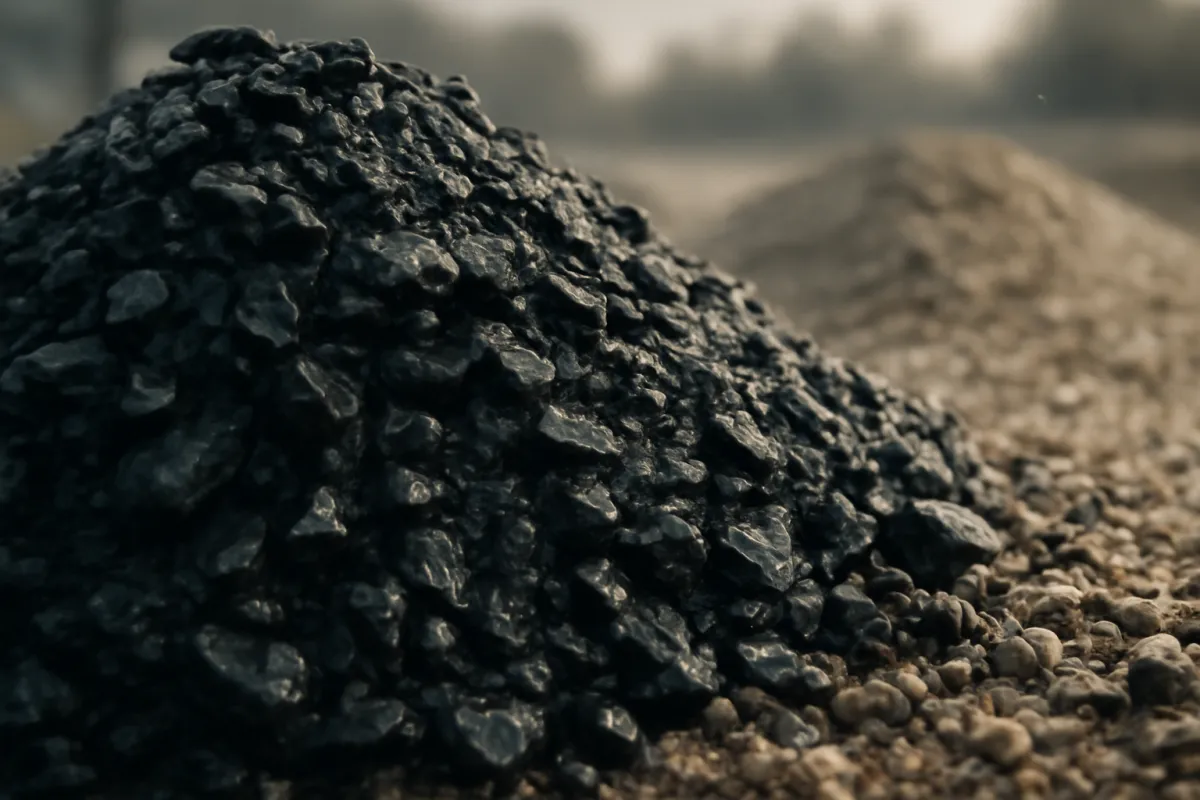
A gravel order by weight: dry stone plus the moisture add
Illustrative split of a wet delivery, where water adds weight without adding volume.
On a by-the-ton buy, the moisture slice is weight you pay for that is not stone: the same tonnage of wet gravel delivers fewer cubic yards than dry, so on a large order it is worth asking whether the pile is wet.
The effect is uneven by stone type. Clean, coarse gravel drains and holds relatively little water, so its weight moves least with the weather, while gravel packed with fines holds more and swings more. For planning, use dry-weight figures as a baseline and expect a real load to weigh more after rain, and on a large or moisture-sensitive order, ask the yard for the current weight of the specific pile rather than converting from a chart, exactly the discipline our tons to cubic yards manual argues for.
Pounds per cubic foot
Sometimes you want the weight in a smaller unit, a cubic foot rather than a cubic yard, either because a spec is written that way or because you are buying a partial load. The conversion is simple, since a cubic yard is 27 cubic feet: divide the per-yard weight by 27. Common gravel near 2,700 pounds per cubic yard works out to almost exactly 100 pounds per cubic foot, a tidy round figure worth memorizing. Lighter rounded stone runs a bit under 100 pounds per cubic foot, and dense base grades a bit over, tracking the same spread as the per-yard numbers.
The hundred-pounds-per-cubic-foot figure is a fast field check. A bag of gravel holding half a cubic foot weighs roughly 50 pounds, which matches what a bag of stone actually feels like off the shelf, so the per-cubic-foot number ties the bulk weight back to something you can lift. It also makes the depth math tangible: a square foot of gravel one inch deep is a twelfth of a cubic foot, or a bit over 8 pounds, so a patio of a few hundred square feet at a couple of inches is quickly a load measured in tons. Whenever a weight figure feels abstract, drop it to pounds per cubic foot and it reconnects to bags, buckets, and barrows you can picture.
Converting yards to tons for a gravel order
The conversion that turns a measured job into an order is short: multiply your cubic yards by the density in tons per cubic yard. For common gravel that density is about 1.4 tons per yard, so cubic yards times 1.4 gives tons. If your driveway worked out to 15 cubic yards including the compaction allowance, that is roughly 21 tons on the truck scale. To go the other way, from a tonnage quote back to volume, divide: 20 tons at 1.4 tons per yard is about 14.3 cubic yards. Divide to go from tons to yards, multiply to go from yards to tons.
The sequence that keeps an order right is fixed. First find the cubic yards from the space, the length-times-width-times-depth-over-27 line our cubic yards manual lays out. Then add the compaction allowance, because loose gravel packs down and the volume that fills a finished depth is more than the depth alone suggests. Only then convert the allowance-inclusive volume to tons, so the tonnage you order actually fills the space after it settles. Converting the bare finished volume instead of the allowance-inclusive one is a common way to come up short. Our tons to cubic yards manual works this chain in both directions with worked examples, and our estimator runs the volume side so you only have to apply the density.
Why the weight matters: trucks, delivery, and hauling
Weight is not trivia on a gravel order, it is the constraint that shapes how the material gets to your site and what it costs to move. The reason the yard sells by the ton is that trucks are weighed at a scale, so weight is the cheat-proof measure of what left the yard, and the reason delivery is priced the way it is comes down to how much weight a truck can legally and safely carry. A delivery fee, whether flat or by distance, spreads across the whole order, so the more weight you take in one trip, the smaller the fee looks per ton, which is a direct argument for buying the compaction allowance and any second job in a single delivery.
Weight also decides the self-haul question outright. Because a single cubic yard of gravel is well over a ton, self-hauling a multi-yard order means many trips in a vehicle whose load limit is a fraction of the total, plus real wear on the truck. The weight figure is what makes that visible before you commit: multiply your yards by the per-yard weight, compare against your vehicle’s rated payload, and the answer to haul-or-deliver usually decides itself. Our gravel manual frames the delivery-versus-pickup economics in full, and the weight here is the input that drives it.
What your vehicle can actually haul
The mismatch that catches people is between how much gravel looks like a lot and how little a vehicle can safely carry. A half-ton pickup, despite the name, is typically rated to carry roughly 1,000 to 1,500 pounds of payload, which is less than a single cubic yard of gravel weighs. So loading a full yard of stone into a half-ton bed overloads it, straining the suspension, brakes, and tires and making the truck genuinely unsafe to drive. The honest limit for a half-ton is closer to a half a cubic yard of gravel per load, and even that sits near the top of its rating.
Bigger trucks carry more, but the arithmetic scales the same way: a three-quarter-ton or one-ton pickup handles more, yet a multi-yard order still means multiple trips or a proper delivery. The practical move is to size the trips off weight, not off how much fits in the bed by volume, because gravel will fill a bed past the point of safety long before it looks full. Take your order’s total weight, divide by a safe per-load figure for your vehicle, and you get the honest number of trips, which is usually the moment a bulk delivery starts looking cheap. Run the numbers through our estimator and the companion below will turn your order into a hauling read directly.
Coverage from a single yard of gravel
Coverage is the question people most often confuse with weight, and separating the two prevents a common ordering mistake: weight tells you what to haul, but depth, not weight, tells you what a yard covers. One cubic yard of gravel spreads over roughly 100 square feet at about 3 inches deep, closer to 80 square feet at 4 inches, and about 160 square feet at a shallow 2 inches. The same volume of stone, and the same weight, thins out over more area as the layer gets shallower, so coverage is entirely a function of the depth you choose, not of how heavy the yard is.
That is why two orders of identical weight can cover wildly different areas. A yard of dense base gravel and a yard of light pea gravel weigh a few hundred pounds apart, but laid at the same depth they cover almost the same area, because coverage follows volume and depth, not weight. To size a real job you measure the area, choose a depth from the use, a path shallow, a driveway surface a few inches over a deeper base, a drainage trench a foot or more, and run the volume math our gravel manual works through, then convert to tons if the yard sells by weight. Keep the two questions apart: how much does it cover is a volume question answered by depth, how much does it weigh is a hauling and billing question answered here.
Gravel weight versus sand and topsoil
Gravel does not travel alone on most jobs, and comparing its weight to the other bulk materials sharpens the sense of what you are ordering. Common crushed gravel, near 1.4 tons per cubic yard, is the densest of the three staples. Dry sand runs a little lighter, around 1.35 tons per cubic yard, close to gravel but not identical, which our sand manual works through for bedding and base jobs. Screened topsoil is the lightest, commonly cited near 1.1 tons per cubic yard when it is reasonably dry, the figure our topsoil manual uses for garden beds and regrades.
The spread matters because a mixed landscaping job, a gravel base under a sand bed under a topsoil fill, cannot be converted at one blended density without mispricing every layer. Convert each material on its own weight per yard and sum the tons, exactly the point our tons to cubic yards manual makes. The other reason the comparison is useful is moisture behavior: gravel drains and holds the least water, so its weight moves least with the weather, while sand holds more and topsoil, loose and organic, holds the most and swings the hardest. So gravel is both the heaviest of the three when dry and the most stable in weight, which makes it the material where a dry-weight planning figure is closest to what actually shows up on the scale.
Calculating tonnage for your order
Turning a space into a tonnage is a three-step chain, and doing it in order is what keeps the number honest. Step one is volume: measure the area, choose the depth, and run length times width times depth in feet, divided by 27, to get cubic yards, the line our cubic yards manual walks through with the inches-to-feet conversion that trips up first-timers. Step two is the allowance: add roughly 20 percent for compaction, because loose gravel settles and packs, and the volume that fills a finished depth is more than the depth alone implies. Step three is the conversion: multiply the allowance-inclusive volume by the density, about 1.4 tons per yard for common gravel, to get tons. The same quantity-first discipline is the heart of material estimation across every trade, and our general manual works it end to end for anything you buy by volume or coverage.
Skipping straight to a tonnage guess is where orders go wrong, because you can no more judge tons by eye than you can judge cubic yards. The discipline is to let each step feed the next: volume first, then allowance, then weight, and only then a call to the yard. Order the allowance-inclusive volume converted to tons, not the bare finished volume, so the delivery holds its depth after it compacts. When the order is large or the product unusual, ask the yard for their weight per yard for that specific stone, because their measured figure beats any planning number. Run the volume in our estimator, apply the density, and you arrive at the counter with a tonnage you can defend.
A quick reference table
The manual compresses to a short table worth keeping by the phone when you order. Every figure is an illustrative dry-weight planning number, and the real value belongs to the specific product and its moisture, so treat these as starting points. To size an order, find your cubic yards, add the compaction allowance, then multiply by the density for tons.
- Pea gravel: about 2,400 to 2,800 pounds per cubic yard, roughly 1.2 to 1.4 tons. Lighter because the rounded stones pack with more open space.
- River rock: about 2,600 pounds per cubic yard, roughly 1.3 tons. Rounded natural stone, middle of the range.
- Crushed stone: about 2,700 pounds per cubic yard, roughly 1.35 tons, near 100 pounds per cubic foot. The common workhorse figure.
- Base gravel or crusher run: about 2,900 pounds per cubic yard, roughly 1.45 tons. Dense with fines, toward the heavy end.
- Wet gravel of any type: add several hundred pounds per cubic yard over the dry figure, since water adds weight without adding volume.
The pattern in the table is the one to memorize: dense, fines-packed material weighs the most per yard, clean or rounded stone the least, and moisture lifts any of them. When a supplier’s product sits outside these ranges, and specialty stone sometimes will, their measured weight wins over the table every time, because the table is only a first pass before the scale settles it.
Working a driveway from yards to tons
Walk a real job end to end, because the worked version shows where each number comes from. Take a single-vehicle driveway, 100 feet long by 10 feet wide, resurfaced with a 4 inch layer of gravel. Area is 1,000 square feet, depth in feet is 0.333, so the volume is about 333 cubic feet, and over 27 that is roughly 12.3 cubic yards from the formula, the same line our gravel manual runs. That is the finished volume, before any adjustment.
Now the two moves that make it an order. Add the compaction allowance, about 20 percent, and 12.3 becomes roughly 14.8 loose cubic yards, the volume you actually buy so the packed layer holds 4 inches. Convert that allowance-inclusive volume to weight: at about 1.4 tons per cubic yard, 14.8 yards is roughly 20.7 tons, or about 41,000 pounds, on the truck scale. So the driveway that measured out at 12.3 finished cubic yards is an order of about 21 tons, and if the yard instead quoted a flat 20 tons, dividing by 1.4 shows you were getting about 14.3 loose cubic yards, a touch under the 14.8 you wanted. Convert both directions and you can check any quote against your measurement. That 41,000 pounds is also the labor and logistics plan: it arrives as one heap, far past any pickup’s capacity, so it is a delivery and a weekend of spreading, not a series of trips. Run your own drive through our estimator to get the volume, then apply the density for the tonnage.
Reading a delivery ticket by weight
The weight figure earns its keep at the moment the truck arrives, when a ticket in tons has to reconcile with the cubic yards you ordered. A delivery ticket typically shows a gross weight, a tare, and a net tonnage, and the net is what you are billed for. To check that you received what the space needs, divide the net tons by the density, about 1.4 for common gravel, to get the loose cubic yards delivered, and compare against the allowance-inclusive volume you calculated. If your driveway wanted 14.8 loose cubic yards and the ticket converts to about 14, you are close; if it converts to 10, something is worth a conversation before the truck pulls away.
The weight reading also protects you on moisture. If a ticket’s tonnage looks high for the volume you expected, a wet load may be part of the reason, because you are paying for water weight, and knowing the weight-to-volume relationship lets you see it rather than just suspect it. A wet load is not a cheat, the scale is honest, but the effective density has shifted and your volume per ton has dropped. Keep your calculated volume, your chosen density, and the expected weight written down before delivery, then run the ticket’s net weight back through the conversion on the spot. The check takes a minute and turns a pile of stone from a thing you hope is right into a thing you have verified, the same reconciliation habit our tons to cubic yards manual recommends for any bulk delivery.
The bottom line
A cubic yard of gravel weighs roughly 2,400 to 2,900 pounds, about 1.2 to 1.5 tons, with a figure near 1.4 tons per yard a sound planning number for common crushed stone, and the spread within that range comes down to gravel type, grading, and above all moisture, since water adds weight without adding volume. Weight is the number a gravel order turns on, because the yard weighs at a scale and sells by the ton, so the discipline is to find your cubic yards, add the compaction allowance, and convert the allowance-inclusive volume to tons using the density for your specific stone. Keep coverage separate, since depth not weight decides what a yard covers, and let the weight tell you what your truck can carry and what the delivery should read on the ticket. Work the volume side in our gravel manual and cubic yards manual, run the conversion in our tons to cubic yards manual, compare against sand and soil in our sand manual and topsoil manual, and put your own numbers through our estimator. Do that, and the weight on the delivery ticket and the space you measured will finally agree.
Take this as yard-side education, not an engineering specification. Every weight, tonnage, density, and coverage figure in this manual is an illustrative planning number, and your stone type, its grading, your supplier, and the moisture on the day will each move the real figures. Weight per cubic yard shifts with the specific product and how wet the pile is, so lean on a supplier’s own measured weight for the exact stone on any order that matters, check your vehicle’s rated payload before self-hauling anything this heavy, and confirm depths, compaction, and the final tonnage with the yard and a qualified professional before the truck is loaded.
Frequently asked questions
How much does a yard of gravel weigh?
A cubic yard of gravel weighs roughly 2,400 to 2,900 pounds, or about 1.2 to 1.5 tons, for common dry crushed stone. The exact figure moves with the gravel type, the size of the crush, and how wet the load is, so treat any single number as an illustrative planning figure rather than a constant. Denser base grades packed with fines sit toward the heavy end, while cleaner or more rounded stone runs lighter. When the order is large, use the supplier's own measured weight for the specific product instead of a generic figure.
How many tons is a yard of gravel?
One cubic yard of common gravel weighs roughly 1.2 to 1.5 tons, with about 1.4 tons per cubic yard a widely cited planning figure for typical crushed stone. To convert, multiply your cubic yards by the density in tons per cubic yard, so 5 yards at 1.4 is about 7 tons. Because suppliers weigh loads on a truck scale and quote in tons, carrying both numbers, your measured cubic yards and the tons they price by, keeps the order and the invoice aligned. Confirm the specific product's weight with the yard when it matters.
How much does a cubic yard of gravel weigh in pounds?
In pounds, a cubic yard of dry gravel commonly runs about 2,400 to 2,900 pounds, which is why one yard is often described as roughly 1.2 to 1.5 tons since a ton is 2,000 pounds. A representative crushed stone near 2,700 pounds per cubic yard works out to about 100 pounds per cubic foot. Wet material climbs above these figures because water fills the gaps between stones and adds weight without adding much volume. Use the dry figure as a baseline and expect a rained-on pile to weigh more.
How much does a yard of pea gravel weigh?
A cubic yard of pea gravel weighs roughly 2,400 to 2,800 pounds, or about 1.2 to 1.4 tons, in the same general range as other gravels but often toward the lighter side because the smooth rounded stones pack with more open space between them. As with any aggregate, the number shifts with moisture and the exact stone, so a damp load weighs more per yard than a dry one. Because pea gravel is sold both bagged for small jobs and bulk for larger ones, knowing the per-yard weight helps you judge when a delivery beats hauling bags home.
Does wet gravel weigh more?
Yes, wet gravel weighs meaningfully more than dry gravel of the same type. Water fills the air gaps between the stones and adds weight without adding much volume, so a soaked cubic yard can weigh a good deal more than the dry figure predicts, often on the order of several hundred pounds more per yard depending on the stone and how saturated it is. Clean, coarse gravel drains and holds relatively little, so its weight moves least with weather, while gravel packed with fines holds more water and swings more. This is one reason suppliers weigh at a scale and sell by the ton.
How many pounds are in a yard of crushed stone?
A cubic yard of crushed stone commonly weighs about 2,500 to 2,900 pounds, or roughly 1.25 to 1.45 tons, with dense base grades that carry a lot of fines sitting toward the heavy end. A representative figure near 2,700 pounds per cubic yard is a reasonable planning number for common crushed stone, but the angular shape, the size of the crush, and moisture all move it. Because crushed stone is almost always sold bulk by the ton off a truck scale, the pound figure is mostly useful for sanity-checking a quote and for judging what your vehicle can safely carry.
How much does a yard of gravel cover?
Coverage depends entirely on depth, not weight, though the two get confused. One cubic yard of gravel spreads over roughly 100 square feet at about 3 inches deep, closer to 80 square feet at 4 inches, and about 160 square feet at a shallow 2 inches, since the same volume thins out over more area as the layer gets thinner. To size a real job you measure the area, choose a depth, and run the volume math our gravel manual works through, then convert to tons if the yard sells by weight. Weight tells you what to haul; depth tells you what it covers.
Why do suppliers sell gravel by the ton instead of the yard?
Bulk gravel moves by truck, and every loaded truck crosses a scale on the way out, so weight is the yard's most accurate and cheat-proof measure of what left the site. Selling by the ton means the scale settles the quantity, moisture and all, with no argument about how heaped a bucket was, whereas a volume-based sale depends on how loosely the material is piled. That is why your cubic-yard figure, which is what a measured space produces, has to cross to tons to match how the yard quotes and bills. Carry both numbers when you order so the two units always reconcile.