What's on this page
- What decking costs per square foot
- Decking cost by size
- Decking cost by material
- Pressure-treated lumber: the baseline
- Cedar and redwood decking
- Composite decking
- PVC and vinyl decking
- What drives decking cost
- The substructure: framing, joists, and beams
- Footings and posts
- Fasteners: screws, hidden clips, and what they add
- Railings: a separate line item
- Where the money goes
- Decking vs a paver patio, poured concrete, and gravel
- Removing an old deck or surface first
- Permits and inspections
- Sealing, staining, and maintenance cost
- DIY decking cost
- From price per foot to your total
- Ways to keep decking cost down
- A worked example: a 16 by 12 foot deck priced
- The bottom line
Short answer: A pressure-treated wood deck commonly runs an illustrative 25 to 40 dollars per square foot installed, with a working midpoint near 30 dollars, so a 16 by 12 foot deck of 192 square feet lands near 5,760 dollars. Cedar runs a step above near 35, composite near 45, and PVC the highest at roughly 40 to 65. The substructure, footings, framing, and joists, is usually the largest share of the bid, often larger than the decking material itself.
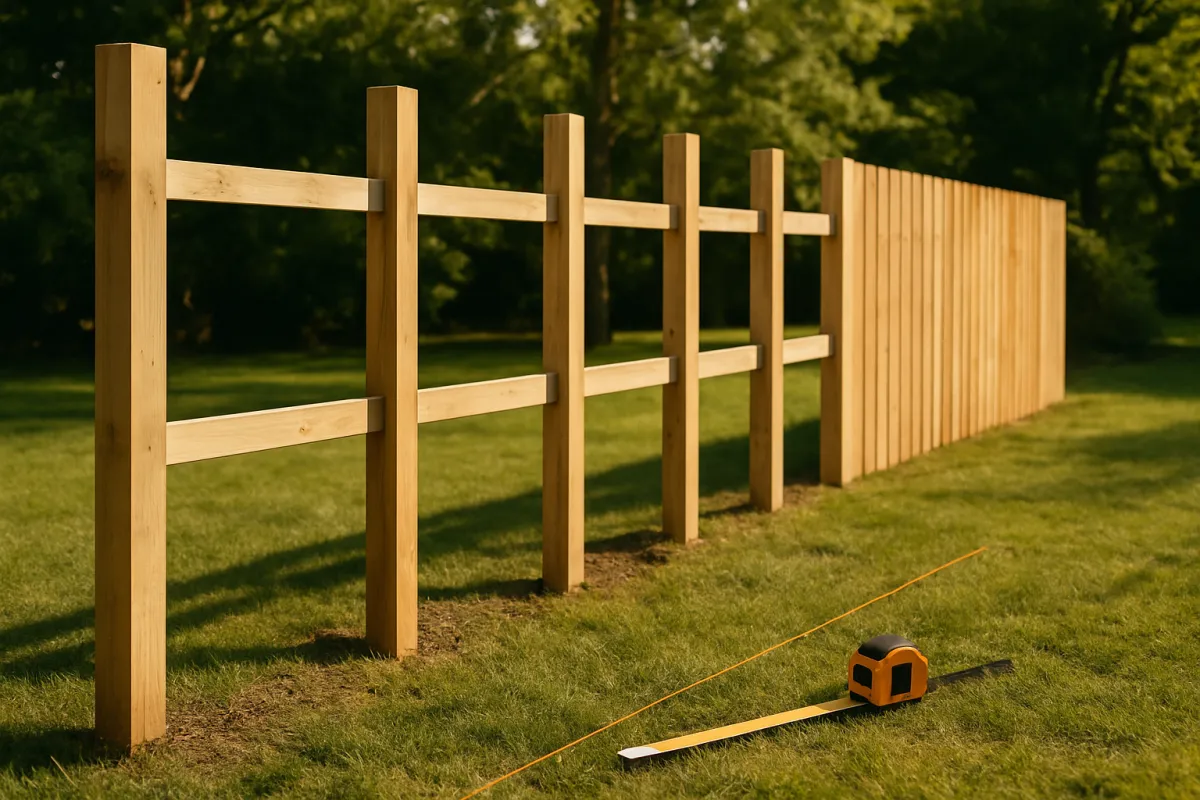
Decking cost looks like a single number and behaves like two separate jobs stacked together, because unlike a patio, a deck is not a surface laid on the ground, it is a structure built up from footings and framing before any decking board ever gets cut. Ask what a deck costs and the honest answer forks twice: once on the decking material sitting on top, pressure-treated, cedar, composite, or PVC, and once on the frame underneath, which is mostly the same build regardless of what finish you choose. Two decks that look identical in a photo can carry very different bids once height above grade, footing depth, and span requirements enter the picture.
This cost brief prices a deck the way builders bid one: per square foot installed, scaled to whole-project totals by size, broken out by the four common decking materials, and separated into the substructure and the surface the way a real estimate has to be. It sits alongside our deck board and joist manual for the physical quantities, boards, joists, posts, and footings, that drive the number this brief prices, and it compares a deck against a paver patio, poured concrete, and gravel for readers weighing more than one outdoor surface. Run your own dimensions through the estimator or the companion below as you read.
Key takeaways
- A pressure-treated deck commonly runs an illustrative 25 to 40 dollars per square foot installed, with a working midpoint near 30; cedar, composite, and PVC each step up from there.
- Unlike a patio, a deck is a structure before it is a surface, so footings, posts, beams, and joists are real cost, often the largest single share of the bid.
- Total cost scales with area, but height above grade, stairs, and railing length move a deck's price more than a flat patio's, since each adds its own structural work.
- Composite and PVC cost more up front than wood but typically trade a recurring staining and sealing cost for a one-time premium and lighter long-term upkeep.
- Every dollar figure here is illustrative and local: your soil, height, span requirements, material, and region set the real number, so measure and collect written bids.
What decking costs per square foot
The cleanest unit for a deck is dollars per square foot installed, because that is how builders estimate the job and how differently sized projects compare fairly. As an illustrative planning range, a pressure-treated wood deck commonly runs somewhere around 25 to 40 dollars per square foot, with a working midpoint near 30 dollars. That figure is not the decking boards alone: it bundles the footings, the posts, the beams and joists, the decking material itself, the fasteners, and a basic railing system, which is why it reads well above the per-board-foot price a lumberyard quotes for decking lumber alone.
The reason the installed figure beats every other unit is that a deck’s substructure cost does not show up anywhere on a decking material receipt. Our deck board and joist manual prices the physical takeoff, boards, joists, posts, footings, fasteners, in quantities, but turning that list into a dollar figure needs the installed rate this brief works through. Start from the per-square-foot installed rate for the material you want, multiply by your deck’s area, and you have a defensible planning number before a single builder visits. The companion below runs the math on your own dimensions as you go.
Decking cost by size
Size is the first multiplier, because every square foot of deck surface carries a share of both the framing underneath it and the decking on top. The table below prices common deck footprints at the illustrative pressure-treated midpoint of 30 dollars per square foot, purely as planning bands. Small decks are cheap in absolute terms but often cost more per foot, since the fixed costs of footings and a mobilized crew spread over less area. Large decks are the reverse: the total climbs fast, but the per-foot rate can soften somewhat as the same crew and equipment cover more surface.
| Deck size | Area | Illustrative total at ~$30/sq ft |
|---|---|---|
| 10 x 10 ft | 100 sq ft | ~$3,000 |
| 16 x 12 ft | 192 sq ft | ~$5,760 |
| 16 x 20 ft | 320 sq ft | ~$9,600 |
| 20 x 20 ft | 400 sq ft | ~$12,000 |
| 20 x 25 ft | 500 sq ft | ~$15,000 |
| 24 x 30 ft | 720 sq ft | ~$21,600 |
Read every row as a starting point, not a quote. Swap the material and the whole column shifts: the same 400 square foot deck at a composite rate near 45 dollars reads about 18,000 dollars. Add a tall deck with stairs, a sloped lot needing deeper footings, or a complex multi-level layout and each row climbs further. The useful habit is to price your real measured footprint, not a nominal size; our square footage manual covers measuring an L-shaped or wrapped deck, and the estimator turns a length and width into area in seconds.
Decking cost by material
Material is the second fork in a deck estimate, and because a deck is built rather than simply surfaced, the material choice affects the decking layer’s cost more than it affects the substructure underneath, which is commonly the same pressure-treated lumber regardless of what sits on top. The chart below places the four common decking materials side by side on illustrative installed cost per square foot, and the sections that follow take each one in turn.
Illustrative installed cost per square foot, by decking material
Full deck build, footings through railing; local labor, height, and access move every bar.
Pressure-treated sits at the bottom because the board itself is the least expensive of the four. The climb from pressure-treated to PVC tracks the manufactured cost of the decking board far more than it tracks any change to the framing underneath.
The structure under every one of these materials is essentially the same: the same footings, the same framing, the same fasteners. What you buy as you climb the chart is the decking board itself, its manufacturing process and its warranty, and in some cases a lighter maintenance schedule over the life of the deck. That is worth keeping in mind when a budget tightens, because it means decking material is a choice you can trade without touching the structural job underneath it, which is the costlier half of the build regardless of what finish you choose.
Pressure-treated lumber: the baseline
Pressure-treated pine or fir is the baseline of the range, an illustrative 25 to 40 dollars per square foot installed with a midpoint near 30, and it is what a deck means when nobody specifies otherwise. The lumber is chemically treated to resist rot and insects, widely available at standard lumberyards, and familiar to essentially every residential framing crew, which keeps both material and labor cost down relative to the alternatives. For a deck that will live under furniture, a grill, and regular foot traffic, pressure-treated lumber is the standard rather than a compromise.
Because the material is a common commodity, a pressure-treated bid is one of the cleaner ones to compare across builders, the differences come down mostly to footing depth, framing method, and local labor rather than sorting through a specialty product. It is also the material that leaves the most budget for the structural half of the job, the footings and framing that determine whether the deck stands safely for decades. Confirm the lumber’s rated exposure and fastener compatibility, since treated lumber chemistry has changed over the years and modern fasteners need to match the current treatment to avoid accelerated corrosion.
Cedar and redwood decking
Cedar, and in some regions redwood, is the first natural step up, an illustrative 28 to 45 dollars per square foot installed with a midpoint near 35, trading a modest premium for a lighter board, a warmer natural color, and rot resistance that comes from the wood’s own chemistry rather than a chemical treatment. Many owners choose cedar specifically to avoid the chemically treated look and feel of pressure-treated lumber, since cedar can be left to weather to a silvery gray naturally or finished to keep its original tone.
The premium buys real advantages alongside real trade-offs. Cedar is generally softer and more prone to surface denting and splintering under heavy use than pressure-treated pine, and without a protective finish it will weather unevenly depending on sun and shade exposure across the deck. Cedar decking is also commonly sold with less structural grading rigor for framing members than pressure-treated lumber, so many cedar decks still frame the substructure in pressure-treated wood and reserve the cedar for the visible decking surface and railings, a hybrid approach that controls cost while delivering the look that draws people to cedar in the first place.
Composite decking
Composite decking sits in the upper-middle of the range, an illustrative 35 to 55 dollars per square foot installed with a midpoint near 45. It is manufactured from a blend of wood fiber and plastic, engineered to resist rot, insects, and splintering without the periodic sealing or staining a wood deck wants, which is the core of its pitch to buyers weighing decades of upkeep rather than just the day-one bill. Composite is typically sold in a range of colors and finish textures that do not require any coating to maintain their appearance over time.

The premium over wood reflects the manufacturing process and the warranty that typically comes with it, often considerably longer than any wood product carries. The trade-offs are real too: composite decking is generally heavier per board than wood, can run noticeably hotter underfoot in direct sun than a lighter-colored wood surface, and the upfront cost is a genuine barrier compared with pressure-treated lumber. For an owner planning to stay in a home for many years and wanting to minimize recurring maintenance, composite is often worth the premium; for a shorter time horizon or a tighter budget, wood delivers most of the function for meaningfully less.
PVC and vinyl decking
PVC and vinyl decking sit at the top of the range, an illustrative 40 to 65 dollars per square foot installed with a common midpoint near 55, the highest among the four because the board is entirely synthetic rather than a wood-plastic blend, manufactured for maximum moisture resistance and minimal expansion and contraction across temperature swings. PVC decking commonly carries the longest warranties of the group and is a common choice near pools, hot tubs, or other consistently wet conditions where even composite’s wood content is a theoretical weak point.
PVC’s case for the premium is durability in the harshest moisture conditions a deck surface sees and a genuinely maintenance-light ownership experience, wash it occasionally and little else. The trade-offs are cost, a noticeably different feel and sound underfoot that some owners dislike compared with wood or composite, and like composite, a tendency to run hot in direct summer sun depending on color. For a straightforward backyard deck on a working budget, pressure-treated or cedar deliver most of the outdoor living value for substantially less than PVC’s premium.
What drives decking cost
Beyond size and material, a handful of factors decide where a real bid lands inside the illustrative ranges, and knowing them explains why two quotes for a similar-looking deck can differ by thousands. Height above grade comes first and is unique to decks among the surfaces this site prices: a low deck just a step up from the yard needs short posts and shallow footings, while a deck off a second story or a sloped lot needs taller posts, more bracing, stairs, and often a railing height and design governed more strictly by code. Footing depth follows the local frost line and soil, and it is not negotiable the way a finish choice is, since a footing poured too shallow can heave and fail regardless of how well the decking above it was built.
Access is next: a backyard a truck or material cart can reach directly moves lumber and concrete quickly, while a deck behind a house with no side-yard access may need material carried by hand, all of which is labor. Then come the add-ons, stairs, built-in benches or planters, multiple levels, and a pergola or roof structure, each priced as its own scope rather than folded into the base rate. Finally, the market itself moves the number: deck-building crews run on a similar seasonal calendar to other outdoor trades, so the same deck can bid differently in spring than in late fall, and regional labor rates move the largest line on every bid.
The substructure: framing, joists, and beams
The part of a deck that costs the most and shows the least once it is finished is the substructure, and it is worth understanding why. A deck’s frame, the ledger or beam that anchors it, the posts that carry it, and the joists that support the decking boards, is a genuine structural system sized by a span table against the load the deck has to carry, not a decorative choice. Our deck board and joist manual works the physical quantities in full: joist count from width over spacing, blocking by the bay, and fastener counts from crossings.
What that manual will not give you, deliberately, is a span, because span depends on species, grade, spacing, and your adopted local code, and the only correct source is the span table your jurisdiction uses together with the plan reviewer who applies it. What this cost brief adds is the dollar side of that same structural system: framing lumber, hardware, hangers, and the labor to cut, hang, and brace it correctly, which together commonly make up the largest single share of an installed deck’s price, more often than not larger than the decking material itself.
Footings and posts
Footings are where a deck most clearly differs from a patio in cost, because a patio sits on a compacted base while a deck’s entire weight channels down through a handful of point loads into the ground below. A footing is commonly a concrete pier poured into a cylindrical form, its depth set by the local frost line so the ground freezing and thawing around it cannot heave the deck out of level over a winter, and its diameter and depth sized by the load each post actually carries, both engineering questions for your plan reviewer rather than a general rule this brief will assert as universal.
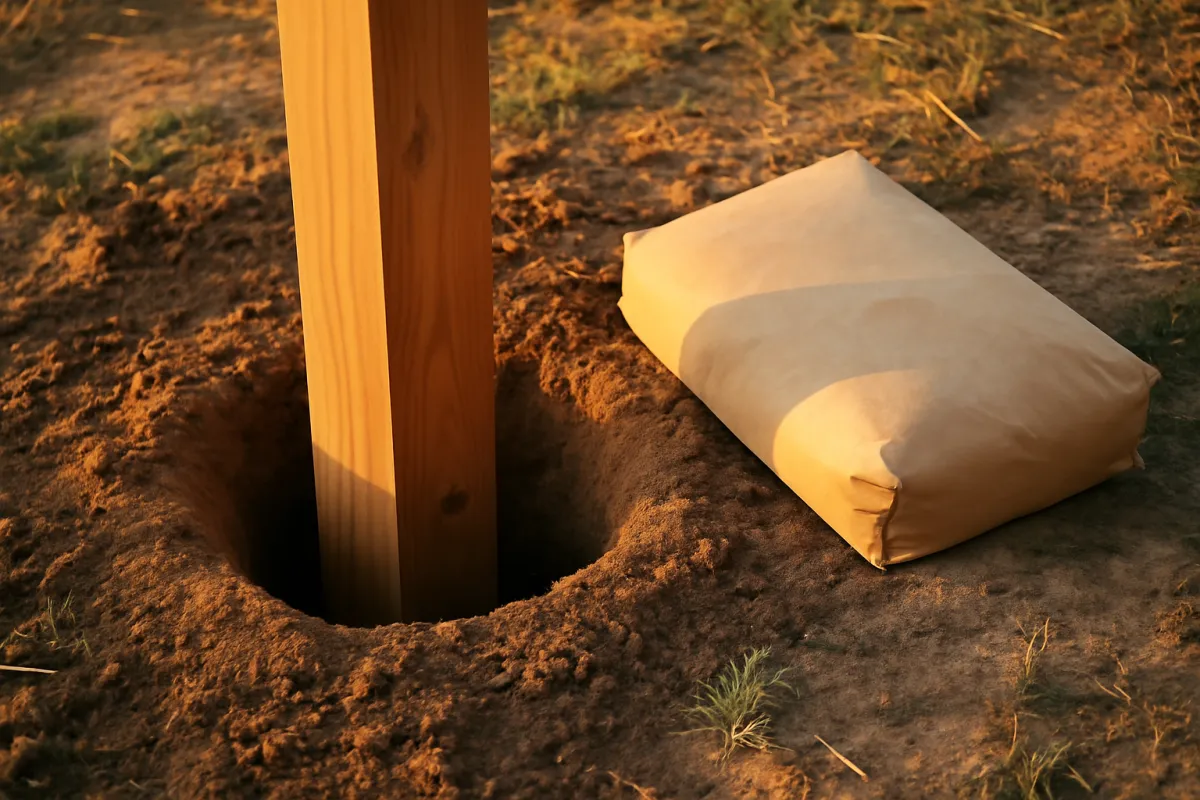
The post itself sits on or in that footing and carries the beam above it, and post count follows directly from the beam span and the load, the same bays-plus-one logic our deck board manual applies to framing generally. Footings and posts are a real cost line in nearly every deck bid, commonly priced per footing rather than per square foot, which is part of why a taller or larger-footprint deck with more posts can cost noticeably more than its square footage alone would predict from a flat per-foot rate.
Fasteners: screws, hidden clips, and what they add
Every decking board meeting every joist is a fastener, face screws or hidden clips, and across a whole deck that is hundreds to low thousands of individual connections, a real material and labor line that a per-square-foot rate already bundles in but is worth understanding separately. Hidden fastener clip systems cost more per piece than simple deck screws but leave no visible fastener head on the decking surface, a look many owners specifically want with composite and PVC decking in particular, where a smooth, screw-free surface is part of the product’s appeal.
Fastener choice also has to match the decking material, not just the look: composite and PVC manufacturers commonly specify approved fastener systems for their warranty to remain valid, so substituting a cheaper generic screw can technically void coverage even if it holds the board down just as well mechanically. Confirm the fastener system a bid specifies matches both your decking material’s warranty requirements and your preferred look before signing off on a quote that seems unusually low, since fasteners are an easy place for a stripped-down bid to cut a corner invisibly.
Railings: a separate line item
A railing is required by code on most decks above a modest height, commonly in the range jurisdictions set around 30 inches, and it is priced and built as its own scope rather than a finishing touch folded invisibly into the decking rate. A basic railing in wood or a simple metal baluster system sits at the economical end, while a cable railing, a glass panel system, or a railing matched to composite or PVC decking in a coordinating color each add real cost, commonly running well above a basic wood railing on a per-linear-foot basis.
Railing length follows the deck’s open perimeter, not its area, so a narrow, long deck can carry more linear feet of railing relative to its square footage than a compact, roughly square deck of the same area, which is one more way two similarly sized decks can price differently. Stairs, where the deck is elevated, need their own railing run as well, and stair railings are commonly priced at a premium over flat-run railing because of the added framing and code requirements around stair geometry.
Where the money goes
Understanding the split inside an installed deck price is what makes bids legible, and on a deck the split runs differently than it does on a patio, because the structural substructure is a real, large share of the total in a way a patio’s compacted base never approaches.
Where an installed composite deck's cost goes
Illustrative split for a mid-size composite deck with a basic railing; shares shift with material, height, and access.
Unlike a patio, where the surface material and labor dominate, a deck's structural substructure is commonly the single largest line, which is why height above grade and footing count move a deck's price more than a comparable change moves a patio's.
Two conclusions follow from the split. First, the substructure is not where a tight budget should look to cut, since it is both the largest cost share and the part that determines whether the deck is safe, so savings there are borrowed at bad interest. Second, decking material choice moves roughly a third of the total, meaningful but not dominant, which is why stepping from pressure-treated to PVC roughly doubles the per-square-foot rate without doubling the whole bid’s underlying structural scope.
Decking vs a paver patio, poured concrete, and gravel
A deck competes with the same ground-level alternatives a patio does, and the honest comparison runs on where the surface sits relative to the ground, not on looks alone. A plain poured concrete patio runs an illustrative 8 dollars per square foot, and a concrete paver patio runs an illustrative 18, both well under even the cheapest deck, because neither needs footings, posts, or a structural frame the way a deck does; our concrete patio cost brief and paver patio cost brief price those surfaces in full.
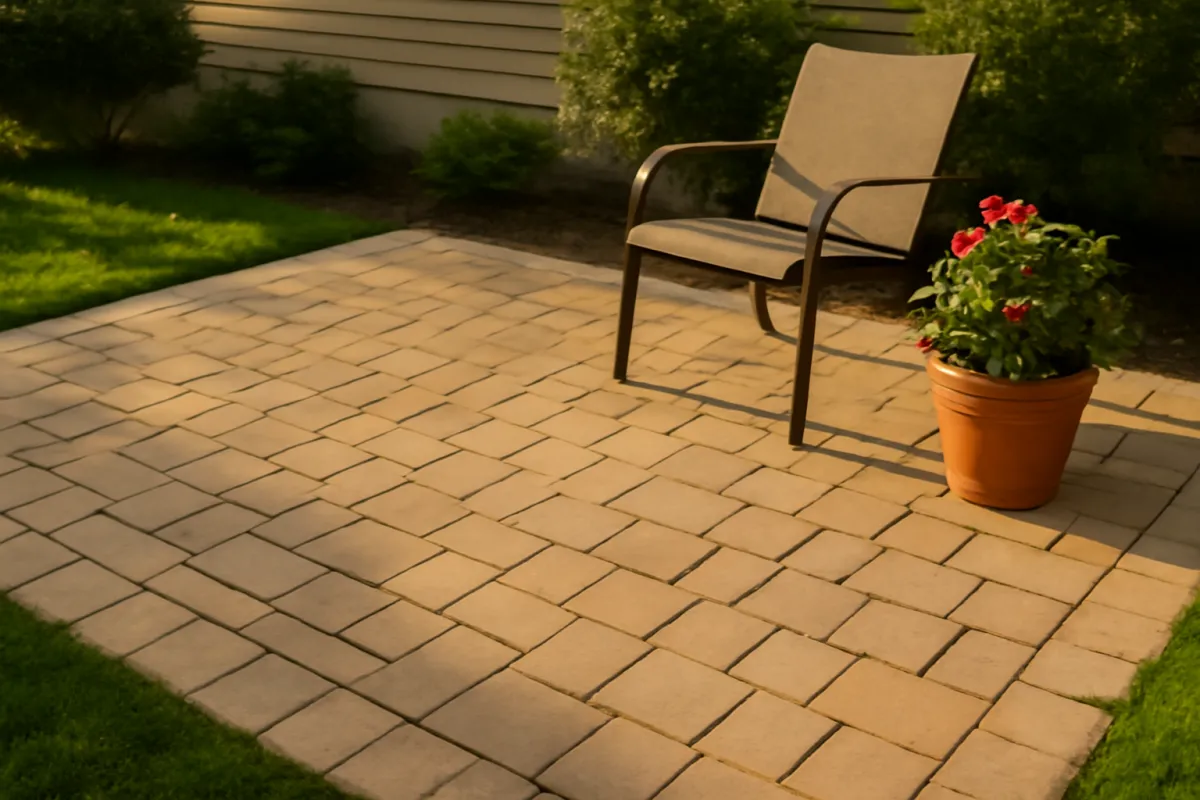
What a deck buys for its premium is the ability to sit well above grade, off a raised door, over a sloped yard, or above a walkout basement, places where a ground-level patio would need serious fill or simply would not work at all. Gravel remains the budget floor for a flat, low yard, inexpensive but loose and migratory underfoot. The honest answer is site-shaped: on flat ground at an accessible height, a patio nearly always costs less; where the door sits well above grade or the yard slopes away from the house, a deck earns its structure and its price.
Removing an old deck or surface first
If a tired deck, an old patio, or a failing gravel bed already occupies the footprint, demolition and haul-away come first, and it is a real line: an illustrative 3 to 6 dollars per square foot to break apart, load, and dispose of the old structure, moving with size, height, condition, and local disposal fees. An old deck generates volume rather than weight the way a concrete slab does, which generally makes it faster to tear out, though a rotted or structurally compromised deck can be more hazardous to dismantle safely than a sound one, a real labor and safety cost a bid should reflect rather than skip.
Getting the demolition inside the same bid as the new deck, where you can, usually prices better than hiring it separately, since a crew already mobilized on site handles the breakout more efficiently, and it also lets the same crew confirm whether any existing footings can be reused rather than assuming all-new concrete work, a detail worth asking about explicitly since reusing sound existing footings is one of the more meaningful ways to trim a rebuild’s cost.
Permits and inspections
A deck is one of the more commonly permitted residential projects precisely because it is structural, and skipping that step is a real risk rather than a shortcut. Most jurisdictions require a permit for a deck above a certain size or height, with the ledger connection to the house, the footing depth and size, and the railing height and spacing all subject to inspection against the locally adopted code. A bid that does not mention a permit is worth asking about directly, since an unpermitted deck can complicate a future home sale and, more immediately, means nobody independent has checked the structural work before you are standing on it.
Permit and inspection fees themselves are a modest line relative to the overall project cost in most places, but the design constraints they impose, required footing depth, ledger fastening method, railing specifications, are not optional extras a bid can quietly omit to look cheaper. Treat a bid that is vague about permitting the same way this site treats a bid that is vague about a patio’s base: not cheaper, unfinished.
Sealing, staining, and maintenance cost
A deck’s ownership cost differs more sharply by material than almost anything else this brief prices. A pressure-treated or cedar deck commonly wants sealing or staining on a recurring cycle, often every one to three years depending on climate and sun exposure, and skipping it accelerates graying, splintering, and eventual board replacement. As an illustrative, typical range, sealing or staining a deck commonly runs around 2 to 4 dollars per square foot in product and labor if hired out, a real recurring line a composite or PVC deck mostly avoids.
Composite and PVC decking’s maintenance pitch is specifically that this recurring line shrinks to occasional washing, which is a genuine advantage worth weighing against the material’s higher purchase price using a true ownership-cost comparison rather than the installed price alone. Railings, regardless of decking material, want periodic inspection for loose connections and, on wood railings, their own sealing cycle. None of these materials are maintenance-free in an absolute sense; they simply ask for different kinds and amounts of upkeep.
DIY decking cost
Building your own deck attacks the largest share of the price, the substructure labor, and the saving can be real for an owner comfortable with structural framing. The DIY bill is materials plus tool rental: concrete for footings, framing lumber, decking boards at their per-square-foot material cost, fasteners, and railing material, without the labor markup a hired crew’s bid includes. Pressure-treated lumber is the most DIY-accessible material family, widely stocked and familiar to tool rental counters and lumberyard staff who can answer basic questions.
The honest caution is heavier here than on a patio, because a deck’s structural half is code-governed and inspected in most places, so the ledger connection, footing depth, and joist span are not places to guess or improvise. Our deck board and joist manual carries the full quantity takeoff, and a permit application with your local building department, filed before digging the first footing, is the step that turns a DIY deck from a liability into a documented, inspected structure. Many owners self-perform the decking and railing, the more forgiving, visible work, while hiring out the footings and framing, or confirm every structural decision with the plan reviewer before proceeding alone.
From price per foot to your total
Turning the rates in this brief into your own planning number is three steps. First, measure the real footprint: length times width in feet for a rectangle, decomposed into pieces for an L-shape or a wrapped corner, as our square footage manual shows, and note the height above grade, since it changes the footing and post requirements. Second, pick the installed rate for your material: an illustrative 30 dollars for pressure-treated, 35 cedar, 45 composite, 55 PVC. Multiply, and you have the base figure; a 16 by 12 deck at 30 dollars is 192 square feet and about 5,760 dollars.
Third, adjust for what the base rate cannot see. Add for demolition if an old structure must go, for stairs and a built-in bench or planter, for a tall deck needing deeper footings and more bracing, and for a premium railing system over a basic one. The result is not a quote, it is a defensible expectation that tells you which bids deserve questions and whether the project fits the budget before anyone visits. The companion below runs this entire method live on your own numbers, material and all, as you read the rest of the brief.
Ways to keep decking cost down
A deck budget has real levers, and material is the most visible one: the same footprint in pressure-treated lumber at an illustrative 30 dollars versus PVC at 55 is nearly double for the same substructure, so choosing pressure-treated or cedar captures most of what a raised outdoor surface offers for meaningfully less. Keeping the deck low to the ground where the site allows it is the next lever, since a low deck needs shorter posts, shallower footings in some jurisdictions, and no railing at all where code permits, all real savings a taller design cannot access.
Size and simplicity round out the list: trimming a plan from 400 to 300 square feet saves real money since every foot carries the full rate, and a simple rectangular footprint without multiple levels, built-in features, or a pergola keeps labor focused on the structure rather than custom details. What should never be cut is the structure itself: footing depth, ledger attachment, and joist span are safety questions set by your local code, and a bid that saves money there is not a deal, it is a liability waiting on the next heavy snow load or a crowded party.
A worked example: a 16 by 12 foot deck priced
Take the common case end to end: a 16 by 12 foot pressure-treated deck attached to the back of a house, a modest 2 to 3 feet above grade, flat yard, decent soil, direct access for material delivery. The area is 192 square feet, matching the same footprint our deck board and joist manual uses for its own worked example of 13 joists at 16 inch on-center spacing and roughly 401 linear feet of decking. At the illustrative 30 dollar midpoint the planning figure is about 5,760 dollars installed.
Inside that number sits the physical job: concrete footings at posts sized to the span, beams and 13 joists framed to code, roughly 401 linear feet of decking cut and fastened, and a basic railing around the open sides. Following the illustrative substructure share of about 35 percent, footings and framing alone account for roughly 2,000 dollars of that total, more than any other single line. Now flex the material lever: the same footprint in cedar runs near 6,720 dollars, composite near 8,640, PVC near 10,560. The substructure cost barely moves across those four figures, since the frame underneath is commonly the same regardless of decking choice, which is the entire lesson of this brief: price your own version in the companion below and watch material and height move your number while the footings stay the quiet constant underneath.
The bottom line
Decking cost comes down to a short list in a fixed order: the area, the height above grade, the material, and the substructure underneath all of it. Carry the illustrative rates, 25 to 40 dollars per square foot installed for pressure-treated with a midpoint near 30, roughly 35 for cedar, 45 for composite, and 40 to 65 for PVC, then multiply by your measured square footage for the base figure. Remember that a deck is a structure before it is a surface, so footings, posts, beams, and joists carry real cost that a patio never has to budget for, and that cost is commonly the largest single share of the bid regardless of which decking material tops it.
A deck costs more than a ground-level patio on flat, low ground while offering something a patio cannot, the ability to sit well above grade where a sloped yard or a raised door demands it. Its honest requirement is a genuine structural build, footing depth, span, and railing all governed by your local code, which is why the substructure is never the place to cut and the low bid that skimps on it is expensive and unsafe later. Measure with the estimator, price your material in the companion below, read our deck board and joist manual for the quantity takeoff, then collect written bids that all cover the same structural scope. A deck priced that way arrives as a decision, not a surprise.
This cost brief is workbench education for planning a deck budget, not a quote, a design, or a construction specification. Every dollar figure in it, per square foot, per material, and per project, is an illustrative planning number, and your soil, height above grade, span requirements, local labor market, and season will each move a real bid, sometimes substantially. A deck is a structure with real safety requirements, footing depth, joist span, ledger attachment, and railing height, that depend on your local code and must be reviewed and typically inspected by your local building department, so have them specified by a qualified builder for your site rather than borrowed from a general article. Outcomes ride on structural work you cannot fully inspect once the decking is down, which is one more reason to hire on scope, permits, and reputation rather than price alone. Build your actual budget on current written bids from local builders, not on any single figure printed here.
Frequently asked questions
How much does a deck cost per square foot?
As an illustrative planning range, a pressure-treated wood deck commonly runs somewhere around 25 to 40 dollars per square foot installed, with a working midpoint near 30 dollars. That figure bundles the footings, the framing, the decking boards, fasteners, and basic railing, which is why it reads well above the per-board-foot price a lumberyard quotes for decking alone. Cedar steps up from there, an illustrative midpoint near 35, composite decking commonly lands near 45, and PVC or vinyl decking is usually the highest at roughly 40 to 65 dollars per square foot. Site conditions, deck height, railing style, and regional labor rates all move the figure, so collect written local bids before treating any single number as a budget.
How much does a 16 by 12 foot deck cost?
At an illustrative 30 dollars per square foot for pressure-treated lumber, a 16 by 12 foot deck, 192 square feet, lands near 5,760 dollars as a planning figure. Step the same footprint up to cedar near 35 dollars and it reads about 6,720 dollars, to composite near 45 it is about 8,640 dollars, and to PVC near 55 it climbs to roughly 10,560 dollars. The area math is simple, length times width, but what it cannot see is your site: deck height above grade, soil conditions for the footings, and how far the material has to be carried all move the base figure, so use this as a starting number and let local bids set the real one.
Is composite decking cheaper than wood in the long run?
Not up front, but often yes over time, and the honest comparison needs both numbers. As illustrative installed figures, pressure-treated wood runs near 30 dollars per square foot against composite near 45, so wood is the cheaper build by a real margin. The trade-off is ownership: wood wants staining or sealing on a recurring cycle and board replacement as it ages, while composite is engineered to skip most of that maintenance, so its higher purchase price is partly a maintenance-cost trade rather than a pure premium. Over a decade or two the gap can narrow, but it depends heavily on how diligently a wood deck is maintained, which is a real variable, not a guarantee.
What is the cheapest decking material?
Pressure-treated pine or fir is typically the least expensive decking material, commonly an illustrative 25 to 40 dollars per square foot installed with a midpoint near 30, because it is widely available, fast to install, and needs no special cutting tools. Cedar sits a step above on material cost while weighing less and resisting rot naturally without chemical treatment. Composite and PVC sit at the top of the range because the board itself is a manufactured, engineered product rather than a sawn commodity. Within pressure-treated lumber, the cheapest path is still a simple rectangular footprint with a plain railing, since curves, multiple levels, and built-in benches all add labor regardless of which board sits on top.
How much does it cost to build the frame of a deck versus the decking itself?
The substructure, footings, posts, beams, and joists, is commonly the largest single share of an installed deck price, often more than the decking boards themselves, because it is where the structural labor and the concrete live. As an illustrative split, framing and footings together often run close to a third to two-fifths of the total installed cost, with the decking material itself typically a somewhat smaller share and labor to set it and build railings making up the rest. Our deck board and joist manual works the physical quantities, boards, joists, posts, and footings, that this cost brief prices.
Can I build a deck myself to save money?
A deck is a more demanding do-it-yourself project than a patio, because it is a structural build with a span table, a permit, and usually an inspection attached to it, rather than a surface laid on prepared ground. The saving is real on labor, which is the largest line in most bids, and the sequence, footings, framing, decking, railing, is well documented, our deck board manual carries the board and joist math in full. The genuine caution is the structural half: joist span, footing depth, and ledger attachment to the house are code and safety questions, not aesthetic ones, and belong to your local building department and the plan reviewer, not to guesswork.
How much does it cost to remove an old deck?
As an illustrative, typical range, tearing out and hauling away an old deck commonly runs around 3 to 6 dollars per square foot, moving with the deck's size, height above grade, whether the framing is rotted and brittle or sound enough to come apart cleanly, and local disposal fees. A low deck close to the ground is generally faster and cheaper to remove than a tall one with stairs and multiple structural levels. Getting the demolition inside the same bid as the new deck, where you can, usually prices better than a separate job, since a crew already mobilized on site handles the breakout more efficiently than a fresh one starting cold.
How long does a deck last, and what does upkeep cost?
A well-built pressure-treated deck commonly lasts an illustrative 15 to 25 years structurally, though the decking surface itself often needs attention well before the frame does; cedar runs a similar range with more consistent weathering if left unsealed. Composite and PVC decking commonly carry longer manufacturer warranties, often two to three decades on the board itself, with the frame underneath, typically still pressure-treated lumber, aging on the wood timeline regardless of what sits on top. Upkeep cost differs sharply by material: wood wants periodic sealing or staining with a real recurring cost, while composite's upkeep is mostly washing, with no stain or seal cycle to budget for.