
What's on this page
- Vinyl fence installation cost per linear foot
- What vinyl fencing actually is
- Vinyl fence cost by style
- Vinyl fence cost by height
- What drives vinyl fence installation cost
- Post spacing and footings on a vinyl fence
- Concrete footing cost per post
- Gate cost for a vinyl fence
- Where the money goes
- Vinyl fence cost versus wood
- Vinyl fence cost versus chain link
- Lifetime cost: upfront price against years of maintenance
- Site access, slope, and demolition of an old fence
- Labor’s share of a vinyl fence install
- DIY versus hiring a pro for vinyl fencing
- A worked example: a 140 foot yard fence with one gate
- Color and texture options, and whether they change price
- Permits and inspections
- How to compare vinyl fence quotes fairly
- Common mistakes when budgeting a vinyl fence
- Vinyl fence cost versus composite
- Weather resistance and expected lifespan
- Noise reduction and privacy screening
- The bottom line
Short answer: Vinyl fence installation cost commonly runs an illustrative 25 to 45 dollars per linear foot for a 6 foot privacy style, with a working midpoint near 35 dollars, and 18 to 30 dollars for a shorter picket or semi-privacy style. A 140 foot yard fence with one gate prices near 5,275 dollars as a planning figure, before site extras or removing an old fence.
Vinyl fence installation cost sits in an odd spot compared with the other common fence materials, because the number that matters most is not the day-one install invoice but what happens, or does not happen, over the years after it. A vinyl fence commonly costs more to install than pressure-treated pine and is not far off from cedar, yet it never needs the staining or sealing cycle either wood species needs every few years, which changes the real comparison from a single price tag into a lifetime cost question.
This cost brief prices vinyl fence installation the way fence contractors actually quote one: per linear foot, broken out by style and height, then layered with what gates and site conditions add, and set directly against wood and chain link so the comparison is explicit rather than left to memory. It is the direct cost companion to our fence material take-off, which works the post and panel quantities for a fence like this in full, and to our fence post tutorial, which carries the concrete footing technique every post here relies on. Measure your own fence line with the estimator, then run the length through the companion below to turn it, your style, and your gate count into an illustrative installed total as you read.
Key takeaways
- A 6 foot vinyl privacy fence commonly runs an illustrative 25 to 45 dollars per linear foot installed, with a midpoint near 35; a picket or semi-privacy style runs 18 to 30 dollars.
- Vinyl costs more upfront than pressure-treated pine and lands close to cedar, but it never needs the staining cycle either wood species needs every 2 to 4 years.
- Vinyl is well under half the cost of chain link per linear foot, a gap that buys privacy and a finished appearance chain link cannot match.
- Gates add a flat several-hundred-dollar cost per opening on top of the per foot rate, because the two posts they hang from need a larger, deeper footing than a line post.
- Every dollar figure here is illustrative and local: your length, style, site, and region set the real number, so measure and collect written bids.
Vinyl fence installation cost per linear foot
The cleanest unit for pricing a vinyl fence is dollars per linear foot, because that is the unit most fence contractors quote in and the one that lets differently shaped yards and differently sized fence runs compare fairly. As an illustrative planning range, a standard 6 foot vinyl privacy fence commonly runs somewhere around 25 to 45 dollars per linear foot, with a working midpoint near 35 dollars.
That installed figure bundles more than the panels themselves: it covers the posts, the rails, the panel caps and trim, the hardware, the concrete for every footing, and the labor to layout, dig, set, and assemble the system correctly. It usually does not include a gate, which prices separately, or removing an old fence first, which also prices separately. The companion below runs the math on your own fence as you go.
What vinyl fencing actually is
Worth naming clearly before going further, since the term gets confused with a different product on this same site: vinyl fencing is solid PVC panel fencing, posts, rails, and panels molded from rigid plastic, not the vinyl-coated chain link mesh our chain link fence cost brief covers, which is galvanized steel wire with a polymer coating over it. The two share a material name but are genuinely different products at genuinely different price points, so confirm which one a quote or a product listing actually means before comparing numbers.
Vinyl panel fencing is manufactured in pre-sized sections, commonly 6 or 8 feet wide, that snap or screw together between posts, which is part of why it installs faster per linear foot than a board-by-board wood fence once the posts are set. Panels come in solid privacy styles, spaced picket styles, and semi-privacy styles with a lattice top or spaced slats, each priced differently, much like the style tiers our wood fence cost brief prices for lumber.
Vinyl fence cost by style
Style is the first lever in a vinyl fence estimate, and it moves the per foot rate independent of height, much the way it does for wood. A solid privacy panel, closed boards with no gaps, is the most material-intensive style and the baseline this brief prices from, an illustrative 25 to 45 dollars per linear foot at 6 feet. A semi-privacy style, which adds a lattice top section or spaced slats above a solid lower panel, commonly costs a similar or slightly lower rate, since it uses less solid panel material while keeping most of the post and rail structure the same.
A picket or spaced rail style, the vinyl equivalent of a classic picket fence, uses the least material per linear foot and commonly runs an illustrative 18 to 30 dollars, since it carries fewer, narrower vertical pickets and often a shorter overall height than a privacy run. Ranch rail styles, two or three horizontal rails with no vertical infill at all, commonly used for a large property line rather than a backyard perimeter, cost the least of any common vinyl style, since they use the least material by far per linear foot of coverage.
Vinyl fence cost by height
Height moves a vinyl fence estimate the same two ways it moves any fence material: taller panels need more material, and taller posts need a deeper, larger footing. As an illustrative planning set for a privacy style, a 4 foot fence might run 20 to 32 dollars per linear foot, a 5 foot fence 22 to 38 dollars, and a full 6 foot privacy fence 25 to 45 dollars, with taller 8 foot runs, sometimes used where extra screening or sound reduction matters, pricing higher still.
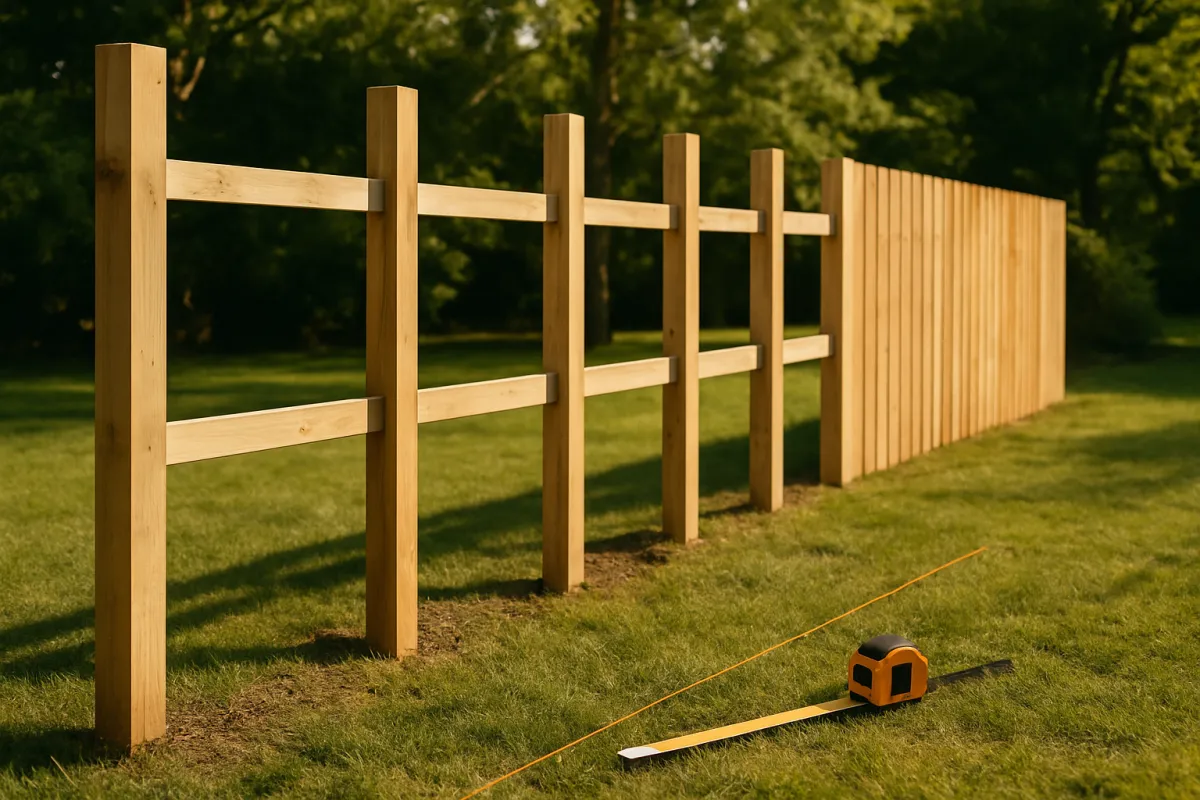
The jump from a 4 or 5 foot height to a full 6 foot privacy height is usually the largest single step in the range, both because the panel area grows and because a 6 foot fence more often needs the deeper, wider footing a taller run’s wind load calls for. Confirm the specific height a quote prices against the fence line you actually want, since a picket-height quote compared against a privacy-height one is not a fair comparison even in the same material.
What drives vinyl fence installation cost
Beyond style and height, a handful of factors decide where a real bid lands inside the illustrative ranges. Panel thickness and manufacturer grade matter more with vinyl than with most materials, since a thin, lower grade panel can flex, discolor, or crack over time in a way a thicker, better engineered panel resists, and that quality difference shows up in price before a single post is set.
Site conditions follow the same pattern every fence material shares: a flat, obstruction-free yard installs faster and cheaper than a sloped, rocky, or heavily rooted one, gates add their own flat cost per opening regardless of fence length, and removing an old fence first, covered below, layers its own cost on top of the bare per foot rate. The companion at the end lets you combine these levers on your own fence rather than averaging across all of them at once.
Post spacing and footings on a vinyl fence
Post spacing on a vinyl privacy fence commonly runs 6 to 8 feet on center, matched to the manufacturer’s panel width, since vinyl panels are a fixed pre-molded size rather than a cut-to-length material the way wood rails are. That fixed spacing is actually a small advantage during estimating: once you know the panel width, the post count follows directly from the fence length without the undercount risk a flexible-spacing material like wood or chain link can carry.
Every post, whether it carries a solid privacy panel or a spaced picket rail, sets in its own concrete footing using the same cylinder-minus-post arithmetic our fence post tutorial carries through step by step. Vinyl posts are typically hollow and sometimes reinforced internally with a metal or composite insert at gate posts and corners, a detail that adds a modest material cost at those specific posts beyond a standard line post.
Concrete footing cost per post
A typical vinyl line post footing on a 6 foot fence commonly holds an illustrative 1.5 to 2 cubic feet of concrete, near 3 bags of standard 80 pound mix, the same figure a comparable wood post footing uses, since the hole size is driven by post diameter and burial depth rather than the material the post is made from. A gate post’s larger section in a deeper, wider hole holds considerably more, an illustrative 4 to 5 cubic feet, near 7 to 8 bags.
On a fence with, say, 18 line posts and 2 gate posts, that works out to roughly 54 bags for the line posts and 15 for the gate posts, near 69 bags total before any margin, a real cost line our bags of concrete manual helps convert to a bag count from any hole size and depth you actually plan to dig. Confirm the yield printed on whatever product you buy, since fast-setting mixes intended for post work commonly publish their own figure that differs from a standard mix.
Gate cost for a vinyl fence
A gate is the item that moves a vinyl fence total the most for its own modest footprint, exactly as it does on a wood or chain link job. A single walk gate matching the fence style, commonly 3 to 4 feet of opening, adds an illustrative 250 to 500 dollars installed on top of the run it interrupts, covering a matching panel-infill frame, hinges sized to the leaf’s weight, and a latch.
A double gate wide enough for equipment or a vehicle, commonly 8 to 12 feet of total opening, runs considerably more, an illustrative 600 to 1,300 dollars or beyond, since a wide vinyl leaf needs internal metal or composite reinforcement to resist sagging across that span the way a rigid plastic frame alone cannot. As with every fence material this site prices, every gate hangs its full weight off one post as a cantilever, which is why gate posts upgrade to a larger size with internal reinforcement in a bigger, deeper concrete footing, a real material and labor cost a bare per foot fence rate never carries.
Where the money goes
Understanding the split inside an installed vinyl fence price is what makes a bid legible, and vinyl splits differently than wood, since prefabricated panels shift more of the cost into material and less into hand labor.
Where a vinyl fence's installed cost goes
Illustrative split for a standard privacy style on an easy, flat site.
Vinyl's split tilts toward material more than wood's does, since a prefabricated panel system assembles faster per linear foot than hanging individual boards, which keeps the labor share smaller in proportion.
That tilt toward material is the direct result of buying a manufactured panel instead of paying labor to build the fence board by board on site, and it is part of why vinyl, despite a higher material cost than wood, does not carry a proportionally larger labor bill to match.
Vinyl fence cost versus wood
Wood sits below vinyl on the illustrative chart for pressure-treated pine and close to it for cedar, but the comparison is incomplete without the maintenance line. Pine commonly installs near an illustrative 24 dollars per linear foot and cedar near 33, against vinyl’s midpoint of 35, which puts vinyl above pine but close to cedar on the day-one invoice alone.
Illustrative installed cost per linear foot, 6 ft privacy style
Vinyl against the common wood and chain link alternatives this site prices.
Every bar width is that row's rate divided by vinyl's 35, times 100. Vinyl sits closest to cedar on day-one price, well above chain link, and only modestly above pine.
The lifetime comparison closes the gap further. Wood needs staining or sealing every 2 to 4 years, an illustrative 2 to 4 dollars per linear foot each time, our wood fence cost brief prices that recurring line directly, while vinyl needs essentially none of that beyond an occasional wash. Over a decade or more, wood’s maintenance total can meaningfully narrow or erase the day-one price gap, which is the real question a buyer choosing between the two is actually deciding.
Vinyl fence cost versus chain link
Chain link is not a close comparison on price, since standard galvanized chain link commonly runs an illustrative 8 to 16 dollars per linear foot against vinyl’s 25 to 45, well under half even at the top of chain link’s range. Chain link needs fewer, more widely spaced posts and no individual panels to assemble, which keeps both material and labor cost down relative to a panel system.
What chain link cannot offer is privacy, since standard mesh is see-through by design, and our chain link fence cost brief covers privacy slats as a retrofit option that narrows but does not close the visual gap with a solid vinyl panel. A buyer choosing primarily on price with privacy as a secondary concern typically lands on chain link with slats; a buyer who wants a finished, opaque look from day one typically accepts vinyl’s higher price for that result without a workaround.
Lifetime cost: upfront price against years of maintenance
The honest way to compare vinyl against wood is over the fence’s full expected life rather than the installation invoice alone. Vinyl’s day-one price is higher than pine and close to cedar, but it carries essentially zero recurring finish cost for as long as the fence stands, while wood’s lower or comparable day-one price comes with a staining or sealing bill every 2 to 4 years that compounds over a decade or two of ownership.

Which material wins the lifetime comparison depends on how long you plan to own the property and how consistently a wood fence would actually get restained on schedule, since a skipped maintenance cycle accelerates wood’s visible wear and shortens its effective life, while vinyl’s performance stays essentially flat with or without owner attention.
A buyer planning to sell within a few years weighs this differently than one settling in for decades, since the shorter owner captures less of vinyl’s long-run advantage and may reasonably prioritize the lower day-one price of pine instead. A longer-term owner, by contrast, is the buyer most likely to see vinyl’s higher upfront cost pay for itself several times over against a wood fence’s repeated staining bills, which is worth weighing honestly against your own actual timeline rather than a generic rule of thumb.
Site access, slope, and demolition of an old fence
A flat, obstruction-free yard is the fastest site to build a vinyl fence on, since post holes dig quickly and pre-sized panels drop into place without extra adjustment the way they would on uneven ground. Sloped ground is a genuine complication for a rigid panel system specifically, since most vinyl fence products step down a slope in fixed increments at each post rather than racking continuously the way individually hung wood boards can, which takes more careful layout to keep the steps even.
Where an old fence is coming out first, demolition and disposal is its own line, commonly an illustrative 3 to 8 dollars per linear foot regardless of what the new fence will be made from, covering pulling the old material, breaking old posts free of their concrete, and hauling the debris away. That cost climbs with the volume of old concrete to break out, and a quote silent on removal is not automatically the cheaper bid, it is an incomplete one until that figure is added back in.
Labor’s share of a vinyl fence install
Labor is a smaller share of an installed vinyl fence than it is of a comparable wood fence, the direct result of assembling prefabricated panels rather than hanging individual boards one at a time. Digging and setting every post plumb is still genuinely skilled, time-consuming work regardless of fence material, but once posts are set, snapping or screwing manufactured panels into place moves faster than measuring, cutting, and fastening pickets board by board.
Because labor carries a smaller share, regional wage rates move an installed vinyl fence quote somewhat less than they move a comparable wood quote, though they still matter. The parts of the job a homeowner can supply, digging holes, hauling an old fence away, are where the real DIY savings live, the same as with any fence material this site prices.
DIY versus hiring a pro for vinyl fencing
Whether to install a vinyl fence yourself comes down to scale and site more than to the style chosen. A standard-height privacy or picket run on a mostly flat, reasonably accessible lot is a realistic project for a capable DIYer with basic tools and the willingness to dig by hand or rent an auger, and buying just the panels, posts, and concrete can be a fraction of a full installed quote.
The case for hiring out strengthens with a sloped or rocky site, which takes more judgment to step evenly and keep panels plumb, with a very long run where dozens of footings multiply any layout error, and simply with not having the weekends to spare. A gate, especially a wide double gate, is also where amateur builds most often disappoint, since a sagging gate is usually a post sizing or hinge mistake rather than a material quality problem.
A worked example: a 140 foot yard fence with one gate
Pull the levers together on one example, matched to the same 140 foot run our wood fence cost brief prices for comparison. A backyard needs 140 feet of new fence, 6 feet tall, a standard privacy style, vinyl, on an easy flat site, with one 4 foot walk gate.
Bare fence at an illustrative 35 dollars per linear foot for 140 feet prices near 4,900 dollars, bundling posts, rails, panels, hardware, concrete, and labor. The walk gate adds an illustrative 375 dollars for its frame, hardware, and the two upgraded gate posts, bringing the total to about 5,275 dollars as an all-in illustrative planning figure, before removing an old fence or any site difficulty adjustment.
Change one input and watch the total move. Swap to a picket or semi-privacy style at the same height and the bare fence line drops to roughly 3,360 dollars before the gate. Compare that same 140 foot run in pressure-treated pine, roughly 3,360 dollars before the gate, and the vinyl premium at the privacy tier is about 1,540 dollars upfront, a gap wood’s recurring staining bill narrows over the years that follow. Run your own fence through the companion below to see how style, length, and gate count move your number.
Color and texture options, and whether they change price
Vinyl panels come in a factory color baked through the full thickness of the material, white the most common and least expensive, with tan, gray, and a handful of other solid colors commonly available at a modest premium, an illustrative 5 to 15 percent over white for the same style and height. Because the color is molded into the material itself rather than applied as a surface coating, it does not chip, peel, or fade the way a painted surface would, which is part of the low-maintenance case for vinyl generally.
Textured finishes that mimic a wood grain surface, rather than a smooth molded finish, are available from some manufacturers at a further premium, an illustrative 10 to 20 percent above a smooth solid color panel, aimed at buyers who want vinyl’s maintenance profile with an appearance closer to painted wood. Ornamental styles, picket tops with scalloped or pointed caps rather than flat caps, also carry a modest premium over the plainest standard profile, priced per linear foot the same way any style choice in this brief is.
Permits and inspections
Fence installation, including vinyl, is a permitted project in many jurisdictions, particularly above a certain height threshold that is set locally rather than nationally, and skipping that step is a real risk rather than a shortcut. A permit and inspection confirm the fence meets locally adopted height limits and setback requirements from the property line, protections that matter both for neighbor relations and for a future home sale where an unpermitted structure can complicate a transaction.
Permit fees themselves are typically a modest line relative to the overall project cost, but a bid that is vague about whether a permit is included, or that suggests skipping it, is worth asking about directly. A homeowners association, where one exists, can add its own conditions on height, color, and style separate from any government permit, and vinyl’s limited color palette compared with paintable wood is occasionally a specific point of friction with an association’s rules, worth confirming before ordering material.
Confirm the actual property line from a survey rather than an old fence, a hedge line, or where the lawn has always been mowed, before finalizing any layout, since relocating a fence already set in concrete because it crossed a boundary line is a far larger cost than the survey that would have caught it beforehand. Call the local utility locate service before any post hole is dug as well, a step that applies to vinyl fence posts exactly as it does to any other material going into the ground.
How to compare vinyl fence quotes fairly
Comparing two vinyl fence bids fairly starts with confirming both are pricing the same style, height, and panel grade, since a lower bid on a thinner, lower grade panel is not actually cheaper than a higher bid on a thicker, better engineered one, it is a different product. Confirm both quotes state the post spacing and panel width assumed, since vinyl’s fixed panel sizing means spacing is less negotiable than it is with wood, but it still needs to be stated and matched between bids.
Ask directly whether concrete, old fence removal, and a difficult-site allowance are included or excluded, and ask what happens if digging runs into rock or heavy roots. And confirm every gate is itemized with its own upgraded, reinforced posts rather than folded into a blended per foot average, since that is the single most common place a vinyl fence quote hides scope rather than removing it.
Common mistakes when budgeting a vinyl fence
A few errors recur across vinyl fence estimates. First, comparing a bid on a budget-grade panel against a bid on a thicker, better engineered one as though they were interchangeable, when panel grade can be a real share of the price gap between two quotes that look similar on paper. Second, forgetting that a color other than white, or a textured finish, carries its own premium not always reflected in an advertised starting price.
Third, pricing gates from the blended per foot rate rather than as their own line, which understates the total every time a layout includes one. Fourth, assuming a sloped yard prices the same as a flat one, when vinyl’s fixed-height panels commonly need a specific stepped product or more careful layout labor that a flat-site quote does not anticipate. Fifth, ignoring the homeowners association’s color and style rules when ordering material, then discovering the chosen color or style does not meet local requirements after the fence is already installed.
Vinyl fence cost versus composite
Composite fencing, built from a blend of recycled wood fiber and plastic rather than solid PVC, is a third fenced-yard material worth naming alongside vinyl and wood, even though this site does not price it as its own full brief. Composite commonly installs at a premium over vinyl, an illustrative 10 to 25 percent above a comparable vinyl privacy run, trading a higher price for an appearance closer to painted or stained wood grain than vinyl’s typically smoother, more uniform surface achieves.
Like vinyl, composite needs essentially no staining or sealing cycle, which is the main reason a buyer considers it over wood despite the higher cost than vinyl. The choice between vinyl and composite usually comes down to appearance preference rather than a functional difference, since both skip wood’s recurring maintenance bill; vinyl wins on price, composite wins on a texture and color depth some owners feel reads more like genuine wood from a normal viewing distance.
Weather resistance and expected lifespan
Vinyl’s rigid PVC construction resists rot, insect damage, and moisture absorption by nature of being a fully synthetic material, advantages wood cannot match regardless of species or treatment. In a hot, high-UV climate, quality vinyl is formulated with UV inhibitors to resist the chalking and brittleness that a lower grade, unprotected plastic product can develop after years of direct sun exposure, which is part of why panel grade, covered earlier in this brief, is worth asking about rather than assuming all vinyl performs identically.
In a cold climate, vinyl’s main vulnerability is impact resistance at low temperatures, since rigid PVC can become more brittle and prone to cracking under a hard impact, a fallen branch or a vehicle strike, when very cold, a trade-off against wood’s tendency to warp or split from moisture cycling in the same climate instead. Neither vulnerability is usually a reason to avoid vinyl outright, but both are worth asking a local installer about if your climate runs to either extreme, since the answer can point toward a specific product line better suited to your region.
Noise reduction and privacy screening
A solid vinyl privacy panel, closed boards with no gaps between them, offers meaningfully more sound dampening than chain link or a spaced picket style, simply by virtue of being a continuous solid barrier rather than an open or gapped one. It does not match a masonry wall’s sound reduction, but for a backyard bordering a moderately busy street or a neighbor’s activity, a solid privacy run makes a real, noticeable difference that a picket or ranch rail style will not provide.
Privacy itself follows the same logic as sound: a solid panel blocks sightlines completely, a semi-privacy style with a lattice top or spaced upper slats blocks most of a standing adult’s sightline while allowing more airflow and light through the upper section, and a picket or ranch rail style offers essentially no privacy screening at all. Choosing among these styles is really a choice about how much airflow, light, and an open-yard feel you are willing to trade for a fully blocked sightline, a decision worth making deliberately rather than defaulting to whichever style a first quote happens to price.
The bottom line
Vinyl fence installation cost comes down to a short list in a fixed order: length, style, height, and gates. As an illustrative planning range, a 6 foot privacy fence runs 25 to 45 dollars per linear foot with a midpoint near 35, a picket or semi-privacy style runs 18 to 30, and every gate adds its own several-hundred-dollar line regardless of the rest of the fence.
Remember that vinyl’s higher day-one price against pine, and its near parity with cedar, is only half the comparison, since vinyl skips the recurring staining cost both wood species carry for as long as the fence stands. Measure with the estimator, price your own fence with the companion below, lean on our fence material take-off and fence post tutorial for the footing technique behind the number, and get more than one written, itemized local quote before you budget, since regional labor rates and the specific panel product move a real bid more than any table here can.
Read this brief as cost education, not a quote or an engineering opinion. Every dollar figure here, per linear foot, by style, per gate, and per project, is an illustrative planning range, and your region, your site conditions, and the specific product line will each move a real bid, sometimes significantly. Confirm height limits, setbacks, and permit requirements with your local building authority, establish the property line from a survey rather than an existing fence, contact the utility locate service and wait for the marks before any digging begins, and build a budget only on written, itemized quotes for your fence in your area.
Frequently asked questions
How much does vinyl fence installation cost per linear foot?
As an illustrative planning range, a standard 6 foot vinyl privacy fence commonly installs somewhere around 25 to 45 dollars per linear foot, with a working midpoint near 35 dollars. A shorter picket or semi-privacy style at 3 to 4 feet costs less, often 18 to 30 dollars per foot, since it uses less panel material and shorter posts. That per foot figure bundles the posts, panels, rails, caps, hardware, concrete, and the labor to build it, but usually not a gate, which prices separately. Get a written local quote, since regional labor rates and the specific product line move the real figure more than any single table.
Is vinyl fencing more expensive than wood?
Vinyl commonly costs more upfront than pressure-treated pine, an illustrative 35 dollars per linear foot against pine's 24, but it typically runs close to or sometimes below cedar, which commonly lands near 33 dollars for a comparable privacy fence. The real comparison is not just the install invoice, since vinyl never needs the staining or sealing cycle that both pine and cedar need every two to four years. Over a decade or more of ownership, vinyl's lifetime cost can land below wood's even though its day-one price is higher, which is the trade this brief's lifetime cost section works through directly.
Is vinyl fencing more expensive than chain link?
Yes, by a wide margin. Standard galvanized chain link commonly installs for an illustrative 8 to 16 dollars per linear foot, well under half of vinyl's 25 to 45 dollar range for a privacy style. The gap is not just material, since chain link needs fewer, more widely spaced posts and no individual panels to hang, which keeps labor down alongside the lower material cost. What chain link cannot match is privacy and a finished, opaque appearance, which is the entire reason most owners choosing between the two are not actually choosing on price alone.
How much does a vinyl fence gate cost?
A single walk gate matching the fence style, commonly 3 to 4 feet wide, adds an illustrative 250 to 500 dollars to a vinyl fence job installed, covering the gate frame, its matching panel infill, hinges rated for the leaf's weight, and a latch. A double gate wide enough for equipment or a vehicle, commonly 8 to 12 feet of total opening, runs considerably more, an illustrative 600 to 1,300 dollars or beyond, since the wider leaves need internal reinforcement to resist sagging. Every gate also upgrades the two posts it hangs from to a larger size in a deeper, wider concrete footing, the same structural logic our fence post tutorial works through for any gate post regardless of fence material.
Does a vinyl fence need staining or sealing?
No, and that is the single biggest ongoing cost difference between vinyl and wood. Vinyl panels are solid PVC through their full thickness and finished with a color baked into the material itself, so there is no wood grain to seal, no paint to peel, and no recurring finish cycle to budget for the way a wood fence needs every two to four years. Cleaning is typically limited to an occasional rinse or a mild soap wash to remove dirt or mildew film, nothing close to the labor and material cost of restaining a wood fence on the same schedule.
How much does it cost to remove an old fence before installing vinyl?
Removing an old fence ahead of a new vinyl installation commonly adds an illustrative 3 to 8 dollars per linear foot, covering pulling the old material, breaking old posts free of their concrete footings, and hauling the debris away for disposal. The cost climbs when old posts are deeply set in a large volume of concrete, since breaking that concrete out is slower than pulling panels or boards. Confirm whether a vinyl fence quote includes removal and disposal of the old fence as a bundled line or as a separate charge, since a bid silent on removal is not cheaper, it is simply incomplete until that number is added.
Is it cheaper to install a vinyl fence yourself?
For a standard-height fence on a reasonably accessible, mostly flat lot, doing it yourself can cut the installed cost substantially, since labor is a real share of the total and DIY converts that labor into your own time rather than a bill. Vinyl panels are designed to assemble with relatively simple hardware compared to board-by-board wood framing, which makes a vinyl fence a realistic project for a capable DIYer with post hole digging capacity and a few weekends. The case for hiring out strengthens with a very long run, a sloped or rocky site, or simply not having the time, since panel systems still need every post set plumb and level for the prefabricated sections to line up correctly.
Does a sloped yard raise vinyl fence installation cost?
Yes, and the effect shows up mostly in labor and in how the panels themselves handle the grade, since vinyl's rigid, fixed-height panels are less forgiving of a continuous slope than individually hung wood boards. Most vinyl fence systems step down a slope, keeping each panel level and dropping it at the post, rather than racking continuously the way a wood fence can, which means more careful layout and sometimes a specific stepped panel product rather than a standard one. Rocky or heavily rooted soil adds its own labor cost regardless of fence material, since every posthole that hits rock or a large root takes longer to dig and occasionally forces a post to shift from its planned spot.