What's on this page
- Calculating the topsoil you need
- Cubic yards or bags: pick your unit first
- Cubic yards of topsoil for the job
- How deep should topsoil go, project by project
- How much topsoil for a garden bed
- How much topsoil to level a yard
- Coverage from a single yard of topsoil
- How many bags of topsoil in a cubic yard
- The weight of topsoil and why delivery matters
- Bags versus bulk: the real crossover
- What a real topsoil order is made of
- Screened versus unscreened topsoil
- Mixing topsoil with compost
- Compaction and settling: order a little extra
- The reverse: I have X yards, what depth and area
- Two worked examples: a raised bed and a lawn topdress
- Where the estimate goes wrong
- The pre-order checklist
- The bottom line
Short answer: Multiply the area in square feet by the depth in inches, then divide by 324 to get cubic yards of topsoil. A 200 square foot bed at 6 inches deep is 200 times 6 over 324, about 3.7 cubic yards. Settle the depth first, since it moves the order more than anything, then round up and add a little for settling.
The question how much topsoil do I need has one honest answer that fits any lawn, bed, or low spot: the volume of the space you are filling, measured in the unit topsoil is sold in. That volume is the area times the depth of the layer, and the entire job is keeping the units straight, because you measure the ground in feet but spread soil in inches, and the two will not meet in one formula until you reconcile them.
This manual works the topsoil estimate from the measurement to the order, starting with the one formula that answers the question for any project, then covering what the formula cannot: the depth to fill for a new lawn versus a garden bed versus leveling, the bag count and the weight of a delivery, the bags-versus-bulk crossover, and the settling allowance that decides how much extra to order. It sits alongside our general estimating manual and shares its coverage logic with our mulch manual, sand manual, and gravel manual; for a quick pass on your own project, our estimator runs the numbers in seconds.
Key takeaways
- The formula is area in square feet times depth in inches divided by 324, which gives cubic yards directly; the 324 folds inches-to-feet and cubic-feet-to-yards into one step.
- Depth is the lever and it is a project decision, not a measurement: roughly 4 to 6 inches for a new lawn, 6 to 12 for garden beds, and a thin quarter to half inch for leveling and topdressing, all illustrative.
- A cubic yard covers about 324 square feet at 1 inch and only 54 at 6; a common 40 pound bag holds roughly 0.75 cubic feet, so about 36 bags fill a yard by volume.
- A cubic yard of topsoil commonly weighs around 1.1 tons, so delivery is the practical choice past a yard or two; confirm the yard's own weight and increment before ordering.
- Order a little extra for settling and compaction, and decide screened versus unscreened and any compost blend after you have the volume, because the blend changes the soil, not the math.
Calculating the topsoil you need
Every topsoil estimate is the same calculation: the volume of the space you are filling, converted into the unit topsoil is sold in. That space is the area times the depth of the layer, and the whole trick is units. You measure the ground in feet, but you spread soil in inches, and the two cannot meet in one formula until you reconcile them. The clean way to do it is to memorize one number, 324, and let it carry both conversions at once: area in square feet, times depth in inches, divided by 324, equals cubic yards.
That 324 is not magic, it is bookkeeping. A cubic yard is 27 cubic feet, and there are 12 inches in a foot, so 27 times 12 is 324. Dividing by it converts your square-feet-times-inches figure straight into cubic yards without a detour. If you prefer to see the steps, the long way is identical: multiply area by depth in inches, divide by 12 to turn the depth into feet and get cubic feet, then divide by 27 to reach cubic yards. Both roads arrive at the same place. The short road just skips the intermediate number where mistakes hide, the same coverage logic our estimating manual applies to every material. If you prefer the long road with the arithmetic done for you, our cubic yards manual carries a calculator that computes cubic yards from your own length, width, and depth as you read.
The error that dominates every topsoil miscalculation is the units slip: treating the depth as feet, or forgetting to convert at all. Spread a bed 6 inches deep, plug in 6 as if it were feet, and the answer comes out twelve times too large, a dump truck of soil for a flower border. Whenever the yard count sounds absurd, the depth conversion is the first suspect, and a physical sanity check catches it faster than re-checking the arithmetic.
Cubic yards or bags: pick your unit first
Before you calculate anything, decide which unit you are buying in, because it changes what the final number needs to be. Topsoil sells two ways: in bulk by the cubic yard, delivered or picked up loose, and in bags, most commonly the 40 pound size holding roughly three quarters of a cubic foot. The volume of your project is the same either way, but the order is expressed differently, and rounding happens at different granularity. A yard is a coarse increment; a bag is a fine one.
For bulk, you compute cubic yards and round up to the supplier’s increment, often a half or quarter yard. For bags, you compute cubic feet and divide by the bag volume, then round up to whole bags. Our estimator will hand you both from a single set of measurements, but the habit worth building is deciding the unit at the start, because it steers the rest of the trip. This is the same bag-versus-bulk decision our mulch manual works through in detail, and the logic carries over cleanly: small and contained leans toward bags, large and open leans toward bulk. The crossover between them has real numbers, worked further down.
Cubic yards of topsoil for the job
The cubic yard is the unit bulk suppliers speak in, so it is worth getting comfortable answering the question directly. The honest reply is that area alone cannot tell you, because depth is a straight multiplier and the same footprint can need wildly different volumes. Take 500 square feet: at 2 inches it is 500 times 2 over 324, about 3.1 cubic yards; at 4 inches it doubles to 6.2; at 6 inches it is 9.3. Nothing changed but the depth, and the order tripled.
That is why the sequence matters. Settle the depth for your project first, then measure the area, then run the formula once. Reversing the order, guessing a yardage and working backward, is how people end up with a pile that is half again too big or a bed that runs short at the far corner. The volume is a consequence of two decisions, area and depth, and only one of them is a measurement.
For anything that is not a plain rectangle, the move is the one our estimating manual makes for any material: decompose the shape into pieces you can already solve, compute each area, sum them, then apply the single depth. An L-shaped bed is two rectangles; a round bed around a tree is radius squared times pi. Sketch the pieces with dimensions before you touch a calculator, because the sketch is where forgotten sections announce themselves. Run the total through our estimator and the yardage comes back with the bag count beside it.
How deep should topsoil go, project by project
Depth is the input that moves the order most, and it is a project decision, not a measurement, so settle it before any math. Unlike mulch, where two to three inches suits almost everything, topsoil depth swings widely by purpose, from a thin dusting for leveling to a foot or more for a raised bed. Getting the depth right for the job is most of getting the order right.
Topsoil depth by project (inches)
Illustrative fill depths by purpose, the lever that sets the volume.
Bars are drawn to depth in inches against a 12 inch max. A raised bed at 12 inches needs roughly 24 times the soil per square foot of a half inch topdressing, which is why the same area can be a single bag or a full delivery.
For a new lawn laid over graded subsoil, a commonly cited range is 4 to 6 inches of quality topsoil, enough for grass roots to establish and hold moisture without sitting on bare, compacted fill. Garden beds want more, roughly 6 to 12 inches of loose soil so roots can run, with vegetables and deeper-rooted plants leaning to the fuller end. Leveling and topdressing are the opposite extreme: a thin quarter to half inch per pass, applied so existing grass still shows through. These are general practice figures, not rules for a particular site, and the fuller a bed is the more the settling allowance later on matters.
How much topsoil for a garden bed
Garden beds are where topsoil earns its keep, and they want depth that lawns do not, because roots need loose, rich soil to run through rather than a thin skin over hardpan. The common range is 6 to 12 inches, and the right number inside it depends on what you are growing: shallow-rooted greens and flowers are content nearer 6, while deep feeders like tomatoes, carrots, and established shrubs prefer the fuller end. Decide that first, because it sets the multiplier on everything else.
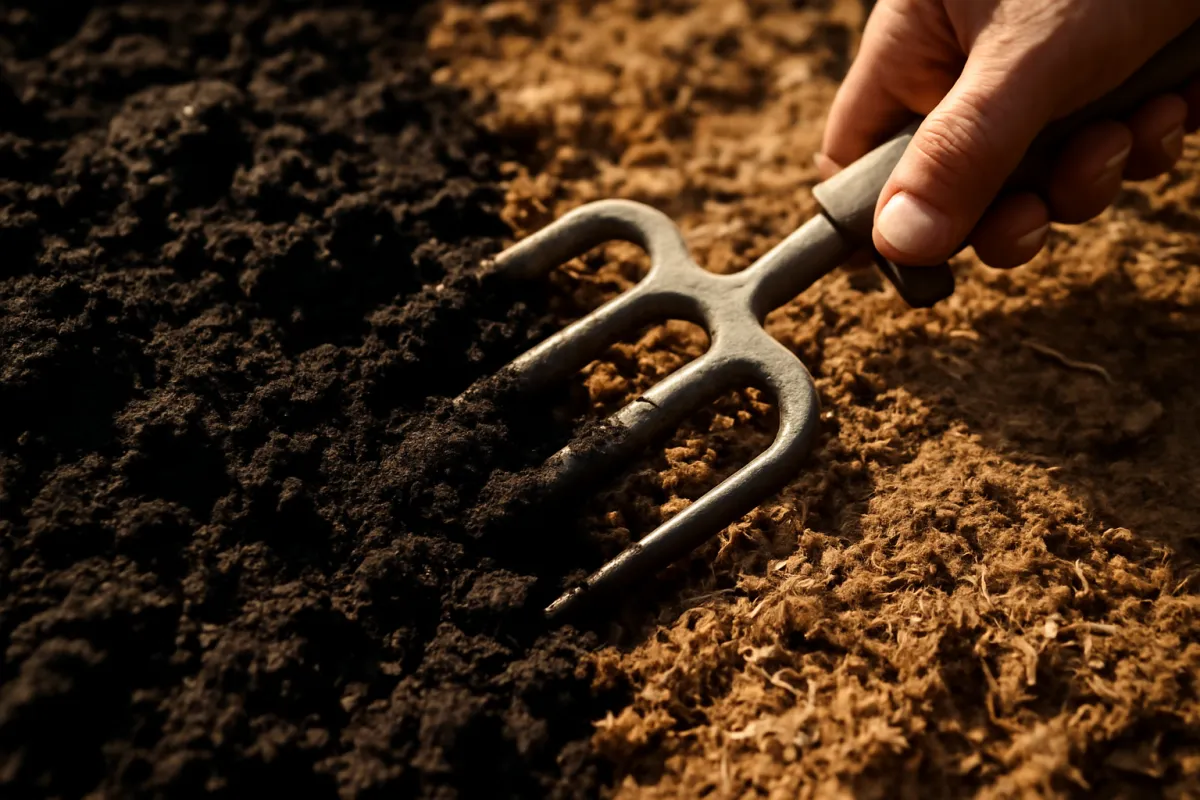
For a raised bed you are filling from the bottom, the calculation is a clean box: length times width times fill height, all in the same unit. A 4 by 8 foot bed filled 10 inches deep is 4 times 8 times 0.83 feet, about 26.7 cubic feet, which is close to a full cubic yard for one bed. Multiply by the number of identical beds and the total climbs fast, which is often what tips a raised-bed project from bags into a bulk order. An in-ground bed uses the same formula with the bed’s real area and the depth of soil you intend to work in or mound up.
One planning note that saves a second trip: raised beds settle noticeably in the first weeks as the soil and any compost break down and compact, so the box that looked full on planting day can drop an inch or two. Order to the full interior depth, expect to top up once, and read the settling section below before you decide how much cushion to add.
How much topsoil to level a yard
Leveling a yard is the project where the depth math flips: instead of a deep layer over a small bed, you have a whisper-thin layer over a large area, and the total sneaks up on people. Topdressing to smooth minor bumps and low spots uses a quarter to a half inch per pass, spread so the existing grass blades still poke through, because a thick layer smothers the lawn you are trying to improve. The per-square-foot volume is tiny, but a whole lawn is a lot of square feet.
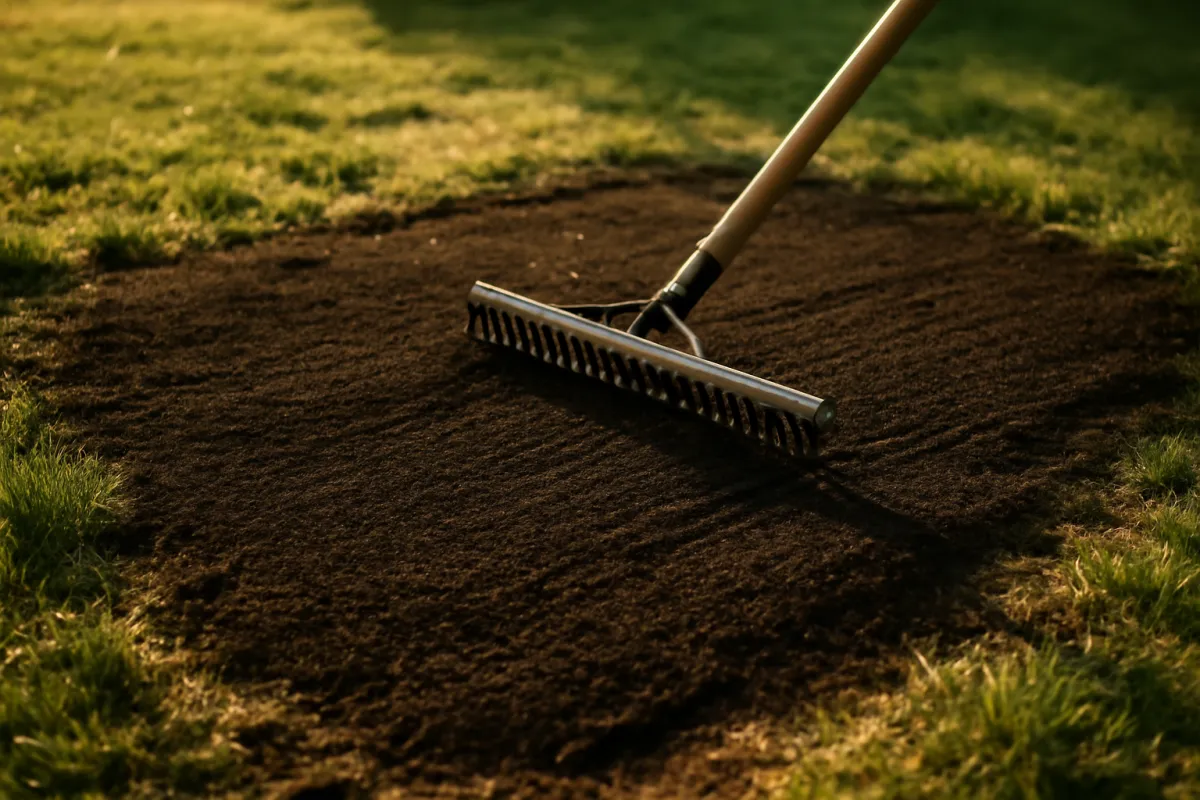
Run the numbers and the thin layer stays modest. A half inch over 1,000 square feet is 1,000 times 0.5 over 324, about 1.5 cubic yards; a quarter inch over the same lawn is half that. Deep low spots and ruts are a separate job: fill those with soil first, firm them, and let them settle before you topdress the whole surface, rather than trying to bury a two inch dip under one heavy pass. Two thin applications a few weeks apart level better than one thick one and do not kill the grass underneath.
For leveling that is really regrading, raising a whole low corner of a yard by several inches, you are back in ordinary volume territory: area times the added depth over 324, and the total can rival a small bed’s order. The thin-layer rule is only for cosmetic topdressing over living grass, not for building up grade, which is why settling the depth by purpose comes first.
Coverage from a single yard of topsoil
Because depth is the lever, it helps to see how much ground one cubic yard actually covers as you change the depth. A yard is a fixed 27 cubic feet of soil; spread it thin and it goes far, spread it thick and it disappears fast. The relationship is a simple inverse, and the numbers are the same ones that made the depth decision so decisive in the first place.
At 1 inch deep, a cubic yard covers about 324 square feet, which is the same 324 from the formula and not a coincidence: one cubic yard spread one inch deep is exactly 324 square feet. At 2 inches it covers 162, at 3 inches 108, at 4 inches 81, and at 6 inches only 54. Double the depth and you halve the coverage every time, which is why a thin topdressing stretches a single yard across a lawn while a 6 inch bed swallows one yard every 54 square feet.
The coverage figure is also the quickest field estimate when you do not have a calculator handy. Know your rough square footage and your target depth, and the coverage number gives the yards in one division: 500 square feet at 6 inches, where a yard covers 54, is 500 over 54, about 9.3 yards, the same answer the formula gives. It is the formula turned inside out, worth keeping in your head for the supply-yard conversation, and the same trick our gravel manual leans on for stone.
How many bags of topsoil in a cubic yard
When you buy in bags, the bridge you need is bags per yard, and it comes from the cubic-foot count. A cubic yard is 27 cubic feet. A common 40 pound bag of topsoil holds roughly 0.75 cubic feet, so 27 divided by 0.75 is about 36 bags to the yard by volume. That is the number that turns a tidy yardage into a haul, and it surprises people the first time, because three dozen bags is a loaded pallet and a yard is not a large order.
Two honest caveats keep the bag math from misleading you. First, bag volume is not fixed: moisture and how finely the soil is screened move it, so 0.75 cubic feet is a working figure, not a guarantee, and the count is best treated as approximate. Second, the volume count and the weight count do not perfectly agree. A cubic yard of moist bulk soil weighs around 1.1 tons, which at 40 pounds a bag would be roughly 55 bags by weight, yet the volume math says 36. The gap is real: bagged topsoil is often drier, lighter, and sometimes blended, so it fills more volume per pound than dense wet bulk. For ordering, count by the volume your project needs, and treat weight as the delivery and handling concern the next section covers.
The weight of topsoil and why delivery matters
Topsoil is heavy in a way that decides how you take delivery, and the number catches people who think of soil as light and fluffy. A cubic yard commonly weighs somewhere around 1.1 tons, roughly 2,200 pounds, and moist or clay-heavy soil runs heavier while dry screened soil runs lighter. Even a modest three yard bed order is over three tons of material, which is not a load for a car trunk or a half-ton pickup bed filled to the brim.
That weight is why bulk topsoil almost always arrives by delivery past a yard or two. A supplier’s truck drops the whole pile in one place; self-pickup means multiple trips with a properly rated trailer, and overloading a light vehicle with wet soil is a real safety problem, not just a slow afternoon. Most passenger vehicles top out around a single yard of loose soil before the load is unwise, and a yard is already most of a ton.
Weight also governs how suppliers quote and how you convert. Some yards sell topsoil by the ton rather than the cubic yard, and to move between the two you need a density figure, which our tons to cubic yards manual works through with topsoil as one of its worked materials. The practical rule is to arrive with both numbers: the cubic yards that tell you the space is filled, and the tonnage that reads their quote. Confirm the yard’s own weight per unit before you order, because moisture alone can swing it noticeably.
Bags versus bulk: the real crossover
Bagged and bulk topsoil are the same material at very different scales of effort and price, and the crossover deserves honest numbers. Per cubic yard, bulk is almost always cheaper, often meaningfully so, because you are not paying for the plastic, the palletizing, or the shelf space, only the soil and its delivery. Bags carry a convenience premium baked into every unit. Against that, bags win on flexibility: no delivery minimum, no pile blocking the driveway, no leftover to store, and you buy precisely what fits your car and your afternoon.
The commonly cited crossover for topsoil sits low, often below a single cubic yard, because 36 bags to the yard is a genuinely punishing haul. Below roughly a half yard, bags frequently make sense: a raised bed or two, a repair patch, a container project, where a delivery minimum would leave you with soil you do not need. Between about a half yard and a yard is a gray zone where either answer is defensible, and access is the tie-breaker: whether a truck can reach your driveway and whether you have somewhere to stage a pile. Past a yard, bulk is nearly always the call, on both cost and the labor of moving three dozen bags twice.
One caution that mirrors our sand manual: do not let a tidy bag count lull you into under-buying. Bag math tempts precision, and precision here means running short with the last strip of bed still bare and the store a second trip away. Round up, and buy the settling cushion described below rather than the bare formula figure.
What a real topsoil order is made of
It helps to see what a bed’s soil order actually contains, because topsoil is rarely bought as pure screened soil and spread untouched. A garden bed order is usually a blend: the bulk of it screened topsoil, a portion of compost or other organic matter worked in for fertility, and a slice of the volume that vanishes to settling and waste once it is in place and watered. The split explains why the number you spread and the number you order are not the same.
What a bed's topsoil order is made of
Illustrative split of a blended garden-bed order, to 100 percent.
Shares are illustrative and vary by bed and by gardener. The lesson is that the volume you order fills the space plus a settling cushion, and part of that volume is the amendment you mix in, not pure soil.
The split teaches two things. First, the compost slice means the topsoil figure alone is not the whole order for a bed: if you plan a 3 to 1 blend, a quarter of the total volume is compost you buy separately. Second, the settling slice is not optional padding, it is the volume that disappears as the soil compacts and organic matter breaks down. Calculate the space, then order the soil, the amendment, and the cushion as three parts of one total.
Screened versus unscreened topsoil
The word topsoil covers a range of products, and screened versus unscreened is the distinction that most affects both price and how the soil behaves. Screened topsoil has been run through a mesh, often a half inch or finer, to pull out rocks, roots, sticks, and clumps, leaving an even, workable product. Unscreened soil is taken more or less as dug, cheaper but lumpier and less predictable, with debris you will pick out by hand as you spread.
For a seedbed, a new lawn, or fine grading where the surface shows, screened soil is worth the premium: it rakes smooth, makes good contact with seed, and does not leave stones to foul a mower or a tiller. For bulk filling where lumps do not matter, raising a low area under future sod, backfilling behind a wall, building up grade in a spot no one will plant, unscreened soil does the job for less money. The volume math is identical either way, since a cubic yard of screened and a cubic yard of unscreened both fill 27 cubic feet; only the price per yard and the spreading effort change.
There is also a quality dimension the labels hint at but do not guarantee. Cheap topsoil can be more subsoil or fill than genuine dark, organic-rich surface soil, and price is a rough signal but not a certain one. If the soil is going where things need to grow, it is worth asking the supplier what the product actually is, or checking a sample for color, smell, and texture, before you commit a delivery to a bed you care about.
Mixing topsoil with compost
Bare topsoil is a starting point, not usually the finished growing medium, and most beds do better with organic matter blended in. Compost adds fertility, improves structure so the soil holds water without staying soggy, and feeds the biology that plants depend on. The common practice is to mix compost into topsoil at something like a 3 to 1 or 4 to 1 ratio by volume, more for hungry vegetable beds, less for general planting, though gardeners disagree and the right blend depends on your soil and plants.
The key point for estimating is that the blend changes what you order, not how you calculate. First compute the total volume the space needs, the same area times depth over 324. Then split that total into its parts: a 3 to 1 topsoil-to-compost blend of a 4 cubic yard bed is 3 yards of topsoil and 1 of compost, ordered separately and mixed on site or in the bed. The bed still needs 4 yards of filled volume; the ratio only decides what those yards are made of.
Mixing also interacts with settling. Compost-rich blends are fluffier going in and compact more as they break down, so a bed filled level with a heavy compost blend can drop more than one filled with plain soil. That is another reason to order the settling cushion, expect to top up once, and treat the first fill as most of the job rather than all of it. The volume formula gives the space; the blend and the cushion give the order.
Compaction and settling: order a little extra
Every topsoil order should be a little larger than the bare formula, because soil settles. Freshly delivered topsoil is loosened and aerated from being dug, screened, and dumped, so it occupies more volume in the pile than it will once it is spread, watered, and left to compact under its own weight and the rain. Fill a bed exactly to the brim with loose soil and it will sit low in a few weeks, which is why the formula figure is a floor, not the order.
A common practice is to add roughly 10 to 20 percent to the calculated volume, leaning to the higher end for deep beds, compost-rich blends, and freshly loosened fill, and to the lower end for thin topdressing that barely compacts. This is the same insurance our gravel manual frames as a compaction allowance, applied to a softer material with lower stakes: run short and you make a second trip, order a touch long and you have soil for the next project or to top up the settling.
The asymmetry favors a modest cushion. Under-ordering leaves a bed low or a lawn patchy until you fetch more, an errand rather than a ruined job, since soil does not set on a clock. Over-ordering with bulk leaves a pile to find a home for, which is why the cushion should be measured, roughly a fifth at most, not a doubled order. Round the total up to the supplier’s increment, which often supplies part of the cushion by itself.
The reverse: I have X yards, what depth and area
Sometimes the question runs backward. You have a set amount of topsoil already, a leftover pile, a fixed delivery, a number of bags on hand, and you want to know how far it goes: what area it covers at a given depth, or how deep it fills a given area. The same formula rearranges to answer both, and it is worth keeping the two versions in your head.
To find the area a known volume covers at a chosen depth, flip the coverage relationship: area in square feet equals cubic yards times 324 divided by the depth in inches. Three cubic yards at 4 inches deep is 3 times 324 over 4, about 243 square feet. To find the depth a known volume reaches over a fixed area, rearrange again: depth in inches equals cubic yards times 324 divided by the area. Those same three yards spread over 500 square feet gives 3 times 324 over 500, about 1.9 inches deep.
This reverse math is the honest way to plan around a fixed supply, and it beats spreading by eye and running out. If a delivery is already booked, work out in advance what depth it gives your beds so you are not surprised at the far end, and if a pile is left over, calculate the area it will topdress rather than heaping it too thick in one spot. Our estimator runs the forward direction; the reverse is the same 324, moved to the other side of the equation.
Two worked examples: a raised bed and a lawn topdress
Two projects at opposite ends of the depth range show how the same formula behaves, because a raised bed and a lawn topdressing could not feel more different yet run identical math. Start with a raised bed: a single 4 by 8 foot box, filled 10 inches deep for vegetables. Area is 4 times 8, or 32 square feet. Volume is 32 times 10 over 324, about 0.99 cubic yards, essentially one cubic yard for one bed. In 40 pound bags at 0.75 cubic feet each, the same volume is 32 times 10 over 12, about 26.7 cubic feet, or 36 bags. That is the crossover in a single project: one bed is right at the line where a bulk yard and a pallet of bags meet.
Now the opposite: topdressing a 1,000 square foot lawn to smooth minor low spots, a half inch deep. Volume is 1,000 times 0.5 over 324, about 1.54 cubic yards. Notice that twenty times the area of the raised bed needs only about 1.5 times the soil, because the depth is a twentieth. This is the whole lesson of the depth lever in two numbers: area feels like the big variable but depth does the real work, and a huge thin job can order less soil than a tiny deep one.
Add the settling cushion to each and the orders finish. The raised bed at 15 percent extra is about 1.15 yards, sensibly rounded to a yard and a quarter or bought as 40 bags with a couple spare; the lawn topdress at 10 percent is about 1.7 yards, rounded to 1.75 or 2 at the supplier’s increment. Run both through our estimator and the yardage and bag count return together, the same two numbers side by side.
Where the estimate goes wrong
The failure patterns repeat reliably enough to list in order of expense. The units slip leads: depth entered as feet instead of inches, or the divide-by-324 forgotten, each throwing the answer off by multiples, not margins, which is why the physical sanity check, does this sound like a flower bed or a dump truck, catches more errors than re-checking the math. Next is the depth mismatch: filling a lawn to garden-bed depth or a bed to lawn depth, which either wastes soil or starves roots, and comes from skipping the project-by-project depth decision.
Then the softer misses. Measuring only the tidy rectangle and forgetting the wings, so the order runs short at the corners; forgetting the settling cushion and filling a bed exactly level, then watching it sink; and treating the volume figure as the whole order for a bed when a quarter of it should be compost. The weight surprise is its own trap: booking self-pickup for three tons of soil a light vehicle cannot safely carry, a mistake the tons to cubic yards manual exists to prevent.
The planning failure that contains the others is measuring and ordering the same day you spread, leaving no room to reconsider depth, re-measure a forgotten area, or catch a units slip before the pile is paid for. Topsoil is forgiving compared with concrete, but it still rewards the boring virtues: settle the depth by project first, measure the real area, run the line once, add a settling cushion, and confirm the supplier’s weight and increment before you book.
The pre-order checklist
The whole manual, compressed to the sheet worth keeping in the car.
- Settle the depth by project first. Roughly 4 to 6 inches for a new lawn, 6 to 12 for garden beds, a quarter to half inch for leveling and topdressing.
- Measure the real area. Length and width at the widest points in feet; decompose L-shapes and use radius squared times pi for circles.
- Run the line. Area in square feet times depth in inches, divided by 324, equals cubic yards; or divide cubic feet by 0.75 for the 40 pound bag count.
- Sanity-check physically. A yard covers about 108 square feet at 3 inches and 54 at 6; does the answer sound like your project?
- Add a settling cushion. Roughly 10 to 20 percent over the formula, more for deep, compost-rich beds, and round up to the supplier’s increment.
- Decide the blend after the volume. Screened for seedbeds, unscreened for fill; split the total into topsoil and compost if you are amending a bed.
- Plan for the weight. A cubic yard is around 1.1 tons, so take delivery past a yard or two, and confirm the yard’s own weight per unit before ordering.
Run the list top to bottom and the order arrives right the first time, with a bed at the depth its roots want and no second trip.
The bottom line
Topsoil estimating is one line of arithmetic with a project decision bolted onto the front: area times depth in inches over 324 gives the cubic yards, but the depth you put in that formula is the real work. Settle it by purpose, a few inches for a lawn, more for a bed, a thin dusting for leveling, then measure the real area, add a settling cushion of ten to twenty percent, and pick bags or bulk by where your job falls against the low crossover. Do that and the soil arrives close, the delivery pays for itself past a yard, and the bed ends up at the depth that grows things instead of the depth that starves or smothers them. Run your own project through our estimator, read the general method for the coverage logic that carries to every material, our mulch manual for the same bag-versus-bulk economics, or the tons to cubic yards manual for the weight side of a delivery, and buy from a measured project, not a guess.
Treat this as garden-shed education, not a horticultural or engineering prescription. Every price, coverage figure, bag yield, weight, and depth range above is an illustrative worked example, and your soil, your supplier, your region, and your moisture will each move the real numbers. Depth and blend guidance is general practice, not a rule for any particular plant, lawn, or grade: some plantings want more soil and some want less, drainage and slope change what is safe to build up, and settling varies with what you fill. When a retaining structure, a drainage problem, or a load-bearing grade is involved, confirm the plan with a qualified landscaper or soils professional before the soil goes down.
Frequently asked questions
How do I calculate how much topsoil I need?
Measure the area in feet, multiply length by width for square footage, then multiply that area by the depth in inches and divide by 324 to get cubic yards. The 324 folds two conversions into one: inches to feet, then cubic feet to cubic yards. A 200 square foot bed filled 6 inches deep is 200 times 6 divided by 324, about 3.7 cubic yards. Round up to your supplier's increment when you order, and add a little for settling.
How many cubic yards of topsoil do I need?
It depends entirely on the depth, because area alone does not set volume. The same 500 square feet is about 3.1 cubic yards at 2 inches, 6.2 at 4 inches, and 9.3 at 6 inches, since depth is a straight multiplier. Settle the depth for your project first, a few inches for a lawn, more for a bed, then run area times depth over 324. Our estimator returns the yardage from a single set of measurements.
How much topsoil do I need for a garden bed?
Garden beds want depth for roots, commonly 6 to 12 inches of loose soil depending on what you are growing and whether it is a raised bed you are filling from the bottom. For a raised bed, calculate the full interior volume: length times width times the fill height, all converted to the same unit. A 4 by 8 foot raised bed filled 10 inches deep is about 26.7 cubic feet, close to one cubic yard. Vegetables with deeper roots lean toward the fuller end of the range.
How many bags of topsoil are in a cubic yard?
A cubic yard is 27 cubic feet, and a common 40 pound bag of topsoil holds roughly 0.75 cubic feet, so it takes about 36 bags to equal one cubic yard by volume. That figure is illustrative, because bag volume shifts with moisture and how the product is screened. Bagged topsoil is often drier and lighter than moist bulk soil, which is why the weight math and the volume math do not line up perfectly. Above one yard, most people switch to bulk delivery to skip hauling three dozen bags.
How much does a yard of topsoil cover?
One cubic yard is a fixed 27 cubic feet, so its coverage depends only on how thick you spread it. Spread 1 inch deep it covers about 324 square feet, at 2 inches about 162, at 3 inches about 108, and at 6 inches only 54. That inverse relationship is why the depth decision moves the order more than any measuring error. For a thin lawn topdressing a single yard goes a long way, while a deep bed swallows it fast.
How much topsoil do I need to level a yard?
Leveling and topdressing use a thin layer over a large area, commonly a quarter to a half inch per pass, so the volume per square foot is small but the total adds up across a whole lawn. A half inch over 1,000 square feet is about 1.5 cubic yards, and you may need more than one pass for deep low spots rather than one thick smothering layer. Keep each application thin enough that existing grass blades still show through, then repeat after it settles. Fill deep holes separately before topdressing the surface.
How much does a yard of topsoil weigh?
A cubic yard of topsoil commonly weighs somewhere around 1.1 tons, roughly 2,200 pounds, though moist or clay-heavy soil can run heavier and dry screened soil lighter. Weight is why delivery matters: even a couple of yards is thousands of pounds that most passenger vehicles cannot and should not carry. If your supplier quotes by the ton rather than the yard, convert between the two with a density figure, which our tons to cubic yards manual works through. Always confirm the yard's own weight before you order.
Should I use screened topsoil or mix in compost?
Screened topsoil has been run through a mesh to remove rocks, roots, and clumps, giving an even product that is easier to spread and better for seedbeds and fine grading. Unscreened soil is cheaper and fine for bulk filling where lumps do not matter, like raising a low area under future sod. Many gardeners blend topsoil with compost, often something like a 3 to 1 or 4 to 1 ratio, to add organic matter for beds, which changes the soil you order but not the volume math. Calculate the total volume first, then decide the blend that fills it.