What's on this page
- How to calculate cubic yards: the core formula
- What “Yardage” Means for Bulk Material
- How do you calculate cubic yards, step by step
- Using this page as a yardage calculator
- Cubic yard calculator: the three inputs and what comes back
- Yard calculator, yardage calculator, cubic yard calculator: the same math
- How many cubic feet in a cubic yard (the 27 rule)
- Converting depth in inches to feet
- Yardage by Material: Gravel, Soil, Sand, Mulch, Concrete
- How to calculate cubic yards for concrete
- How to calculate cubic yards of gravel
- Converting Tons to Yards and Back
- How to convert square feet to cubic yards
- How to calculate cubic yards for a circle or round area
- Irregular areas: break them into rectangles
- The waste and overage allowance
- A quick reference table
- How to calculate cubic yards for topsoil and dirt
- Common Yardage Mistakes (Depth in Inches, Compaction, Waste)
- Worked example: a concrete slab
- Worked example: a gravel driveway
- Worked example: a garden bed
- Converting cubic yards to cubic meters
- Worked example: a two-layer gravel driveway
- Averaging depth on sloped or uneven ground
- The bottom line
Short answer: Cubic yards equal length times width times depth, all in feet, divided by 27, because a cubic yard is a 3 foot cube holding 27 cubic feet. Convert a depth in inches to feet first by dividing by 12. Spread flat, one cubic yard covers about 324 square feet at 1 inch, 162 at 2, 108 at 3 and 81 at 4. Add a 5 to 10 percent overage for waste.
Yardage is the trade word for the quantity a supplier loads onto a truck, and it is counted in cubic yards, so a yardage calculator and a cubic yard calculator are two names for the same arithmetic. The companion tool on this page is that arithmetic with the multiplication done for you, and this manual is the formula running underneath it, because some numbers you can look up and some you have to work out. Your yardage sits squarely in the second group: there is no chart that knows the size of your hole, only a formula that turns your measurements into an order. That formula is short, it is the same for concrete, gravel, and dirt, and once you have it you never have to guess at a bulk order again.
This manual is the general method, the hub that the material-specific pages hang off. It covers the core formula, the reason you divide by 27, how to handle depth in inches, what yardage means when a supplier asks for it, and how the same three steps play out for a concrete slab, a gravel driveway, a topsoil bed, a mulch ring, a round area, and an irregular one. You can run your own dimensions through it in about a minute with our material coverage estimator, and the companion below recalculates every section against your numbers as you read.
Key takeaways
- The master formula is length times width times depth, all in feet, then divide by 27. That single line gives you the yardage for almost any bulk material.
- There are 27 cubic feet in a cubic yard, because a cubic yard is a 3-foot cube: 3 times 3 times 3 equals 27. That is why the formula ends in a division by 27.
- Depth is usually measured in inches, so convert it to feet first by dividing by 12 before you multiply, or the whole answer is wrong by a factor of twelve.
- Square feet cannot become cubic yards without a depth, and a round area only differs in how you find its area, pi times radius squared.
- Add a 5 to 10 percent overage for waste, and convert to tons only after you have the cubic yards, using a density your supplier confirms rather than a published constant.
How to calculate cubic yards: the core formula
The entire method is one line: length times width times depth, with every measurement in feet, then divide the result by 27. The multiplication gives you the volume in cubic feet, and the division converts that into cubic yards, which is the unit suppliers of concrete, gravel, and soil actually sell in. Master this one formula and everything else in this manual is a variation on it.
Written out, cubic yards equals (length in feet times width in feet times depth in feet) divided by 27. The three dimensions can come in any order, since multiplication does not care, but they must all be in the same unit, feet, before you multiply. That unit discipline is the single most important habit in the whole calculation, and it is where most first attempts go wrong, because depth almost never arrives in feet.
This is the same volume-then-convert shape that runs through all of our estimating work; our manual on how to estimate materials for a project frames it as the universal method for anything sold by the cubic unit. Here we are drilling into the cubic yard specifically, because it is the unit the yard quotes you in, and getting it right is the difference between one delivery and two.
What “Yardage” Means for Bulk Material
Yardage is a quantity, not a tool and not a shape. When a gravel yard, a topsoil supplier, or a ready-mix dispatcher asks what your yardage is, they are asking a single question: how many cubic yards do you want on the truck. The word survives in the trade because it is how the whole supply chain is organised, from the loader bucket that scoops in fractions of a yard to the truck bed rated in yards to the invoice line that reads in yards. Learning to answer that question with one confident number is most of what estimating a bulk material actually involves.
The unit itself is easy to picture once, and then you never have to picture it again. A cubic yard is a cube 3 feet wide, 3 feet long, and 3 feet tall. That is 27 cubic feet of space. Set a sheet of plywood on the ground, mark a 3 foot square on it, and imagine a box that tall: that is one yard of material, and it is bigger than most people expect. Handled by barrow, a cubic yard is roughly 9 trips of a barrow carrying 3 cubic feet, or about 14 trips of a smaller one carrying 2 cubic feet. Those barrow capacities are illustrative sizes rather than a standard, but the arithmetic behind them is exact: 27 divided by the barrow’s cubic feet.
The second thing worth knowing about yardage is what one yard covers, because that is the form the question usually takes in practice. Spread flat, a cubic yard covers an area equal to 27 divided by the depth in feet. At 1 inch deep, which is 0.0833 feet, that is about 324 square feet. At 2 inches it halves to 162. At 3 inches it is 108, at 4 inches it is 81, at 6 inches it is 54, and at a full foot of depth a cubic yard covers just 27 square feet. Those five figures are worth writing on the back of a plan, because they let you sanity check any quote in your head before you open a calculator.
Notice what that coverage list does to the shape of the job. Depth is not a detail; it is the dominant variable. Doubling a mulch depth from 2 inches to 4 inches does not add a bit to the order, it doubles it, and the difference between a 3 inch and a 4 inch gravel layer on a large driveway is several yards and a real change in the delivery. That is why every worked example in this manual handles depth first and treats it as the number to pin down before anything else. Our note on how deep gravel should be is the reference for choosing that depth in the first place.
One last piece of vocabulary. Yardage in a bulk material context always means cubic yards, but the bare word yard is ambiguous in general use, because it is also a linear measure of 3 feet and there is a square yard of 9 square feet in the paving and flooring trades. Nobody at a gravel pile will misunderstand you, but a written figure can be misread, so the habit worth keeping is to write the full unit every time: 6.7 cubic yards, never 6.7 yards. It costs three characters and removes an entire category of expensive confusion.
How do you calculate cubic yards, step by step
Broken into steps, the calculation is almost boringly reliable, which is exactly what you want from a number you are about to pay for.
First, measure the length and width of the area and the depth you want to fill or pour. Second, put all three measurements into feet, which usually means dividing the depth in inches by 12. Third, multiply length times width times depth to get cubic feet. Fourth, divide the cubic feet by 27 to get cubic yards. Fifth, add a waste allowance and round up to how the supplier sells.
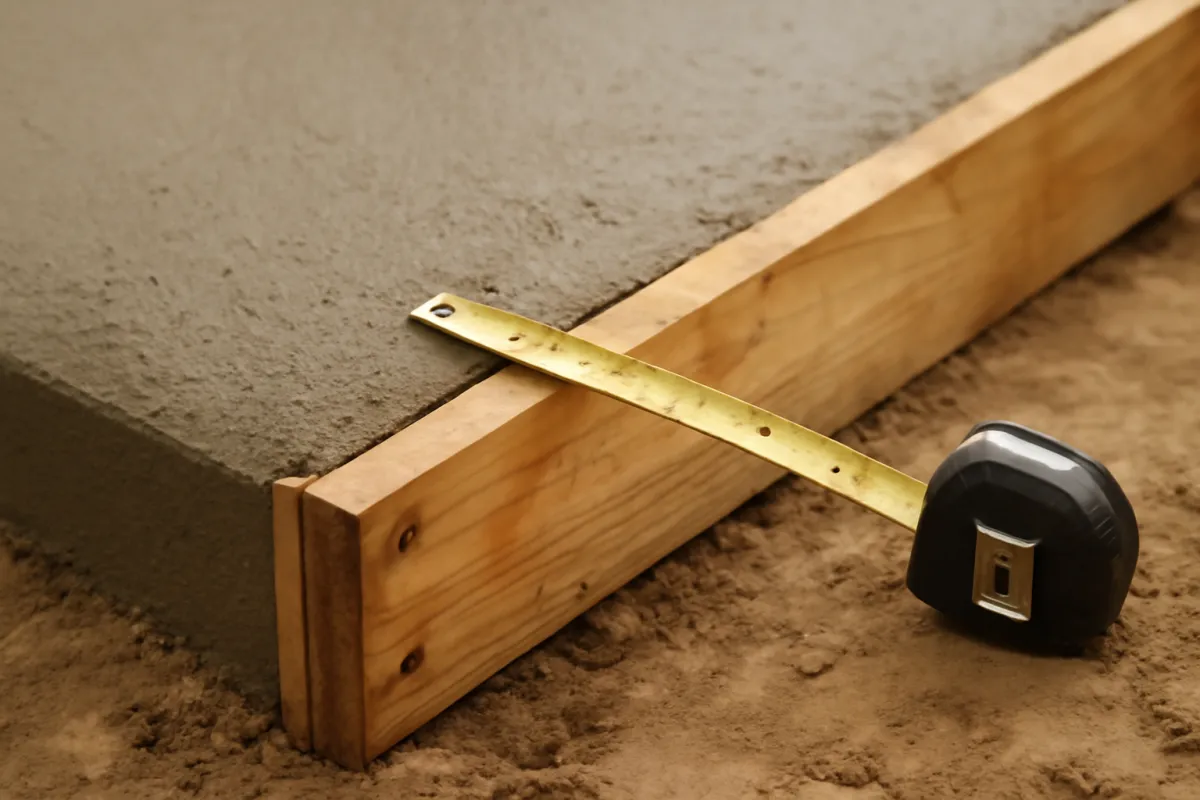
Take a plain example. A pad measures 12 feet by 9 feet, and you want it 6 inches deep. Depth first: 6 inches divided by 12 is 0.5 feet. Volume: 12 times 9 times 0.5 is 54 cubic feet. Convert: 54 divided by 27 is exactly 2 cubic yards. That is the whole procedure, and it does not change whether the hole is for concrete, gravel, or garden soil. Only the depth you choose and the waste you add differ from one material to the next.
Using this page as a yardage calculator
A yardage calculator is nothing more than the formula above with the arithmetic done for you, and that is what the companion on this page is. Enter the length and width in feet and the depth in inches, and it converts the depth, multiplies the three dimensions, divides by 27, and returns the cubic yards, then adds a 10 percent overage so the number you see is the number you can actually order against. Flip the shape field to circle and the length becomes a diameter, so round beds and tank pads run through the same tool without a separate formula.
What most single-purpose yardage calculators skip is everything after the volume. Bulk materials are frequently quoted by weight, so the companion also picks an illustrative mid-range density for the material you select, gravel, sand, topsoil, concrete, or mulch, and shows an approximate tonnage next to the cubic yards. Treat that tonnage as a planning figure rather than a quote: densities are ranges rather than constants, moisture changes the weight, and every supplier weighs from their own pile, so the yard’s own figure wins on ordering day.
The habit worth keeping even with a calculator in hand is one manual pass. Run your dimensions through the formula once on paper, length times width times depth in feet, divided by 27, and check that the tool agrees to within rounding. The point is not distrust of the arithmetic, it is that a mistyped depth or a width entered as inches is invisible inside a tool but obvious in a hand calculation, and a yardage error costs you a return trip in either direction. Our note on how much a yard of gravel weighs is the companion reading for the weight side of the order.
Cubic yard calculator: the three inputs and what comes back
A cubic yard calculator asks for three things and nothing else, which is why it is worth knowing exactly what each one means before you type. Length and width are the footprint of the area in feet, measured along the ground the material will actually cover, not the outside of a form or the property line. Depth is how thick the material will lie once it is in place, and it is almost always given in inches, which is why every honest calculator converts it to feet by dividing by 12 before multiplying. Shape is the only other choice worth offering: a rectangle uses length times width, a circle uses pi times the radius squared, and the radius is half the diameter you measured across the middle.
What comes back is a chain of numbers rather than a single answer, and each link is worth reading. First the area in square feet, which is a useful check on its own because you can usually eyeball whether it is plausible. Then the volume in cubic feet, the raw multiplication before any unit conversion. Then the cubic yards, that volume divided by 27, which is the figure the supplier quotes against. Then the same figure with an overage added, commonly 5 to 10 percent, because real ground is never as tidy as arithmetic. And finally, for materials sold by weight, an approximate tonnage using an illustrative density for what you selected.
The reason to read the chain rather than just the last line is that a units mistake shows up somewhere specific. If the area looks wrong, a dimension was entered in inches. If the area is right but the cubic feet are wildly high, the depth was left in inches. If the cubic feet are right but the yards look enormous, something divided by 3 instead of 27. Every wrong bulk order in this manual traces to one of those three, and a calculator that shows its intermediate figures lets you catch the slip before a truck is booked. Run your own dimensions through the material coverage estimator and read down the chain rather than straight to the bottom.
Yard calculator, yardage calculator, cubic yard calculator: the same math
These three names get used interchangeably and they mostly mean the same tool, but the ambiguity in the word yard is worth clearing up, because it is the one place the terminology can genuinely mislead. A yard is a linear measure, 3 feet, and a yard calculator in a fabric or landscaping-fabric context means linear yards of material off a roll. A cubic yard is a volume, a cube 3 feet on every side, which works out to 27 cubic feet. When a gravel yard or a ready-mix plant quotes you a yard, they mean a cubic yard, and that is what every calculation in this manual returns.
Yardage calculator is the informal trade name for the same thing, and it usually implies bulk material rather than fabric. Cubic yard calculator is the unambiguous version and the phrase worth using when you want to be certain. Whichever name you search, the tool should do the identical four operations: convert the depth from inches to feet, compute the area, multiply for cubic feet, divide by 27. If a tool you find online will not tell you which of those it did, it is worth a minute of hand arithmetic to check it against the quick reference table further down this manual.
There is one more unit that shares the confusion, and that is the square yard, which is 9 square feet and describes area rather than volume. Square yards turn up in paving and flooring quotes, cubic yards in anything sold by the truckload, and mixing them up is roughly as expensive as leaving a depth in inches. The reliable habit is to say the whole unit out loud when you write a number down, cubic yards or square yards, never just yards, so the figure you hand the supplier cannot be read two ways. Our note on land area measurement covers the area units in more detail if a quote has you working in both at once.
How many cubic feet in a cubic yard (the 27 rule)
The number 27 is not arbitrary, and understanding where it comes from makes the formula stick. A yard is 3 feet. A cubic yard is a cube that measures one yard, or 3 feet, along every edge. To find the volume of that cube you multiply its three sides: 3 feet times 3 feet times 3 feet, which is 27 cubic feet. So one cubic yard contains 27 cubic feet, always.
The reason this trips people is that the linear conversion, 3 feet to a yard, feels like it should carry over to volume, and it does not. Stepping from feet to yards in one dimension is a factor of 3, but volume works in three dimensions at once, so the factor becomes 3 cubed, which is 27. Anyone who divides a cubic-foot volume by 3 instead of 27 ends up ordering roughly nine times too much material, which is a memorable and expensive way to learn the rule once.
Cubic yards by depth for a 100 sq ft area
The same 100 square feet, filled to different depths, then converted by dividing by 27.
Depth scales the answer straight up: doubling the depth doubles the cubic yards. A 100 square foot area at one foot deep is exactly 100 divided by 27, about 3.7 cubic yards, which is a useful figure to keep in your head.
The chart shows the other half of the relationship. Because area is fixed here, the cubic yards rise in direct proportion to depth: 4 inches gives twice the volume of 2 inches, and 12 inches gives six times as much. That linearity is worth internalizing, because it means a small error in the depth you assume, half an inch here, an inch there, moves the order more than you would expect on a large area.
Converting depth in inches to feet
This is the step that quietly wrecks more estimates than any other, so it earns its own section. Length and width are usually measured in feet already, but depth, the thickness of a slab, the layer of gravel, the fill in a bed, is almost always thought of in inches. The formula needs feet. So before you multiply, divide the depth in inches by 12, because there are 12 inches in a foot.
A 4 inch depth is 4 divided by 12, which is 0.333 feet. A 6 inch depth is 0.5 feet. A 3 inch depth is 0.25 feet. Two inches is about 0.167 feet. Skip this conversion and multiply by the raw inch figure, and your volume comes out twelve times too large, which is the kind of error that turns a two-yard order into a laughable one. When a cubic yard result looks absurdly big, an un-converted depth is the first thing to check.
The habit that removes the error permanently is to write the conversion down as its own line before you touch the multiplication. Not “12 by 9 by 6 inches” scribbled on a plan, but three clean lines: length 12 ft, width 9 ft, depth 0.5 ft. Once all three read in feet on the page, the multiplication cannot go wrong, and anyone checking your figures can see at a glance that the units agree. If you would rather not do the inch-to-foot step by hand at all, the material coverage estimator takes depth in inches directly and handles the conversion for you.
Yardage by Material: Gravel, Soil, Sand, Mulch, Concrete
The geometry never changes from one material to the next. Area times depth in feet, divided by 27, gives the yardage for crushed stone exactly as it does for compost. What changes is the depth you would sensibly choose, how much the material moves after it is placed, and whether the yard sells it by volume or by weight. Those three differences are the whole reason material-specific pages exist, and they are worth walking one at a time.
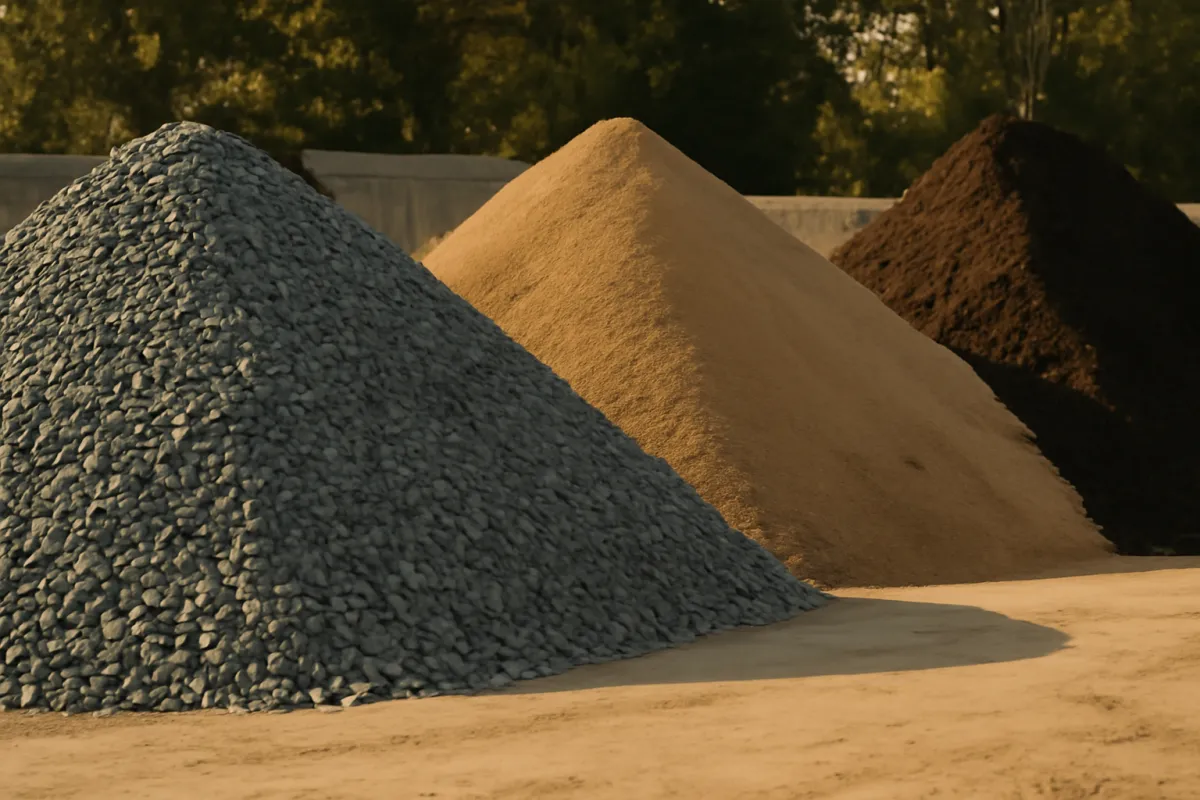
Gravel. A driveway or path is built in layers, and each layer is its own calculation at its own depth. A surface course commonly runs 3 to 4 inches over a deeper compacted base, and the two are separate volumes that you add. Gravel compacts under traffic and scatters off the edges, so it carries a real overage rather than a token one. It is also the material most often quoted by weight, which is why the tons conversion below matters most here. Our manual on how much gravel you need takes a driveway from footprint to a delivered order.
Topsoil and fill dirt. Soil settles noticeably once it is placed, watered, and walked on, so the volume a bed measures empty is not quite the volume of soil it will hold at finished grade. Order toward the top of your overage range and expect to top up a bed after the first heavy rain. Depths vary widely by purpose: a raised bed might want 10 to 12 inches, a lawn topdressing a fraction of an inch. Our note on how much topsoil you need carries a bed through settlement to a firm order.
Sand. Bedding sand under pavers, sandbox fill, and pipe bedding are all thin, tightly specified layers where the depth is dictated by the detail rather than by preference, often around an inch for paver bedding. Sand’s weight swings hard with moisture, more than most people expect, so a tonnage figure calculated from a dry density can understate a wet load meaningfully. Our manual on how much sand you need covers the layer depths that actually apply.
Mulch. Mulch is the lightest of the common bulk materials by a wide margin, and it is usually spread 2 to 3 inches deep, which means a single cubic yard covers a lot of bed. Because it is light, it is also the material most often bought in bags, and the crossover point between bags and a bulk yard is worth calculating rather than guessing. Our manual on how much mulch you need works the bags-versus-bulk comparison.
Concrete. Concrete is the least forgiving material on this list, because a short pour cannot be topped up an hour later without a cold joint, and a small partial second batch is impractical to obtain. Thickness is set by the application rather than by taste, and it drives the order hard: moving a slab from 4 inches to 6 inches is a 50 percent increase in volume. Round up and add an overage without agonising over it. Our concrete calculator manual walks a slab from measurement to order.
Here is the same information as a table, with the depths given as the ranges commonly used rather than as recommendations, and the densities as illustrative ranges rather than constants. Ask your supplier for the density they weigh against before you convert anything to tons.
| Material | Common depth | Illustrative density, tons per cubic yard | Usually sold by |
|---|---|---|---|
| Crushed gravel | 3 to 4 in surface, deeper base | ~1.3 to 1.5 dry | Weight or volume |
| Topsoil | 10 to 12 in beds, thin topdressing | ~1.0 to 1.3 dry | Volume |
| Sand | ~1 in paver bedding, deeper fill | ~1.25 to 1.45 dry | Weight or volume |
| Mulch | 2 to 3 in | ~0.4 to 0.6 | Volume or bags |
| Concrete | 4 to 6 in slabs | ~2.0 to 2.1 | Volume |
Every density in that table is a range for a reason. Moisture alone can move a load by a noticeable margin, gradation changes how tightly a stone packs, and two suppliers digging different pits will weigh differently for the same product name. Treat the ranges as a sanity check on a quote, never as a figure to order against, and get the yard’s own number when weight is what you are buying.
How to calculate cubic yards for concrete
Concrete is a volume material, so it follows the master formula exactly: length times width times thickness in feet, divided by 27. The one thing to respect is that concrete is unforgiving of under-ordering, because a small partial second batch is impractical to obtain and blend, and a cold joint from a delayed pour can weaken the slab. That makes the waste allowance and the rounding-up more important here than almost anywhere else.
Work a 12 foot by 12 foot slab at 4 inches thick. Depth first: 4 divided by 12 is 0.333 feet. Volume: 12 times 12 times 0.333 is about 48 cubic feet. Convert: 48 divided by 27 is roughly 1.78 cubic yards. Add a modest overage and you would order around 2 cubic yards, or discuss a short load with the supplier. For the full walk from slab dimensions to a firm concrete order, including thickness choices and short-load terms, see our manual on how much concrete you need.
Two concrete-specific cautions. Thickness drives the order more than people expect, so a jump from 4 to 6 inches is a 50 percent increase in volume, not a rounding detail. And ready-mix is usually sold in fractions of a yard, with terms that change below a full truck, so knowing your cubic yardage precisely lets you judge whether bagging or a delivery is the sensible route for a small pour.
How to calculate cubic yards of gravel
Gravel uses the identical formula, area times depth in feet, divided by 27, but two things about it differ in practice. First, the depth is a layer, not a full fill, so a driveway might want 4 inches of surface gravel over a deeper base course, and each layer is its own calculation. Second, gravel is frequently sold and hauled by weight, so the cubic yards you calculate often get converted to tons before you order.
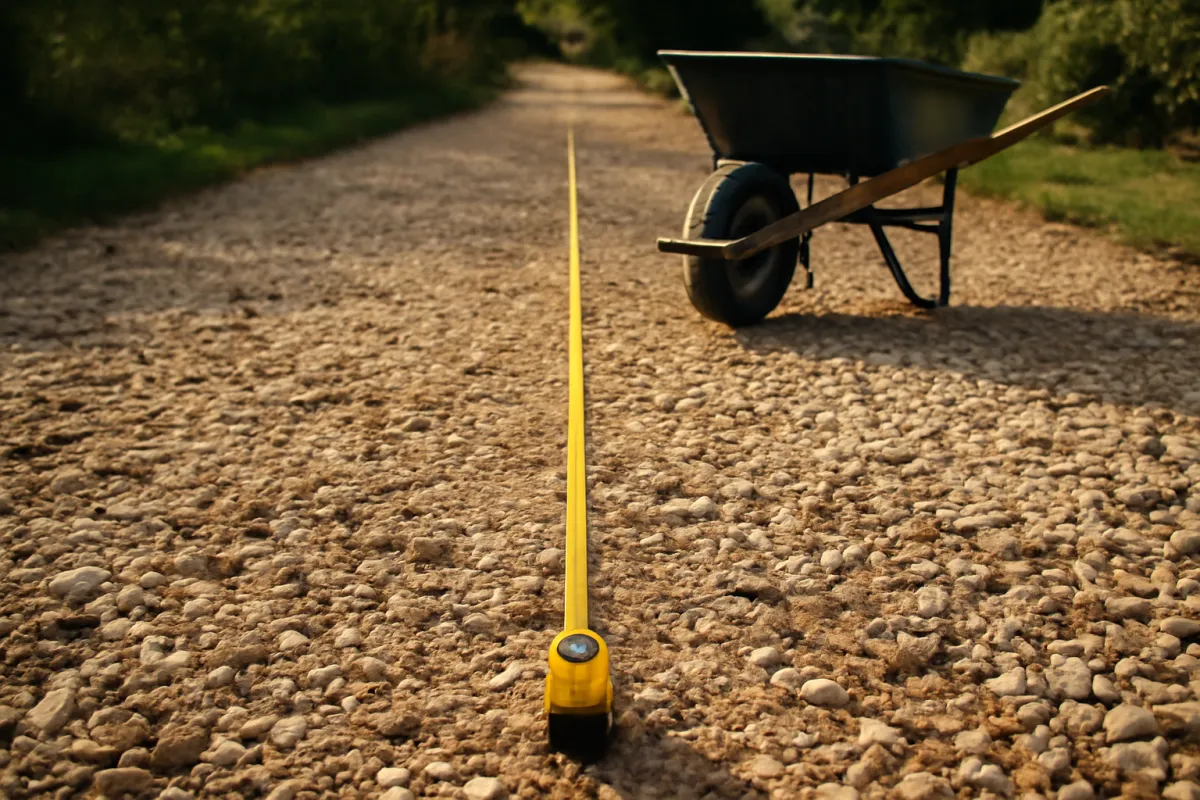
Take a driveway 40 feet long and 10 feet wide, topped with a 4 inch gravel layer. Area is 40 times 10, which is 400 square feet. Depth is 4 divided by 12, or 0.333 feet. Volume is 400 times 0.333, about 133 cubic feet, and 133 divided by 27 is roughly 4.9 cubic yards. Gravel compacts and scatters, so a 5 to 10 percent overage is sensible. To carry that number through to a driveway order, including base versus surface layers, our manual on how much gravel you need is the companion to this one.
Converting Tons to Yards and Back
Gravel, sand, and often soil change units somewhere between your plan and the invoice, because you calculate in volume and the yard weighs in tons. The conversion runs in both directions and it is a single multiplication or division, not a change of method. Yards to tons: multiply the cubic yards by the material’s density in tons per cubic yard. Tons to yards: divide the tons by that same density. The volume calculation always comes first, and the weight is layered on top of a number you have already worked out.
Work it forward. The 4.9 cubic yards of driveway gravel above, using an illustrative mid-range figure near 1.4 tons per cubic yard, is about 6.9 tons. Now work it back. A yard quotes you 10 tons of the same product, and you want to know whether that fills your drive: 10 divided by 1.4 is about 7.1 cubic yards. Divide that by your area of 400 square feet and multiply by 12, and you get a depth of about 5.7 inches, which tells you the 10 ton load is more than your 4 inch layer calls for. Reading a quote back into a depth like that is the fastest check there is on whether a tonnage and a plan agree.
The honest caution is that the density in the middle of both calculations is not a constant, and treating it as one is the most common way a tonnage conversion goes wrong. The same crushed stone weighs meaningfully more soaked than dry. A well-graded mix with fines packs tighter, and therefore heavier per yard, than a single-size washed stone. Two pits produce different rock. That is why the density figures in this manual are given as ranges, why the companion uses a mid-range value clearly labelled as illustrative, and why the only figure worth ordering against is the one your supplier weighs to.
The practical routine, then, is three lines rather than one. Calculate your yardage from the measurements. Ask the supplier for their tons-per-yard figure for the exact product, not the material family. Multiply or divide with their number, and keep your own mid-range calculation alongside it as a sanity check: if the two disagree by more than a modest margin, one of you has the wrong product or the wrong moisture assumption, and it is worth a question before a truck rolls. Our tons-to-cubic-yards conversion note works both directions in more detail, and our note on how much a yard of gravel weighs covers what moves the weight of a single yard.
How to convert square feet to cubic yards
This is one of the most common questions, and the honest answer starts with a correction: you cannot convert square feet directly to cubic yards, because they measure different things. Square feet are area, a flat measurement of a surface. Cubic yards are volume, a measurement of the space a material fills. Turning one into the other requires the piece of information a square footage alone does not carry: a depth.
Once you supply the depth, the conversion is easy. Take the area in square feet, multiply by the depth in feet to get cubic feet, then divide by 27. So 300 square feet at 4 inches deep is 300 times 0.333, about 100 cubic feet, and 100 divided by 27 is roughly 3.7 cubic yards. If someone hands you only a square footage and asks for cubic yards, the correct response is to ask how deep, because without that number the question has no answer.
There is a shortcut worth memorising for the common case. Because 27 cubic feet spread 1 inch deep covers 324 square feet, you can divide any area in square feet by 324 to get the yardage for a 1 inch layer, then scale it by the depth. A 972 square foot patio at 1 inch is 3 cubic yards, so at 3 inches it is 9. The shortcut is exactly the same arithmetic rearranged, and it is quicker in your head than the full chain when you are standing in a yard. If you need the area figure first, our manual on how to calculate square footage covers measuring the footprint.
How to calculate cubic yards for a circle or round area
Round patios, planters, tree rings, and column footings all need cubic yards, and the only difference from a rectangle is how you find the area. A rectangle is length times width; a circle is pi times the radius squared. The radius is half the diameter, and pi is about 3.14159. Once you have the circle’s area in square feet, the rest is identical: multiply by the depth in feet and divide by 27.

Work a round bed 10 feet across at 6 inches deep. The radius is half of 10, which is 5 feet. The area is pi times 5 squared, or 3.14159 times 25, about 78.5 square feet. Depth is 0.5 feet. Volume is 78.5 times 0.5, about 39.3 cubic feet, and 39.3 divided by 27 is roughly 1.45 cubic yards. The trap to avoid is squaring the diameter instead of the radius, which quadruples the area and the order. Always halve the diameter to the radius before you square it.
Irregular areas: break them into rectangles
Real yards, patios, and slabs are rarely perfect rectangles or circles, and the reliable way to handle an odd shape is not a clever single formula but a simple habit: break the area into pieces you can calculate, work each one, and add the volumes together. An L-shaped patio is two rectangles. A driveway that widens at the apron is a rectangle plus a trapezoid you can split further. A curved bed is a rectangle plus a half-circle.
Calculate the cubic yards for each piece separately, at its own depth if the depths differ, then sum them for the total order. This is far more accurate than trying to average an irregular shape by eye, and it keeps the arithmetic honest, since each piece is a clean length-times-width-times-depth calculation. When a shape has a hole in it, a planter in a patio, a column footing in a slab, calculate the outer shape and subtract the hole rather than trying to trace the leftover outline. Divide, conquer, and add: that is the whole technique for anything the standard shapes do not cover.
The waste and overage allowance
The calculated cubic yardage is the volume of a perfect, tidy hole, and real excavation is neither perfect nor tidy. Ground is uneven, edges slump, some material compacts, some spills off the truck and the wheelbarrow, and the bottom of a hand-dug trench is never as flat as the formula assumes. To cover that gap, add an overage, commonly 5 to 10 percent on top of the calculated cubic yards, and more for rough, sloping, or irregular ground.
A concrete order: needed volume versus allowances
Illustrative split of a 2.5 cubic yard order built from a 2.0 cubic yard slab.
The calculated need is only part of what you order. A waste allowance covers uneven ground and spillage, and suppliers round bulk orders up to their nearest increment anyway, so the final order sits comfortably above the bare formula figure.
The chart makes the point that the number you calculate and the number you order are not the same. On a 2.0 cubic yard slab, a 12 percent allowance and a round-up to the supplier’s nearest quarter or half yard can lift the order to 2.5 cubic yards, and that cushion is cheap insurance. Running a little long on a bulk material costs little; running short costs a second trip, a stalled job, and on concrete a possible cold joint. The overage is one of the easiest ways to protect a project, and it is the reason the formula figure is a floor, not the final order.
A quick reference table
For quick sizing before you reach for a calculator, it helps to have a few common area-and-depth combinations memorized or written down. These are illustrative round figures for a rectangular area, all following the same length-times-width-times-depth, divided by 27 method.
| Area | Depth | Cubic yards |
|---|---|---|
| 100 sq ft | 3 in | ~0.93 yd |
| 200 sq ft | 4 in | ~2.47 yd |
| 300 sq ft | 6 in | ~5.56 yd |
| 400 sq ft | 4 in | ~4.94 yd |
| 500 sq ft | 6 in | ~9.26 yd |
Every row is area in square feet times depth in feet, divided by 27. Because the relationship is linear, you can scale any row: double the area or the depth and the cubic yards double with it. These are illustrative round figures for a rectangular area.
Use the table as a sanity check rather than a substitute for the calculation. If your worked figure lands far from the nearest comparable row, that is a prompt to look for a units mistake, usually a depth left in inches or a diameter squared instead of a radius. A reference table catches the order-of-magnitude errors that are easy to make and expensive to miss. Our material coverage reference collects the same style of yield figures for a wider set of materials.
How to calculate cubic yards for topsoil and dirt
Topsoil and fill dirt are volume materials like the rest, so the formula does not change: area times depth in feet, divided by 27. What changes is that soil settles and compacts noticeably, especially when it is placed loose and then watered or walked on, so the practical overage tends to run toward the higher end of the range. A bed that measures a tidy 3 cubic yards of space often wants a bit more soil than that once it settles.
For a raised bed 8 feet by 4 feet filled 10 inches deep, depth is 10 divided by 12, about 0.833 feet. Volume is 8 times 4 times 0.833, about 26.7 cubic feet, and 26.7 divided by 27 is very close to 1 cubic yard. Garden soil is usually sold by the cubic yard in bulk or by the bag for small jobs, and the crossover between bags and a bulk delivery is worth checking, since a single yard is a lot of bags to haul. Our manual on how much topsoil you need carries a bed from dimensions to a settled, delivered order.
Common Yardage Mistakes (Depth in Inches, Compaction, Waste)
A handful of errors account for nearly every wrong yardage figure, and all of them are easy to catch once you know to look. Three of them deserve more than a bullet, because they are the ones that survive a careful reader.
Depth left in inches. This is the error that outranks all the others combined. Multiply by 4 instead of 0.333 and the volume comes out twelve times too large; multiply by 6 instead of 0.5 and it is twelve times too large again. The result is so absurd that it usually gets caught, but the near-miss version does not: writing 0.33 for 4 inches is fine, writing 0.4 is not, and a rounded depth on a large area quietly shifts the order. The fix is procedural rather than mathematical. Convert the depth on its own line, in writing, before you multiply anything, and check that all three dimensions read in feet before the multiplication starts.
Compaction and settlement. The formula gives you the volume of the space, not the volume of loose material you have to buy to fill that space once it is compacted. Gravel is delivered loose and driven on until it locks together. Soil is delivered fluffed and settles under water and weight. Both mean the loose yardage you buy is more than the finished yardage you measured, and the gap is real rather than theoretical. This is why the overage is not purely a waste allowance: part of it is buying the volume that the compaction is going to take away from you. On a base course being deliberately compacted, that part of the allowance runs higher than on a decorative layer that will never see a plate compactor.
Treating the waste allowance as optional. The tidy number is the floor, not the order. Ground is uneven, edges slump, a barrow tips, and the supplier rounds to their own increment regardless of what you asked for. A 5 to 10 percent allowance is the working range, higher for rough or sloping ground and higher still for anything that punishes a shortfall. Skipping it saves nothing, because the supplier’s rounding usually absorbs it anyway, and it exposes you to a second trip that costs far more than the surplus would have.
The remaining errors are quicker to state, and each has a symptom you can spot in the intermediate numbers:
- Dividing by 3 instead of 27. A cubic yard is 27 cubic feet, not 3. The symptom is a yardage roughly nine times bigger than the job looks.
- Squaring the diameter of a circle. Use the radius, half the diameter, then square it. The symptom is an area four times too big.
- Converting square feet without a depth. Area cannot become volume until you supply how deep the material goes. There is no answer to give until it arrives.
- Treating a published density as a constant. Densities are ranges that move with moisture and gradation. Calculate the yardage first, then apply the supplier’s own tons-per-yard figure.
- Averaging an uneven depth from one reading. A single spot check on sloping ground is not the average depth, and the section below on averaging covers how to take a fair one.
- Mixing square yards and cubic yards. Nine square feet against 27 cubic feet: two different units that share a word. Always write the unit in full.
Every one of these is a units or dimensions slip, which is why the discipline of putting all three measurements into feet before you multiply, and dividing by 27 at the end, is the habit that prevents almost all of them. Run the same numbers through the material coverage estimator as a second opinion and read the intermediate figures, not just the last line.
Worked example: a concrete slab
Pull the method together on a real pour. Say you are placing a shed slab, 10 feet by 10 feet, at 4 inches thick. Start with depth: 4 inches divided by 12 is 0.333 feet. Volume: 10 times 10 times 0.333 is about 33.3 cubic feet. Convert: 33.3 divided by 27 is roughly 1.23 cubic yards.
Now the ordering judgment. Concrete under-orders badly, so add an overage and consider the supplier’s increments. A 10 percent allowance takes 1.23 to about 1.36 cubic yards, and a ready-mix yard selling in quarter yards would likely round you to 1.5. So the calculated 1.23 becomes an order of about 1.5 cubic yards, or a conversation about bagged concrete if a delivery minimum makes a small pour impractical. The formula gave the honest volume; the overage and the supplier’s increments turned it into a safe order. That two-step move, calculate then cushion, is the pattern for every bulk purchase.
Worked example: a gravel driveway
Now a larger, weight-sold job. A driveway runs 45 feet long and 12 feet wide, and you want a 4 inch surface layer of crushed gravel. Area is 45 times 12, which is 540 square feet. Depth is 4 divided by 12, or 0.333 feet. Volume is 540 times 0.333, about 180 cubic feet, and 180 divided by 27 is roughly 6.67 cubic yards.
Because gravel scatters and compacts, add around 10 percent, taking it to about 7.3 cubic yards. If the yard sells by weight, convert with their density: at an illustrative mid-range figure near 1.4 tons per cubic yard, 7.3 cubic yards is about 10.2 tons. So one measured driveway produces two numbers, about 7.3 cubic yards or about 10.2 tons, and which one you quote depends on how the supplier sells. This is exactly the situation the tons-to-cubic-yards conversion note is built for, so you can walk into the order fluent in both units and read the quote against your own figure.
Worked example: a garden bed
Finally a soil job with an irregular twist. Suppose a bed is an L-shape: one rectangle 6 feet by 4 feet, and a second 4 feet by 3 feet, both filled 8 inches deep. Break it into the two rectangles. Depth is 8 divided by 12, about 0.667 feet. First piece: 6 times 4 times 0.667 is about 16 cubic feet. Second piece: 4 times 3 times 0.667 is about 8 cubic feet. Total volume is 24 cubic feet, and 24 divided by 27 is roughly 0.89 cubic yards.
Soil settles, so round up rather than down, and a bit under a cubic yard is a fine bulk order or a manageable pile of bags. The lesson of this example is the break-into-rectangles habit: an L-shape has no single formula, but split into two clean rectangles it is no harder than the simplest calculation, and the two volumes add straight together. Any irregular area yields to the same treatment, which is why the shape of the ground never has to be an obstacle to a firm order. Run any of these through the material coverage estimator and the arithmetic, including the divide-by-27 step, is done for you.
Converting cubic yards to cubic meters
Plans and suppliers outside the United States quote bulk material in cubic meters, so the cubic yard you calculate sometimes needs one more conversion. The two units are close but not equal: one cubic yard is about 0.765 cubic meters, and one cubic meter is about 1.31 cubic yards. To go the metric route from the start, calculate the volume in cubic feet as usual, then divide by 35.3 rather than 27, because a cubic meter holds about 35.3 cubic feet.
Take the 100 square foot area at one foot deep that came to about 3.7 cubic yards. In metric, 100 cubic feet divided by 35.3 is roughly 2.83 cubic meters, and 3.7 cubic yards times 0.765 lands in the same place. Both figures describe the identical hole; only the unit changed. When a supplier quotes per cubic meter and your plan is in yards, multiply your yards by 0.765 to compare like with like, and keep the waste allowance and the round-up exactly as they were.
The reason to carry the conversion rather than guess is that the two units are close enough to be dangerous. A cubic meter is only about 31 percent larger than a cubic yard, so a figure that looks roughly right in the wrong unit can still leave you a meaningful fraction short. Convert deliberately, note which unit each number is in, and a metric quote stops being a trap.
Worked example: a two-layer gravel driveway
Gravel driveways are rarely one depth, so work a layered one, because it shows how the same formula runs twice and sums. Say the drive is 50 feet long and 12 feet wide, with a 6 inch compacted base course of coarse stone under a 3 inch surface layer of finer gravel. The footprint is 50 times 12, which is 600 square feet, and both layers share it, exactly as a slab and its base share a footprint.
Base layer first: 6 inches is 0.5 feet, so 600 times 0.5 is 300 cubic feet, and 300 over 27 is about 11.1 cubic yards. Surface layer next: 3 inches is 0.25 feet, so 600 times 0.25 is 150 cubic feet, and 150 over 27 is about 5.6 cubic yards. The two layers together are about 16.7 cubic yards before waste. Gravel scatters and compacts, so add around 10 percent, taking the order near 18.4 cubic yards.
Because gravel is usually sold by weight, convert each figure with its own density if the two materials differ, then sum the tons, rather than converting the combined yards at one density. At an illustrative mid-range figure near 1.4 tons per cubic yard, 18.4 yards is roughly 25.8 tons, and the yard’s own density would move that. The lesson the two layers teach is the one that carries to any multi-course job: calculate each layer as its own volume at its own depth, sum the yards, and add waste once at the end. Our manual on how much gravel you need carries a driveway all the way to a delivered order.
Averaging depth on sloped or uneven ground
Every worked example so far assumed one clean depth, and real ground rarely offers it, so the last skill is handling a depth that changes across the area. When a slab or a fill sits on ground that slopes, or in a trench whose bottom undulates, the honest volume uses the average depth, not a single reading. Measure the depth at several points, spread evenly across the area, add them, and divide by the number of readings to get the average, then run that average through the same length times width times depth line.
Take a fill area 10 feet by 12 feet where the depth reads 4 inches at the high end and 8 inches at the low end, sloping steadily between. The average depth is 6 inches, or 0.5 feet, so the volume is 10 times 12 times 0.5, which is 60 cubic feet, and 60 over 27 is about 2.2 cubic yards. Using only the shallow reading would have under-ordered badly, and using only the deep one would have over-ordered, which is why the average is the number to trust.
Two cautions keep the average honest. On a strong slope the fill is a wedge, and if the depth does not change steadily, a simple two-point average can mislead, so take more readings where the ground is irregular and average all of them. And on any material that punishes under-ordering, lean toward the deeper readings when in doubt, because the cost of a little surplus is small and the cost of a shortfall is a stalled job. An average is only as good as the readings behind it, so measure generously before you trust one. Our note on calculating slope and grade covers measuring the fall itself when the ground is doing the work.
The bottom line
Yardage is one formula worn many ways: length times width times depth in feet, divided by 27. Convert the depth from inches to feet first, remember that a cubic yard is 27 cubic feet because it is a 3-foot cube, and the same three steps carry you through a concrete slab, a gravel driveway, a soil bed, a mulch ring, a round planter, and any irregular area you break into rectangles. Add a 5 to 10 percent overage because real ground is not as tidy as arithmetic and because compaction takes a share of what you buy, convert to tons only after you have the cubic yards and only with a density the supplier stands behind, and round up to how they sell. Do that, and the yardage you hand the yard is one you can trust, on the first delivery.
Read these pages as bench notes meant to teach the method, not as an order you can sign without checking. The densities, depths, and waste allowances here are illustrative ranges, and the real numbers shift with the material, its moisture, the ground, and the supplier. Measure your own space, run it through the formula, confirm the depth and the density with the yard, and verify the quantity before any load is booked.
Frequently asked questions
How do you calculate yardage?
Yardage means cubic yards, and you calculate it by multiplying length times width times depth with every measurement in feet, then dividing by 27. The step that catches people is depth, which is normally thought of in inches, so divide the inches by 12 before you multiply. A 12 foot by 9 foot area at 6 inches deep is 12 times 9 times 0.5, which is 54 cubic feet, and 54 divided by 27 is exactly 2 cubic yards. That one line covers gravel, soil, sand, mulch, and concrete, because yardage is a volume and the material never changes the geometry.
How do you calculate cubic yards?
Measure the length, width, and depth of the space in feet, multiply the three together to get cubic feet, then divide by 27 to get cubic yards. The only trick is unit consistency: depth is usually measured in inches, so divide the inches by 12 first to turn it into feet before you multiply. For example, a 10 foot by 10 foot area at 6 inches deep is 10 times 10 times 0.5, which is 50 cubic feet, and 50 divided by 27 is about 1.85 cubic yards. That single formula, length times width times depth in feet, divided by 27, handles almost every bulk material you will ever order.
How many cubic yards in a ton?
It depends entirely on the material, because a ton is a weight and a cubic yard is a volume, and the bridge between them is density. Divide 1 by the material's density in tons per cubic yard to get yards per ton. Using illustrative mid-range figures, crushed gravel near 1.4 tons per cubic yard gives roughly 0.7 cubic yards to the ton, and a lighter dry topsoil near 1.1 gives roughly 0.9. Those figures move with moisture, gradation, and the pile a yard is loading from, so treat any published density as a planning number and ask your supplier for the one they actually weigh against.
How much is a yard of material?
In quantity terms, a yard of material is a cubic yard: a cube 3 feet on every side, holding 27 cubic feet. Spread flat, that one yard covers about 324 square feet at 1 inch deep, 108 square feet at 3 inches, 81 square feet at 4 inches, and 54 square feet at 6 inches, because the coverage is simply 27 divided by the depth in feet. The bench notes here do not quote prices, since what a yard costs varies by material, region, season, and supplier, and any figure written down here would be stale before you read it. Ask the yard for a current quote and use the coverage math to check the quantity.
How many cubic feet are in a cubic yard?
There are 27 cubic feet in a cubic yard. A yard is 3 feet, and a cubic yard is a cube that measures 3 feet on every side, so its volume is 3 times 3 times 3, which equals 27 cubic feet. This is why the cubic yards formula ends with a division by 27: you calculate the volume in cubic feet first, then convert to the larger unit the supplier sells in. Remembering that a cubic yard is 27 cubic feet, not 3, is one of the most common places a first estimate goes wrong.
How do I convert square feet to cubic yards?
You cannot convert square feet straight to cubic yards, because square feet measure area and cubic yards measure volume, and volume needs a depth. Take the area in square feet, multiply by the depth in feet to get cubic feet, then divide by 27. So 300 square feet at 4 inches deep is 300 times 0.333, which is about 100 cubic feet, and 100 divided by 27 is roughly 3.7 cubic yards. The missing piece is always the depth, and until you supply it a square footage cannot become a cubic yardage.
How do I calculate cubic yards of gravel?
Gravel uses the same volume formula as everything else: area times depth in feet, divided by 27. Multiply the length by the width to get the area, convert the gravel depth from inches to feet by dividing by 12, multiply them together for cubic feet, then divide by 27 for cubic yards. A typical gravel driveway surface layer runs 3 to 4 inches deep, with a deeper base course under it, and each layer is its own calculation. Because gravel is often sold and hauled by weight, you may then convert the cubic yards to tons, which our tons-to-cubic-yards conversion note covers in detail.
What is a yardage calculator?
A yardage calculator is a tool that turns length, width, and depth into cubic yards, the unit bulk materials like gravel, concrete, and topsoil are sold in. It multiplies the three dimensions in feet, divides by 27, and usually adds a waste allowance on top. The companion calculator on this page does exactly that, and it also shows an approximate tonnage using an illustrative mid-range density for the material you pick. Any yardage calculator is only as good as the measurements you feed it, so measure carefully and confirm the final quantity and the density with your supplier, since both vary from yard to yard.