
What's on this page
- The firewood cord formula in one line
- What a cord actually is
- Face cords, ricks, and why they are not fixed
- Half cords, quarter cords, and the fractions in between
- A worked example: measuring your own stack
- Stacked volume versus actual solid wood
- How much a cord of firewood weighs
- Stacking shape, access, and why dimensions matter more than the pile
- Seasoned versus green wood, and why it changes more than weight
- Buying wood by the cord versus by the truckload
- Stacking methods and how they change the footprint
- Kiln-dried, air-dried, and small bagged firewood
- Comparing wood density and heat value in general terms
- The reverse problem: a fixed delivery, what stack does it make
- Where the estimate goes wrong
- Covering a stack while it seasons
- Common cord-buying pricing red flags
- Your firewood order checklist
- The bottom line
Short answer: Measure your stack's length and height in feet and the piece depth in inches, multiply length times height times depth divided by 12 for stacked cubic feet, then divide by 128 for cords, since a full cord is a standardized 128 cubic feet. A stack 8 feet long, 4 feet high, with 16 inch pieces is 42.7 cubic feet, about a third of a cord, which is why that exact stack is called a face cord rather than a full cord.
A firewood cord calculator solves a problem that catches almost everyone the first time they buy wood: cord is a volume, not a weight or a piece count, and two stacks can look similar in a yard while differing by a factor of three once the actual dimensions are measured. The confusion is not accidental. A full cord is a precisely defined 128 cubic feet, but the everyday unit most people actually buy and stack, a face cord or a rick, is not a fixed amount at all, it is whatever fraction of a full cord your particular piece length happens to produce.
This manual works the firewood measurement from the stack to the order: the standardized full cord definition, the stacked-cubic-feet formula that handles any stack dimensions, the face cord and its dependence on piece length, half and quarter cords, the gap between stacked volume and actual solid wood, and the weight question that varies more by species than almost anything else in this calculator’s material family. It sits alongside our cubic yard manual for the general volume math and our material coverage reference for the same derive-it-yourself approach applied to other materials. Run your own stack through the estimator or the companion below as you read.
Key takeaways
- A full cord is a fixed, standardized 128 cubic feet, traditionally a 4 by 4 by 8 foot stack; a face cord or rick is not fixed, it is whatever fraction of 128 your piece length produces.
- The general formula is stack length in feet, times stack height in feet, times piece depth in inches divided by 12, divided by 128 for cords.
- Three face cords of 16 inch wood equal one full cord; the exact ratio moves with piece length, so always confirm the length a seller means.
- A stacked cord holds roughly 70 to 90 cubic feet of actual solid wood, not the full 128, because round and split pieces leave real air gaps between them.
- Weight varies enormously by species and moisture: a commonly cited range for seasoned hardwood is 4,000 to 5,000 pounds per full cord, with softwoods and green wood moving well outside that band.
This matters well beyond a single purchase. A household heating with wood through a cold season typically runs through several cords, and a face cord that is quietly a third smaller than expected compounds into a real shortfall by midwinter, not just a disappointing delivery day.
The firewood cord formula in one line
Every firewood volume question reduces to the same calculation: stacked cubic feet divided by 128. Getting the stacked cubic feet right is the entire job, and it comes from three measurements, the stack’s length along the ground, its height, and the depth the pieces are cut to, which is also how far the stack extends front to back. Length and height are naturally measured in feet; piece depth is almost always expressed in inches, so it has to be divided by 12 before it enters the same formula as the other two.
In one line: stack length in feet, times stack height in feet, times piece depth in inches divided by 12, equals stacked cubic feet; divide that by 128 for cords.
That single formula handles a textbook full cord, a face cord of any piece length, a half cord, and an oddly shaped stack against a garage wall, because none of those are actually different calculations, they are the same formula fed different numbers. The reason firewood confuses people where a yard of gravel or a bag of concrete does not is that the industry uses several names, cord, face cord, rick, for volumes that are not the same size, and the only way to tell them apart is to run the numbers rather than trust the word.
What a cord actually is
A cord is a standardized volume, 128 cubic feet, and it does not change with species, piece length, or how the wood is split. The traditional picture is a stack 4 feet high, 4 feet deep, and 8 feet long, built from logs cut to a full 4 foot length and stacked with their length running front to back. Multiply those three dimensions and 4 times 4 times 8 is 128, which is where the number comes from and why it never moves: a cord is defined by that volume, not by a weight, a piece count, or a species.
Almost nobody actually cuts wood to a full 4 foot length for home heating, though, because a log that long does not fit most wood stoves or fireplaces. That gap between the standardized definition and the wood people actually burn is exactly what the face cord exists to describe, and it is also exactly where buyers most often lose track of how much wood they are getting.
Face cords, ricks, and why they are not fixed
A face cord, also called a rick in many regions, is a stack 4 feet high and 8 feet long, the same face dimensions as a full cord, but only as deep as the pieces happen to be cut, which is commonly somewhere around 12 to 18 inches for a typical stove or fireplace. Because the depth is not fixed at 4 feet, a face cord is not a fixed volume the way a full cord is; it is whatever fraction of 128 cubic feet that particular piece length produces.
Face cords per full cord, by piece length
How many stove-length face cords it takes to equal one standardized 128 cubic foot full cord.
Each bar is 48 inches, the full cord's standard depth, divided by the piece length. Shorter pieces take more face cords to equal a full cord, because each individual face cord holds less wood. Bar width tracks each count against the tallest.
The practical consequence is that a face cord of 12 inch pieces and a face cord of 24 inch pieces look the same from the front, 4 feet high and 8 feet long, but the second one holds twice the wood, because it is twice as deep. Never buy or sell a face cord by the name alone; confirm the piece length, since that single number is the entire difference between the two stacks.
Half cords, quarter cords, and the fractions in between
Below a full cord, the common fractions are straightforward multiples of 128. A half cord is 64 cubic feet, commonly stacked 4 feet high by 4 feet deep by 4 feet long, or spread wider and shallower as 4 feet high by 8 feet long by 2 feet deep for shorter pieces. A quarter cord is 32 cubic feet, often seen as a small truck-bed delivery or a starter amount for someone trying a wood stove for the first time.
The same formula handles every fraction without needing a separate rule: run your actual stack dimensions through length times height times depth over 12, then compare the result to 128 for a full cord, 64 for a half, or 32 for a quarter. A stack that comes out to 60 cubic feet is not a clean fraction of anything, and that is fine, it is simply 0.47 cords, a number worth knowing exactly rather than rounding to the nearest named unit.
A worked example: measuring your own stack
Pull the formula together on a stack that does not match any of the clean examples above. Say you have stacked wood along a fence, the stack runs 10 feet long, stands 4 feet high, and the pieces are cut to 18 inches. Stacked cubic feet is 10 times 4 times 18 divided by 12, which is 10 times 4 times 1.5, or 60 cubic feet. Divide by 128 for cords: 60 divided by 128 is about 0.47, just under half a full cord.
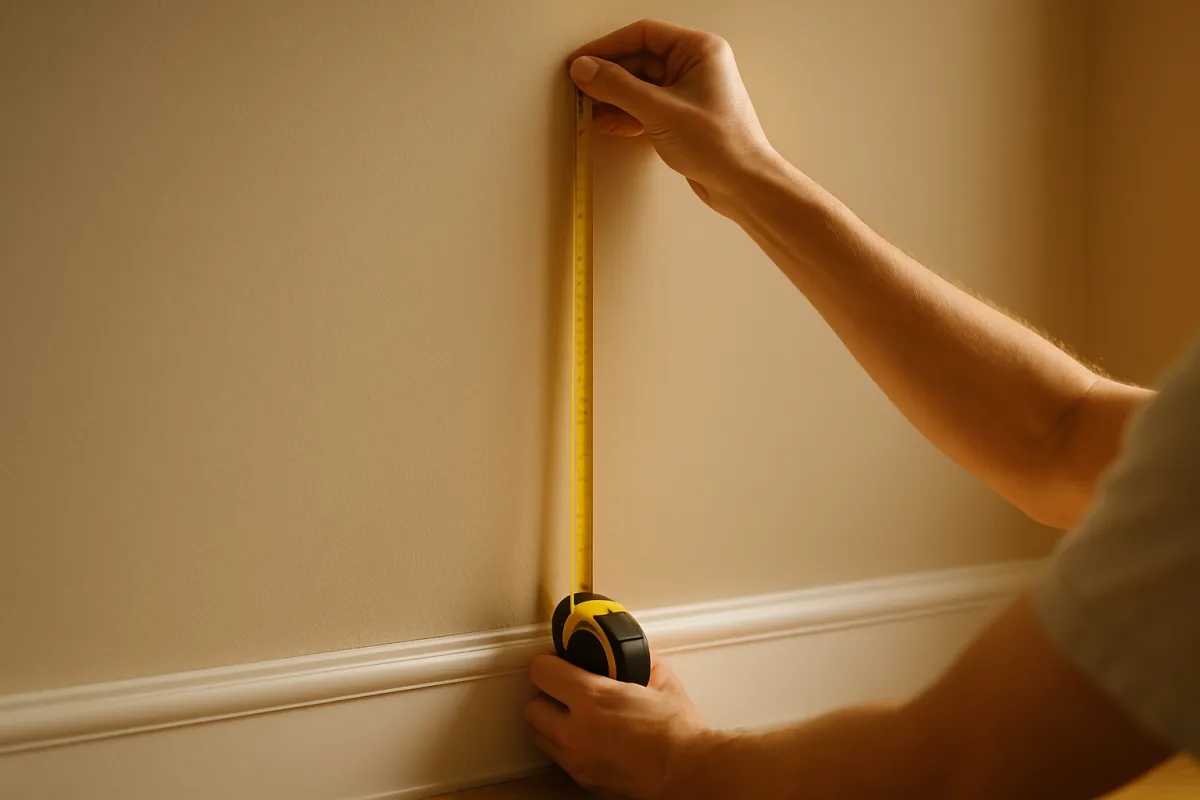
Cross-check it the other way: a face cord at 18 inch pieces is 2.7 face cords to a full cord, so one face cord at that piece length is 128 divided by 2.7, about 47.4 cubic feet, which would be a stack 4 feet high by 8 feet long by 18 inches deep. The 10 foot long stack in the example is a quarter longer than that 8 foot reference face cord, and 60 divided by 47.4 is also about 1.27, confirming the two ways of looking at the same stack agree. Run your own three measurements through the companion below and skip the cross-check arithmetic.
Stacked volume versus actual solid wood
The 128 cubic feet in a full cord is the volume the stack occupies, not the volume of solid wood inside it, because round and split pieces never interlock perfectly the way a stack of flat lumber does. Gaps form between every curved surface and every irregular split face, and those gaps add up to a meaningful share of the stack’s total volume.
What a stacked cord is made of
Illustrative split of solid wood versus air gap in a typical stacked cord, to 100 percent.
Shares are illustrative and move with how round or split the pieces are and how tightly the stack is built. Split, flat-sided wood packs tighter than round, unsplit rounds, which is part of why neatly split and stacked wood often reads as a better value than the same cord thrown loosely.
A commonly cited range puts actual solid wood somewhere around 70 to 90 cubic feet out of a stacked cord’s 128, with tightly stacked split wood running toward the higher end and loosely stacked rounds running lower. That gap is normal and expected, not a sign of being shorted, though a stack that looks dramatically more air than wood, with large visible voids between pieces, is worth a second look regardless of what the tape measure says the outer dimensions are. Splitting rounds into quarters or smaller pieces before stacking generally tightens the pack and pushes the solid-wood share toward the higher end of that range, which is part of why split wood is often preferred even where an unsplit round would otherwise fit the stove.
How much a cord of firewood weighs
Weight is the figure that varies the most in this whole calculation, because it depends on species and moisture far more than it depends on how the wood is stacked. A commonly cited range for a full cord of seasoned hardwood, oak, hickory, and similarly dense species, runs somewhere around 4,000 to 5,000 pounds, while lighter hardwoods and most softwoods, pine and fir among them, commonly run noticeably lighter, and unseasoned green wood carries significant extra water weight on top of either figure until it dries.
That weight range matters most when you are hauling wood yourself rather than having it delivered. A half ton pickup rated for roughly 1,000 to 2,000 pounds of payload can be overloaded by less than a full cord of dense, seasoned hardwood, well before the truck bed looks visibly full, which is the same overloading risk our topsoil manual flags for wet soil. Confirm your specific species and roughly how seasoned it is before assuming a weight figure, and never assume a truck’s visual capacity matches its rated payload.
Stacking shape, access, and why dimensions matter more than the pile
A cord’s volume does not care what shape the stack takes, since length times height times depth works the same whether the wood runs along a fence, around a shed, or in a tight rick between two trees. What does matter is that every dimension is measured on the actual stack as built, not estimated from a casual glance at a loose pile, because a pile thrown into a rough heap occupies noticeably more apparent space than the same wood stacked tightly, which is exactly why cord volume is defined on a stacked measurement rather than a loose one.

If a stack has to bend around a corner or split across two separate runs, the move is the same one our general estimating manual uses for any irregular footprint: treat each straight run as its own rectangle, calculate each one’s stacked cubic feet separately, then add the totals together before dividing by 128. A stack that is 6 feet along one wall and 4 feet along a perpendicular wall, both 4 feet high and 16 inches deep, is two separate volume calculations summed, not one combined length multiplied by the height and depth.
Seasoned versus green wood, and why it changes more than weight
Seasoned wood, dried for a season or more after splitting, burns more efficiently and produces less smoke and creosote than green, freshly cut wood, which still carries a significant amount of water weight inside the cell structure. The volume math in this calculator does not change between seasoned and green wood, a cord is still 128 cubic feet of stacked volume either way, but the weight does, and so does how the wood should be stacked and covered while it dries.
Green wood commonly needs six months to a year or more of stacked, covered, airflow-exposed seasoning before it burns well, depending on species and climate, so wood bought or cut in spring is often intended for the following winter rather than the current one. Dense hardwoods generally take longer to season fully than lighter, more porous softwoods, because the same volume of denser wood holds more water that has to migrate out before the wood burns cleanly. If a seller’s price seems unusually low for what is described as seasoned wood, confirming how long it has actually been split and stacked is worth the question, since moisture content affects how the wood burns far more than the cord math affects how much of it you have.
Buying wood by the cord versus by the truckload
A truckload is not a standardized unit the way a cord is, and prices quoted by the load rather than the cord are the single easiest way to lose track of how much wood you are actually buying. A pickup bed loaded level with the rails commonly holds somewhere around a third to a half of a full cord once the wood is restacked tightly, considerably less than the pile looks like it should hold when it is thrown in loosely with gaps and overhang. A full size pickup bed is commonly cited as roughly 8 feet long by 5 feet wide, and loaded level with the rails at a typical sideboard height that works out to a stacked-equivalent volume well under half a cord even before accounting for the gaps a loosely thrown load leaves, which is why a bed heaped well above the rails is often what a seller actually means by a truckload cord.
Larger trailers and dump truck deliveries scale the same way: the relevant number is never the vehicle’s name or size class, it is the stacked cubic feet the load actually produces once it is off the truck and restacked, which is exactly the measurement this whole manual keeps returning to.
The honest check costs nothing: have the wood stacked, or restack it yourself, into a measured rectangle, then run the same length times height times depth formula this whole manual uses. If a seller is confident in the amount they are delivering, they should have no objection to the wood being stacked and measured rather than estimated by eye, and if the measured volume comes up meaningfully short of what was described, that is a fact worth raising before the next order rather than after.
Stacking methods and how they change the footprint
The straight, 4 foot high rows this manual has used for every example are the easiest shape to measure, but they are not the only way wood gets stacked, and the alternatives change the footprint without changing the underlying cord math. A traditional holzhausen, a round, self-supporting stack built like a short silo with the splits laid radiating outward from a center post, holds the same volume formula as a rectangular row, but the shape is a cylinder rather than a box: area of the circular base times the height, rather than length times height times depth. The appeal is a smaller footprint and a shape that sheds rain off the outside without a cover, at the cost of being harder to build well and slower to load and unload from a single face.
Stacking in a dedicated firewood rack, rather than a free stack against a wall or between posts, does not change the cord formula either, since the rack’s interior dimensions are simply the length, height, and depth to measure. What a rack does change is consistency over time: a free stack can lean, bow, or settle unevenly as the wood dries and shifts, which can quietly shrink the measured volume of an old stack compared with when it was first built, while a rigid rack holds its dimensions. If you are measuring a stack that has been sitting for a season rather than one freshly built, check it again rather than trusting the dimensions from the day it was stacked.
Kiln-dried, air-dried, and small bagged firewood
Bagged firewood sold at a grocery store or gas station for occasional campfire or fireplace use is priced and measured completely differently from a cord delivery, and the two should never be compared directly. Small bags commonly state their contents in cubic feet directly on the label, often somewhere around 0.75 to 1 cubic foot per bag, which puts a single bag at a tiny fraction of even a quarter cord, appropriate for a handful of fires rather than a season of heating. Kiln-dried bagged wood is typically dried faster and to a lower moisture content than air-dried cordwood, which is part of why it costs more per cubic foot and lights more easily, but the volume math is identical: whatever the bag states, or whatever you measure if it is unstated, is the cubic feet you have, and 128 of those cubic feet is still a full cord regardless of how the wood was dried.
The practical lesson is to never estimate a heating season’s wood needs from the price or convenience of bagged wood, since buying a winter’s worth of heat at the bagged-wood per-cubic-foot rate costs dramatically more than the same volume bought as a cord or a face cord from a firewood seller. Bagged wood is a convenience product for occasional use; cord and face cord quantities are the unit for heating, and the two markets rarely compete on price for a reason: a dedicated firewood seller is pricing wood that was cut, split, and stacked in bulk, while a bagged product is also paying for the bag, the pallet, and the retail shelf space it sits on.
Comparing wood density and heat value in general terms
Not every species of firewood produces the same amount of heat from the same volume, and this is worth understanding in general terms even though this calculator does not assign specific heat values to specific species, since those figures vary by source and by how the wood is measured. As a broad, commonly used grouping, denser hardwoods, species like oak, hickory, and sugar maple, pack more wood fiber into the same cord volume and are widely regarded as burning longer and hotter per cord than lighter woods. Lighter hardwoods and most softwoods, pine, fir, and similar species, are less dense, generally burn faster, and are often favored for kindling and quick, hot starting fires rather than for the long, steady burn a dense hardwood provides.
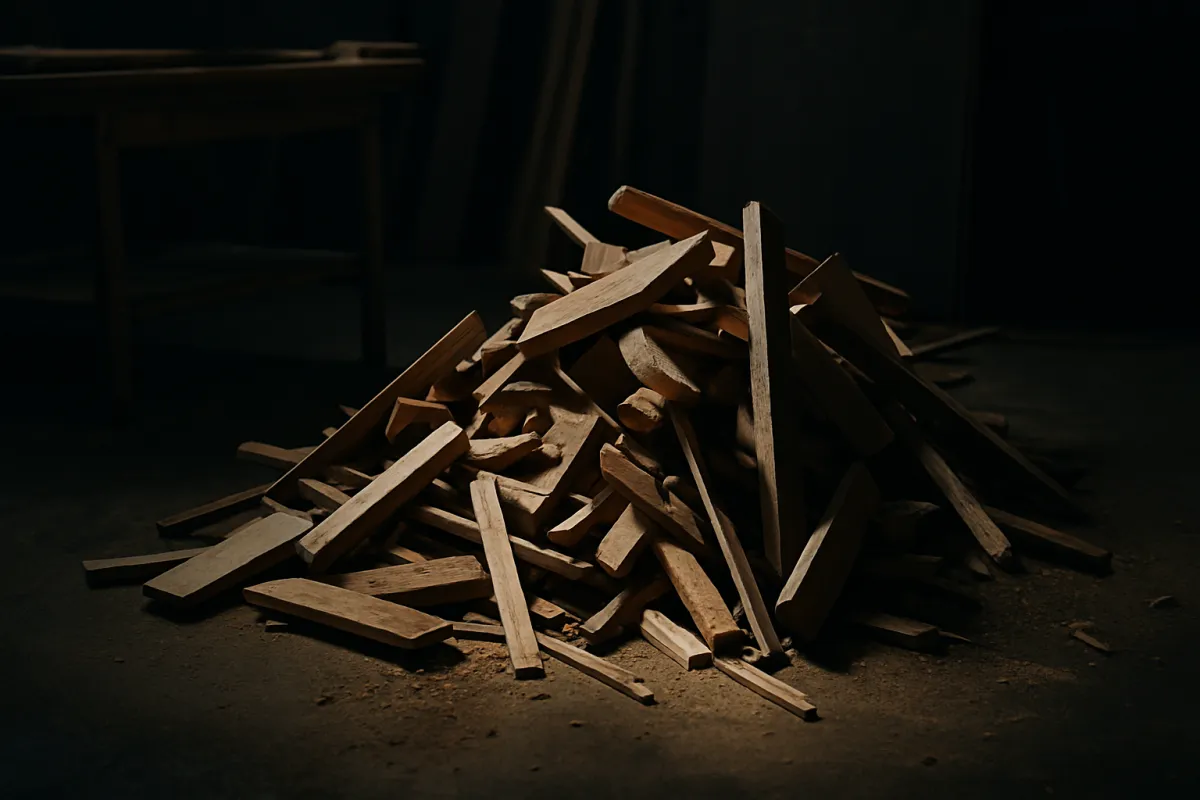
This density difference means two cords of different species are not necessarily equivalent heating value even though they are an identical 128 cubic feet of stacked volume, because the actual mass of burnable wood fiber inside that volume differs by species. Treat species as a quality and burn-characteristic decision layered on top of the volume calculation, not as something the cord formula itself accounts for, and confirm any specific heat-output comparison with a source dedicated to firewood species rather than treating a general density ranking as an exact figure.
The reverse problem: a fixed delivery, what stack does it make
Sometimes the question runs backward from every example so far: a load has already been delivered, or a price was quoted for a specific amount, and the question is how big a stack that amount should make once it is restacked properly. The same formula rearranges cleanly for this. Given a known number of cords, multiply by 128 for total cubic feet, then divide by your chosen height and piece depth in feet to find the length the stack should reach.
A delivered half cord, 64 cubic feet, restacked 4 feet high with 16 inch pieces, should reach a length of 64 divided by 4 divided by 1.333, about 12 feet. If the wood as delivered, once properly stacked at that height and depth, falls meaningfully short of 12 feet, either the height achieved is lower than planned, the pieces are shorter than assumed, or the delivery itself came up short of the half cord it was sold as. Running this reverse check at delivery, rather than trusting the truck bed’s appearance, is the single most useful habit this whole manual can offer, and it takes only the same tape measure and the same one formula every other section here has used.
Where the estimate goes wrong
The dominant error is treating cord, face cord, and rick as interchangeable words for the same amount of wood, when only the full cord is actually a fixed volume. Buying or selling by one of the other names without confirming the piece length is how a buyer ends up with a third of what they expected, and it is rarely dishonesty on either side, just an assumption that went unchecked.
The second error is estimating a stack’s volume from how full a pile or a truck bed looks rather than measuring the stacked dimensions directly, which consistently overstates the amount, since a loose pile always occupies more apparent space than the same wood stacked tight. The third is treating the 128 cubic foot full cord figure as the amount of solid wood you are getting, rather than the stacked volume including the air gaps between pieces, which overstates the heating value by the same 10 to 30 percent the gap typically represents.
Covering a stack while it seasons
A seasoning stack needs airflow on its sides to dry properly but protection from rain and snow on top, and getting that balance backward is a common mistake that slows drying rather than speeding it. Covering the entire stack tightly on all sides, including the sides, traps moisture inside the pile and can slow seasoning compared with leaving it fully open, while leaving the top completely uncovered lets rain soak into the top layers repeatedly, which can keep the whole stack wetter than an uncovered pile in a dry climate might suggest.
The common practice is a cover over the top only, extending a little past the edges, while the sides stay open to wind and sun, which is also why a stack sited with its long axis facing the prevailing wind and some sun exposure typically seasons faster than one tucked into a shaded, still corner. None of this changes the cord volume math, a covered or uncovered cord is still the same 128 cubic feet, but it changes how long you should expect to wait before the wood burns the way seasoned wood should.
Common cord-buying pricing red flags
A handful of patterns in firewood pricing are worth watching for, independent of the volume math itself. A price quoted per truckload with no stated cord or face cord equivalent is the single biggest red flag, since truck bed sizes vary and a loosely thrown load always looks larger than its stacked volume. A price that seems unusually low compared with other local sellers for the same stated cord quantity is worth a direct question about piece length and species, since an unusually cheap “cord” sometimes turns out to be a face cord of short pieces described loosely.
A seller who is reluctant to have the delivered wood stacked and measured, or who delivers a loose dumped pile rather than offering to stack it, is not necessarily dishonest, but it removes the easiest way to verify the quantity, so doing the stacking and measuring yourself becomes more important in that situation, not less. None of these patterns prove a problem on their own; they are simply the moments where running the actual formula in this manual, rather than trusting a word or a glance, protects you.
Your firewood order checklist
The whole manual, compressed to the sheet worth keeping by the woodpile.
- Measure the stack as built, not the pile before stacking. Length and height in feet, piece depth in inches.
- Run the formula. Length times height times depth over 12, divided by 128, gives cords.
- Confirm the piece length behind any face cord or rick quote. The same name can describe very different volumes depending on length.
- Compare against the standard units. 128 cubic feet is a full cord, 64 a half cord, 32 a quarter cord.
- Expect air gaps. Roughly 70 to 90 of the 128 cubic feet in a stacked cord is solid wood; the rest is normal space between pieces.
- Treat weight as a wide range, not a fixed number. Species and moisture move it more than stacking does; confirm before loading a vehicle.
- Stack and measure a delivery before accepting the quantity. A loose pile in a truck bed looks larger than the same wood stacked tight.
The bottom line
Firewood volume is one formula, length times height times piece depth over 12, divided by 128, applied honestly to a stacked measurement rather than a glance at a pile. The confusion in the firewood trade comes entirely from names, cord, face cord, rick, that sound like fixed units but are not, except for the full cord itself, which is permanently 128 cubic feet by definition. Settle the piece length, measure the actual stack, run the one formula, and expect roughly a quarter to a third of the volume to be air between pieces rather than solid wood.
That one formula also answers the weight, the seasoning timeline, and the buying-season planning questions this manual has worked through, since every one of them starts from the same stacked cubic feet figure before species, moisture, and climate adjust it further. Run your own stack through the companion below or the estimator, stack and measure any delivery before accepting the quantity, and the number that comes back is one you can hold a seller to rather than a word that might mean several different amounts of wood.
Treat this manual as workshop arithmetic meant to make a stacked measurement legible, not a species guide or a heating engineering reference. The piece lengths, solid-wood percentages, weights, and seasoning times above are typical illustrative values that vary by species, climate, how the wood is split, and how it is stacked, and your own wood will move the real numbers. Confirm species, moisture content, and weight before loading any vehicle, and check local rules on cutting, transporting, or burning wood where they apply.
Frequently asked questions
How do I calculate a cord of firewood?
Measure your stack's length and height in feet, and the depth the pieces are cut to in inches, then multiply length times height times depth divided by 12, which gives stacked cubic feet. Divide that by 128, since a full cord is standardized as 128 cubic feet, conventionally a stack 4 feet high, 4 feet deep, and 8 feet long. A stack 8 feet long, 4 feet high, with logs cut to the full 4 foot depth is exactly one cord. Most home stacks use shorter pieces and a different length, so the formula does the conversion for whatever dimensions you actually have.
What is the difference between a full cord and a face cord?
A full cord is a fixed, standardized volume of 128 cubic feet, traditionally pictured as a stack 4 feet high, 4 feet deep, and 8 feet long, built from logs cut to a full 4 foot length. A face cord, sometimes called a rick, is a stack 4 feet high and 8 feet long but only as deep as the pieces are cut, commonly 12 to 18 inches for a wood stove or fireplace, which makes it a fraction of a full cord rather than a fixed unit of its own. Three face cords of 16 inch wood equal one full cord, since 16 inches is a third of the 4 foot depth a full cord uses.
How many face cords are in a full cord?
It depends entirely on how long the pieces are cut, because a face cord is not a fixed volume the way a full cord is. At a 12 inch piece length, 4 face cords equal a full cord. At 16 inches, the common stove length, it takes 3. At 18 inches, about 2.7. At 24 inches, exactly 2. The rule is the full cord's 4 foot depth divided by your piece length in feet; always confirm the piece length a seller means by a face cord or a rick, since the same word can describe meaningfully different amounts of wood.
How much space does a half cord of wood take up?
A half cord is 64 cubic feet, half of a full cord's 128, commonly stacked as 4 feet high by 4 feet deep by 4 feet long, or spread out as 4 feet high by 8 feet long by 2 feet deep if you are using shorter pieces. Either arrangement holds the same volume; which one fits depends on how much wall or yard space you have to stack against. Run your own stack dimensions through the companion below to see the volume either arrangement produces.
How much does a cord of firewood weigh?
Weight varies enormously by species and moisture, more than almost any other material this calculator covers, so treat any figure as a wide illustrative range rather than a fact to plan a vehicle load around. A commonly cited range for a full cord of seasoned hardwood, species like oak or hickory, runs somewhere around 4,000 to 5,000 pounds, while lighter hardwoods and most softwoods can run noticeably less, and green, unseasoned wood carries extra water weight on top of either figure. Confirm your specific species and moisture content before assuming a figure, especially before loading a trailer or a pickup bed.
How much solid wood is actually in a stacked cord?
Less than the full 128 cubic feet, because round and split pieces never pack together with zero air gaps the way a solid block would. A commonly cited range is somewhere around 70 to 90 cubic feet of solid wood per stacked cord, with split, neatly stacked wood running toward the higher end and round, unsplit, or loosely stacked wood running lower, since rounds leave larger gaps than flat-sided splits. That airspace is normal and expected; it is not a sign of being shorted on a delivery unless the gap looks dramatically larger than a well-stacked pile should leave.
How do I know if I am getting a full cord when I buy firewood?
Stack the delivered wood yourself, or watch it stacked, into a measured rectangle rather than trusting a loose pile or a truck bed estimate, since a loosely thrown pile in a truck bed can look like more wood than it is once it compresses into a tight stack. Measure the stack's length and height in feet and the depth in inches, run the same length times height times depth over twelve formula this calculator uses, and divide by 128. If the number comes up meaningfully short of what you paid for, you have an honest measurement to raise with the seller rather than a guess.
How many cords of wood do I need for a winter?
It depends heavily on climate, how often you burn, the efficiency of the stove or fireplace, and how well the house is insulated, so there is no single number that applies everywhere. As a commonly cited rough planning range, a household burning a wood stove as a primary heat source through a cold winter might use somewhere around 3 to 6 full cords, while occasional fireplace use for ambiance rather than heat might use well under one cord across a whole season. Track your own burn rate for a season before committing to a large early order, since local climate and habits move this figure more than any formula can.